Cyclone vs Standard Shop Vacuum: Which One Should You Buy?
A cyclone separator pre-filters dust before it reaches the filter; a standard shop vacuum collects straight into the tank. Four picks ranked for the garage.

On this page
Top picks at a glance
As an Amazon Associate we earn from qualifying purchases.
- 1
 CRAFTSMAN CMXEVBE17250 2.5 Gallon 2.5 Peak HP Wet Dry Shop9.6/10View on Amazon
- 2
 CRAFTSMAN CMXEVBE17596 20 Gallon 6.5 Peak HP Wet Dry Shop9.6/10View on Amazon
- 3
 CRAFTSMAN CMXEVBE17595 16 Gallon 6.5 Peak HP Wet Dry Shop9.6/10View on Amazon
- 4
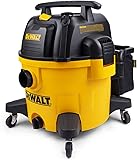 DEWALT 9 Gallon Wet/Dry VACView on Amazon
- 5
 STANLEY 3 Gallon Wet Dry VacuumView on Amazon
- 6
 DEWALT Shop Vacuum 6 Gal 4 HP Poly Wet/Dry Vacuum with BlowerView on Amazon
- 7DEWALT Wet and Dry Vacuum 9 Gallon Poly Wet/Dry Vac YellowView on Amazon
- 8
 DEWALT 10 Gallon Poly Wet Dry VacuumView on Amazon
The filter clogs halfway through the job, suction fades, and the garage cleanup turns into filter cleanup. Cyclone vs standard shop vacuum: which one should you buy? Buy a standard shop vacuum if you want one unit that does everything, and add a cyclone separator if fine dust keeps clogging the filter. A cyclone spins dust out of the airstream into a bucket before it reaches the filter; a standard vacuum collects straight into its own tank. The four picks below cover both sides, ranked from the most capable to the least for the home garage.
More options to compare
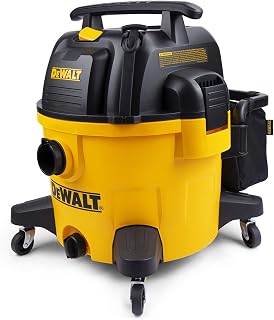 DEWALT 9 Gallon Wet/Dry VACCheck price on Amazon
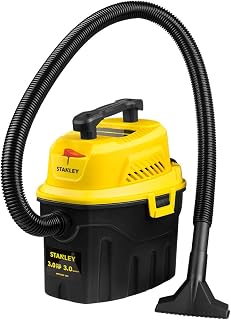 STANLEY 3 Gallon Wet Dry VacuumCheck price on Amazon
 DEWALT Shop Vacuum 6 Gal 4 HP Poly Wet/Dry Vacuum with BlowerCheck price on Amazon
- DEWALT Wet and Dry Vacuum 9 Gallon Poly Wet/Dry Vac YellowCheck price on Amazon
 DEWALT 10 Gallon Poly Wet Dry VacuumCheck price on Amazon
GarageToolHQ earns a commission when you buy through links on our product pages, at no extra cost to you. Read our affiliate disclosure.
Below: what each setup does, a side-by-side comparison, four ranked picks with their stated specs, dust safety basics, and answers to common questions.
Cyclone vs standard shop vacuum: what each one does
A standard shop vacuum is one unit: motor, filter and tank together. It picks up the mess and holds it in its own tank or bag until you empty it; wet/dry models handle liquids too. When the filter loads up with fine dust, suction drops until the filter is cleaned or replaced.
A cyclone separator is a pre-filter stage that sits between the hose and the vacuum. Spinning the airstream throws dust and debris into a bucket before they reach the filter, so the filter stays cleaner and suction stays up. The Oneida Dust Deputy DIY claims up to 99.9% capture with 20% more efficiency from its Neutral Vane Technology, and the DEWALT separator claims up to 99.5% efficiency. Both need a vacuum to pair with; the RosyOcean fits standard 5-gallon buckets with a 90-degree elbow and a 43 in hose.
The short version: the vacuum does the sucking either way. The cyclone just keeps the filter out of the fight. If the filter clogs every session, that is a cyclone job. If cleanup is occasional and mixed, a standard vacuum alone is simpler.
Side-by-side comparison
| Cyclone separator | Standard shop vacuum | |
|---|---|---|
| What it is | A pre-filter stage before the vacuum | Motor, filter and tank in one unit |
| How it handles dust | Spins debris into a bucket first | Collects straight into tank or bag |
| Filter life | Longer: up to 99.9% caught before the filter | Shorter with fine dust; clean or replace |
| What you need | A vacuum, a bucket and a hose | Just the vacuum |
| Wet pickup | Yes on wet/dry models | Yes on wet/dry models |
| Footprint | Vacuum plus bucket | One unit |
| Best for | Wood, drywall and concrete dust | Mixed garage cleanup, wet and dry |
Specifications are manufacturer rated, as published on each listing and collected 22 October 2026. Separation percentages are maker claims.
The gear: four ranked picks
Three cyclone separators and the one shop vacuum to pair them with, ranked from the most capable to the least on stated specs, completeness and listing quality.
DEWALT DXVCS001 Dust Separator
The top pick is the DEWALT cyclone separator: up to 99.5% cyclone separation efficiency for wet/dry vacuums, in a 6.1 x 6.1 x 14.3 in plastic body weighing 16 oz. The listing states a 3 years distributer and manufacturer warranty, the only concrete warranty in this group, under model DXVCS001. It is reusable and sold as the separator alone.
The 3-year warranty and the stated efficiency earn the top slot. Pair it with any wet/dry vacuum and a bucket to build the two-stage setup.
DEWALT DXV06P-QTB 6-Gallon Shop Vacuum
The vacuum pick is DEWALT’s 6-gallon STEALTHSONIC: a 5 HP motor making 90 CFM at 65 db, which the listing calls 50% quieter than previous models, with a lifespan up to 900 hours. It runs on 120 volts at 8 A, with 70 inches of maximum suction, a 7 ft hose, a 10 ft cord for over 17 ft of reach, and a washable cartridge filter the maker says captures 95% of dust. The box includes 6 disposable dust bags, a foam filter, wands, brushes and nozzles, at 18.2 lb and 16.54 x 16.54 x 20.47 in.
No warranty term is stated. For a one-unit garage vacuum with quiet running and a full accessory kit, this is the pick; add a separator later if the filter clogs.
Oneida Dust Deputy DIY
The Oneida Dust Deputy DIY is the anti-static retrofit cyclone: centrifugal separation claiming up to 99.9% of dust and debris before the filter, with Neutral Vane Technology the maker calls 20% more efficient. Ports are tapered 2.0 in O.D. with a 3 in I.D. discharge, in a 15.5 x 9.3 x 7.4 in body at 0.8 oz. It handles wet or dry material, from wood and drywall dust to cooled ash and metal shavings, and is made in the USA.
DIY means you supply the waste container, hose and adapters; the box holds the cyclone, gasket and mounting hardware. The warranty field reads only “Warranty”, which is not a concrete term. It ranks behind the DEWALT separator on completeness and warranty.
RosyOcean Cyclone Separator
The RosyOcean is the low-profile bucket-top separator: a horizontal cyclone that fits standard 5-gallon buckets, with a 90-degree elbow and 43 in hose included. It claims up to 99.9% of coarse debris before the filter, fits 2.5 in shop vac hoses, and weighs 2.97 lb under model YS54541001. The listing recommends buckets over 90 mil wall thickness, or two nested buckets, and vacuums of 5.0 HP or higher.
No warranty term is stated. It is the most compact separator here, but the bucket and the vacuum requirements narrow its fit.
Use rated jack stands on solid ground, wear eye protection with power and air tools, keep fuel-burning equipment out of a closed garage, and follow the manual for every tool. Read our Safety Disclaimer.
Dust safety basics
Fine dust is the hazard, not the vacuum. Wood, drywall and concrete dust belong in the separator bucket, not in your lungs: work with the garage ventilated and wear a dust mask rated for the job. Never vacuum anything hot or burning; the Oneida listing specifies cooled ash, not fresh ash. Empty the bucket before it packs solid, keep the filter in place even with a separator, and check that hoses and bucket seals are tight so dust does not leak back into the air.
Frequently Asked Questions
Do I need a cyclone separator with my shop vacuum?
Not always. If the filter clogs every session with wood or drywall dust, a separator that claims up to 99.9% pre-separation keeps suction up and stretches filter life. For occasional mixed cleanup, the vacuum alone is simpler.
What size bucket does a cyclone separator fit?
The RosyOcean fits standard 5-gallon buckets with its elbow and 43 in hose. The Oneida Dust Deputy DIY needs a user-supplied waste container, hose and adapters.
How loud is the DEWALT quiet vacuum?
The listing states 65 db and calls it 50% quieter than previous models. It is still a 5 HP shop vacuum, so hearing protection is wise for long sessions.
Can a cyclone separator handle wet pickup?
Yes on wet/dry models. The Oneida lists wet or dry use, and the RosyOcean supports dual wet and dry modes for spills and wet debris.
Which is better for drywall dust?
Drywall dust is the classic filter killer, and the Oneida listing names drywall dust among its materials. A separator keeps the fine dust in the bucket instead of the filter. See HEPA vs standard shop vacuum for the filter side of the question.
Related: our garage upgrades hub, the best shop vacuum for home garage and the best shop vacuum for auto body dust.