Cylinder Hone vs Ball Hone: Which One Should You Buy?
Stone hones and ball hones compared by grit, bore range, and drive, for deglazing and finishing engine and brake cylinders.

On this page
Top picks at a glance
As an Amazon Associate I earn from qualifying purchases.
- 1
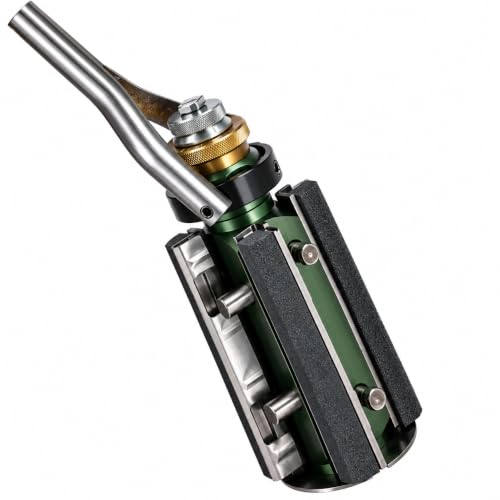 15000 Engine Cylinder Hone9.7/10View on Amazon
- 2
 Garhgi 4 Inch Flexible Cylinder Hone 240 Grit Silicon Carbide9.6/10View on Amazon
- 3
 Garhgi 3-1/4"9.6/10View on Amazon
- 4
 Cylinder HoneView on Amazon
- 5
 Lisle 15000 Engine Cylinder HoneView on Amazon
- 6
 Garhgi 3 InchView on Amazon
- 7
 Powerbuilt Disk Brake Cylinder Hone 3/4 Inch to 2-1/4 InchView on Amazon
- 8
 Engine Cylinder Hone Adjustable Deglazer 3/4" to 2-1/2"View on Amazon
A cylinder bore with glazed walls will not hold oil, and rings will not seat the way they should. That is the job a cylinder hone vs ball hone comparison answers: a stone hone and a ball hone both cut a crosshatch finish into the bore, but they do it with different shapes. A stone hone uses flat stones held against the wall, while a ball hone uses flexible abrasive balls on a shaft that centers itself in the bore. Pick the shape by the bore you need to finish and the finish the listing states.
Other tools worth a look
 Cylinder HoneCheck price on Amazon
 Lisle 15000 Engine Cylinder HoneCheck price on Amazon
 Garhgi 3 InchCheck price on Amazon
 Powerbuilt Disk Brake Cylinder Hone 3/4 Inch to 2-1/4 InchCheck price on Amazon
 Engine Cylinder Hone Adjustable Deglazer 3/4" to 2-1/2"Check price on Amazon
GarageToolHQ earns a commission when you buy through links on our product pages, at no extra cost to you. Read our affiliate disclosure.
Below: how the shapes differ, the gear in this guide with grit and bore figures from the listings, and how to match the tool to the bore.
Cylinder hone vs ball hone: how the shapes differ
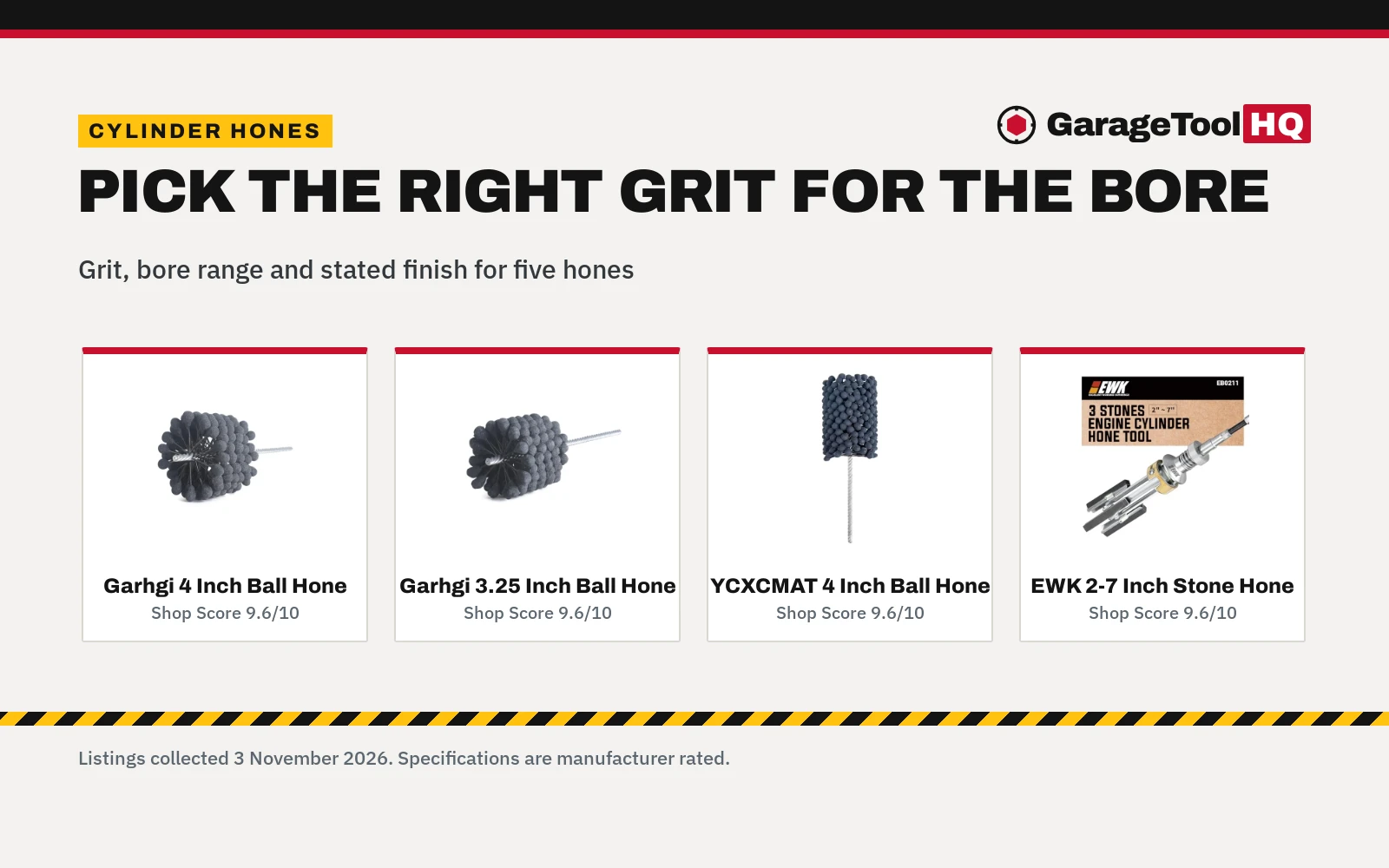
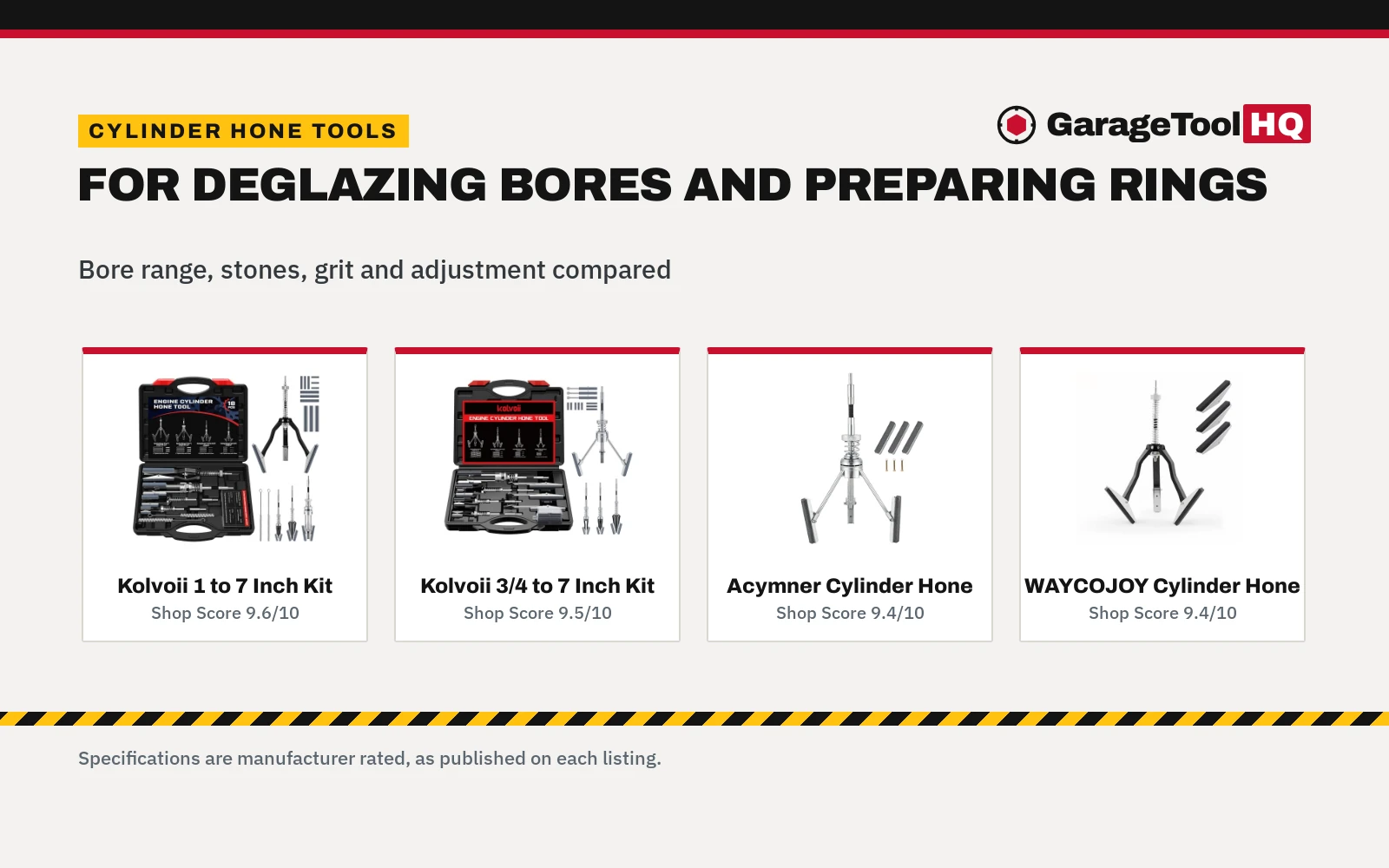
A stone hone works with stones pressed against the cylinder wall. The EWK example in this guide uses 3 adjustable stones, with a tension screw that controls the spring pressure of the stones against the bore, and a flexible shaft that keeps the movement smooth so the hatch pattern stays even. The listing states that the tool deglazes the walls of cylinders in gasoline and diesel engines, removes burrs, and roughens the walls to produce an oil-holding crosshatch pattern and an adequate seal. It fits brake caliper bores and engine cylinders of automotive, motorcycle, and industrial equipment, and it works with a 1/4-inch power drill.
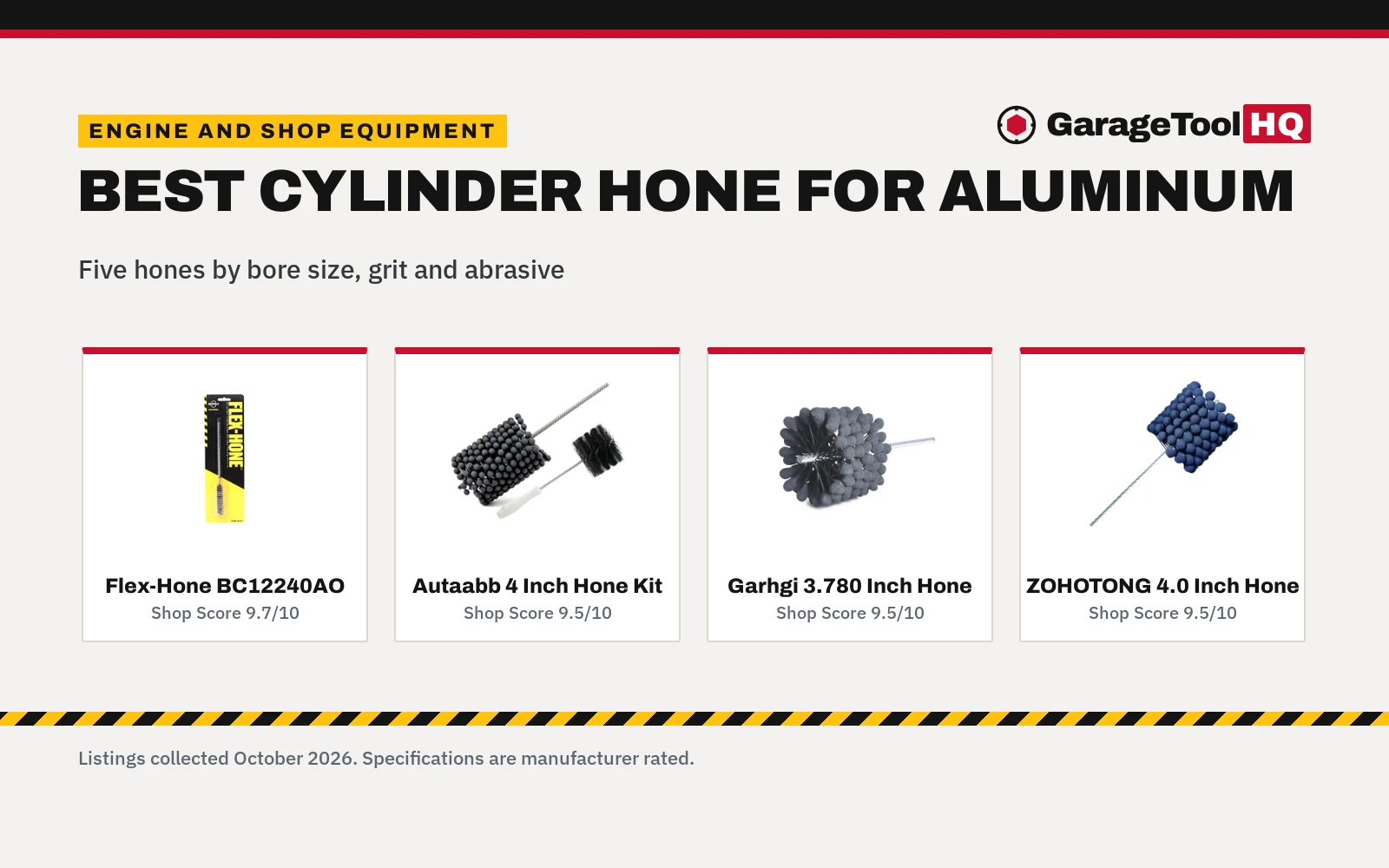
A ball hone works with flexible abrasive balls on a shaft. The Flex-Hone examples are intentionally manufactured oversized, and that engineered oversize creates the pressure inside the cylinder wall that lets the tool center itself, align itself, and compensate for wear as it runs. The Garhgi example is also oversized and flexible, and it self-centers and self-aligns for uniform contact pressure. The ball shape finishes the bore and deburrs cross holes at the same time, in a single setup, and the listings state use in a hand drill, a drill press, or CNC equipment. The Flex-Hone listings state mild steel, stainless steel, cast iron, and softer ferrous materials, while the Garhgi listing states mild steel, stainless steel, and cast iron. All three ball hones state crosshatch finishes, and the Garhgi listing states oil keeping and piston ring seating for its finish.
The practical difference is control against coverage. A stone hone lets the user set stone pressure with a tension screw and deglaze a wide bore range with that tool. A ball hone centers itself in the bore and finishes plus deburrs together, but each ball hone covers only the bore range its listing states, so the bore size decides which ball hone fits.
The gear in this guide
| Product | Shape | Grit | Bore range | Drive |
|---|---|---|---|---|
| Flex-Hone BC10018, 1 inch | Ball-style | 180 | 0.939″-1.000″ | Hand drill, drill press, CNC |
| EWK 2 to 7 inch | Stone, 3 stones | 220 | 2″ to 7″ | 1/4-inch power drill |
| Flex-Hone GB41824, 4-1/8 inches | Ball-style | 240 | 3.751″-4.125″ | Hand drill, drill press, CNC |
| Garhgi 3-1/2 inches | Ball-style | 240 | 3.251″-3.500″ | Hand drills, drill presses, CNC machines |
The Flex-Hone BC10018 example is a 1-inch (25.4mm) ball-style hone in 180 grit silicon carbide, for mild steel, stainless steel, cast iron, and softer ferrous materials. The listing states a 3-inch abrasive part length, a 0.228-inch shank diameter, and an 8-inch overall length, with use on bore diameters between 0.939″-1.000″, and a finish of 30 – 40 microinch. The stated uses are rebuilding hydraulic and pneumatic cylinders, engine and brake cylinders, valve guides, pumps, and compressors, and the listing states that the tool is made in the USA.
The EWK example is a stone hone with 3 adjustable 3-inch stones in 220 grit, covering 2″ to 7″ (50.8mm to 177.8mm). The listing states a tension screw for stone pressure, a self-aligning flexible shaft, and use with a 1/4-inch power drill, for deglazing gasoline and diesel engine cylinders, brake caliper bores, and engine cylinders of automotive, motorcycle, and industrial equipment. The stones are replaceable and wear gradually with use, and the listing states that the bore should be measured for correct fit before ordering.
The Flex-Hone GB41824 example is a 4-1/8-inch (105mm) ball-style hone in 240 grit silicon carbide, for the same materials as the smaller Flex-Hone example. The listing states a 4-inch abrasive part length, a 0.310-inch shank diameter, and a 13.5-inch overall length, with use on bore diameters between 3.751″-4.125″, and a finish of 24 – 32 microinch. The stated uses match the smaller Flex-Hone example: hydraulic and pneumatic cylinders, engine and brake cylinders, valve guides, pumps, and compressors.
The Garhgi example is a 3-1/2-inch (89mm) ball-style hone in 240 grit silicon carbide balls, with a stated finish of 0.8-1.2 Ra. The listing states use on bore diameters between 3.251″-3.500″, an overall length of 300mm, and an abrasive part length of 80mm, with use on engine cylinders, brake masters, rotors, valve guides, piston rings, pumps, compressors, and bearings. The listing states a safety guideline for this tool: wear safety glasses, gloves, and ear protection, never dry hone, and read the manual before use.
How to pick between a stone hone and a ball hone
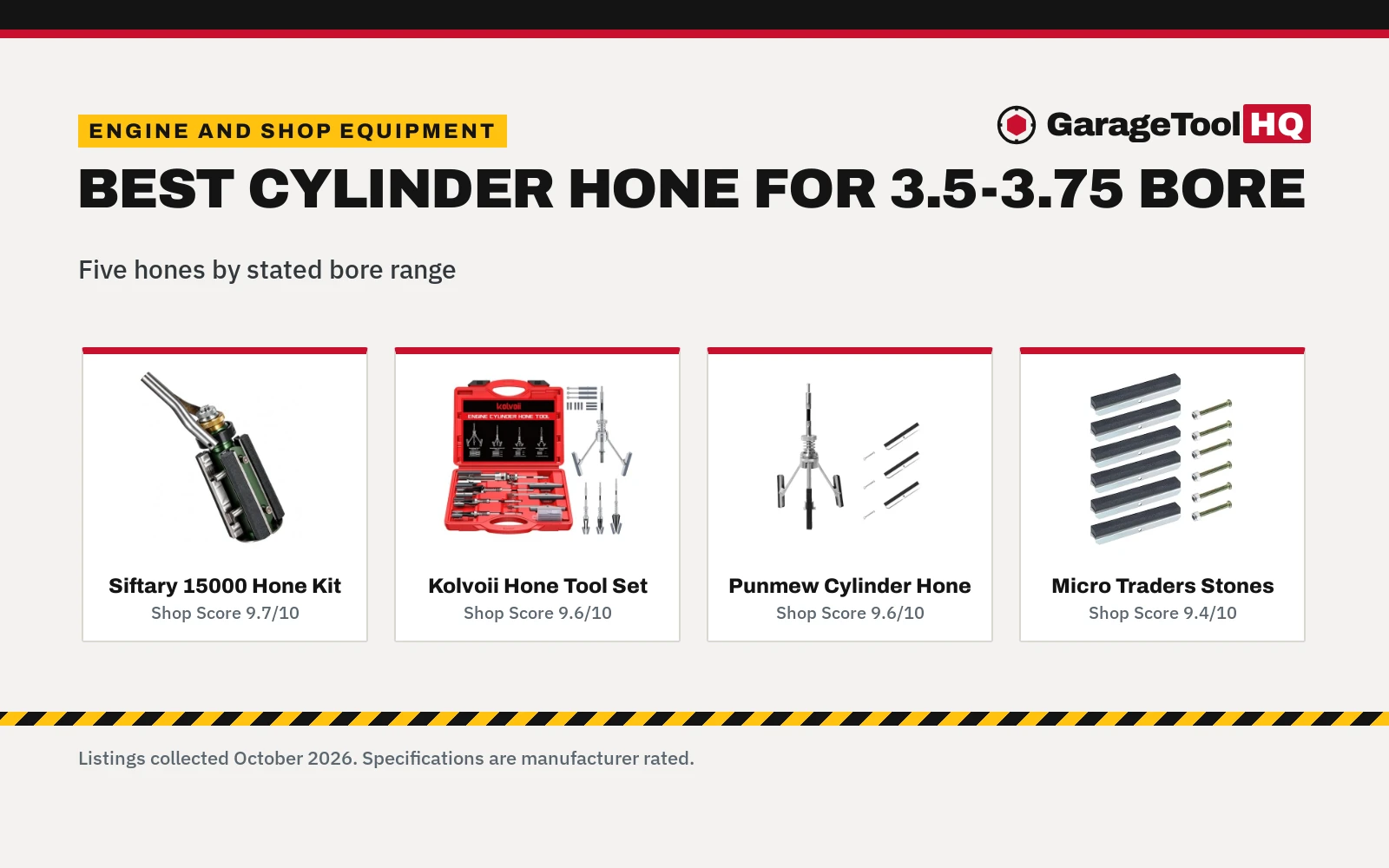
Start with the bore. The Flex-Hone listings state to order by bore size, and the EWK listing states to measure the cylinder bore for correct fit before ordering, so the bore range in the listing decides whether a given hone fits at all. The stone hone in this guide covers a wide range, from 2″ to 7″, while each ball hone covers a narrow range, so a ball hone needs a bore measurement matched to its stated range.
Then weigh grit against finish. The listings state 180 grit with a finish of 30 – 40 microinch, 220 grit on the stone hone, and 240 grit with a finish of 24 – 32 microinch or 0.8-1.2 Ra on the larger ball hones. Grit and finish figures come from the listing for the bore at hand, not from a general rule, so compare the stated finish for the hone that fits the bore.
Then weigh the job. For deglazing a cylinder wall and roughening it for an oil-holding crosshatch, the stone hone states that job directly. For finishing a bore and deburring cross holes at the same time, the ball hones state that combined job. For drive, the ball hones state a hand drill, a drill press, or CNC equipment, while the stone hone states a 1/4-inch power drill, so the drill or spindle on hand is another check before ordering.
FAQ: garage tools
How do you hone cylinders?
The listings state use in a rotating spindle: a hand drill, a drill press, or CNC equipment for the ball hones, and a 1/4-inch power drill for the stone hone. The ball hones center themselves in the bore as they run, and the stone hone uses a tension screw plus a flexible shaft for an even hatch pattern. The Garhgi listing states a safety guideline for the job: wear safety glasses, gloves, and ear protection, never dry hone, and read the manual before use.
What size ball hone for a cylinder?
Order by bore size. The ball hones in this guide state use on bore diameters between 0.939″-1.000″, between 3.251″-3.500″, and between 3.751″-4.125″, so the bore measurement picks the hone. Measure the bore before ordering, and check the measurement against the stated range for the hone.
What does cylinder hone mean?
A cylinder hone is a tool that finishes the inside wall of a cylinder bore. The listings state that honing deglazes the wall and roughens it for an oil-holding crosshatch pattern. The ball hone listings add piston ring seating, with a stated finish in microinch or Ra. Stone hones do it with stones held against the wall, and ball hones do it with flexible abrasive balls on a shaft.
How many times can you hone a cylinder?
The listings in this guide state no re-hone count, so no fixed number applies here. What the listings do state is the bore range for each hone and, for the stone hone, replaceable stones that wear gradually with use. Measure the bore before each job and check it against the stated bore range for the hone.
How do you use a brake cylinder hone?
Brake work is inside the stated uses here: the Flex-Hone listings state engine and brake cylinders, the EWK listing states brake caliper bores, and the Garhgi listing states brake masters. Pick the hone by the brake bore measurement against the stated bore range, drive it with the spindle the listing states, and follow the safety guideline in the Garhgi listing: safety glasses, gloves, and ear protection, never dry hone, and the manual before use.
Related: engine and shop equipment hub, cylinder hone tool picks, cylinder hone for aluminum.