Dual vs Single Lens Dash Cam: Which One Should You Buy?
A single lens watches the road ahead, while a dual lens adds a rear view, and this guide compares both setups through four garage-installed cameras.

On this page
Top picks at a glance
As an Amazon Associate I earn from qualifying purchases.
- 1
 Lisle 52750 Dual Purpose Stethoscope Kit9.7/10View on Amazon
- 2
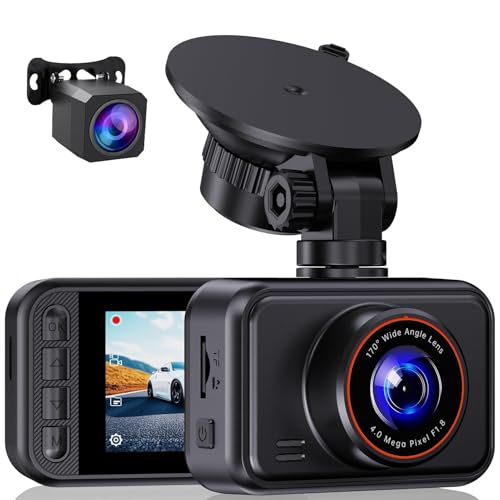 Dash Cam Front and Rear for Cars9.5/10View on Amazon
- 3
 Veement 1296P Dash Cam Front9.5/10View on Amazon
- 4
 VIOFO A229 Plus Dash Cam Front and RearView on Amazon
- 5
 70mai A810 Lite 4K Dash Cam Front and RearView on Amazon
- 6
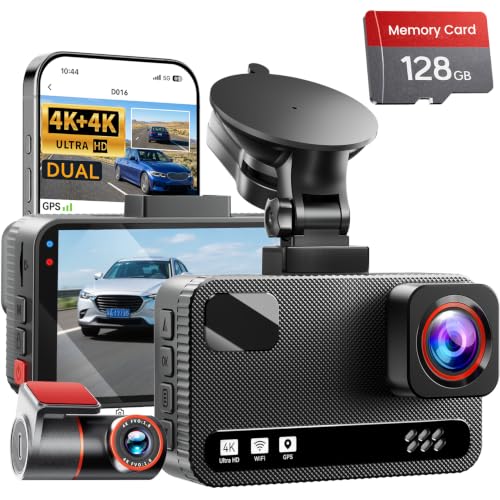 4K+4K Dual Dash Cam Front and RearView on Amazon
- 7
 IIWEY N5 4 Channel Dash Cam for CarsView on Amazon
- 8
 IIWEY N6 360° Dash Cam 4 ChannelView on Amazon
- 9
 4K+1080P*3 FHD Dash Cam Front and RearView on Amazon
Dual vs single lens dash cam comes down to which directions need recording. A single lens watches the road ahead, which covers forward collisions and the view ahead, while a dual lens adds a rear view, which covers what happens behind the car and during parking. For a car that spends time parked on the street or in shared lots, the dual lens is the stronger pick; for a car that only needs forward evidence, a single lens keeps the setup simpler.
Other tools worth a look
 VIOFO A229 Plus Dash Cam Front and RearCheck price on Amazon
 70mai A810 Lite 4K Dash Cam Front and RearCheck price on Amazon
 4K+4K Dual Dash Cam Front and RearCheck price on Amazon
 IIWEY N5 4 Channel Dash Cam for CarsCheck price on Amazon
 IIWEY N6 360° Dash Cam 4 ChannelCheck price on Amazon
 4K+1080P*3 FHD Dash Cam Front and RearCheck price on Amazon
GarageToolHQ earns a commission when you buy through links on our product pages, at no extra cost to you. Read our affiliate disclosure.
Below: what a second lens adds, the four cameras in this guide, parking power, and install notes.
Dual vs single lens dash cam: the quick answer
A single lens records the road ahead from one camera, while a dual lens records ahead and behind from a front camera plus a rear camera. The rear view is the whole difference: evidence for rear-end incidents and parking bumps from behind, at the cost of a second camera and a cable run to the rear.
| Point | Single lens | Dual lens |
|---|---|---|
| Coverage | Road ahead | Road ahead and behind |
| Parking evidence | Front impacts, where parking mode covers the front | Front and rear impacts while parked |
| Wiring | One camera, one cable run | A second camera cable run to the rear |
| Setup | Simpler install | More coverage for more install work |
All four cameras in this guide are dual lens or more, so the guide compares dual setups against each other and against the single lens idea.
What a second lens adds
The rear lens turns a forward-only record into a two-direction record. The 70mai and GKU cameras pair a 4K front lens with a 1080P rear lens, the E-YEEGER camera pairs a 2.5K front lens with a 1080P rear lens, and the shenghuo camera pairs a 4K front lens with three adjustable 1080P lenses for 360° coverage. Wide-angle lenses cut blind spots, with the GKU camera stating 170° front and 150° rear coverage and the E-YEEGER camera stating a 170° front lens.
Night recording is where the second lens has to prove itself too, since a rear view must stay readable after dark. The 70mai camera uses HDR with an F1.55 aperture, the GKU camera uses a STARVIS 2 sensor with WDR and adds HDR in front-only mode, the shenghuo camera uses 8 LED infrared night vision with an F1.6 aperture and WDR, and the E-YEEGER camera uses a starlight night vision sensor with a 6-layer glass lens and WDR. Loop recording and a G-sensor lock appear on all four listings, so an impact clip stays locked whichever lens caught it.
The gear in this guide
The four cameras below are ranked from the strongest listing to the simplest.
GKU D600 Pro Max
The GKU camera records 4K front and 1080P rear video with 170° front and 150° rear coverage, a STARVIS 2 sensor, WDR night vision, and HDR in front-only mode without the rear camera connected. Built-in GPS records routes, speed and location, 5.8GHz Wi-Fi 6 reaches up to 20MB/s, and voice control handles key functions hands-free. A supercapacitor replaces a battery for heat resistance and lifespan, loop recording overwrites the oldest unlocked clips, and the G-sensor locks collision footage, with a LOCK button for manual locking. A 64GB memory card is included and pre-installed. Parking monitoring runs 24/7 with time-lapse recording, collision detection and pre-recording of 30 to 60 seconds before and after an incident, but only the GKU hardwire kit works, since third-party kits are not compatible. Mounting offers a suction cup mount and a 3M adhesive mount, and a car charger is included while a USB cable is not. One contradiction needs a note: the bullets state a 12-month warranty extendable to 24 months, while the spec table states 6 Months.
70mai A810 Lite
The 70mai camera records 4K front video at 3840×2160P with a 1080P rear lens, using HDR and an F1.55 aperture for night, tunnel and rainy driving. Built-in 5GHz Wi-Fi 6 transfers at up to 25MB/s, and 4G LTE gives remote live view, vehicle tracking and real-time alerts through the app, with the UP05 4G hardwire kit required. Parking mode runs 24 hours with G-sensor detection that locks impact footage, time-lapse recording for low-power monitoring, and low-voltage protection against battery drain, with a hardwire kit UP03, UP05 or UP06 required. Built-in 3-mode GPS covers GPS, GLONASS and BDS for speed, route and location, voice control gives hands-free operation, and a supercapacitor replaces a battery for heat resistance. The compact, credit card-sized form fits behind the rearview mirror, with an 18-month warranty.
shenghuo 4-channel camera
The shenghuo camera is the widest-coverage pick here: a 4-channel setup with a 4K front lens and three adjustable 1080P lenses for simultaneous 360° coverage, shown on a 3.18 IPS screen. Night vision uses 8 LED infrared lights with an F1.6 aperture and WDR for headlight glare. Dual-band 5.8GHz WiFi moves recordings to a phone through the app at 20MB/s, a 64GB card is included and pre-installed, and loop recording with a G-sensor lock protects accident clips. Parking mode runs 24 hours after the vehicle is turned off, with the front sensor recognizing objects within 3 to 4 meters, a 5-second quick start, and a 1-minute clip per event, but a separately purchased hardwire kit is necessary for parking surveillance. Install uses a suction cup mount with a pry tool for routing wires. No warranty term is stated in the bullets; the spec table lists 0.
E-YEEGER S60
The E-YEEGER camera is the simplest pick here: 2.5K front video with a 1080P rear lens, a 170° front lens, WDR night vision from a starlight sensor and a 6-layer glass lens, and loop recording with a G-sensor lock. The SD card is not included, and the camera supports cards up to 256GB. Parking monitoring runs 24 hours with time-lapse recording, but a compatible Type-C hardwire kit is required and not included. A 2″ IPS screen shows the camera view and basic settings, and a 360° suction mount adjusts the angle and removes for reinstalling. The listing states a 1-year limited warranty.
Parking mode and power
Parking mode is where the four listings differ most on power. Every camera here offers parking monitoring, and every one requires a hardwire kit for it: UP03, UP05 or UP06 for the 70mai camera, the GKU kit only for the GKU camera, a separately purchased kit for the shenghuo camera, and a compatible Type-C kit for the E-YEEGER camera. Without the kit, parking mode does not run, so the kit belongs in the same order as the camera.
The 70mai and GKU cameras use a supercapacitor instead of a battery, with better heat resistance and longer lifespan stated for a camera that sits on a windshield in summer. The 70mai camera also states low-voltage protection against battery drain during overnight or long-term parking, and its time-lapse parking mode gives continuous low-power monitoring rather than full recording.
Wiring and install in the garage
Mounting is straightforward on all four listings. The GKU camera gives a choice of suction cup or 3M adhesive mount, the shenghuo camera uses a suction cup mount with a pry tool for hiding wires, the E-YEEGER camera uses a 360° suction mount for angle adjustment and removal, and the 70mai camera fits behind the rearview mirror without blocking the view. The rear camera is the longer job: its cable runs from the front camera to the rear of the car.
Use rated jack stands on solid ground, wear eye protection with power and air tools, keep fuel-burning equipment out of a closed garage, and follow the manual for every tool. Read our Safety Disclaimer.
FAQ: garage tools
Do I need a rear camera for parking protection?
A rear camera adds parking evidence from behind, which a front-only camera cannot give. All four cameras here offer parking monitoring with a hardwire kit, and the GKU camera adds pre-recording of 30 to 60 seconds before and after an incident. For a car parked in shared lots or on the street, the rear view covers bumps the front lens never sees.
Does a dual lens dash cam need a hardwire kit?
Only for parking mode. Driving recording runs from vehicle power, but parking monitoring on all four listings requires a hardwire kit: UP03, UP05 or UP06 for the 70mai camera, the GKU kit for the GKU camera, a separately purchased kit for the shenghuo camera, and a compatible Type-C kit for the E-YEEGER camera. Third-party kits are not compatible with the GKU camera.
Will a second lens drain the car battery?
Parking mode is built for low-power use rather than full recording. The 70mai camera uses time-lapse recording for continuous low-power monitoring and states low-voltage protection against battery drain. The other listings describe time-lapse, collision-based or sensor-triggered parking modes, but only the 70mai listing states low-voltage protection, so a kit with that protection is the safer choice for long parking stretches.
Is a 4-channel camera better than a dual camera?
A 4-channel camera covers more directions, not better directions. The shenghuo camera records 360° coverage from a 4K front lens and three 1080P lenses, against the two-direction coverage of the dual cameras here. More lenses mean more angles secured and more cameras to place, so the 4-channel pick suits a driver who wants side coverage too.
Can a dash cam record when the car is off?
Yes, with parking mode and its hardwire kit fitted. The 70mai camera runs 24-hour parking mode, the GKU camera runs 24/7 monitoring with time-lapse, collision detection and pre-recording, the shenghuo camera runs 24-hour parking mode with a 1-minute clip per event, and the E-YEEGER camera runs a 24-hour parking monitor with time-lapse recording. Without the hardwire kit, none of these parking modes runs.
Related: the best dash cam for car, the dash cams category and the diagnostics and electrical hub.