Garage Floor Epoxy vs Tiles: Differences Explained
Garage floor epoxy and interlocking tiles compared for a home shop: floor preparation, installation effort, chemical resistance, load capacity, moisture tolerance, and concrete examples of each.

On this page
Top picks at a glance
As an Amazon Associate we earn from qualifying purchases.
- 1
 Gorilla Epoxy Garage Floor Coating Kit9.7/10View on Amazon
- 2
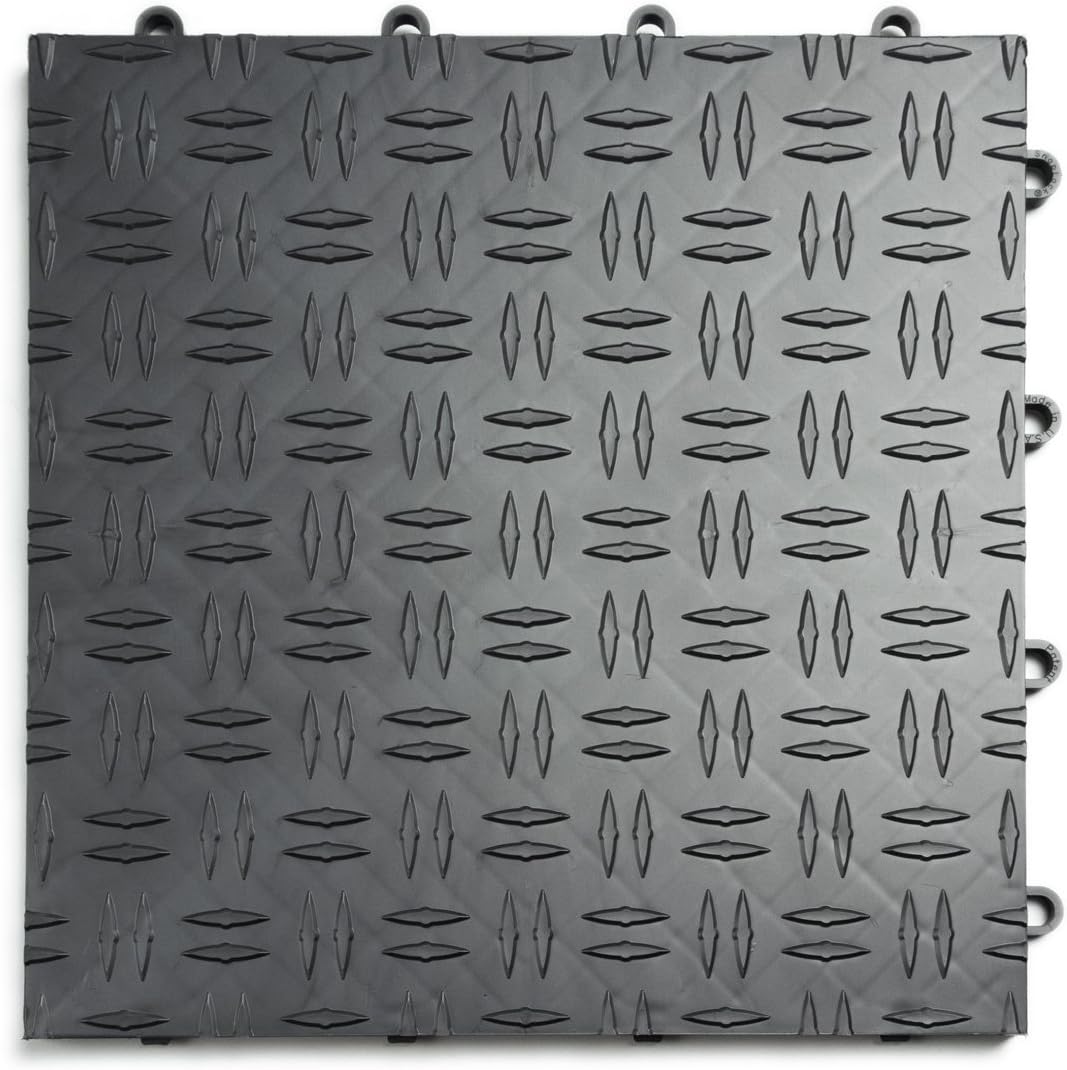 SnapLock GarageTrac 12"x12" Interlocking Garage Tiles9.7/10View on Amazon
- 3
 ArmorPoxy 100% Solids Garage Epoxy Floor Kit9.7/10View on Amazon
- 4
 SnapLock GarageDeck 12"x12" Interlocking Garage Floor TilesView on Amazon
- 5
 Epoxy Colored Sand Floor Paint for ConcreteView on Amazon
- 6
 VEVOR Garage Tiles InterlockingView on Amazon
- 7
 VEVOR Garage Floor Tiles 12x12x0.53 in 50 PackView on Amazon
- 8
 VEVOR Garage Floor Tiles 12 x 12 x 0.53 inch InterlockingView on Amazon
- 9
 VEVOR Garage Floor TilesView on Amazon
Verdict: Choose garage floor epoxy if you want a seamless, high-gloss surface bonded directly to your slab, you have concrete in sound condition, and you have the time for concrete etching and the multi-day drying schedule required before parking. Choose interlocking tiles if you want immediate drive-on capability with no drying delay, dry installation without chemical etching, or a modular surface that does not rely on coating adhesion.
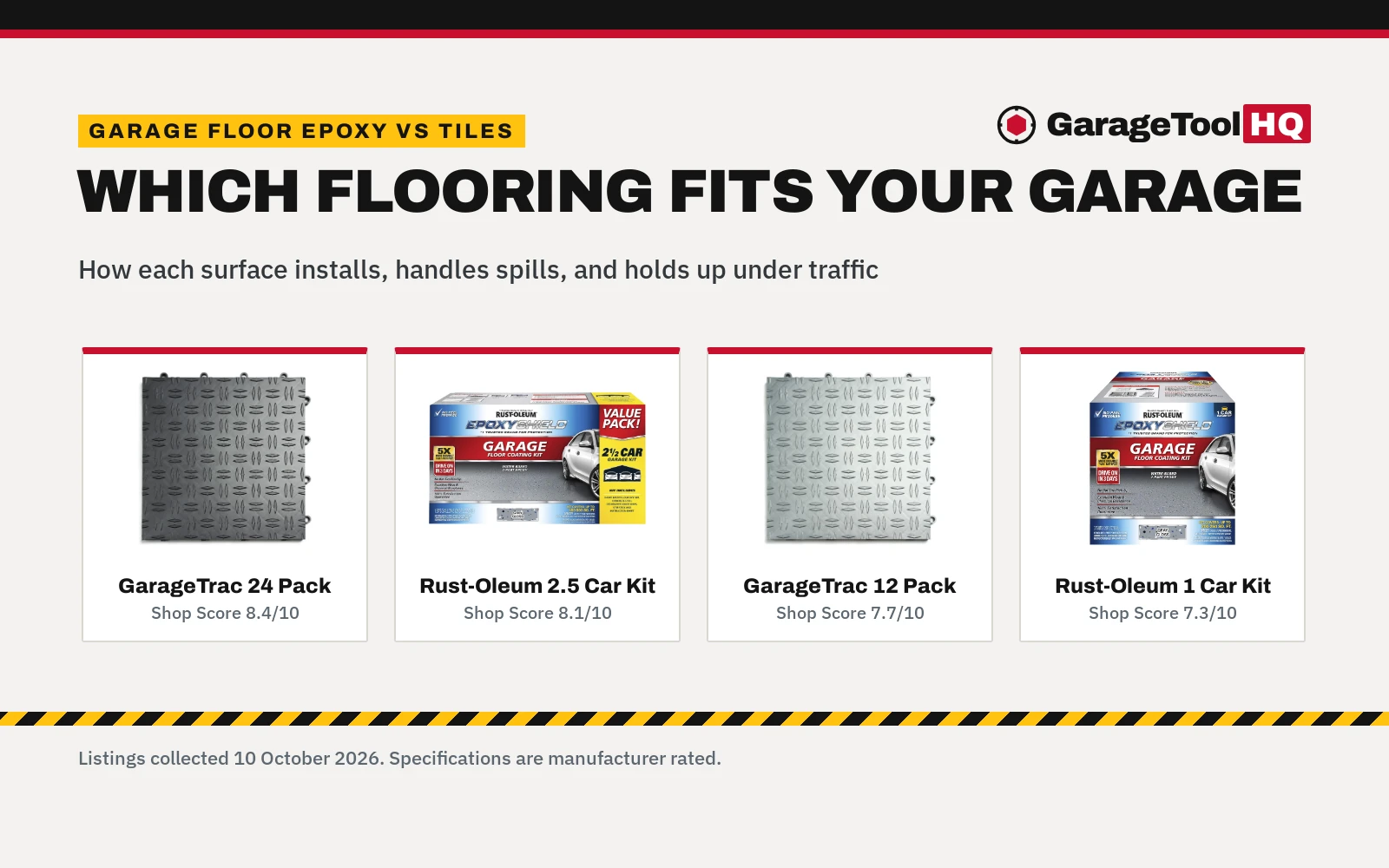
When deciding between garage floor epoxy vs tiles, the choice centers on installation effort, floor prep, and how quickly you need your workshop back in service. Epoxy creates a continuous protective barrier that seals the concrete, while interlocking modular tiles float above the slab without chemical adhesion. This head-to-head comparison breaks down both flooring options across essential workshop criteria, using four concrete listings from our review pool as real-world examples.
GarageToolHQ earns a commission when you buy through links on this page, at no extra cost to you. Read our affiliate disclosure.

SnapLock GarageTrac 12"x12" Interlocking Garage
Interlocking 12x12 in copolymer tiles with 24 sq ft coverage, a 40,000 lb rolling load rating, and diamond tread.
Pros
- 40,000 lb rolling load capacity handles vehicle parking
- Snaps together without tools, glues, or extra hands
- Diamond double tread pattern adds traction underfoot
- Resists oil, dirt, dust, and cleans with mop or shop vac
Cons
- Coverage is 24 sq ft per pack, requiring multiple packs for a garage
- Warranty description lists 12 without a unit (years or months not stated)
- Modular tile layout does not form a single seamless liquid barrier
- No safety certifications stated in listing
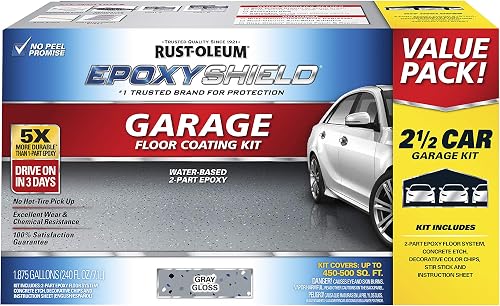
Rust-Oleum EpoxyShield Garage Floor Coating
A 2-part water-based epoxy kit sized for a 2.5 car garage with burst pouch coating, decorative chips, and etch.
Pros
- Sized for a 2.5 car garage in a single kit
- Complete kit includes burst pouch coating, color chips, and concrete etch
- Resists cracking and prevents hot tire pickup
- Allows light foot traffic in 12 to 16 hours
Cons
- Requires 3 days before driving vehicles onto the surface
- Spec table states 24 hours full drying time while listing 72 hours dry time
- Demands thorough concrete surface preparation and etching before rolling
- No warranty term is stated

SnapLock GarageTrac 12"x12" Interlocking Garage
A 12 pack of 12x12 in interlocking copolymer tiles covering 12 sq ft with a 40,000 lb rolling load rating.
Pros
- Rated for over 40,000 lb rolling loads
- Interlocking tiles assemble with no tools or glues
- Diamond double tread pattern offers slip resistance
- Sturdy copolymer resists automotive fluids and cleans with a mop
Cons
- Covers 12 sq ft per pack, requiring dozens of packs for a full garage
- Spec table incorrectly lists width as 0.05 in instead of 12 in
- Warranty description lists 12 without stating months or years
- No safety certifications stated in listing

Rust-Oleum EpoxyShield Garage Floor Coating
A 1 car epoxy floor coating kit in Gloss Gray with concrete etch, color flecks, and burst pouch packaging.
Pros
- Packaged for a single car garage bay
- Includes burst pouch coating, decorative chips, and concrete etch
- Resists cracking and prevents hot tire pickup
- Allows light foot traffic in 12 to 16 hours
Cons
- Contradiction between water-based bullets and oil paint spec table
- Spec table states 24 hours dry time against 3 days vehicle drive-on
- Spec table lists coverage vaguely as see package
- No concrete warranty term stated (lists satisfaction only)
More options to compare
 SnapLock GarageDeck 12"x12" Interlocking Garage Floor TilesCheck price on Amazon
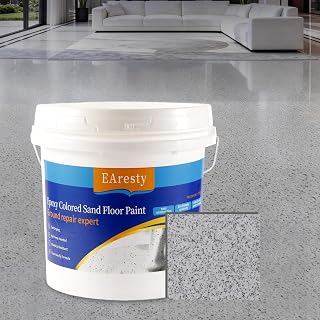 Epoxy Colored Sand Floor Paint for ConcreteCheck price on Amazon
 VEVOR Garage Tiles InterlockingCheck price on Amazon
 VEVOR Garage Floor Tiles 12x12x0.53 in 50 PackCheck price on Amazon
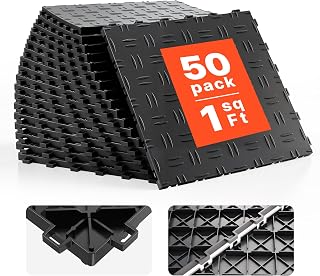 VEVOR Garage Floor Tiles 12 x 12 x 0.53 inch InterlockingCheck price on Amazon
 VEVOR Garage Floor TilesCheck price on Amazon
Side by side
| Garage floor epoxy | Interlocking tiles | Key difference | |
|---|---|---|---|
| Form factor | Liquid coating applied to concrete slab | Modular interlocking copolymer tiles | Continuous coating vs modular tiles |
| Surface preparation | Requires concrete etch on clean, sound concrete | No chemical etching; snaps together over concrete | Acid etching vs no chemical prep |
| Installation method | Roller applied (Rust-Oleum kits specify 4×4 ft sections) | Interlocking tabs snap together with no tools or glues | Roller application vs snap-together assembly |
| Vehicle drive-on time | 3 days for vehicle traffic on Rust-Oleum examples | Immediate drive-on ready once assembled | 3-day wait on examples vs immediate parking |
| Foot traffic time | 12 to 16 hours for light foot traffic on Rust-Oleum examples | Immediate foot traffic once assembled | 12 to 16 hours on examples vs immediate use |
| Rolling load rating | Not stated in listings (rated crack resistant for vehicles) | Over 40,000 lb rolling load rating (SnapLock examples) | Unstated vs 40,000 lb rating on examples |
| Surface traction | Gloss finish with decorative color flecks | Diamond double tread pattern for slip resistance | Color flecks vs textured diamond pattern |
| Fluid cleanup | Seamless gloss surface keeps spills on top for easy wipe-down | Stain resistant copolymer cleans with mop or shop vac | Sealed surface vs washable copolymer |
| Example packaging | 1 Car Kit (120 fl oz) or 2.5 Car Kit (Rust-Oleum) | 12 sq. ft. (12 Pack) or 24 sq. ft. (24 Pack) (SnapLock) | Car bay kits vs square foot packs |
Example figures are manufacturer rated, as published on each listing and collected 9 October 2026.
Garage floor epoxy vs tiles: core differences
The fundamental distinction between garage floor epoxy and modular tiles is how they attach to your garage. Epoxy is a chemical coating that relies on mechanical and chemical adhesion to bare concrete. In the Rust-Oleum listings, it arrives as a 2-part liquid that you mix and roll onto the slab. Interlocking tiles, represented by the SnapLock listings, are rigid copolymer squares that snap together using interlocking tabs, floating freely over the existing floor.
That difference drives every trade-off between the two surfaces. A roll-on epoxy forms a continuous, seamless surface bonded directly to the slab, sealing the concrete beneath. Interlocking tiles connect to each other rather than adhering to the floor, creating a floating modular surface that does not depend on chemical bonding to the concrete.
Surface preparation and installation
Preparation separates these two flooring paths more than any other factor. Applying epoxy demands clean concrete in sound condition. Both Rust-Oleum kits include concrete etch, which the instructions direct you to scrub into the floor to prepare the slab before coating. In addition, the maker specifies that floors must be in good, sound condition. Once prepped, the liquid is applied with a synthetic nap roller in 4×4 foot sections while scattering decorative chips into the wet coating.
Interlocking tiles bypass chemical prep entirely. The SnapLock GarageTrac listings describe a snap-together PowerLock design that requires no tools, glues, or extra hands. You align the tabs and press the tiles together over the concrete floor. Because the tiles interlock mechanically rather than bonding chemically, there is no acid etching, liquid mixing, or multi-day drying cycle involved in the installation.
Drive-on time and vehicle traffic
If you need your garage back in service immediately, interlocking tiles hold a clear timing advantage. The SnapLock tiles can support vehicle parking as soon as the tiles are snapped into place, with no waiting period required for the material to set.
In contrast, epoxy coatings require a structured drying timeline before they can take vehicle weight. The Rust-Oleum listings state that the coating allows light foot traffic in 12 to 16 hours and normal use in 24 to 48 hours, but requires 3 days before allowing full vehicle traffic. Parking a vehicle on the floor before the stated 3 days has passed risks hot tire pickup, where warm tires lift the coating from the concrete. The listing highlights that the coating resists hot tire pickup once fully dried through the 3-day window.
Chemical resistance and stain cleanup
Both flooring options are designed to handle garage messes, but their surfaces function differently. The Rust-Oleum epoxy formulas provide a continuous gloss finish that keeps motor oil, grease, and automotive fluids on the surface, allowing spills to be wiped away without soaking into the concrete slab.
The SnapLock tiles are molded from copolymer material that resists stains from car oil, dirt, and dust. The maker highlights that the tiles are washable and moisture resistant, stating that cleanup is simple with a mop or shop vac. Because the tiles are modular copolymer units rather than a single poured membrane, they provide a durable, washable surface across the workspace.
Load capacity and heavy equipment
A workshop floor must support the weight of parked vehicles, rolling floor jacks, and heavy tool cabinets. The SnapLock GarageTrac listings publish a rolling load capacity of over 40,000 lbs, constructed from high-impact copolymer. The maker also includes a patent diamond double tread pattern across the surface to provide slip resistance underfoot while working.
The Rust-Oleum epoxy listings do not state a specific numeric pound rating for rolling load capacity. Instead, the maker specifies that the coating is crack resistant and designed for passenger vehicle traffic in residential garages. A properly applied epoxy coating adheres directly to sound concrete, transferring loads directly into the slab beneath.
Choose garage floor epoxy if
- You want a seamless, continuous finish bonded directly to the slab
- Your concrete is in sound condition and ready for acid etching
- You can wait the 3 days stated on the listings before parking vehicles
- You want spilled fluids contained on a sealed gloss surface
Choose interlocking tiles if
- You want immediate vehicle parking as soon as assembly is finished
- You want a modular floor that does not rely on chemical adhesion to the slab
- You prefer dry installation without liquid mixing or concrete etching
- You want the high rolling load support stated on the copolymer listings
Example flooring options
For more workshop upgrade ideas, explore our guide to garage tools every homeowner should own and see our breakdown of garage floor mats vs epoxy.
Use rated jack stands on solid ground, wear eye protection with power and air tools, keep fuel-burning equipment out of a closed garage, and follow the manual for every tool. Read our Safety Disclaimer.
Frequently Asked Questions
Is garage floor epoxy or interlocking tiles better for a home workshop?
It depends on your slab condition and how quickly you need to park vehicles. Epoxy creates a seamless, chemical-resistant barrier bonded to the slab, but the reviewed kits require concrete etching and 3 days before driving on the surface. Interlocking tiles snap together without tools or chemical prep and allow immediate vehicle parking, making them practical when you cannot wait for liquid coatings to dry.
How long after applying garage floor epoxy can you park a vehicle on it?
On the Rust-Oleum listings, light foot traffic is ready in 12 to 16 hours and normal use is allowed in 24 to 48 hours, but full vehicle traffic requires 3 days. Parking on the surface before that 3-day window has elapsed risks hot tire pickup, where warm tires pull the coating away from the concrete.
Can interlocking tiles handle heavy vehicle parking?
Yes. The SnapLock GarageTrac listings publish a rolling load capacity of over 40,000 lbs. The maker builds the tiles from high-impact copolymer designed to withstand residential garage environments, including cars, trucks, and SUVs.
Do interlocking garage tiles need glue or adhesive?
No. The SnapLock tiles feature an interlocking PowerLock tab design that snaps together without adhesive. The maker states that no tools, glues, or extra hands are required for installation.
What concrete condition is required for garage floor epoxy?
The Rust-Oleum listings state that the epoxy coating is intended for concrete floors in good, sound condition. Slabs must be cleaned and treated with the included concrete etch to ensure proper adhesion. Slabs with active surface problems or previous peeling coatings require extra preparation before a liquid epoxy coating can adhere properly.
Related: our comparison of garage floor mats vs epoxy, the best garage door insulation kit, essential garage tools every homeowner should own, and our garage upgrades hub.