Gas Pressure Washer Maintenance: A Practical Guide
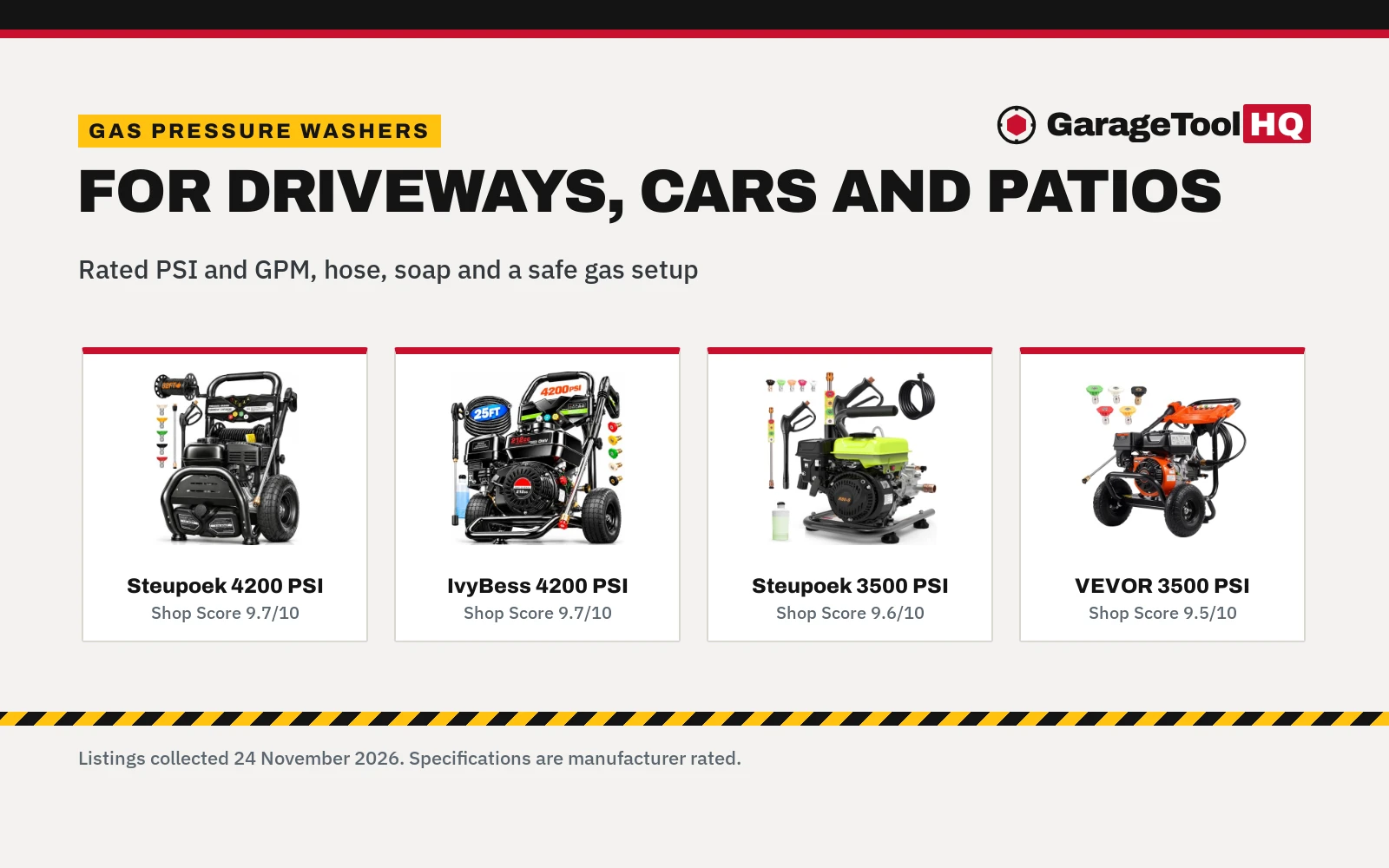
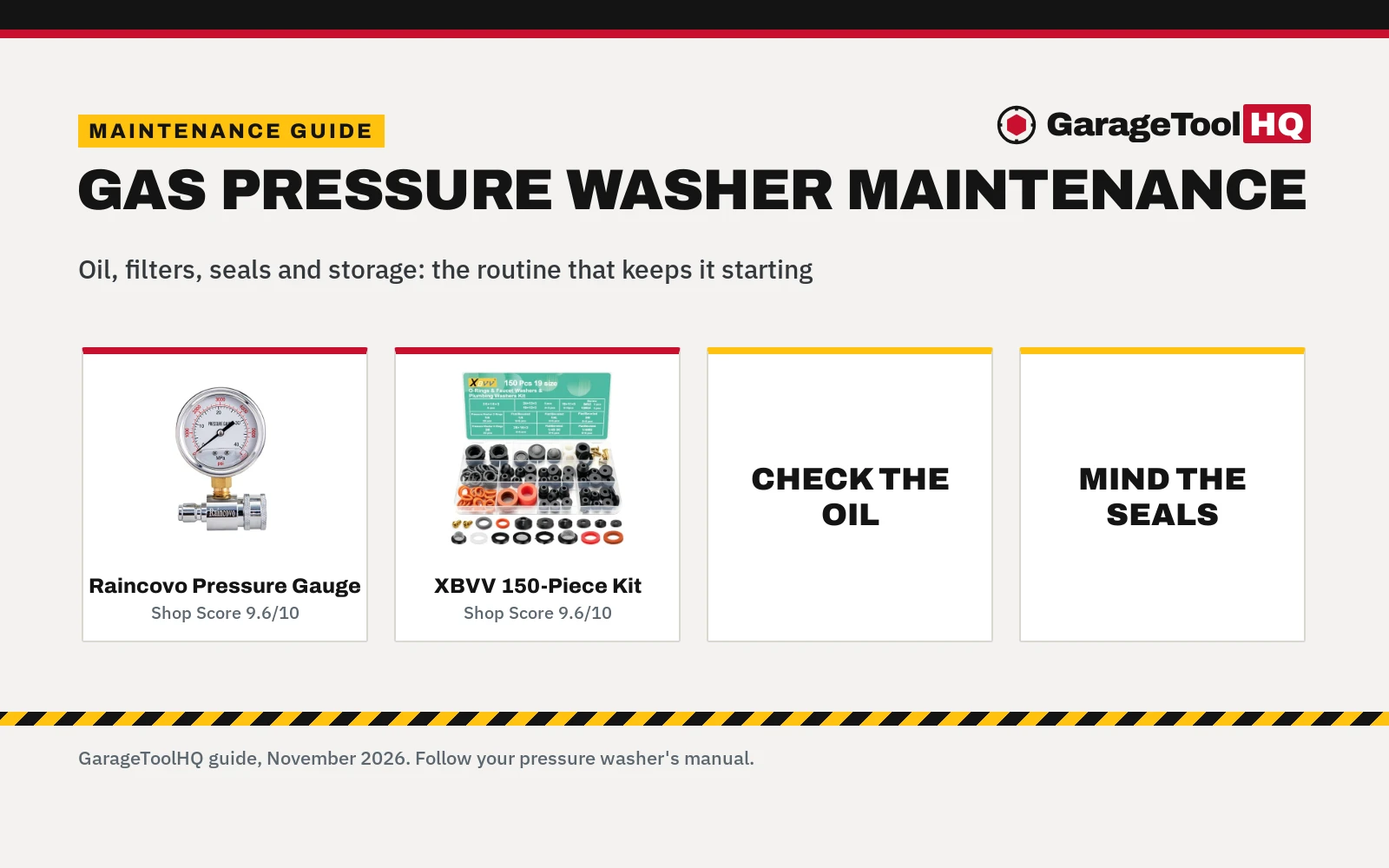
Gas pressure washer maintenance comes down to fresh oil, a clean air filter, sound hoses and seals, and a drained pump before storage.

On this page
Top picks at a glance
As an Amazon Associate I earn from qualifying purchases.
- 1
 Raincovo Pressure Washer Gauge, 6000 PSI9.6/10View on Amazon
- 2
 150 Pcs Faucet Washers & Pressure Washer O-Rings9.6/10View on Amazon
Gas pressure washer maintenance is a short routine of checks before, during and after each use: look at the oil, the air filter and the spark plug, walk the hoses and fittings for drips, keep the inlet screen clear, and drain the water before storage. A washer that gets that routine starts easier, holds pressure better and lasts longer, while a washer left with old oil, worn seals and water in the pump is the one that gives trouble after a long rest.
GarageToolHQ earns a commission when you buy through links on our product pages, at no extra cost to you. Read our affiliate disclosure.
Below: the routine step by step, the gear that makes the checks easier, and answers to the questions owners ask most.
Raincovo Pressure Washer Gauge, 6000 PSI
A stainless steel pressure gauge that reads up to 6000 PSI through a 3/8-inch quick connect, with a dual dial and a glycerin-filled interior.
Pros
- Reads up to 6000 PSI
- 3/8-inch quick connect fits pump and hose
- Stainless steel body resists heat and corrosion
- Glycerin-filled interior for a steady, accurate reading
Cons
- No warranty term is stated
- Fits 3/8-inch quick connect only
- Single gauge in the box
- Measures pressure only; it cannot reseal a fitting or clear a clogged inlet
150 Pcs Faucet Washers & Pressure Washer O-Rings
A 150-piece assortment of faucet washers and pressure washer O-rings in 19 sizes, with filter screen washers and a divided case, for 1/4-inch and 3/8-inch quick couplers and 3/4-inch garden hose fittings.
Pros
- 150 pieces in 19 sizes for quick couplers, spray guns, wands and nozzles
- 20 O-rings for 1/4-inch and 30 for 3/8-inch quick connectors
- Filter screen washers catch debris at water inlets
- Divided case with a size and quantity chart in the lid
Cons
- No warranty term is stated
- Washers are wear parts and need replacing as they age
- Sizes look alike, so each seal must be matched to the old one first
- Covers seals, washers and screws; it cannot fix a cracked hose or a worn pump
Gas Pressure Washer Maintenance: The Routine
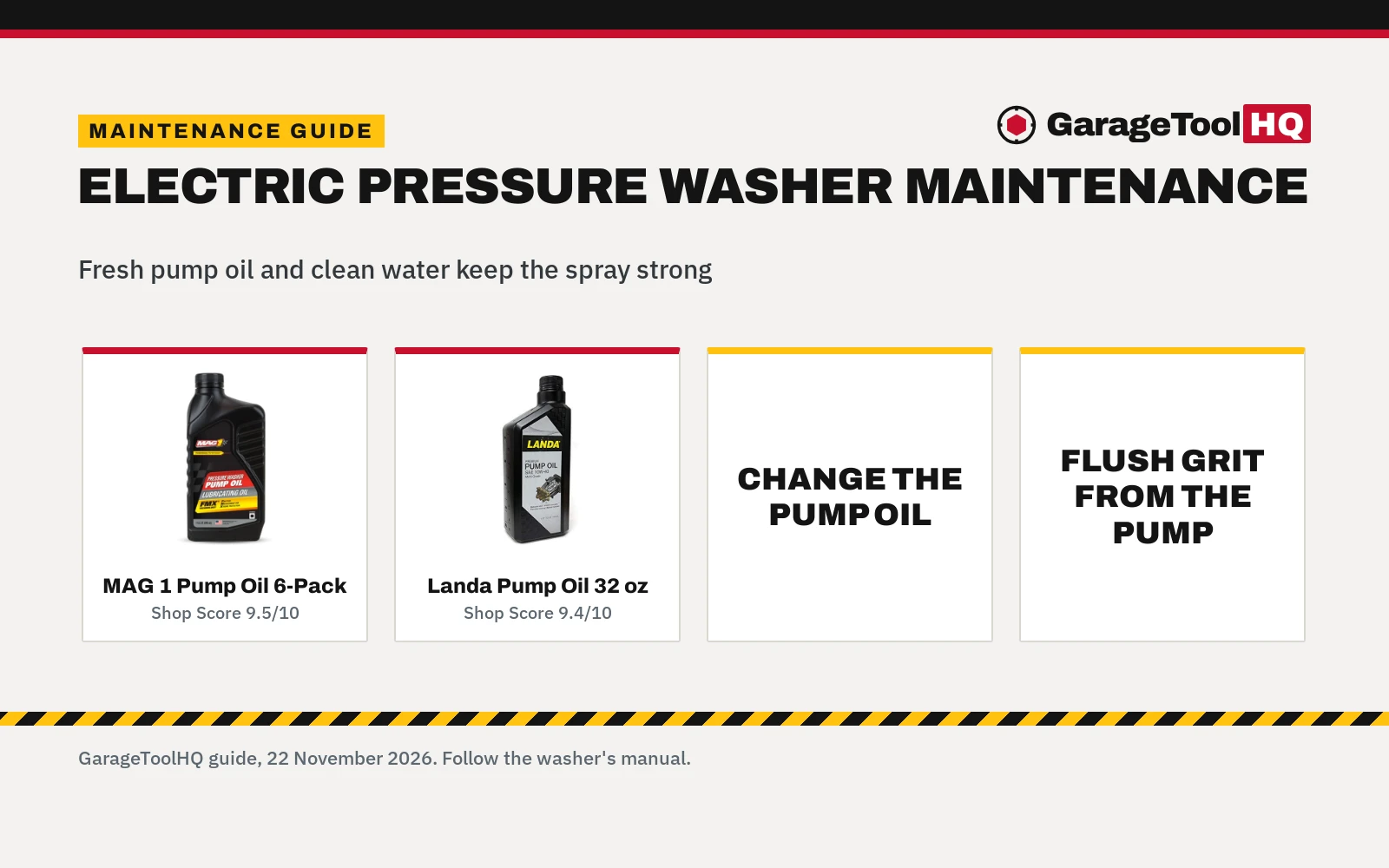
The routine is the same whatever the washer cleans: engine first, then water path, then storage. Work through the list in order, and fix what looks worn before it fails on the job.
- Check the oil. Look at the level and the color, and change the oil as the manual directs.
- Clean the air filter. Tap out dust and clean or replace the filter as the manual directs when it looks dirty.
- Look at the spark plug. Check its condition as the manual directs, and replace it when it looks worn.
- Walk the hoses. Look for cracks, bulges and drips at each fitting, and tighten what is loose.
- Replace worn seals. Swap O-rings and flat washers at the quick connectors and hose fittings, matching each new seal to the old one.
- Keep the inlet screen clear. Rinse the mesh screen washers so debris stays out of the pump.
- Read the pressure. Fit a gauge at the pump or hose and watch the reading while the washer runs.
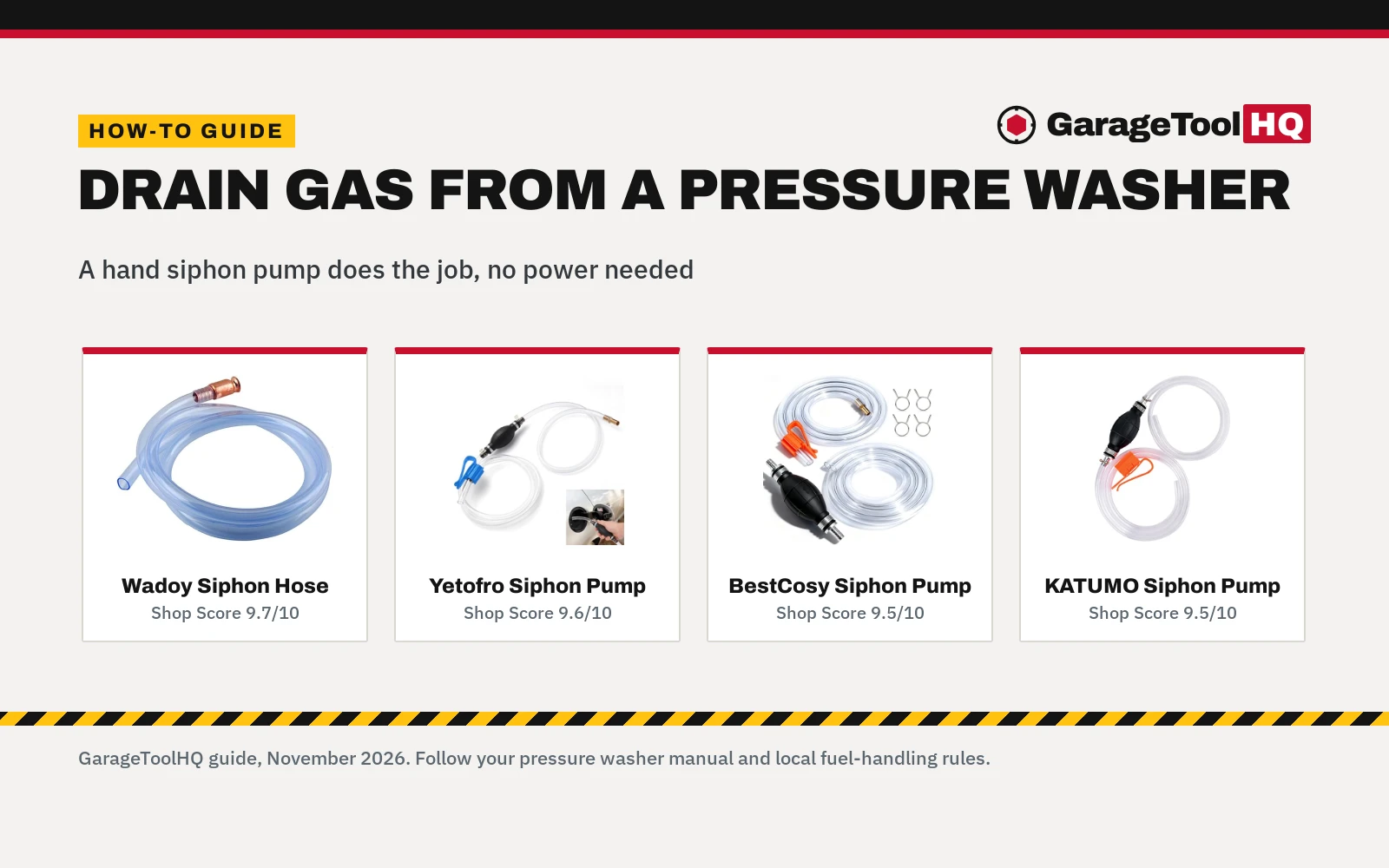
- Drain before storage. Empty the pump and hoses of water, and store the machine where it stays dry.
- Mind the spray. Wear eye protection, and never point the spray at people.
- Never run a gas engine in a closed garage. Move the washer outside before starting it, even for a short check.
A pressure washer jet can cut skin, so keep the spray away from people and wear eye protection. A gas engine makes carbon monoxide, so never run the washer in a closed garage, even with the door partly open.
Keep electric pressure washers on a GFCI outlet, never point the wand at people or pets, wear eye protection with polishers and chemicals, and read the label before mixing any cleaning products. Read our Safety Disclaimer.
Gear for the Job
The checks above call for a gauge to read the working pressure and fresh seals when the old ones drip.
Gas or Electric: Does the Routine Change?
Gas washers need the engine checks: oil, air filter and spark plug. Electric washers skip those, but they share the rest of the routine: hoses, seals, inlet screen, pressure reading and draining before storage. The Raincovo gauge (on Amazon) fits pump and hose with a 3/8-inch quick connect and works with most brands of electric and gas pressure washer, so the same check covers either type.
FAQ: garage tools
How do I know when the O-rings and washers need replacing?
Drips at a quick connector or hose fitting point to a worn seal. The kit covers 1/4-inch and 3/8-inch quick couplers with 20 O-rings for 1/4-inch female quick connectors and 30 for 3/8-inch quick connectors, in 19 sizes, so match the new seal to the old one before fitting it.
How do I check the working pressure of a gas pressure washer?
Fit a gauge at the pump or hose through a 3/8-inch quick connect and read the dial while the washer runs. The Raincovo gauge reads up to 6000 PSI, with a dual dial and a glycerin-filled interior for a steady reading.
Do I need to drain the water before storing a gas pressure washer?
Yes. Empty the pump and hoses of water before storage, and store the machine where it stays dry, so trapped water cannot sit in the pump over the off-season.
What size O-rings fit a 3/8-inch quick connector?
The kit includes 30 O-rings for 3/8-inch quick connectors and 20 for 1/4-inch female quick connectors. Match the replacement to the existing seal’s dimensions before installation, and use the chart inside the lid to find the size.
Can I use the pressure gauge on a gas pressure washer?
Yes. The gauge fits pump and hose with a 3/8-inch quick connect and works with most brands of electric and gas pressure washer. It reads up to 6000 PSI.
How do I keep debris out of the water inlet?
Fit a mesh screen washer at the water inlet connection. The kit’s filter screen washers help capture debris at compatible water inlet connections while providing a seal.
Related: best gas pressure washer picks, the pressure washer maintenance kit guide and the car detailing hub. Also see the best pressure washer for car cleaning.