How to Drain Gas From Pressure Washer: Step-by-Step Guide
Drain the tank with a hand siphon pump before storage: set the container lower than the tank, start the flow, and let the fuel run into the container.

On this page
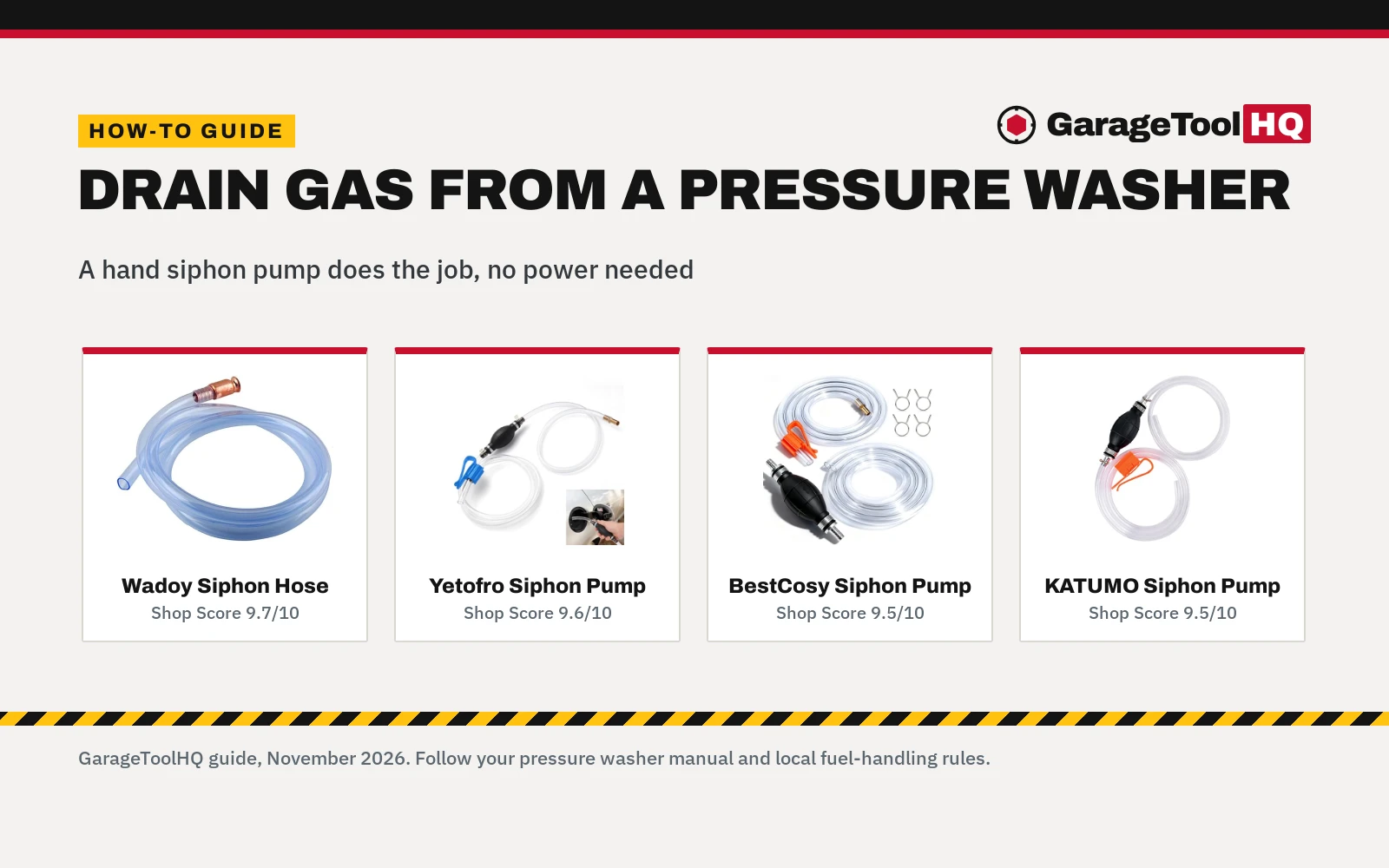
Top picks at a glance
As an Amazon Associate I earn from qualifying purchases.
- 1
 Gas Siphon Hose Pump, Shaker Siphon Hose9.7/10View on Amazon
- 2
 Yetofro Gas Siphon Hose Pump9.6/10View on Amazon
- 3
 Gasoline Siphon Hose Pump9.5/10View on Amazon
- 4
 KATUMO Siphon Pump, Hand Siphon Hose Fuel Transfer9.5/10View on Amazon
The washer is going into storage and the tank still holds fuel, so the fuel has to come out before the machine is put away. How to drain gas from pressure washer? Use a hand siphon pump: set the container lower than the tank, put one hose in the tank, start the flow with a few squeezes of the bulb, or a shake for the shaker hose, and let gravity carry the rest into the container. No power or mouth suction is needed.
GarageToolHQ earns a commission when you buy through links on our product pages, at no extra cost to you. Read our affiliate disclosure.
| # | Product | Shop Score | Buy |
|---|---|---|---|
| 1 | Gas Siphon Hose Pump, Shaker Siphon Hose | 9.7/10 | Buy on Amazon |
| 2 | Yetofro Gas Siphon Hose Pump | 9.6/10 | Buy on Amazon |
| 3 | Gasoline Siphon Hose Pump | 9.5/10 | Buy on Amazon |
| 4 | KATUMO Siphon Pump, Hand Siphon Hose Fuel Transfer | 9.5/10 | Buy on Amazon |
Gas Siphon Hose Pump, Shaker Siphon Hose
A 6-foot shaker siphon hose, 1/2-inch inner diameter, rated up to 3.5 gallons per minute, with a lead-free copper pump, glass ball and stainless steel spring.
Pros
- Up to 3.5 gallons per minute through a 1/2-inch hose
- Shaker start, no mouth suction and no power needed
- Lead-free copper pump, glass ball and stainless steel spring
- Food-safe materials, rated for gasoline, diesel and water
Cons
- No warranty term is stated
- Needs the source higher than the container
- Single hose, no spare hose in the box
- No hose clips in the box
Yetofro Gas Siphon Hose Pump
A hand siphon pump with 2 PVC hoses at 15 mm outside and 11 mm inside diameter, a one-way stop valve, 4 metal clips and a brass nozzle, with a 1 year manufacturer warranty.
Pros
- 1 year manufacturer warranty
- 4 metal clips plus a brass nozzle to sink the hose
- One-way stop valve prevents backflow
- Around 300 g, light to carry and store
Cons
- Needs the source 10 inch or more higher than the receiver
- Not for drinking water, salt water, edible oil or chemical liquids
- Suits equipment without an anti-theft filter net only
- Reach is limited to the hoses in the box
Gasoline Siphon Hose Pump
A hand fuel transfer pump with 2 reinforced PVC hoses at 15 mm diameter, a one-way stop valve, 4 metal hose clips and a flow arrow on the bulb.
Pros
- 15 mm hoses for faster pumping
- One-way stop valve prevents backflow
- 4 metal clips prevent slippage and leaks
- Lightweight at 290 g, no power needed
Cons
- No warranty term is stated
- Not for potable water or edible oils
- Reach is limited to the two hoses in the box
- No hose retainer in the box
KATUMO Siphon Pump, Hand Siphon Hose Fuel Transfer
A hand siphon pump with 2 flexible PVC hoses, a rubber bulb with a built-in stop valve, 2 metal clips and a hose retainer, weighing 171 g.
Pros
- Lightest here at 171 g
- Adjustable hose retainer holds the hose for hands-free draining
- Built-in stop valve prevents backflow
- 2 metal clips fix the hoses to the bulb
Cons
- Needs the source 11 inch or more higher than the receiver
- Not for edible oil, drink water, salt water or chemical liquids
- Suits medium and small equipment without an anti-theft filter net; not for big truck types
- 10 mm size, narrower than the 15 mm hoses here
How to Drain Gas From Pressure Washer: the Steps
Draining a tank is a short job once the hoses are set.
- Move the washer outdoors. Work outside, away from open flame and sparks, and wear eye protection.
- Set the container lower than the tank. Siphon flow needs the source higher than the receiver. Yetofro states 10 inch or more, and KATUMO states 11 inch or more.
- Connect the hoses to the pump bulb. For the three bulb pumps, push the hoses onto the bulb and fix them with the metal clips, and point the flow direction arrow toward the container. The Wadoy hose (on Amazon) is a single shaker hose with no bulb or clips.
- Put the upper hose in the tank. Feed the hose into the filler neck until it reaches the fuel. KATUMO and Yetofro state their pumps suit equipment without an anti-theft filter net.
- Squeeze the bulb a few times. For the bulb pumps, a few squeezes start the flow, and the built-in stop valve keeps fuel from running back. For the Wadoy hose, shake the hose up and down instead, and its check valve and ball keep fuel from running back.
- Drop the lower hose into the container and let it run. Where one is included, use the hose retainer or a clip to hold the hose standing in the container.
- Lift the hose out when the tank runs dry. When flow stops, lift the upper hose clear of the tank, then cap the container.
The pumps here are built to avoid mouth suction: the bulb starts the flow with a few squeezes, and the shaker hose starts with a shake.
Read the manual before first use, wear eye protection, keep the work area clear and ventilated, and stay within every stated rating. Read our Safety Disclaimer.
Siphon Pumps for Draining Gas From Pressure Washer
Each step above needs a hose that reaches into the tank and a pump that starts the flow; the four pumps below cover that job.
FAQ: garage tools
Can a siphon pump drain gas from a pressure washer?
Yes. Put the upper hose in the tank, set the container lower than the tank, start the flow with a few squeezes of the bulb, or a shake for the shaker hose, and let gravity move the fuel into the container.
How much higher must the tank be than the container?
The source must sit higher than the receiver: Yetofro states 10 inch or more, and KATUMO states 11 inch or more.
Can one siphon pump move gas, diesel, oil and water?
Three of the four state gasoline, diesel, oil and water. Wadoy states gasoline, diesel and water, with no oil stated. Wadoy states food-safe materials, while BestCosy, KATUMO and Yetofro state not for potable water or edible oils.
Will a siphon hose fit a tank with an anti-theft filter?
Not always: KATUMO and Yetofro state their pumps suit equipment without an anti-theft filter net, so check the filler neck first.
How fast does a siphon pump drain gas?
The only flow rate stated here is Wadoy’s, up to 3.5 gallons per minute through its 1/2-inch hose. The other pumps state no flow rate.
Related: gas pressure washer with a soap tank, a spill kit for fuel, the chemical injector for pressure washers and the car detailing hub.