What Is the Best Gas Powered Pressure Washer? A Guide for Home Mechanics
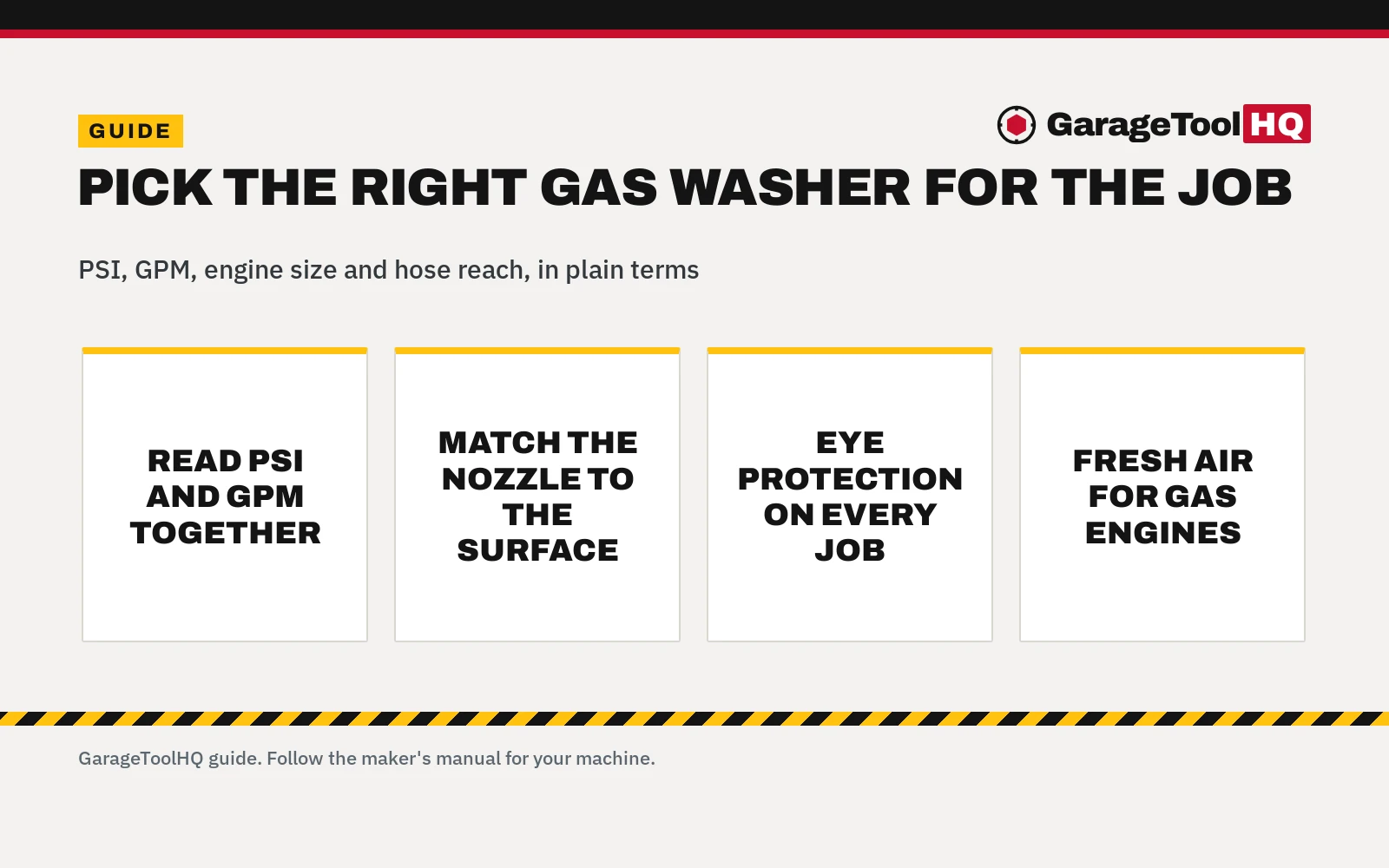
A gas powered pressure washer earns its place when its pressure, flow, engine and hose all match the jobs you actually do, so this guide shows how to read each spec before you buy.

On this page
A driveway that has spent a winter under wet leaves, siding with a green film along the north wall, patio slabs gray with ground-in dirt. The garden hose and a scrub brush will not shift any of it before dark, and that is the job a gas powered pressure washer is built for. So what is the best gas powered pressure washer for a home garage? The short answer is the machine whose pressure and flow match the jobs you actually do, with an engine that starts without a fight, nozzles that cover concrete and paintwork, and a hose long enough to reach around the car.
A gas machine earns its place when pressure and flow work together, and when the engine, nozzles and hose all suit the same jobs. This guide walks through each spec in plain terms, using figures from a current gas machine so you can see what the numbers mean in practice.
As an Amazon Associate I earn from qualifying purchases. GarageToolHQ earns a commission when you buy through links on this page, at no extra cost to you.
What Is the Best Gas Powered Pressure Washer?
The best gas powered pressure washer for a home garage is the one that matches the work: enough pressure to lift ground-in dirt, enough flow to rinse it away, an engine sized for steady running, and nozzles and hose that fit the surfaces you wash most. There is no single machine that suits every driveway, patio, fence and car, so the right pick starts with the jobs on your list, not with the biggest number on the box.
As a worked example, IvyBess lists a gas machine rated at 3500 PSI and 2.4 GPM, with a 79CC engine, 5 nozzles, a 25-foot hose and a 1.0-gallon soap tank. That pairing of pressure and flow, with a small gas engine and a full set of nozzles, is the shape of a home machine built for driveways, siding and patio work. The maker also calls for a minimum water input of 5 GPM, which is a reminder that the garden tap has to keep up with the machine.
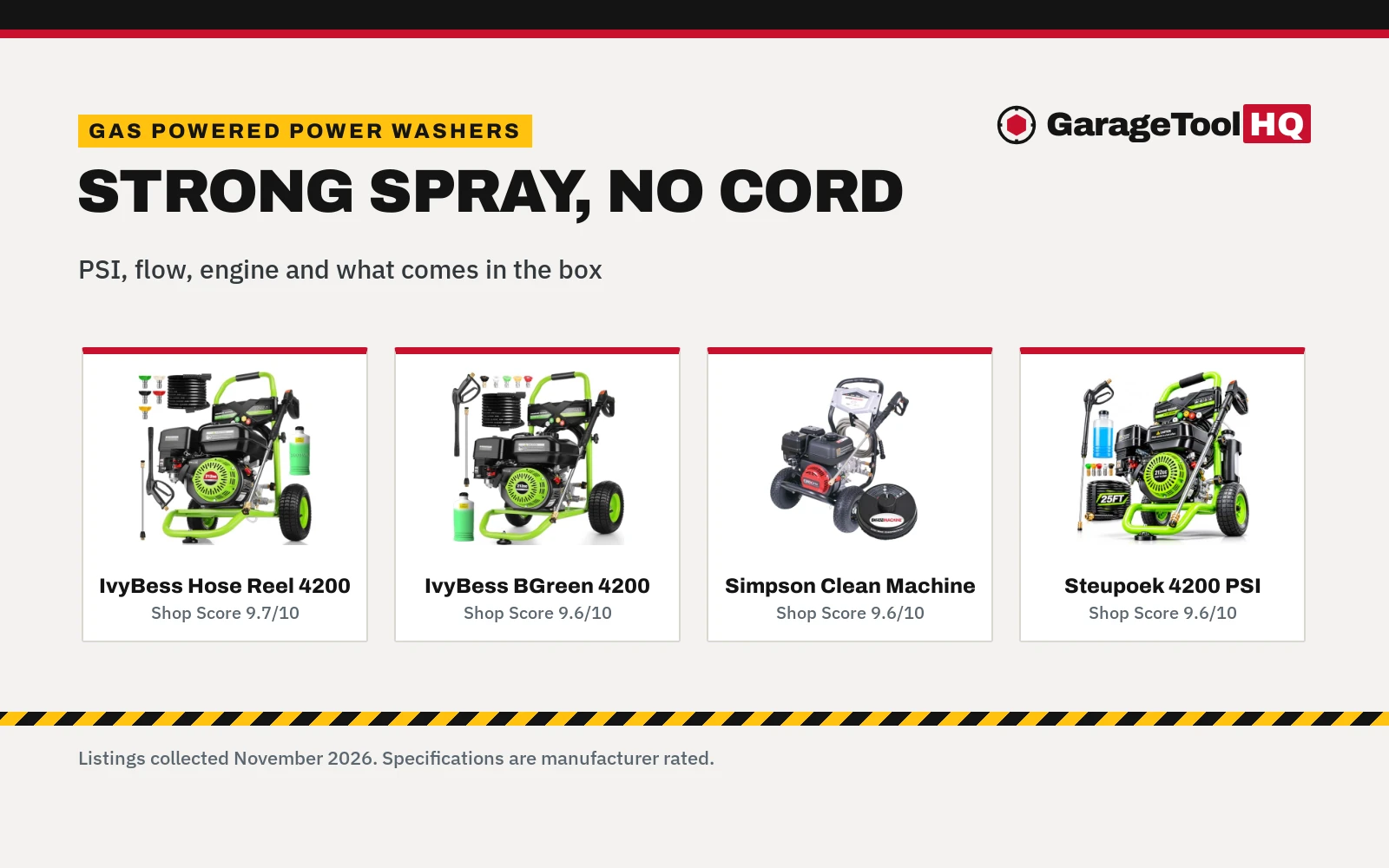
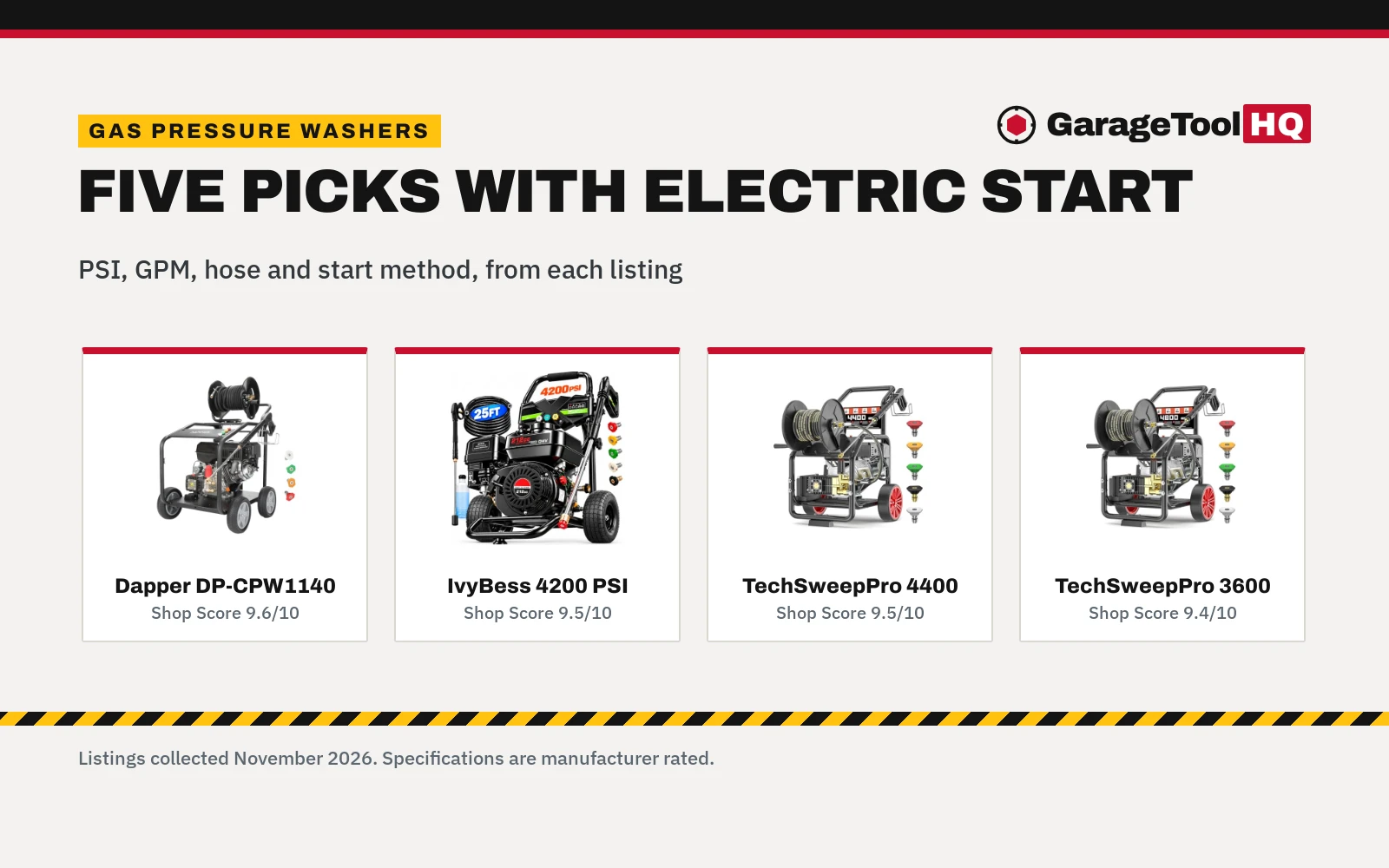
If you want a shortlist to compare after this guide, see the gas pressure washer roundup.
PSI and GPM: Read Them Together
PSI is the pressure at the nozzle, the force that lifts dirt off concrete and siding. GPM is the flow, the volume of water that carries the loosened dirt away. A machine with strong pressure and thin flow can cut a line through grime and still leave it sitting on the surface, while a machine with generous flow and low pressure rinses well and cleans slowly. Judge both figures as a pair.
The IvyBess example rated at 3500 PSI and 2.4 GPM shows the pairing in practice: pressure high enough for concrete and siding, with flow that keeps the rinse moving. The trade sometimes multiplies pressure by flow to give one cleaning-units figure, but the separate figures tell you more.
For cars and paintwork, the same pairing needs care rather than force: a wide nozzle and a steady pass matter more than peak pressure, and a machine built for concrete can mark paint if you hold a narrow nozzle close. Choose the nozzle for the surface first, and let the pressure follow.
Engine Size and Fuel
The engine is what sets a gas washer apart from an electric one: no cord, no outlet hunt, and full power anywhere on the property. The IvyBess example runs a 79CC engine, a small single-cylinder size that suits home jobs rather than all-day commercial work. A 1.0-gallon gas tank feeds it, so a long driveway session may need a fuel stop partway through, and the maker notes to keep the fuel level below the filler neck to avoid spillage.
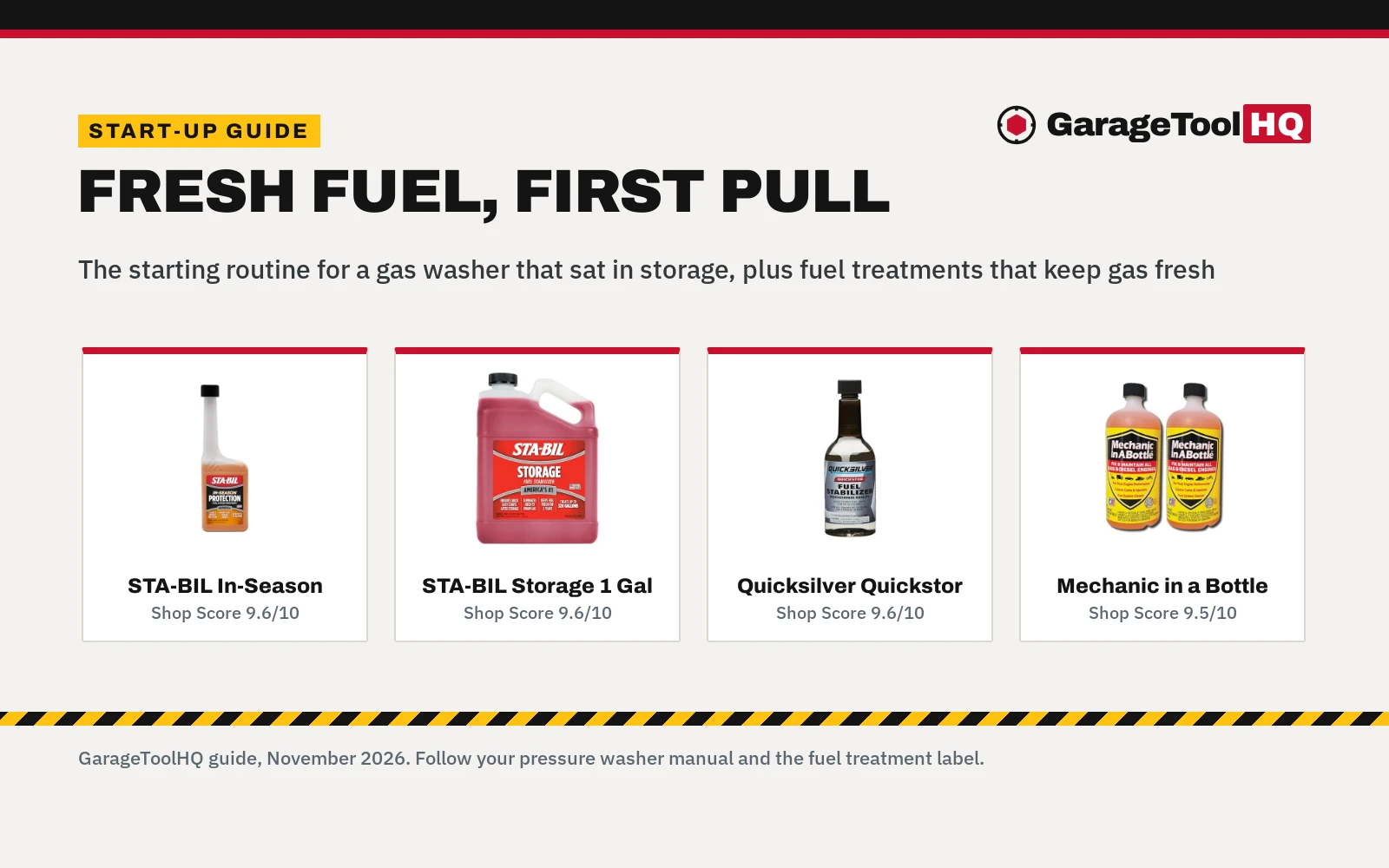
Gas engines need the same basic care as any small engine in the garage: fresh fuel, clean oil, and a manual that you actually read before the first start. The guide to changing oil on a pressure washer walks through the oil change step by step. Store fuel in a rated container, away from the water heater and the furnace, and never run a fuel engine in a closed garage.
Nozzles, Hose and Soap Tank
Nozzles decide what the pressure does. The IvyBess example ships with 5 nozzles, which covers the usual spread from a wide fan for siding and cars to a narrow jet for concrete joints and stubborn stains. A machine with a single nozzle forces every job through the same spray pattern, so a full set is worth more than it looks on the box.
Hose length decides how far you can work from the machine. A 25-foot hose reaches around a car and across a patio without dragging the washer behind you, and the steel-braided hose on the example resists kinks and abrasion on concrete. Check the hose fittings too: a standard quick-connect end lets you add a surface cleaner or a foam cannon later.
A soap tank turns the washer into a wash-and-rinse tool instead of a rinse-only tool. The example carries a 1.0-gallon soap tank, so detergent feeds through the wand on the fly. If you wash cars or siding often, a soap tank is worth having; see the gas pressure washer with soap tank roundup for machines built around one.
Frame, Wheels and Moving It Around
A gas washer is heavier than an electric one, so the frame and wheels matter on every job. The IvyBess example uses a welded steel frame with a powder-coated finish, and the maker describes the wheels as both never-flat and pneumatic, so check the wheel type before ordering. The wheels are built to roll over a driveway, a lawn edge and a gravel path without a struggle. The maker describes the machine as portable for one person, which matters when you have to lift it over a curb or into a truck bed.
Before you buy, check where the machine will live between jobs. Measure the space in the garage or shed, and keep the wand and nozzles with the machine so nothing goes missing. A washer that lives in the open, under a tarp, will not last as long as one that lives under cover.
Pressure Washer Safety in the Garage
A gas pressure washer is a serious tool, and a few habits keep every job safe. Wear eye protection on every job: a pressure jet can throw grit, paint flakes and water back at your face from a surprising distance. Never point the wand at people or pets, and keep the spray off skin at all times, even when the machine is at idle.
Never run a fuel engine in a closed garage. Gas engines make carbon monoxide, and a closed garage fills with it faster than you would think. Work outside, or with the door fully open and the machine outside the door line. Let the engine cool before you refuel, keep fuel away from open flame, and read the manual for the machine you own before the first start.
FAQ: garage tools
What PSI do I need for a driveway?
A driveway wants pressure high enough to lift ground-in dirt from concrete, and flow to rinse it away. A machine rated at 3500 PSI and 2.4 GPM, like the IvyBess example in this guide, suits driveways, patios and siding. Start with a wide nozzle and work in passes rather than holding a narrow jet in one spot.
Is a gas pressure washer better than an electric one?
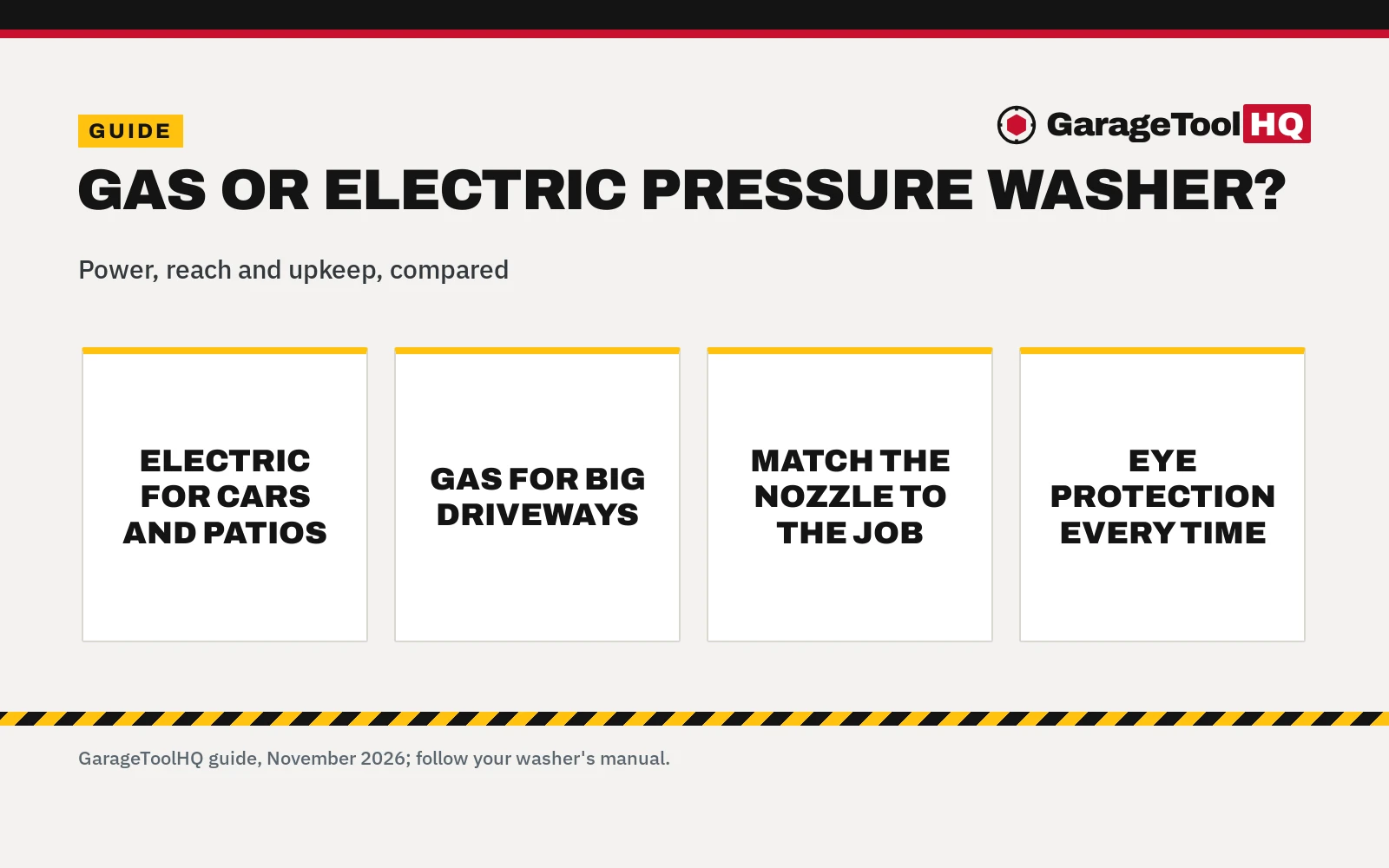
Gas suits jobs away from outlets and heavy cleaning on concrete and siding, where pressure and flow matter most. Electric suits lighter work near the house, car washing and small patios, with less noise and no fuel to store. Compare both sides in the electric pressure washer roundup before you decide.
How much water does a gas pressure washer use?
Water use follows the flow rating. The IvyBess example is rated at 2.4 GPM, and the maker calls for a minimum water input of 5 GPM from the tap, so the supply has to exceed the machine’s draw. If the tap cannot keep up, the pump can starve and the pressure will surge and drop.
Can I wash a car with a gas pressure washer?
Yes, with the right nozzle and a careful pass. Use a wide fan nozzle, keep the wand moving, and hold it back from paint, trim and glass. A soap tank helps here, since detergent does the cleaning and the jet only rinses. For dedicated car gear, see the car wash pressure washer gun roundup.
How do I change the oil on a gas pressure washer?
Change the oil on the schedule in your manual, with the engine warm and the machine on level ground. The step-by-step oil change guide covers the drain, the fill and the level check. Used oil goes to a recycling point, never down a drain.
Related: best gas pressure washer and best gas powered power washer.