Is Gas or Electric Pressure Washer Better? A Garage Guide
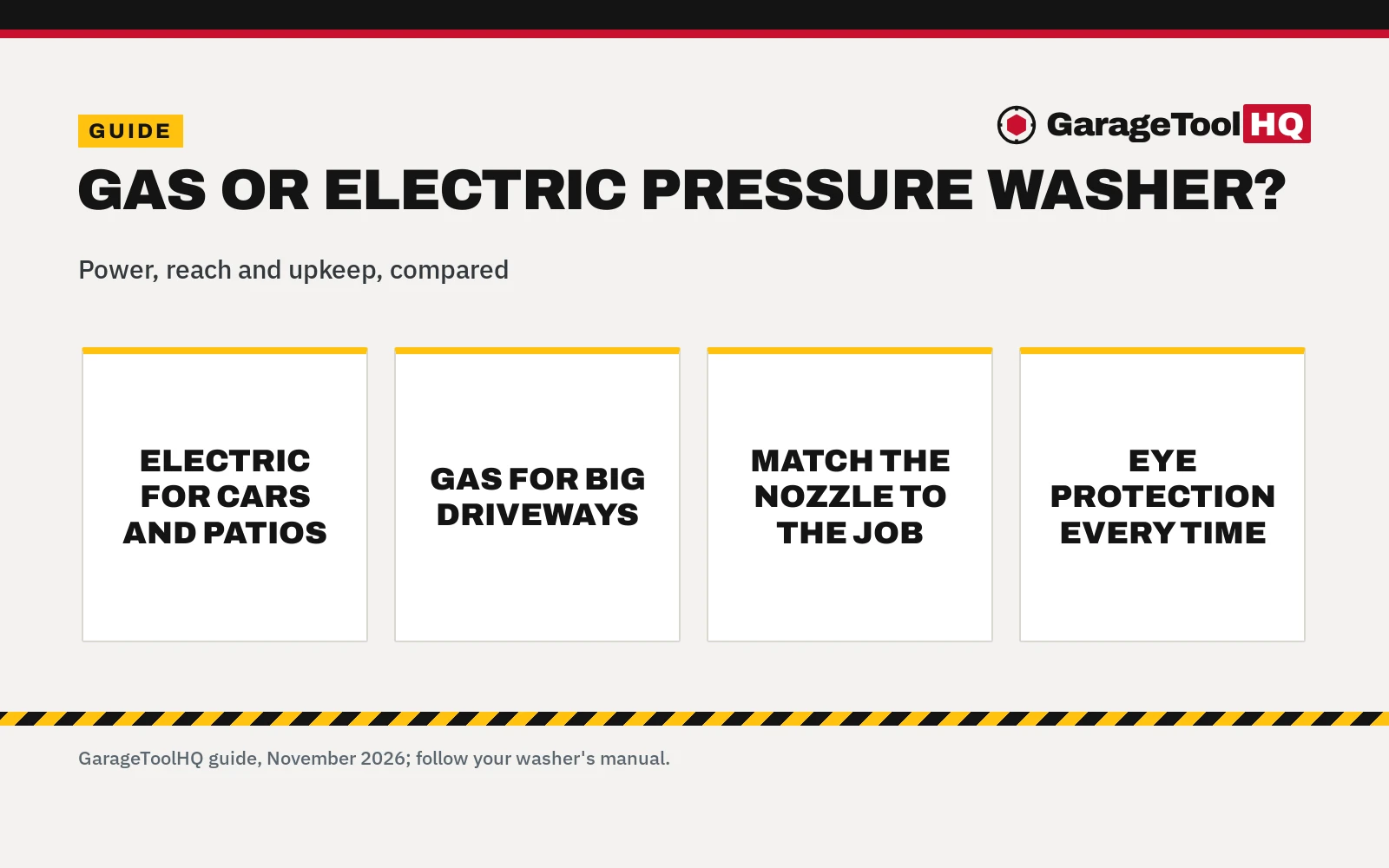
Electric wins for most garage and car washing jobs, while gas wins for large driveways and remote cleaning, so match the washer to the job.

On this page
Picture a Saturday wash: the car sits in the driveway with road grime on the paint, the patio slabs are green, and the driveway has oil spots a garden hose will not shift. That is when most people ask: is gas or electric pressure washer better? For most home garage jobs, electric is better: it is quieter, lighter, needs no fuel, and plugs into a wall outlet. Gas is better when the job is big, far from an outlet, or needs more power than a plug-in machine gives. The right pick depends on the job, not on the badge on the box.
As an Amazon Associate I earn from qualifying purchases. GarageToolHQ earns a commission when you buy through links on our product pages, at no extra cost to you. Read our affiliate disclosure.
Below: how the two types compare, when each one wins, how to pick for your jobs, and the safety rules for both types.
Is gas or electric pressure washer better? The short answer
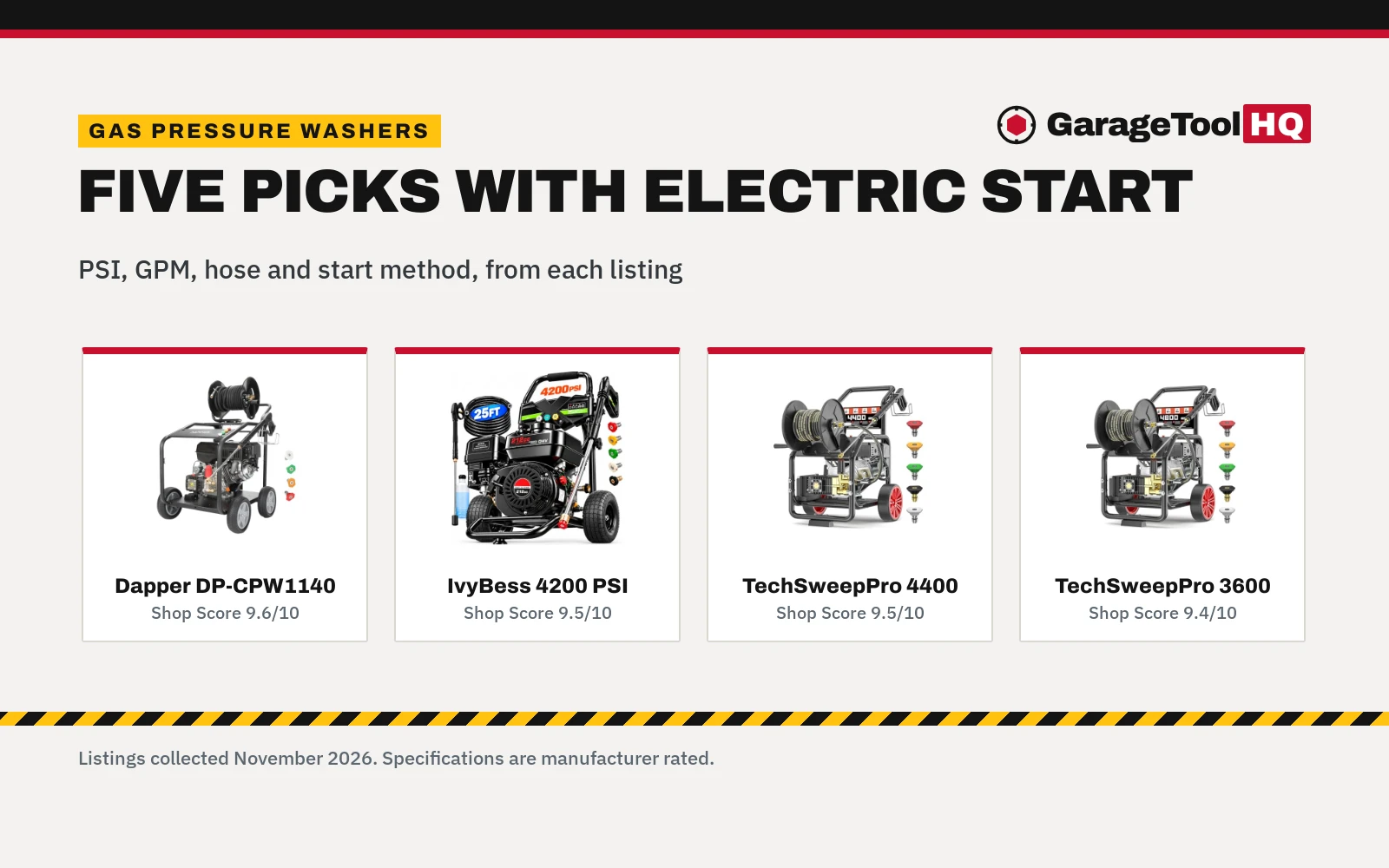
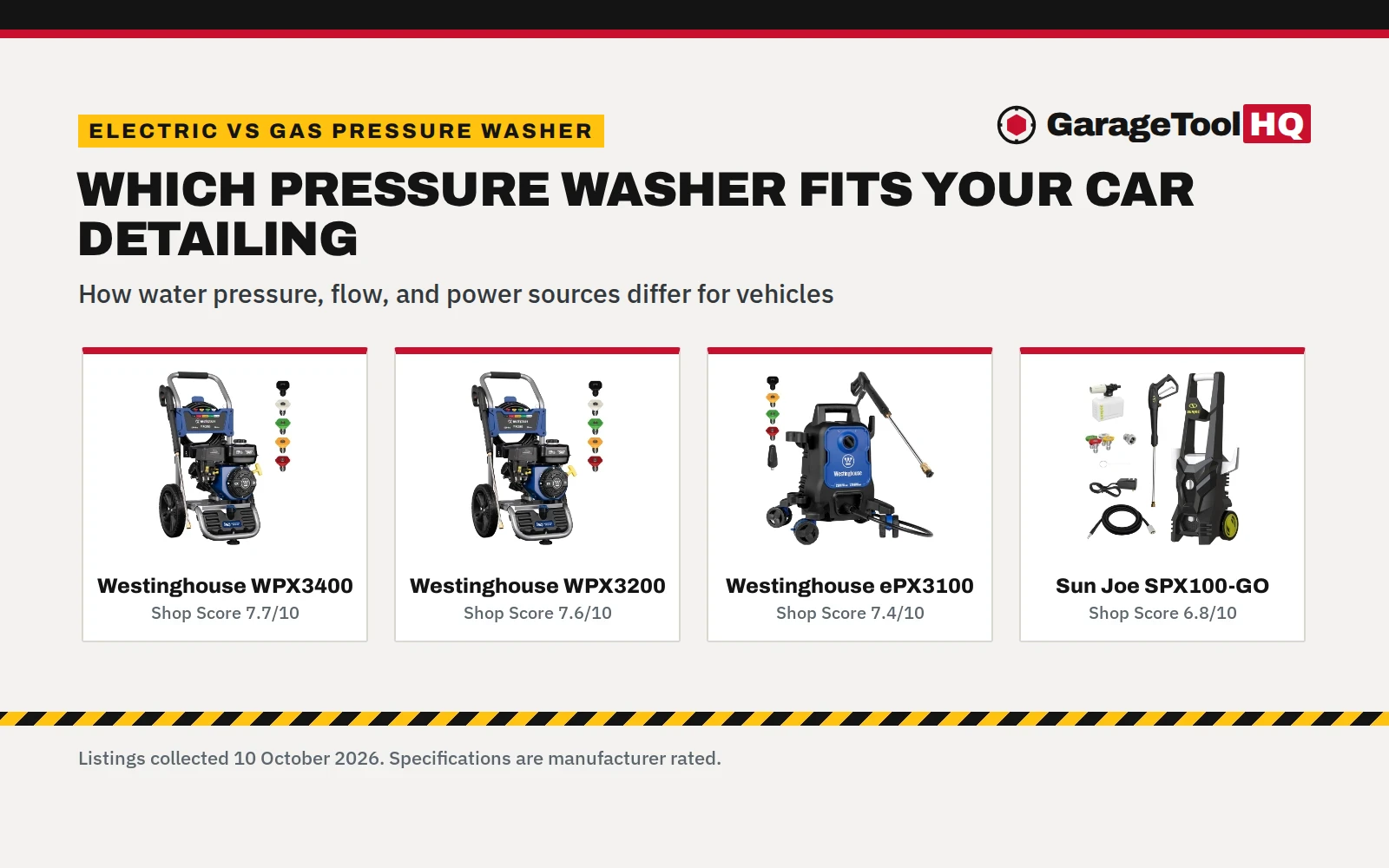
Electric wins for the jobs most home garages see every week: washing cars, cleaning patios and siding, and rinsing driveways. It starts with a switch, makes less noise, and needs no fuel or oil. Gas wins when the surface is large, the dirt is ground in, or the nearest outlet is too far to reach. If you wash cars and clean around the house, start with the picks for the best electric pressure washers. If you clean long driveways, fences and decks, look at the best gas pressure washers instead.
| Type | Power source | Cleaning power | Upkeep | Best for |
|---|---|---|---|---|
| Electric pressure washer | Wall outlet | Suits cars, patios and siding; one electric example is rated at 5000 PSI | No fuel or oil changes; store the cord and hose dry | Car washing, patios, siding, small driveways |
| Gas pressure washer | Fuel engine | More power for large areas and ground-in dirt | Fuel, oil changes and engine care; louder and heavier | Large driveways, fences, decks, remote spots |
What PSI and GPM mean, and why both matter
Pressure washers are rated by PSI and GPM, and both shape how fast a surface gets clean. PSI is the pressure at the nozzle: higher pressure cuts through stuck-on dirt. GPM is the flow of water: higher flow rinses dirt away and covers ground faster. Makers quote cleaning units as PSI times GPM, so judge a washer by both figures, not by pressure alone.
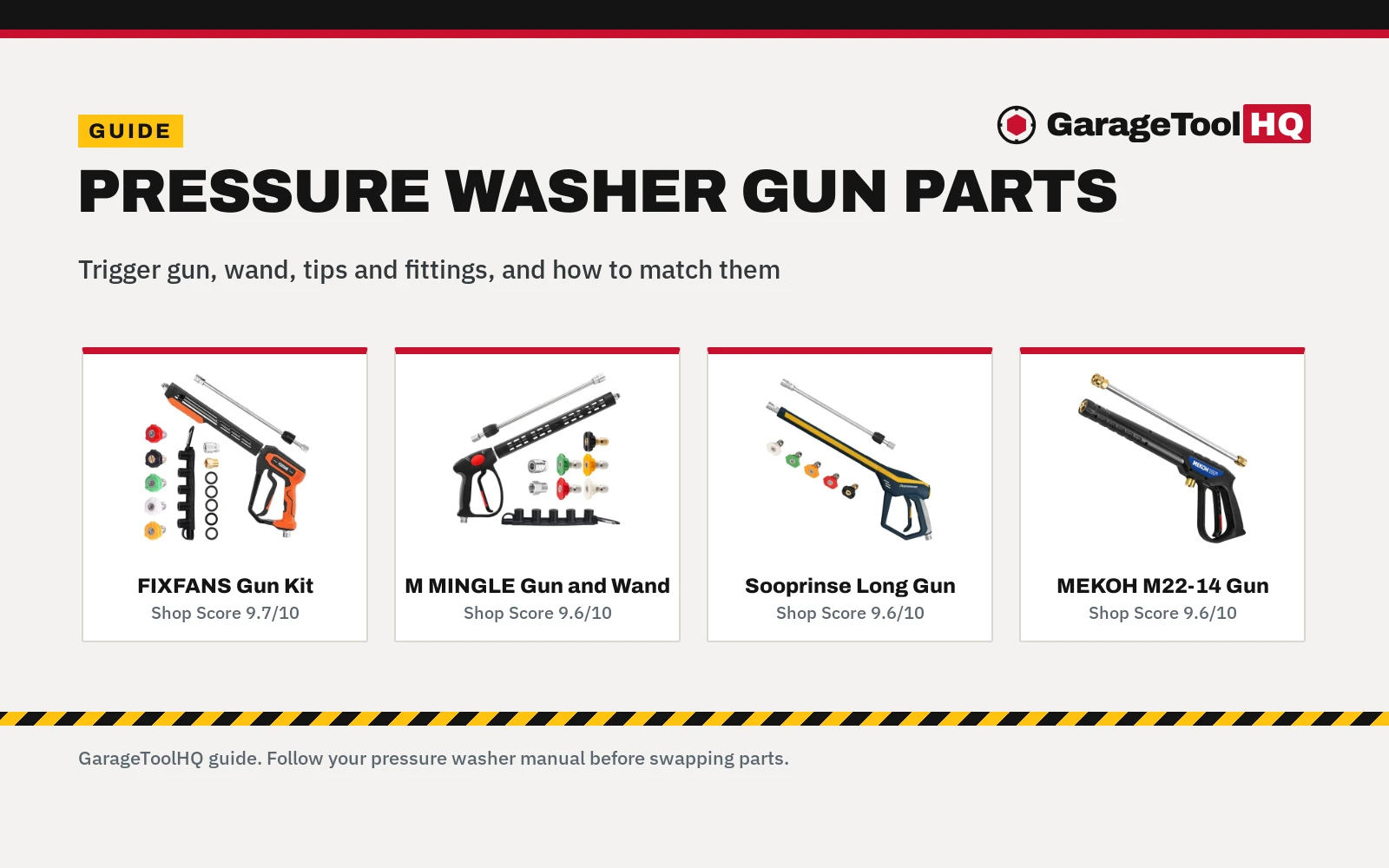
The nozzle matters as much as the machine. One electric example comes with 5 nozzle modes: a 0 degree jet for stuck spots, a 15 degree fan, a 25 degree fan, a 40 degree fan for paint and siding, and a foam nozzle for soap. The narrow jet concentrates the stream, while the wide fan spreads it, so one washer can clean a patio slab and then wash a car. Pick the widest fan that lifts the dirt, and keep the nozzle moving.
When an electric pressure washer wins
Electric wins on the jobs around the house. It starts with a switch and needs no fuel or oil, so a quick car wash never turns into a fuel and oil chore. It is the natural pick for cars, motorcycles, RVs, patios, siding and fences near the house.
Reach is the limit to check. One electric example lists a 20 ft hose and a 35 ft cord, with a total working range of up to 55 ft, so it covers a car and the patio from one outlet. The same example carries a 500 ml soap bottle, a 2-stage pull rod and a foam nozzle, and the maker lists it at 18.84 pounds and 12.79 by 11.02 by 20.47 inches. It rolls to the driveway on its wheels and stores upright in a corner. For car washing, the guide to the best car wash soap for pressure washers covers what to put in the bottle.
When a gas pressure washer wins
Gas wins when the job outgrows a cord. A fuel engine is not tied to an outlet, so it suits long driveways, fences at the far end of the yard, decks and any spot where a cord cannot reach. It also suits heavy build-up: ground-in dirt on concrete, moss on slabs and mud on equipment.
The trade is upkeep and noise. A gas washer needs fuel, oil changes and engine care, and it is louder than a plug-in machine, so ear protection and a clear work area matter. The guide to how to change oil on a pressure washer covers that upkeep. For mostly cars and patios, the extra power of gas buys little and the fuel and upkeep cost extra time. For mostly concrete and fences, gas earns its keep. When the choice is gas or battery power, see gas vs battery pressure washers.
How to pick one for your jobs
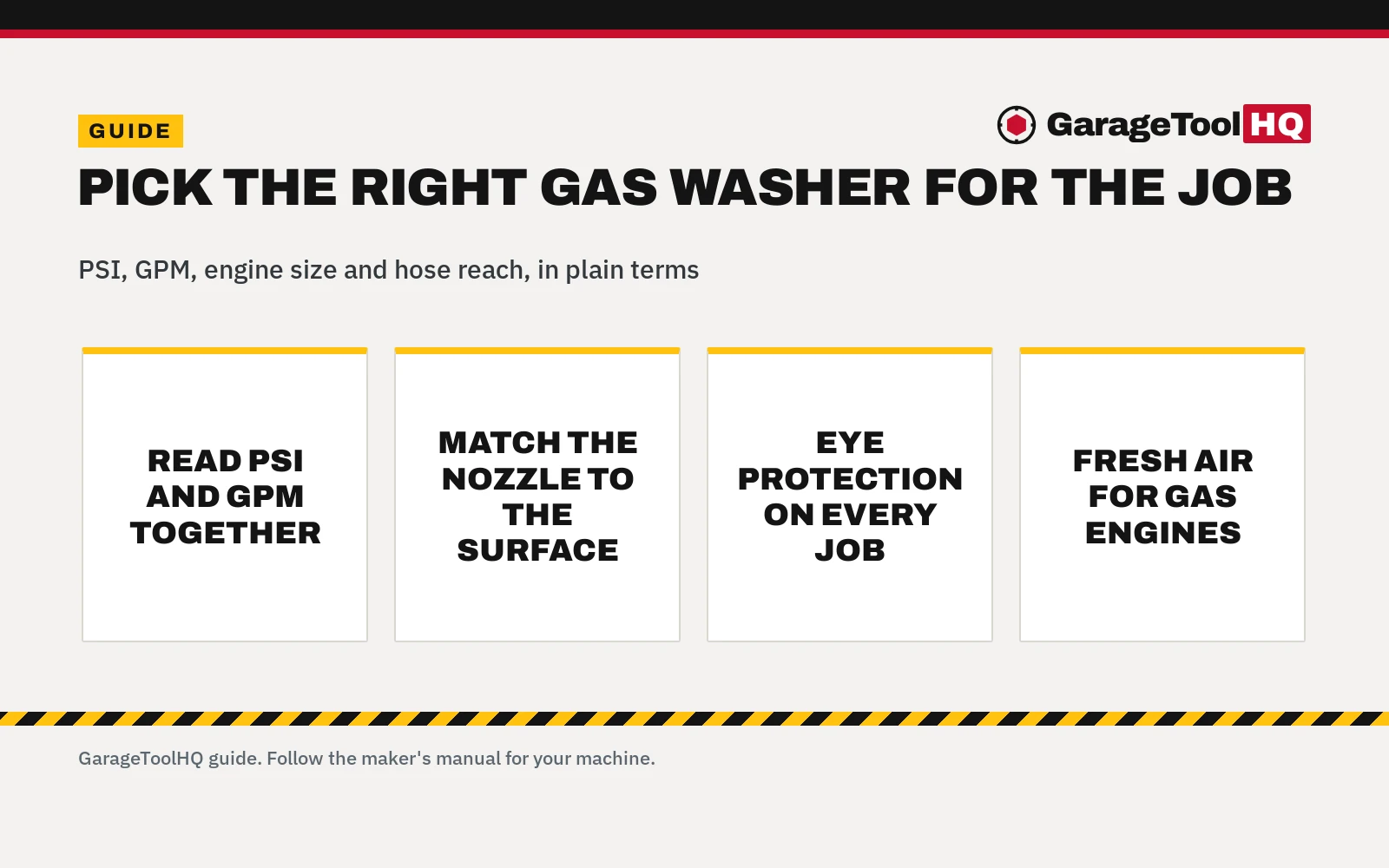
- List the jobs first. Cars, patios and siding point to electric; long driveways, fences and decks point to gas. The jobs decide the type.
- Check the power source. Electric needs an outlet within cord reach; gas needs fuel on hand and a place to store it safely.
- Check the reach. A short hose means moving the machine mid-wash and dragging the cord across wet ground.
- Match the nozzle to the surface. A wide fan suits paint and siding, while a narrow jet suits concrete and stuck dirt. Hold it back from soft surfaces.
- Check the storage. A washer that lives on a shelf gets used; one buried behind boxes does not. Wheels and a pull rod help it move between garage and driveway.
Before you buy, compare the pump as well as the pressure: an axial vs triplex pump pressure washer comparison explains the pump choice, and a belt drive vs direct drive pressure washer comparison covers the drive. Check the manual before the first job.
Pressure washer safety: the rules for both types
The spray rules are the same for both types, and they start before the trigger is pulled. Wear eye protection every time the washer runs: a jet can throw grit and small stones back at the operator. Never point the spray at people or pets, and never use it to clean skin, hands or feet. Keep the jet away from windows, soft wood and electrical fittings, and check the manual before the first job.
A gas pressure washer makes exhaust fumes, so never run one inside a closed garage, and never use it as a heater. Work outdoors with the washer outside, and keep fuel cans away from flames and sparks.
Keep electric pressure washers on a GFCI outlet, never point the wand at people or pets, wear eye protection with polishers and chemicals, and read the label before mixing any cleaning products. Read our Safety Disclaimer.
FAQ: garage tools
Can an electric pressure washer clean a driveway?
Yes, for a small driveway and light dirt. An electric example rated at 5000 PSI with a narrow jet handles oil spots and ground-in dirt on a small patch of concrete. For a long driveway with heavy build-up, gas covers ground faster, so match the washer to the job.
What PSI do I need to wash a car?
Pressure alone does not wash a car well; the nozzle and soap do most of the work. A wide fan, such as the 25 degree or 40 degree setting, spreads the stream across paint, and a foam nozzle lays soap on thick so dirt lifts before you rinse. Start wide and move closer only if the dirt stays put.
Can I use a gas pressure washer in a closed garage?
No. Never run a gas pressure washer, or any fuel engine, in a closed garage. Exhaust fumes build up fast in an enclosed space, so work outdoors with the washer outside.
Do electric pressure washers need oil changes?
No. An electric washer has no fuel engine, so there is no oil to change and no fuel to store. A gas washer does need oil changes, so follow the maker schedule in the manual and the guide to how to change oil on a pressure washer.
How far can I work from the outlet?
As far as the hose and cord reach. One electric example lists a 20 ft hose and a 35 ft cord, with a total working range of up to 55 ft, so it reaches a car and the patio around it from a single outlet. If the job sits further out, a gas washer or a closer outlet is the answer.
Is gas or electric pressure washer better for washing a car?
Electric, for most car washing. It is lighter, quieter and simpler to start, and a foam nozzle with a 500 ml soap bottle covers the car in soap before the rinse. One electric example at 18.84 pounds rolls on wheels with a 2-stage pull rod, so it moves around the car easily. Gas suits car washing mainly when the car sits far from any outlet.
Related: best electric pressure washers, best gas pressure washers, car wash soap for pressure washers and gas vs battery pressure washers.