How Long for Car Touch Up Paint to Dry
Car touch-up paint needs a full drying window between coats, and the wait depends on coat thickness, airflow and temperature rather than the clock alone.

On this page
Top picks at a glance
As an Amazon Associate I earn from qualifying purchases.
- 1
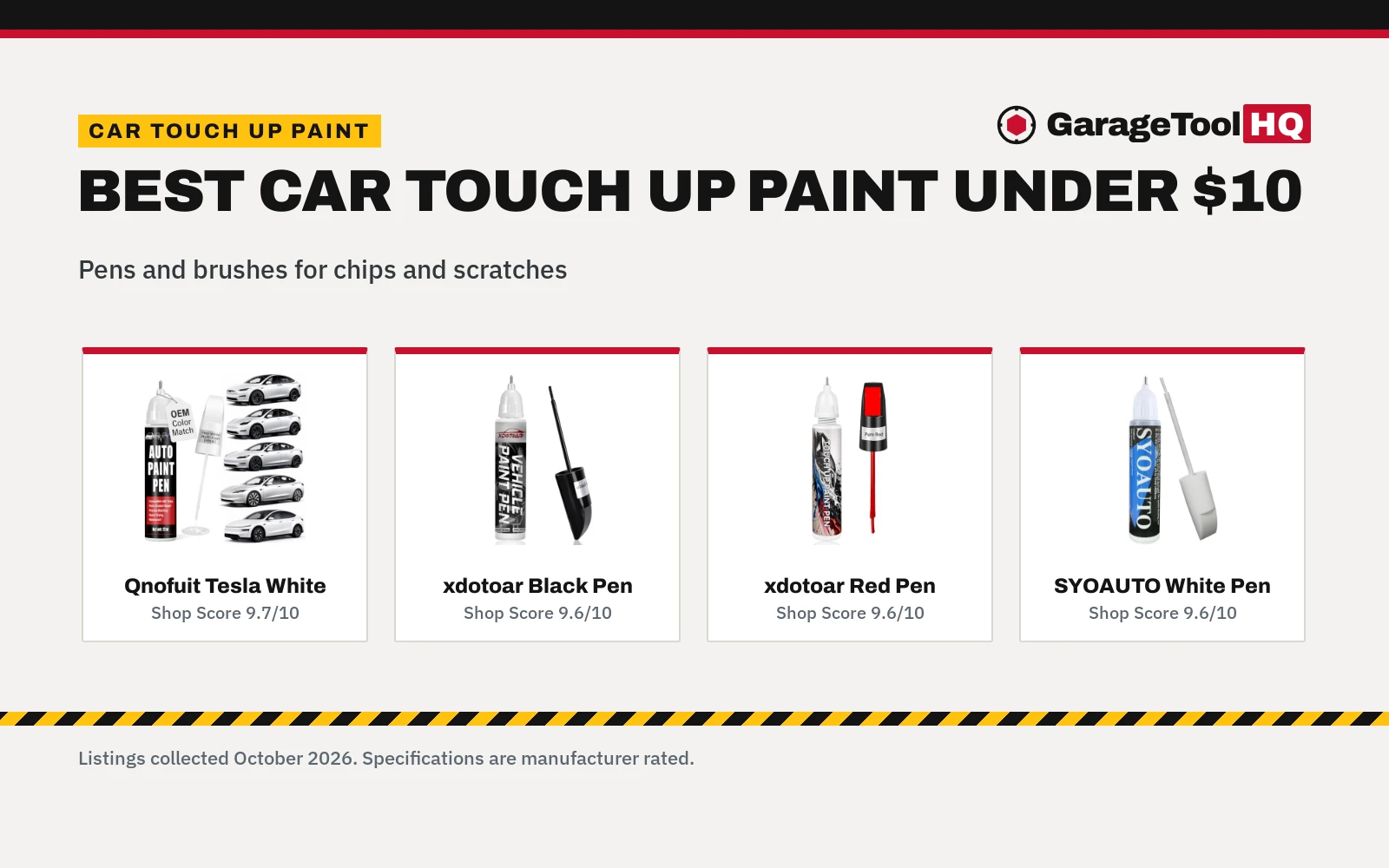
 White Car Paint Touch Up Pen9.6/10View on Amazon
- 2
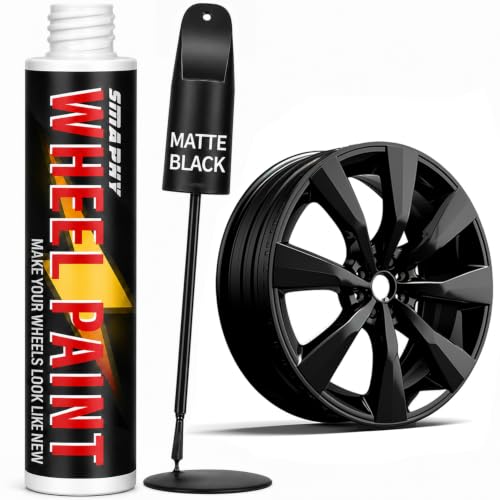 Matte Black Rim Touch Up Paint9.5/10View on Amazon
- 3
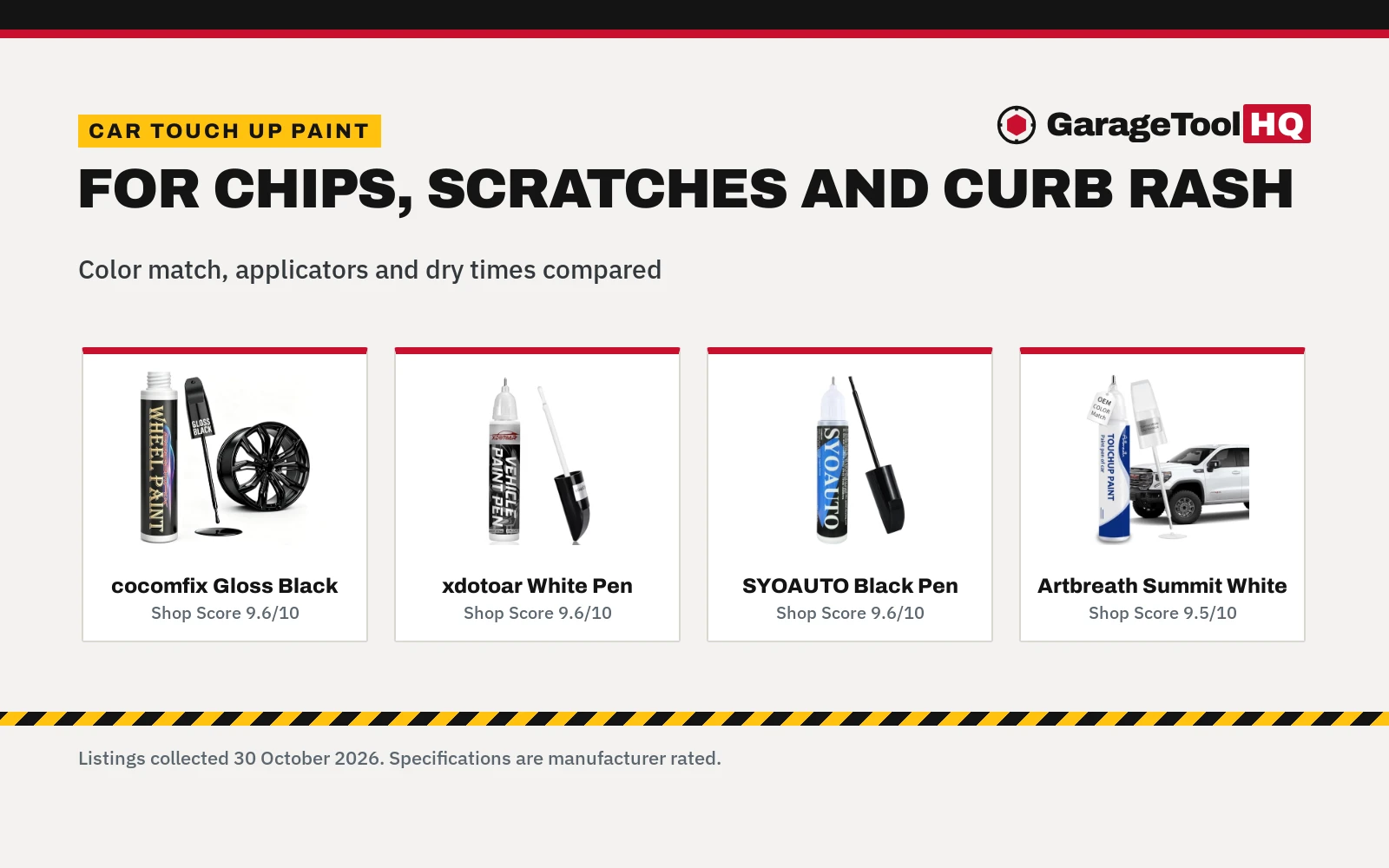
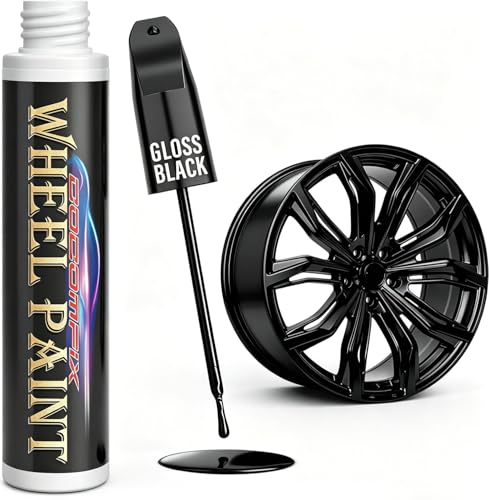 cocomfix Gloss Black Rim Touch Up Paint9.6/10View on Amazon
A stone chip on the hood catches the eye every time the car is washed, a bright fleck of bare metal sitting in the middle of clean paint. Dabbing touch-up paint over it takes only a few minutes, and then the waiting starts. How long for car touch up paint to dry? Until the coat is dry right through, not just dry on the surface, and that takes longer than the shine suggests. A coat that looks dry can still be soft underneath, so the next coat, a wash, or a coat of wax all have to wait until the paint has had its full drying window.
GarageToolHQ earns a commission when you buy through links on our product pages, at no extra cost to you. Read our affiliate disclosure.
Below: what the drying stages mean, the one stated drying figure, a step-by-step routine for the job, and answers to the questions drivers ask most.
How Long for Car Touch Up Paint to Dry: the Short Answer
Car touch-up paint dries in stages, and the stage matters more than any single figure. The surface can look dry while the paint underneath is still soft, so touching it, adding another coat, or washing the panel can mark the finish. One touch-up paint maker states a 2-hour drying time between coats, with at least two coats for a repair. That figure covers the wait between coats for that paint, not every paint on the shelf, so the label on the bottle or pen in hand is the authority for the job at hand.
Think of drying as three separate stages: wet paint, paint dry enough for the next coat, and paint fully dry and hard. Each one has its own job, and rushing any of them shows in the finish.
The Three Stages of Drying
| Stage | What it means | What to do next |
|---|---|---|
| Wet | Fresh paint, still moving and easy to mark | Leave it alone and keep dust and fingers away |
| Dry between coats | Previous coat fully dry and ready for the next thin coat | Apply the next coat; one maker states a 2-hour drying time between coats |
| Fully dry and hard | Paint dry right through and ready for normal use | Wash and wax only once the paint is fully dry |
The middle stage is where most touch-ups go wrong. The next coat laid over a soft first coat can wrinkle or lift the paint below it, and the repair ends up looking worse than the chip it was meant to hide. Patience between coats is the whole job.
What Affects How Long Touch Up Paint Takes to Dry
No two touch-ups dry alike, because the job itself sets the pace. These things matter most:
- Coat thickness. A thin coat dries more evenly than a thick one. Thick paint skins over on top while the paint below stays soft, so thin coats are the way to a flat repair.
- Airflow. Still, dry air lets solvents leave the paint at a steady pace. A closed, damp garage holds moisture in the air and slows the wait.
- Temperature. Cold weather may cause gelling or drying problems, the maker notes, so a mild day or a dry garage suits the job better than a cold driveway.
- Dust and dirt. Dust landing on wet paint stays in the finish. Keep the garage door closed and the panel covered from wind-blown grit while each coat dries.
How to Give Touch Up Paint Time to Dry
- Wash the chip first. Clean the chipped spot and the paint around it, then let the panel dry before any paint goes on. Dirt and wax trapped under fresh paint weaken the repair.
- Apply one thin coat. Use the built-in brush to lay a thin coat over the chip. A thin coat dries more evenly than a thick one, and a thick coat can stay soft underneath while the surface looks dry.
- Let the coat dry fully. One maker states at least two coats with a 2-hour drying time between each, so plan the job around that wait rather than rushing the next coat on.
- Keep dust and rain off the repair. Park under cover while the paint dries, and keep the garage door closed against wind-blown dust. A speck of dust in soft paint stays there.
- Mind the weather. Cold weather may cause gelling or drying problems, the maker notes, so a dry garage with still air suits the job better than a cold driveway.
- Leave washing and waxing until the paint is fully dry and hard. Water and wax on soft paint can lift or cloud the repair, so give the panel its full drying window before the next wash.
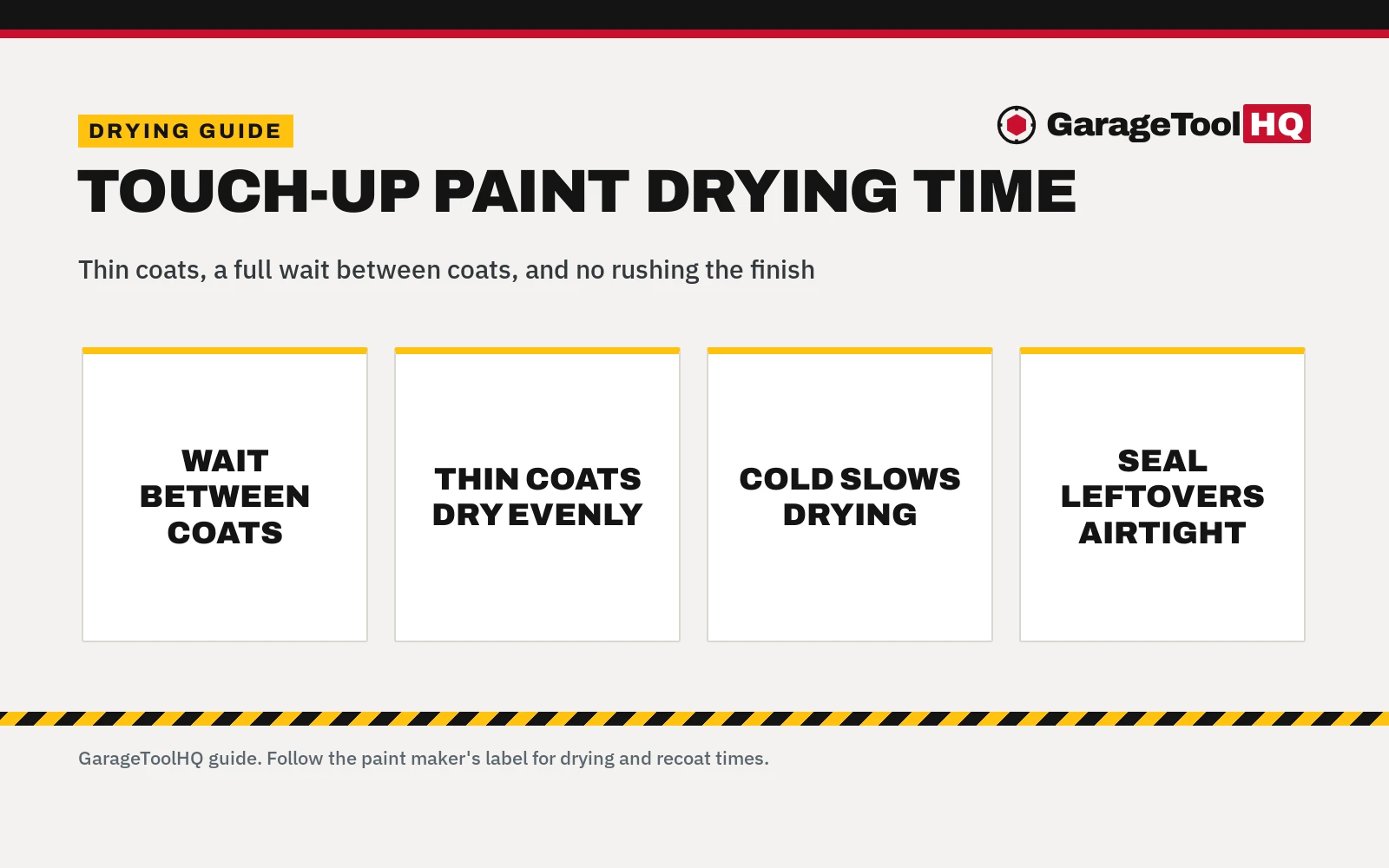
Cold weather may cause gelling or drying problems with touch-up paint, so pick a mild day or a dry garage for the job and let each coat dry fully before the next one goes on.
Keep electric pressure washers on a GFCI outlet, never point the wand at people or pets, wear eye protection with polishers and chemicals, and read the label before mixing any cleaning products. Read our Safety Disclaimer.
Touch Up Paint or a Full Respray
Touch-up paint suits small chips and light scratches, the kind that show bare metal or primer in one small spot. When the damage covers a wide area, when paint is peeling, or when the panel has a dent under the chip, a touch-up will not blend, and a body shop respray is the honest answer. For scuffs on a bumper, the guide to bumper paint repair kits covers the options for chips and scuffs. If a rough edge needs smoothing first, the guide to sandpaper for car paint repair covers grits for the job.
How to Store Leftover Touch Up Paint
Leftover paint keeps for the next chip if it is sealed and labelled. Sealed pens keep paint fresh for up to 7 years, according to one maker, and a 3-pack of 13 oz storage containers with lids keeps paint fresh for up to 10 years when stored correctly, according to another maker. Wipe the rim, close the lid tight, label the container with the color and the car, and store it out of extreme cold so the paint is ready for the next stone chip.
FAQ: garage tools
How long should car touch up paint dry before the next coat?
Until the coat is fully dry, not just dry on the surface. One maker states a 2-hour drying time between coats, with at least two coats for a repair, so use that wait as the guide and follow the label on the paint in hand.
Can I drive the car while touch up paint is drying?
Wait until the coat is fully dry before driving. Road dust, rain, and wind can mark soft paint, and a coat that is still wet can pick up grit that stays in the finish.
How long before washing or waxing over a touch up?
Wait until the paint is fully dry and hard. Washing or waxing soft paint can lift or cloud the repair, so leave both until the drying window has fully passed.
Does cold weather change how long touch up paint takes to dry?
Yes. Cold weather may cause gelling or drying problems, so a touch-up done on a cold day can dry unevenly or stay soft longer. A dry garage with still air suits the job better, and the label on the paint gives the maker's own guidance.
How do I keep leftover touch up paint usable?
Seal it and label it. Sealed pens keep paint fresh for up to 7 years, according to one maker, and lidded 13 oz storage containers keep paint fresh for up to 10 years when stored correctly, according to another maker. Keep the container closed tight and out of extreme cold.
Related: car detailing hub, bumper paint repair kit guide, sandpaper for car paint repair and car detailing for beginners.