How to Choose Air Filter for Your Engine
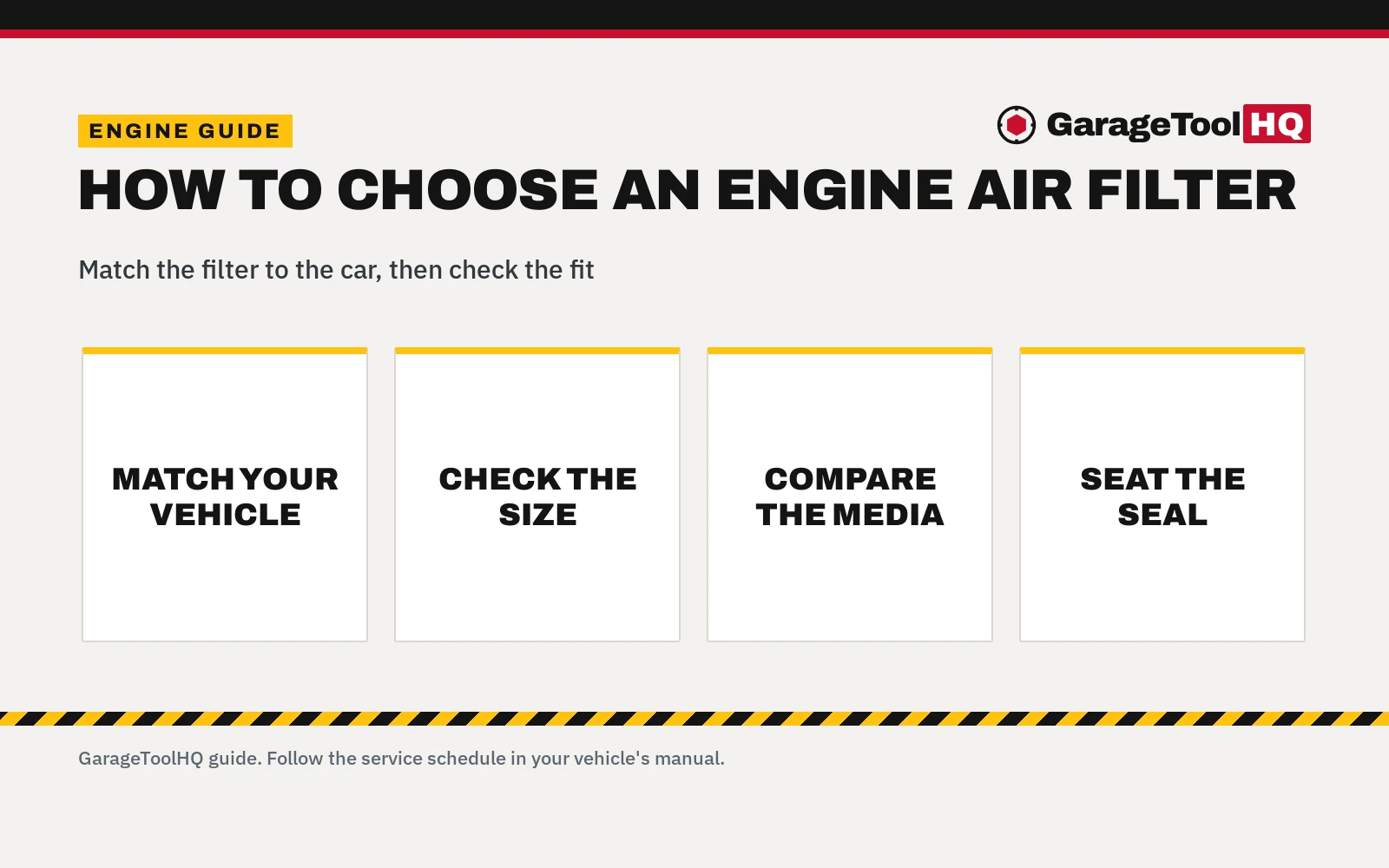
Match the filter to the vehicle, check the size and shape, compare the media, and seat it so the airbox seals all the way around.

On this page
Top picks at a glance
As an Amazon Associate I earn from qualifying purchases.
- 1
 K&N Engine Air Filter:Long Life 189.7/10View on Amazon
- 2
 Genuine Toyota Engine Air Filter9.7/10View on Amazon
- 3
 Puroma 1 Cabin Air Filter Activated Carbon for CP285 CF102859.7/10View on Amazon
How to choose air filter for a car engine comes down to matching the filter to the vehicle, then checking the size, the shape and the media before the airbox closes. A filter that fits the airbox and seals all the way around keeps dirt out of the engine, while a filter that leaves a gap lets grit straight past it. Start with the vehicle and the old filter in hand, and the choice gets simple: the right filter is the filter made for that engine, in the shape the airbox takes, with media suited to how the car is driven.
GarageToolHQ earns a commission when you buy through links on our product pages, at no extra cost to you. Read our affiliate disclosure.
Below: how to tell an engine air filter from a cabin filter, how to match a filter to a vehicle, what the media choices mean, and how to check the fit before driving.
How to choose air filter: start with the right kind
Cars carry several kinds of air filter, and the engine air filter is the subject of this guide. It sits in the airbox under the hood and cleans the air going into the engine. The cabin air filter is a different part: it cleans the air coming through the vents and lives behind the glovebox or under the cowl, and it does not swap with the engine filter.
Engine air filters come in a few shapes. Most modern cars use a flat panel filter that drops into a rectangular airbox. Older cars often use a round filter in a round housing. Cone filters show up on aftermarket intake kits. The shape is set by the airbox, so the filter must match the housing it goes into, not the other way around.
When the job is the cabin filter instead, the steps change: the part lives inside the car, and the manual shows where it sits. See how long a cabin air filter lasts before starting that job.
Match the filter to your vehicle
Start with the owner’s manual. It names the filter for the engine in the car, and it shows where the airbox sits under the hood. When the manual is missing, read the part number printed on the old filter, or look the vehicle up in the filter maker’s catalog by year, make, model and engine. A parts counter can match it the same way.
Never pick by looks. Filters for different engines can look alike and still seal differently, and a filter that looks right can leave a gap at the gasket. Keep the old filter until the new filter is in place, so the outline, the gasket and the thickness can be compared side by side.
See the guide to car air filter types for the shapes and media in more depth.
Paper, oiled cotton or foam: pick the media
Media is the material that catches the dirt, and the choice comes down to upkeep. Paper is the standard choice for daily driving: dry, disposable, and replaced when dirty. Oiled cotton, often sold as gauze, is washable and reusable, but it needs cleaning and re-oiling exactly as the maker instructs. Foam shows up on small engines and off-road machines, and it is washable too, with oil worked into the foam after cleaning.
| Media | How it works | Upkeep |
|---|---|---|
| Paper | Dry fibers catch dust | Replace when dirty |
| Oiled cotton | Oiled gauze catches fine dust | Wash, dry, re-oil |
| Foam | Oiled foam traps dirt | Wash, dry, re-oil |
Match the media to the driving. A daily driver on paved roads does well on paper. A car that sees dusty tracks or dry dirt roads loads a filter fast, and a washable filter can make sense there when the cleaning is kept up. Never oil a dry paper filter, and never fit an oiled filter without its oil: dry gauze passes dirt, and too much oil can reach the sensors in the intake.
When the choice is between a standard paper filter and a washable filter, weigh the upkeep: paper asks for a swap when dirty, while a washable filter asks for a wash, a full dry and a careful re-oil each time it is serviced.
Check the fit before you close the airbox
Hold the new filter next to the old filter and compare the outline, the gasket and the thickness. The new filter should match the old filter in every way that matters for the seal. Lay it in the airbox and press it flat: the gasket should touch all the way around, with no edge lifted and no corner folded.
Latch every clip on the airbox lid. A clip left open leaves a leak path for unfiltered air, and a lid that rocks or sits crooked means the filter is seated wrong or is the wrong size. When the lid will not close, stop and recheck the seating before forcing anything: a forced lid can crack the housing or crush the gasket.
An engine running with the airbox open or the filter out pulls unfiltered air straight into the intake. Keep the filter in place whenever the engine runs, even for a quick listen.
Read the manual before first use, wear eye protection, keep the work area clear and ventilated, and stay within every stated rating. Read our Safety Disclaimer.
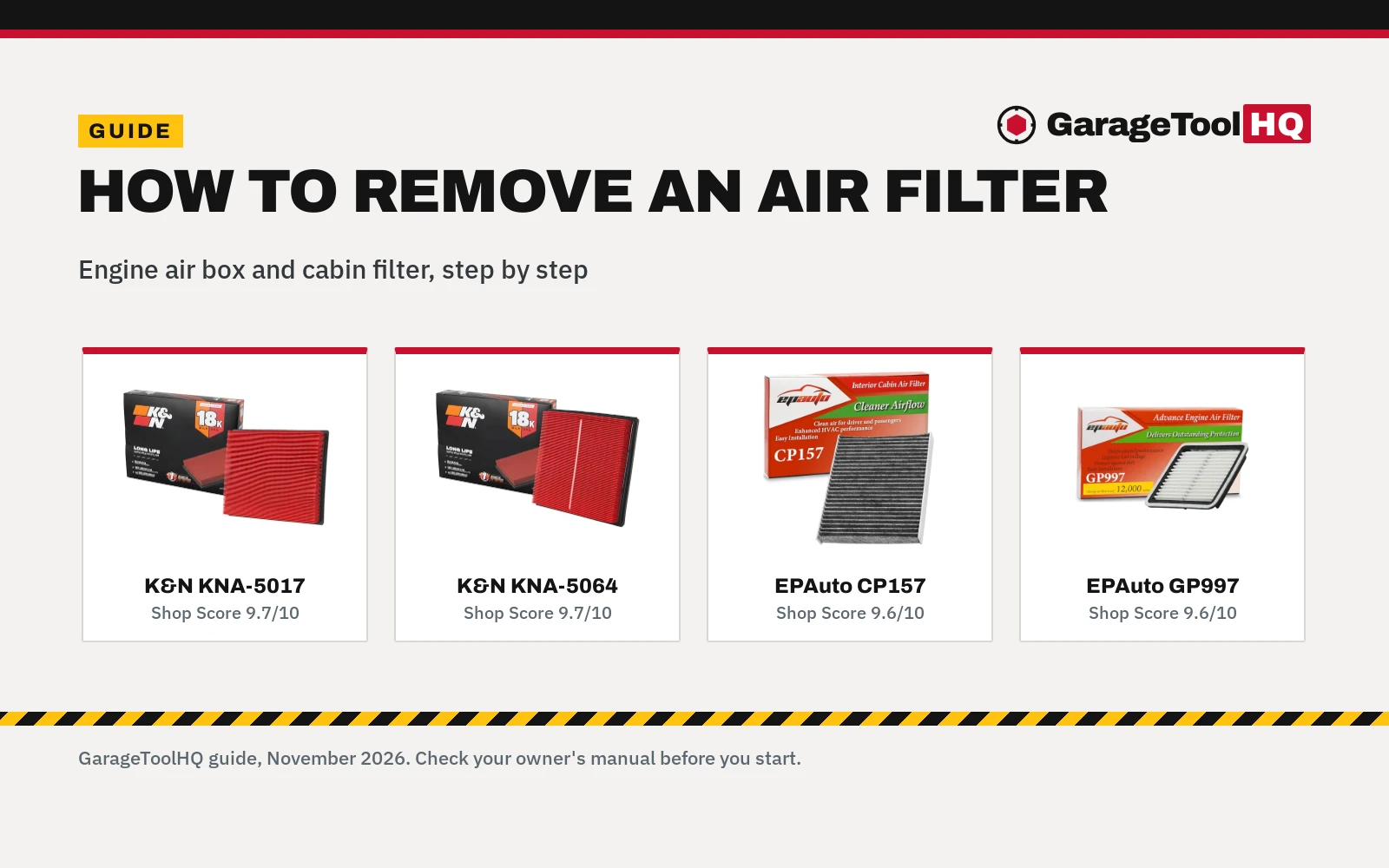
For the removal steps, see how to remove an air filter, and for fitting, see how to put in an air filter.
When to change an engine air filter
Follow the service schedule in the manual for the change interval, and inspect the filter whenever the hood is open for other work. Cars driven on dusty roads or in dry, dusty weather load a filter faster than cars driven on clean paved roads, so the schedule is a guide and the filter itself is the check.
Hold the filter up to the light. A clean filter passes light through the media; a loaded filter blocks it and looks dark with packed dust. When the media is packed, replace the filter. Do not blow a paper filter clean with compressed air: the blast can tear the media and open holes that let dirt through. Paper filters are replaced, not washed.
See how long car air filters last for more on service life and the signs of a loaded filter.
FAQ: garage tools
How do I know which air filter fits my car?
Use the owner’s manual, the part number printed on the old filter, or the filter maker’s catalog with the year, make, model and engine. Compare the new filter with the old filter before fitting, checking the outline, the gasket and the thickness.
Can I clean and reuse an engine air filter?
Paper filters are disposable: replace them when dirty. Oiled cotton and some foam filters are washable: clean and re-oil them exactly as the maker instructs, and let them dry fully before fitting. Never wash a paper filter. See how to clean an air filter for the washable kinds.
What happens if I drive with a dirty air filter?
Airflow drops, the engine works harder, and response feels flat. A torn media can let dirt through to the engine. Change the filter when inspection shows the media is packed with dust.
Is an oiled filter better than a paper filter?
Neither is better for every car. Paper is simple: fit it and replace it when dirty. Oiled cotton can be reused, but it needs cleaning and careful re-oiling, and too much oil can reach the sensors in the intake. Match the media to how much upkeep the driver wants to take on.
What is the difference between an engine air filter and a cabin air filter?
The engine filter cleans air going into the engine and lives in the airbox under the hood. The cabin filter cleans air coming through the vents and lives behind the glovebox or under the cowl. They are different parts and do not swap.
Can I fit a bigger or universal air filter?
A filter must match the airbox: same outline, same gasket, same seal. A filter that is too large will not seat, and a filter that is too small leaves a gap for dirt. Use the filter made for the vehicle, or an aftermarket filter listed for that exact vehicle.
Related: car air filter types compared, how to remove an air filter, how long car air filters last, how to put in an air filter, and the engine and shop equipment hub.