How to Use Concrete Sealer on a Garage Floor
A step-by-step guide to sealing a garage floor, from cleaning the slab to rolling on sealer with a T-bar and pads for the edges.

On this page
Top picks at a glance
As an Amazon Associate I earn from qualifying purchases.
- 1
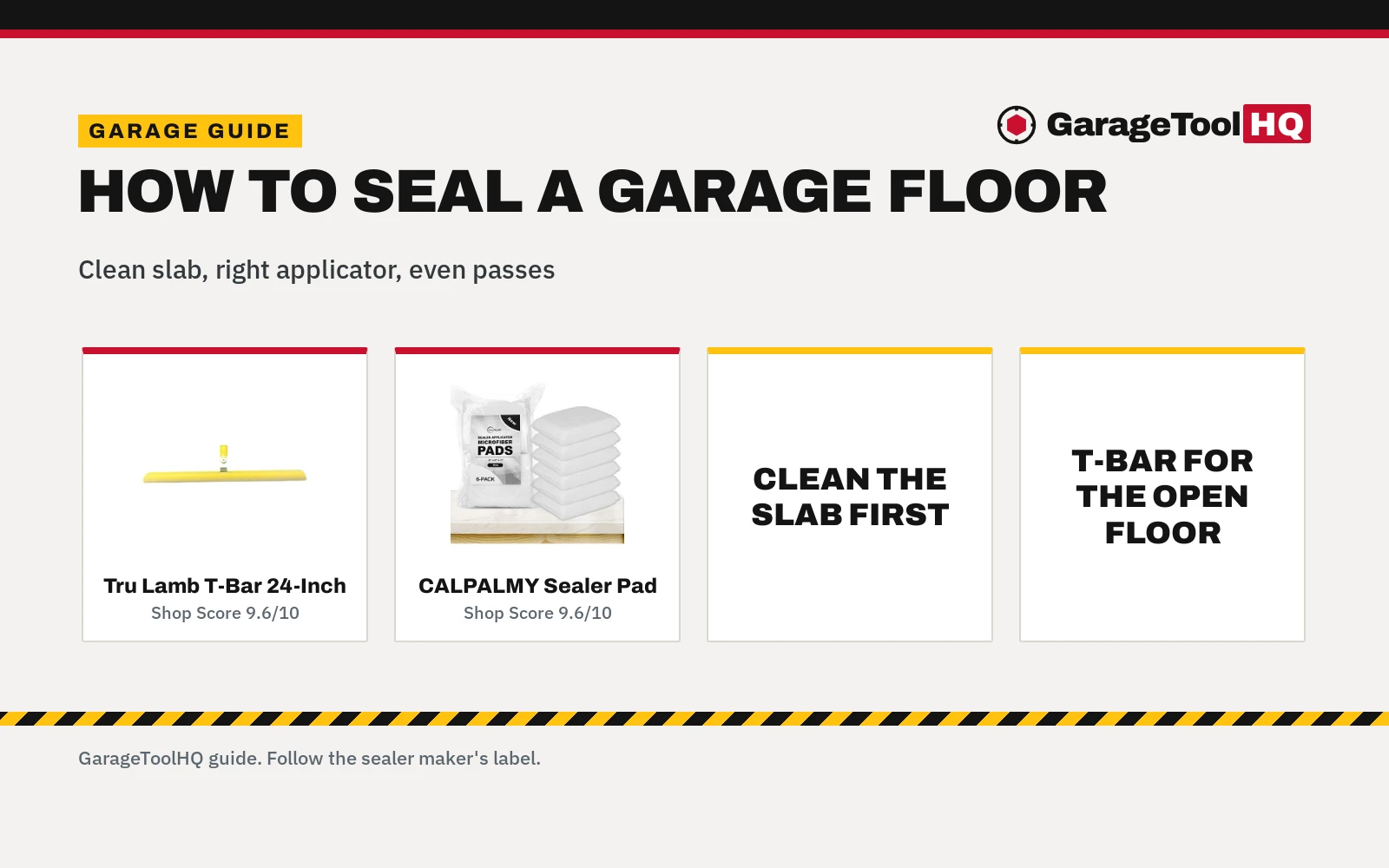
 Tru Lamb 24 Inch Lightweight T-Bar Applicator9.6/10View on Amazon
- 2
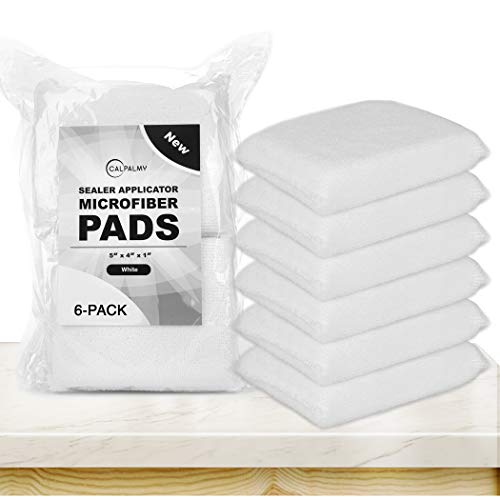 Professional Microfiber Sealer Applicator Pad9.6/10View on Amazon
How to use concrete sealer on a garage floor? Clean the slab, pick the right applicator, and roll the sealer on in thin, even passes. A bare concrete floor soaks up oil, road salt and water, and a sealed floor wipes clean and stands up to daily garage use. This guide walks through the job from a swept slab to a finished coat, with the gear for each step.
GarageToolHQ earns a commission when you buy through links on our product pages, at no extra cost to you. Read our affiliate disclosure.
Below: the steps in order, what to check before you start, the gear for the job, and answers to common questions.
Tru Lamb 24 Inch Lightweight T-Bar Applicator
A 24-inch lightweight T-bar applicator handle with 1 sleeve included, for water-based and solvent-based finishes on hardwood, concrete, stone, tile and vinyl floors.
Pros
- 24-inch width for wide floor passes
- Swivel head angles to your preference
- Works with water-based and solvent-based finishes
- Reusable, with 1 sleeve included
Cons
- Only 1 sleeve included
- No warranty term is stated
- No applicator pads included for edges and corners
- Angle changes need a nut and bolt adjustment
Professional Microfiber Sealer Applicator Pad
A 6-pack of 5 by 4 by 1 inch lint-free microfiber sealer applicator pads with a sponge foam insert, for water-based and solvent-based sealers on concrete, stone and tile.
Pros
- 6 pads in the pack, 5 by 4 by 1 inch each
- 100% lint-free microfiber with a sponge foam insert
- Works with water-based and solvent-based sealers
- Reaches curves, tight spots and problem areas
Cons
- Small pads for a full garage floor
- No handle included, hand-held only
- No warranty term is stated
- One size only, 5 by 4 by 1 inch
How to use concrete sealer on a garage floor
Sealer goes on a clean, dry slab. Work from the back of the garage toward the door so you never walk across a fresh coat, and keep the garage door open for air while you work.
- Clear the floor. Move cars, toolboxes and anything stored on the slab out of the way, then sweep the whole floor.
- Clean the slab. Scrub oil spots and grime, then rinse and let the floor dry fully before sealing. Sealer will not bond to a dirty or damp slab.
- Check the sealer type. Both applicators below list water-based and solvent-based sealers, so read the sealer label before you start.
- Cut in the edges. Use the microfiber pads along walls, corners and tight spots where the wide bar cannot reach.
- Roll the open floor. Load the T-bar sleeve with sealer and pull it across the open floor in steady, overlapping passes.
- Let the coat dry. Leave the floor alone until the coat is dry to the touch, then check the label before moving cars or toolboxes back in.
What to check before you start
A sealing job goes wrong when the slab is dirty, damp or the wrong applicator is in hand. Check these before you open the sealer:
- Slab condition. Sweep and scrub first; sealer bonds to clean concrete, not to oil, dust or old grime.
- Sealer type. Both applicators below list water-based and solvent-based sealers, so the sealer type does not change which applicator to use; read the label before you start.
- Applicator size. A wide bar covers the open floor, while small pads handle edges, corners and tight spots.
- Air flow. Open the garage door and keep air moving while you work, and keep the space clear until the coat dries.
Solvent-based sealers give off fumes while they dry. Work with the garage door open, keep the space ventilated, and keep sparks, flames and running engines away from the wet coat.
The gear for this job
The rolling step needs a wide applicator for the open floor and small pads for the edges, and these two picks cover both jobs.
FAQ: garage tools
Can I use a T-bar applicator with solvent-based sealer?
Yes. The Tru Lamb T-bar lists both water-based and solvent-based finishes, and the CALPALMY pads list water-based and solvent-based sealers too, so either applicator fits either sealer type.
What size T-bar applicator should I use for a garage floor?
This listing is the 24-inch size, and the bar also comes in 12 and 18 inch sizes. The 24-inch width suits the open floor, while the pads handle edges and corners.
Do I need a separate applicator for edges and corners?
Yes. The CALPALMY pads reach curves, tight spots and problem areas where a wide bar cannot reach, so keep a pack of pads on hand for the edges while the T-bar covers the open floor.
How many applicator pads come in the CALPALMY pack?
The pack holds 6 pads, each 5 by 4 by 1 inch, made from 100% lint-free microfiber with a sponge foam insert.
Can I reuse the T-bar applicator?
Yes. The maker says you can reuse the T-bar applicator over and over again, and the swivel head angles to your preference with a nut and bolt adjustment.
Related: types of concrete sealers for garage floors, the best way to clean a garage floor, garage upgrades hub and garage floor coating types.