Hybrid vs Rubber Air Hose: Which One Should You Buy?
Hybrid vs rubber air hose: hybrid polymer and rubber-blend hoses against traditional rubber on kink resistance, cold flexibility, weight and pressure.

On this page
Top picks at a glance
As an Amazon Associate we earn from qualifying purchases.
- 1
 Flexzilla Air Compressor Hose9.8/10View on Amazon
- 2
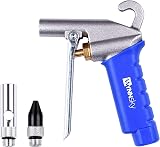 WWYNNsky High Flow Air Blow Gun with Rubber Tip and Xtreme9.7/10View on Amazon
- 3
 YOTOO Hybrid Air Hose 3/8-Inch by 50-Feet 300 PSI Heavy Duty9.6/10View on Amazon
- 4
 Estwing E3850PVCR 3/8" x 50' PVC/Rubber Hybrid Air Hose withView on Amazon
- 5
 Goodyear 50' x 3/8" Hybrid Air HoseView on Amazon
- 6
 Hybrid Air Hose 3/8-Inch x 25FTView on Amazon
- 7
 Hybrid Air Compressor Hose 3/8 in x 10 ft Short Air HoseView on Amazon
- 8
 Goodyear 6' x 3/8" Hybrid Air HosesView on Amazon
- 9
 Hybrid Air HoseView on Amazon
Verdict: Choose a hybrid air hose if you want light weight, kink resistance and easy coiling for general garage work. Choose a rubber air hose if you work in extreme cold, drag the hose over rough concrete daily, or need maximum abrasion resistance.
Hybrid vs rubber air hose is the choice between the modern blend and the old workhorse. Hybrid hoses mix rubber and PVC or use a hybrid polymer to stay light, flexible and kink-free; rubber hoses are heavier and stiffer but shrug off abrasion, oil and brutal cold. For most home garages the hybrid is the easier hose to live with; for harsh shops and winter work, rubber still earns its keep.
More options to compare
 Estwing E3850PVCR 3/8" x 50' PVC/Rubber Hybrid Air Hose withCheck price on Amazon
 Goodyear 50' x 3/8" Hybrid Air HoseCheck price on Amazon
 Hybrid Air Hose 3/8-Inch x 25FTCheck price on Amazon
 Hybrid Air Compressor Hose 3/8 in x 10 ft Short Air HoseCheck price on Amazon
 Goodyear 6' x 3/8" Hybrid Air HosesCheck price on Amazon
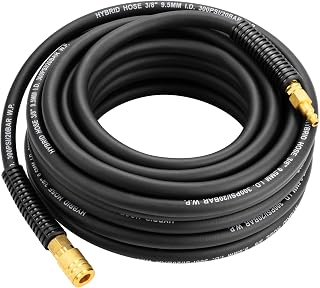 Hybrid Air HoseCheck price on Amazon
GarageToolHQ earns a commission when you buy through links on this page, at no extra cost to you. Read our affiliate disclosure.
All ten reference listings for this guide are hybrid air hoses; no rubber-only hose is among them. The rubber side below is explained from general shop knowledge, without listing figures, and every number in this guide comes from the hybrid listings cited by brand.
Hybrid vs rubber air hose: the short answer
Choose hybrid for the garage. The listings show 300 PSI maximum working pressure in nearly every case, from the Flexzilla 3/8-inch by 100-foot hose with a 5-year limited warranty, to the Estwing 3/8-inch by 50-foot PVC and rubber blend rated from minus 40 to 164 degrees F, to the YOTOO 3/8-inch by 50-foot with a 1200 PSI burst rating and 2-year warranty, to the Goodyear 50-foot hybrid made in the USA. Hybrid hoses coil easily, lay flat with no memory and resist kinking. Choose rubber when the work is punishing: extreme cold, rough floors and daily abuse are where the heavier old material still wins.
What a hybrid air hose gives you
A hybrid hose blends materials to dodge the weaknesses of each. The Flexzilla listings describe a hybrid polymer that will not kink under pressure, coils easily and lays flat with zero memory, rated 300 PSI with all-weather flexibility from minus 40 to 140 degrees F, backed by a 5-year limited warranty. The Estwing E3850PVCR blends PVC and rubber in a 3/8-inch by 50-foot hose at 300 PSI, working from minus 40 to 164 degrees F, with solid brass fittings and a rubber coating the listing says protects against abrasion, chemicals and oil.
The value listings fill out the picture. The YOTOO 3/8-inch by 50-foot lists 300 PSI working pressure with a 1200 PSI burst rating and a 2-year warranty. The WYNNsky 3/8-inch by 100-foot lists 300 PSI with UV, oil and abrasion resistance; its listing states no warranty term. The JOROY listings offer 3/8-inch hose in 25 and 100 feet at 300 PSI with a 900 PSI burst rating and a three-layer build. The Furesn 1/4-inch by 25-foot lists 300 PSI working with a 1200 PSI burst and a minus 40 to 150 degree F range; its listing states no warranty term. The Goodyear 50-foot hybrid, made in the USA with spiral synthetic yarn reinforcement, lists 300 PSI in its spec table against 250 PSI maximum operating pressure in its bullets, a contradiction to note before you buy.
What a rubber air hose gives you
A rubber hose is the traditional choice: a heavy, thick-walled hose that stays flexible in cold that stiffens lesser materials and resists abrasion from concrete, gravel and shop debris. Rubber costs more, weighs more and can leave black marks on floors and workpieces, and it tends to coil with more memory than a hybrid. No rubber-only hose appears in the reference listings, so treat this as general shop knowledge: where the listings give hybrid figures, rubber is the heavier, tougher, less convenient alternative.
Hybrid vs rubber compared
| Feature | Hybrid air hose | Rubber air hose |
|---|---|---|
| Material | Rubber and PVC blend, or hybrid polymer | Rubber throughout |
| Working pressure cited | 300 PSI in nearly every listing | Not listed here |
| Cold flexibility cited | Minus 40 F on Flexzilla, Estwing and Furesn | Stays flexible in deep cold |
| Kink resistance | Marketed as no-kink; bend restrictors fitted | Kinks less than PVC, more than hybrid |
| Weight | Light; easy to coil and carry | Heavy; more effort to drag and coil |
| Abrasion resistance | Good; oil and abrasion resistant per listings | Excellent; the toughest option |
| Warranty cited | 5-year (Flexzilla); 2-year (YOTOO) | Not listed here |
| Best for | Home garages, general shop work | Harsh shops, extreme cold, rough floors |
Which one should you buy?
Buy hybrid for the home garage and general shop work. The 300 PSI rating covers impact wrenches, ratchets, drills and paint sprayers, the light weight makes daily use pleasant, and the kink resistance means less fighting the hose. The Flexzilla’s 5-year warranty is the standout coverage.
Buy rubber if you work through real winter, drag the hose across concrete or gravel all day, or run a busy shop where hoses take abuse. Rubber’s weight is the price of its toughness.
Size it right either way. The listings run 1/4 and 3/8 inch inside diameter in 25, 50 and 100 feet. A 3/8-inch hose feeds hungry tools with less pressure drop; 1/4 inch suits light tools and short runs.
Wear eye protection with every air tool, use impact-rated sockets on impact wrenches, disconnect the air line before changing accessories, and finish lug nuts with a torque wrench to the vehicle's spec. See OSHA eye and face protection. Read our Safety Disclaimer.
Common mistakes to avoid
- Ignoring the pressure contradiction. The Goodyear lists 300 PSI in its spec table but 250 PSI maximum operating pressure in its bullets; the JOROY lists 300 PSI working against 200 PSI in one spec field. Read both and plan to the lower figure.
- Buying too small a diameter. A 1/4-inch hose starves a large impact wrench at distance. The 3/8-inch listings exist for a reason: air-hungry tools need the flow.
- Expecting any hose to never kink. The hybrids are marketed as no-kink and ship with bend restrictors, but every hose kinks if you yank it sideways. Coil loosely and the marketing stays true.
- Skipping the temperature rating. Minus 40 F flexibility is stated on the Flexzilla, Estwing and Furesn listings. If your garage freezes, that figure matters more than the color.
Frequently Asked Questions
What is a hybrid air hose made of?
A blend of rubber and PVC, or a proprietary hybrid polymer as Flexzilla describes it. The listings present it as lighter than rubber and more flexible than PVC, with kink resistance built in.
Is 300 PSI enough for air tools?
Yes for the usual garage tools. Nearly every listing here rates 300 PSI maximum working pressure (the Goodyear bullets say 250 PSI, noted above), and shop tools run far below that; the hose rating is not the limiting factor.
Do hybrid hoses really not kink?
The listings market them as no-kink and fit bend restrictors at the ends. They kink far less than PVC, but no hose is kink-proof under abuse.
Which hose is best for winter?
Rubber is the traditional cold-weather choice, but the Flexzilla, Estwing and Furesn hybrid listings all claim flexibility down to minus 40 F. Either works; rubber has the longer track record in the deep cold.
What fittings do I need?
The listings ship with 1/4-inch NPT or MNPT fittings, brass or aluminum, with quick couplers on several. Match the fitting to your compressor and tools; the hose does not care what brand they are.
Does hose length matter?
Yes. Longer hoses drop more pressure, so a 100-foot 1/4-inch hose starves big tools. The listings offer 25, 50 and 100 feet in both diameters; buy the shortest hose that reaches your work.
Related guides
Related: our polyurethane vs rubber air hose guide.