Interlocking Garage Tiles vs Roll Out Mats (2026): Which to Buy
Interlocking garage tiles vs roll out mats compared on install, repair, seams and load, with two interlocking tile packs from the listings.

On this page
Top picks at a glance
As an Amazon Associate we earn from qualifying purchases.
- 1
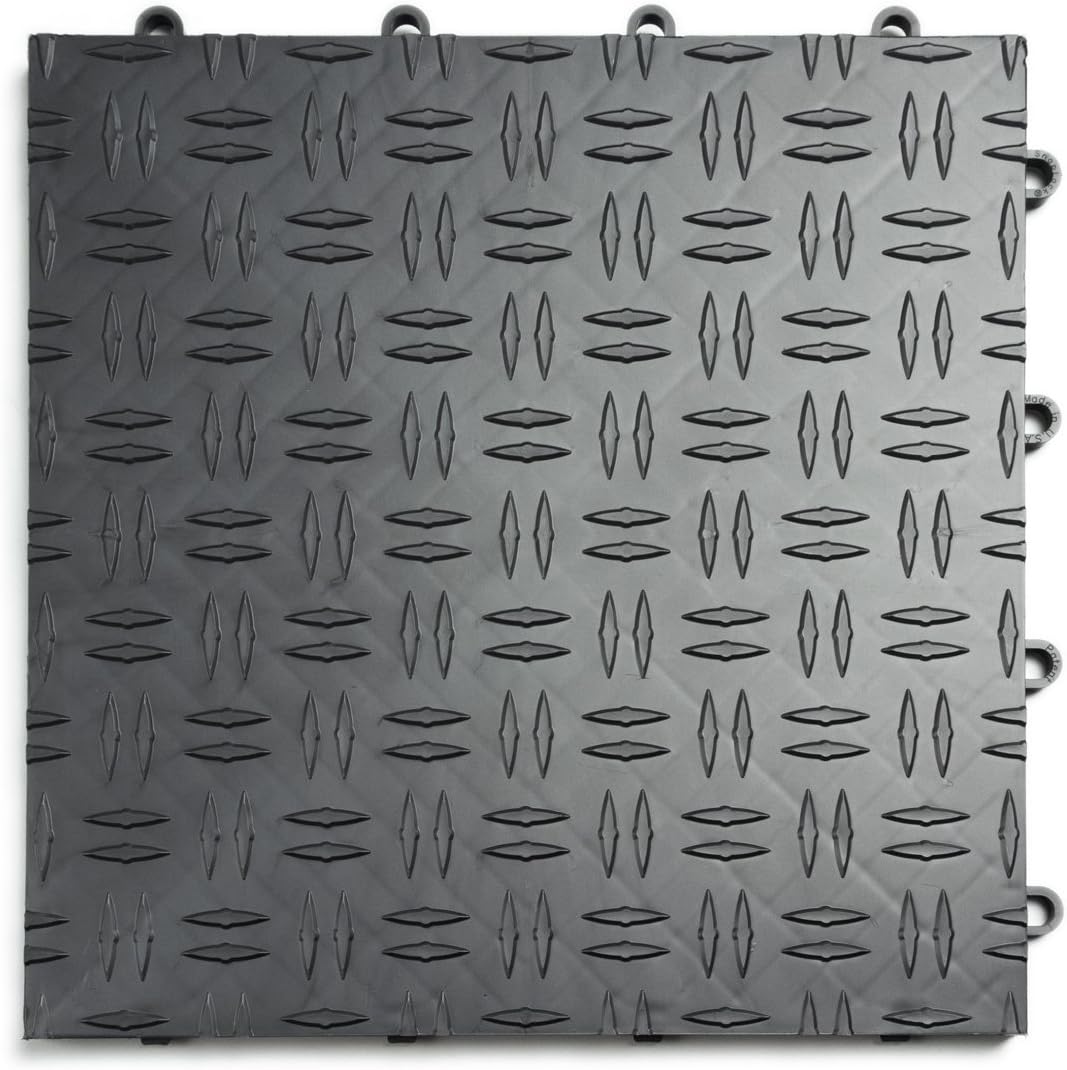 SnapLock GarageTrac 12"x12" Interlocking Garage Tiles9.7/10View on Amazon
- 2
 7'9" x 18' Garage Floor Mat9.6/10View on Amazon
- 3
 SnapLock GarageDeck 12"x12" Interlocking Garage Floor Tiles9.7/10View on Amazon
- 4SnapLock GarageTrac 12"x12" Interlocking Garage TilesView on Amazon
- 5
 SnapLock GarageDeck 12"x12" Coin Garage TilesView on Amazon
- 6
 VEVOR Garage Floor Tiles 12 x 12 x 0.53 inch InterlockingView on Amazon
- 7
 VEVOR Garage Tiles InterlockingView on Amazon
- 8
 VEVOR Garage Floor TilesView on Amazon
- 9
 VEVOR Garage Floor Tiles 12x12x0.53 in 50 PackView on Amazon
After a brake job leaves the concrete spotted and the mop comes out again, covering the floor starts looking smart. The interlocking garage tiles vs roll out mats choice comes down to this: tiles snap together piece by piece and a damaged one swaps out alone, while a mat rolls out in one piece and covers the floor fast. Both listings below are interlocking tiles; this guide compares the two floor types, then details those two tile packs.
More options to compare
 SnapLock GarageTrac 12"x12" Interlocking Garage TilesCheck price on Amazon
 SnapLock GarageDeck 12"x12" Coin Garage TilesCheck price on Amazon
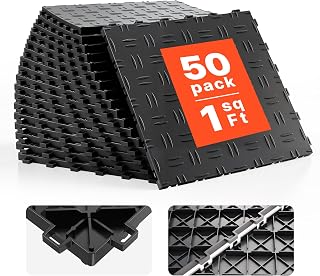 VEVOR Garage Floor Tiles 12 x 12 x 0.53 inch InterlockingCheck price on Amazon
 VEVOR Garage Tiles InterlockingCheck price on Amazon
 VEVOR Garage Floor TilesCheck price on Amazon
 VEVOR Garage Floor Tiles 12x12x0.53 in 50 PackCheck price on Amazon
GarageToolHQ earns a commission when you buy through links on our product pages, at no extra cost to you. Read our affiliate disclosure.
Below: how each floor type installs and repairs, what to measure before you buy, and the two interlocking tile packs from the listings.
Interlocking garage tiles vs roll out mats: the short version
Pick interlocking tiles if you want a floor you can repair one piece at a time: each tile snaps to its neighbors, and a stained or cracked tile lifts out for a fresh one. Pick a roll-out mat if you want the fastest cover with the fewest seams: unroll it, trim the edges, and the floor is done. Tiles suit working garages where damage happens; mats suit quick refreshes over concrete that is already in decent shape.
How interlocking tiles work
Interlocking tiles are 12 x 12 in modules that snap together with no tools, glues or extra hands, per both listings. You build the floor tile by tile, which means you can mix patterns and colors: the listings below offer a diamond tread and a coin top. Both listings state a 40,000-lb rolling load capacity and a slip-resistant surface, and both state the surface wipes clean of car oil, dirt and dust with a mop or shop vac. The modular design is the whole point: damage stays local to one tile.
How roll-out mats work
A roll-out mat is one continuous sheet, usually rubber or vinyl, that you unroll across the floor and trim at the walls. Installation is fast, and with nearly no seams there are fewer edges to catch a creeper or a jack. The tradeoff is repair: a cut or stained section cannot be swapped like a tile, so bad damage means patching or replacing the whole mat. Mats can also shift under hard use unless the edges are secured, so check the maker’s install notes for your floor.
| Trait | Interlocking tiles | Roll-out mats |
|---|---|---|
| Install | Snap together, no tools or glue | Unroll and trim to fit |
| Repairing damage | Swap the one damaged tile | Patch, or replace the whole mat |
| Seams | A seam at every tile edge | Nearly seamless |
| Rolling load rating | 40,000 lb stated on both tile listings | Not stated in these listings |
| Surface patterns | Diamond or coin traction stated | Usually smooth or coin |
What to measure before you buy
- Floor size. Measure length and width of the area you want covered, and compare it with the 48 sq ft coverage each 48-pack below states. Order for the full area; partial coverage leaves an edge that catches jacks and creepers.
- What parks on it. Both tile listings state a 40,000-lb rolling load capacity. Check the stated rating against what you will park or roll across the floor.
- Chemical exposure. The GarageDeck listing below states resistance to oil, grease, petroleum, antifreeze and most household chemicals. If your bay sees those fluids, pick a tile that names them.
- Pattern. The two listings below offer diamond tread and coin tops, both stated as slip resistant. Pick the traction surface that suits how you work.
Two tile options from the listings
Big Floors GarageDeck
The chemical-resistance pick. The listing states a 48-pack of 12 x 12 in black coin-top tiles covering 48 sq ft, with a 40,000-lb rolling load capacity and PowerLock installation, made in the USA. The tiles are non-toxic high impact copolymer, stated resistant to oil, grease, petroleum, antifreeze and most household chemicals, with a coin surface stated as slip resistant that will not stain. Each tile weighs a listed 13.6 oz. Note: the spec table’s warranty field reads 12 with no unit stated, so confirm the term with the maker.
Big Floors GarageTrac
The diamond-tread pick. The listing states a 48-pack of 12 x 12 in graphite diamond-tread tiles covering 48 sq ft, with a 40,000-lb rolling load capacity and PowerLock installation, made in the USA. The tiles are high impact copolymer that snap together with no tools or glue, with a diamond double tread pattern stated as slip resistant, and the surface mops clean of oil, dirt and dust. GarageTrac tiles interlock with other GarageTrac tiles for mixed layouts. Each tile weighs a listed 13.6 oz.
Thickness, weight and edges: reading the spec tables
The spec tables reveal differences the bullets skip. The GarageTrac table lists 0.05 inches thick; the GarageDeck table states no thickness. Both list 13.6 ounces per tile and a 40,000-lb rolling load capacity. Both list square edges, water resistance and slip resistance; the GarageTrac table adds moisture resistance, stain resistance and washable. Both state interlocking installation with no tools, glues or extra hands. So what should you do with these figures? First, compare thickness against your floor: the listings do not state which thickness suits which use, but the numbers show the two packs are built differently despite sharing a brand and a load rating. Second, match the pattern to your fluids: only the GarageDeck names oil, grease, petroleum and antifreeze. Third, note the warranty gap: both spec tables read 12 with no unit stated, so confirm the term with the maker before you count on it. None of this replaces measuring your bay, but it turns the spec tables into a buying checklist.
Use rated jack stands on solid ground, wear eye protection with power and air tools, keep fuel-burning equipment out of a closed garage, and follow the manual for every tool. Read our Safety Disclaimer.
Frequently Asked Questions
Do interlocking tiles hold up under a parked car?
Both listings state a 40,000-lb rolling load capacity, which covers passenger vehicles. Check the stated rating against what you park, and install per the maker’s instructions.
Can I replace a single damaged tile?
Yes. That is the advantage of the modular design: the damaged tile unsnaps and a fresh one snaps in, without redoing the floor.
Which handles oil spills better, tiles or mats?
Both tile listings state a stain-resistant surface that cleans with a mop or shop vac, and the GarageDeck listing names oil, grease, petroleum and antifreeze specifically. Mats wipe clean too, but a soaked-in stain cannot be swapped out like a tile.
Will the tiles shift when I turn the steering wheel?
The listings state PowerLock installation that keeps the tiles engaged. Install on a clean, dry floor per the maker’s instructions for the best hold.
Are these tiles made in the USA?
Yes. Both the GarageTrac and GarageDeck listings state Made in USA.
Related: our garage upgrades hub, rubber vs vinyl garage floor, garage floor paint vs epoxy, the best garage floor mat for workshop and the best garage floor mat for oil drips.