Low Cost Garage Heater: Options That Work
A low cost garage heater keeps a cold garage workable, and the cheapest way to heat it depends on the size of the space, the power already in place and how often the heater runs.

On this page
A low cost garage heater is a heater that warms a cold garage enough to work in it, without a costly install or a running bill that stings every month. The cheapest option is rarely the cheapest heater on the shelf: it is the type that fits the space, the power or fuel already in place, and the way the garage gets used through the cold months. This guide walks through the options that keep the cost down, the safety rules that apply to all of them, and how to pick the type that fits a garage without overspending.
As an Amazon Associate I earn from qualifying purchases. GarageToolHQ earns a commission when you buy through links on our product pages, at no extra cost to you. Read our affiliate disclosure.
Below: the heater types that cost the least to buy and run, how to match a heater to a garage, and the safety checklist to run before switching it on.
Low cost garage heater options: what actually keeps the cost down
| Type | How it heats | What keeps the cost down |
|---|---|---|
| Portable electric heater | Plugs into a wall outlet and heats the air around it | Low buy-in, no install, easy to move where the work is |
| Ceiling-mounted electric heater | Mounts overhead and warms the whole space | Frees floor space and suits a garage that gets used often |
| Vented gas unit heater | Burns gas and vents exhaust outside through a flue | Suits larger garages and steady heat through the cold months |
| Portable propane heater rated for indoor use | Burns propane from a cylinder, with safety shutoffs | No wiring or gas piping, but needs fresh air and a carbon monoxide alarm |
| Outdoor-only propane heater | Burns propane with no indoor rating | Does not belong in a garage at any price |
The label and the manual decide which group a heater is in, not the box art or the price tag. If the manual says outdoor use only, it does not go in a garage, however low the price.
How to choose a low cost garage heater
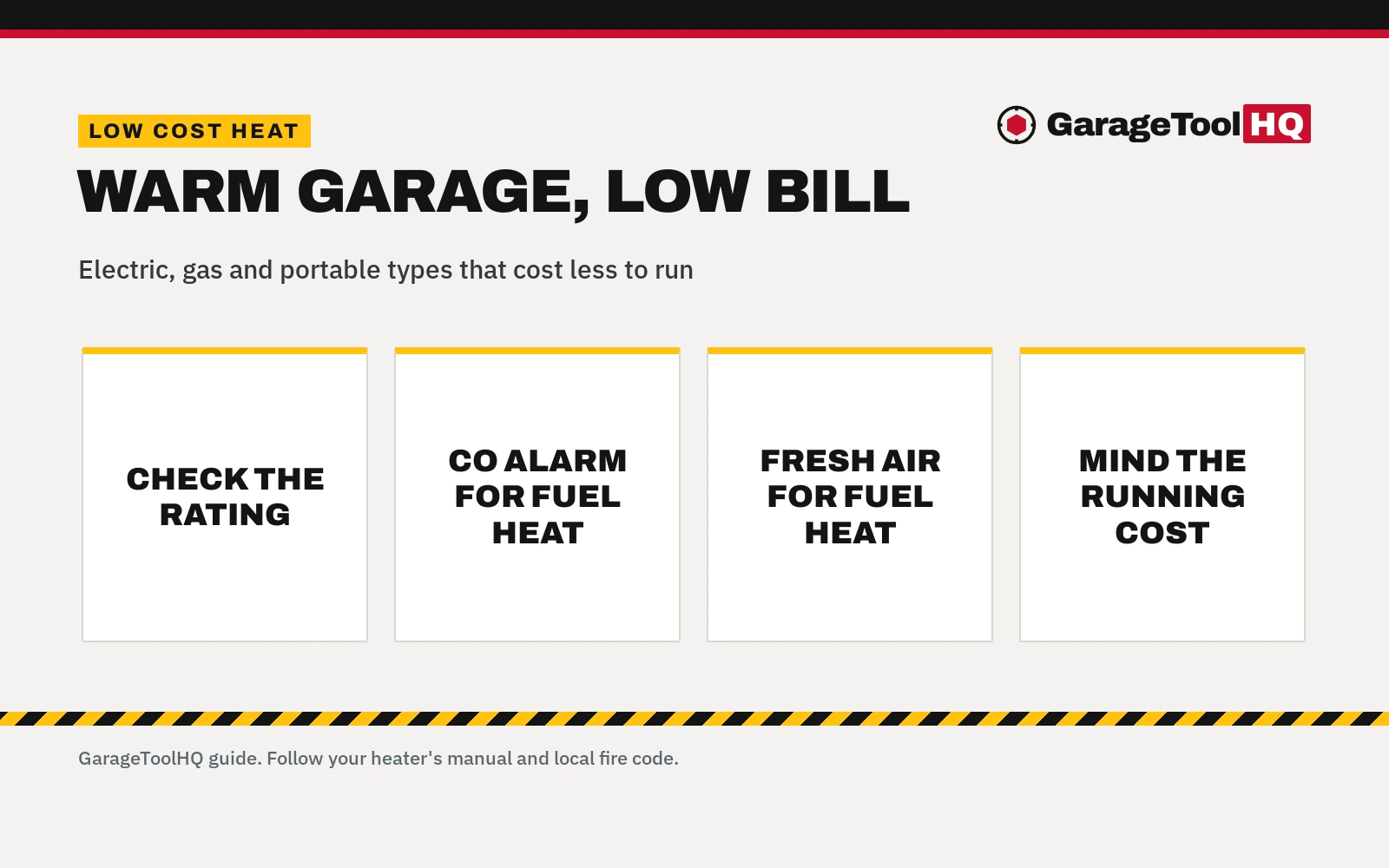
- Start with the space. A small, tight garage needs far less heat than a large, drafty garage with a high ceiling. Insulation, door seals and windows matter as much as floor area: a drafty garage wastes whatever heat goes into it.
- Check what power or fuel is already there. A garage with a spare circuit and room on the panel suits electric heat. A garage with a gas line suits a vented gas unit heater. Adding a circuit or a gas line costs money, so a heater that uses what is already in place usually costs less overall.
- Match the heater to how often the garage gets used. A heater that runs on occasional weekends can be a simple portable unit. A garage used as a workshop through the cold months earns a fixed heater that warms the whole space and stays out of the way.
- Count the running cost, not just the buy-in. Electric heat, gas heat and propane each carry a running cost that depends on local rates, so compare the fuel bills for the space before choosing. A cheap heater that runs on costly fuel is not a low cost heater.
- Read the safety label before buying. On a portable heater, look for tip-over shutoff and overheat shutoff. On an unvented portable fuel heater, look for an oxygen depletion sensor too. An indoor rating must be stated by the maker: a heater without an indoor rating does not go in a garage.
- Fit a carbon monoxide alarm. Any heater that burns fuel can make carbon monoxide. Fit an alarm in the garage and in the house next to the garage door, and check it before the cold season.
- Keep the clearances. Hold the distances from walls, ceilings, cars and anything combustible that the manual lists. Keep gas cans, solvents and spray painting well away from the flame, and do not heat while using flammable products.
- Plan the install. A vented gas heater needs gas piping, venting and usually a permit. An electric heater that needs a dedicated circuit needs a licensed electrician. Never run an unvented fuel heater in a closed garage, and never use an outdoor-only heater inside at all.
The same rules apply to anything that burns fuel. Never run a car, a generator or any gas engine in a closed garage, even with the door partly open, and never use an outdoor grill or camp stove as a heater.
Never run a fuel-burning heater, generator or engine in a closed garage: carbon monoxide builds up fast and has no smell. Fit a CO alarm, keep clearances to cars and storage, use vented gas heaters installed to code, and put 240V electric heaters on a dedicated circuit. See CPSC carbon monoxide guidance. Read our Safety Disclaimer.
Electric or gas heat for a garage
If the choice is still open, compare these before buying:
- Combustion: electric heaters make no carbon monoxide and no water vapor. Vented gas heaters send their exhaust outside. Unvented portable propane heaters release water vapor and combustion products into the garage, and can produce carbon monoxide when combustion is incomplete.
- Power and fuel: electric heaters need a circuit that can carry the load, and a licensed electrician for a dedicated circuit. Gas unit heaters need gas piping, venting and usually a permit.
- Running cost: depends on local gas and electricity rates, and on how efficiently each heater turns fuel or power into heat, so compare per unit of heat with the bills for the space.
- Warm-up: a heater sized to the space warms it in reasonable time; an undersized heater warms the space slowly and may never reach the set temperature on the coldest days, and an oversized heater with a thermostat may cycle on and off more often. Size the heater to the space, not to the shelf.
Work out how much heat the space needs before buying, then compare real models side by side in our garage heater picks for larger garages and our garage heater picks that cost less. For smaller spaces, see the small garage heater picks.
Flames and battery charging do not mix
Many people charge or maintain car batteries in the garage over winter. Flooded lead-acid batteries can release hydrogen while charging, and hydrogen ignites easily. Keep any charging battery well away from a propane heater’s flame, charge with ventilation, and follow the charger’s manual. A smart charger that drops to a float charge limits gassing, but distance from open flame still matters.
FAQ: garage tools
What is the cheapest way to heat a garage?
It depends on the space and what is already in place. Electric heat suits a garage with spare circuit capacity and a small space to warm. Vented gas heat suits a larger garage that needs steady heat through the cold months. Portable propane suits occasional use where no wiring or gas piping exists, as long as the heater is rated for indoor use and the garage has fresh air and a carbon monoxide alarm. Compare running costs for the space before choosing, since the cheapest heater to buy is not always the cheapest to run.
Can I use a propane heater in my garage?
Only the right kind, set up the right way. A vented propane unit heater installed to code is a normal way to heat a garage. A portable propane heater is only acceptable if its maker rates it for indoor use, and even then only with the fresh-air opening the manual calls for and a working carbon monoxide alarm. Never run any propane heater in a closed garage, and never use an outdoor-only heater inside at all.
Do I need a carbon monoxide alarm in the garage?
Yes, if any heater in the garage burns fuel. A carbon monoxide alarm in the garage, and one in the house next to an attached garage, is the warning to rely on. An oxygen depletion sensor shuts the heater off when oxygen falls; it does not measure carbon monoxide, which is why the alarm still matters.
Can I leave a garage heater running overnight?
No, not with a portable or unvented fuel heater. Never sleep, or leave the garage, with one running: turn it off and close the cylinder valve when walking away. A fixed vented heater installed to code and controlled by a thermostat is built to run unattended, so follow its manual and local code. For electric heat, follow the manual and the maker’s guidance on unattended use, and never leave a portable heater running in an empty garage.
What size garage heater do I need?
It depends on the size of the space, how well it is sealed, and how warm it needs to be. A small, tight garage needs far less heat than a large, drafty garage. Work out the heat the space needs before buying, and check the heater’s rating against the space rather than the shelf price. The maker’s manual and the guidance on the product page state what each heater is rated to warm.
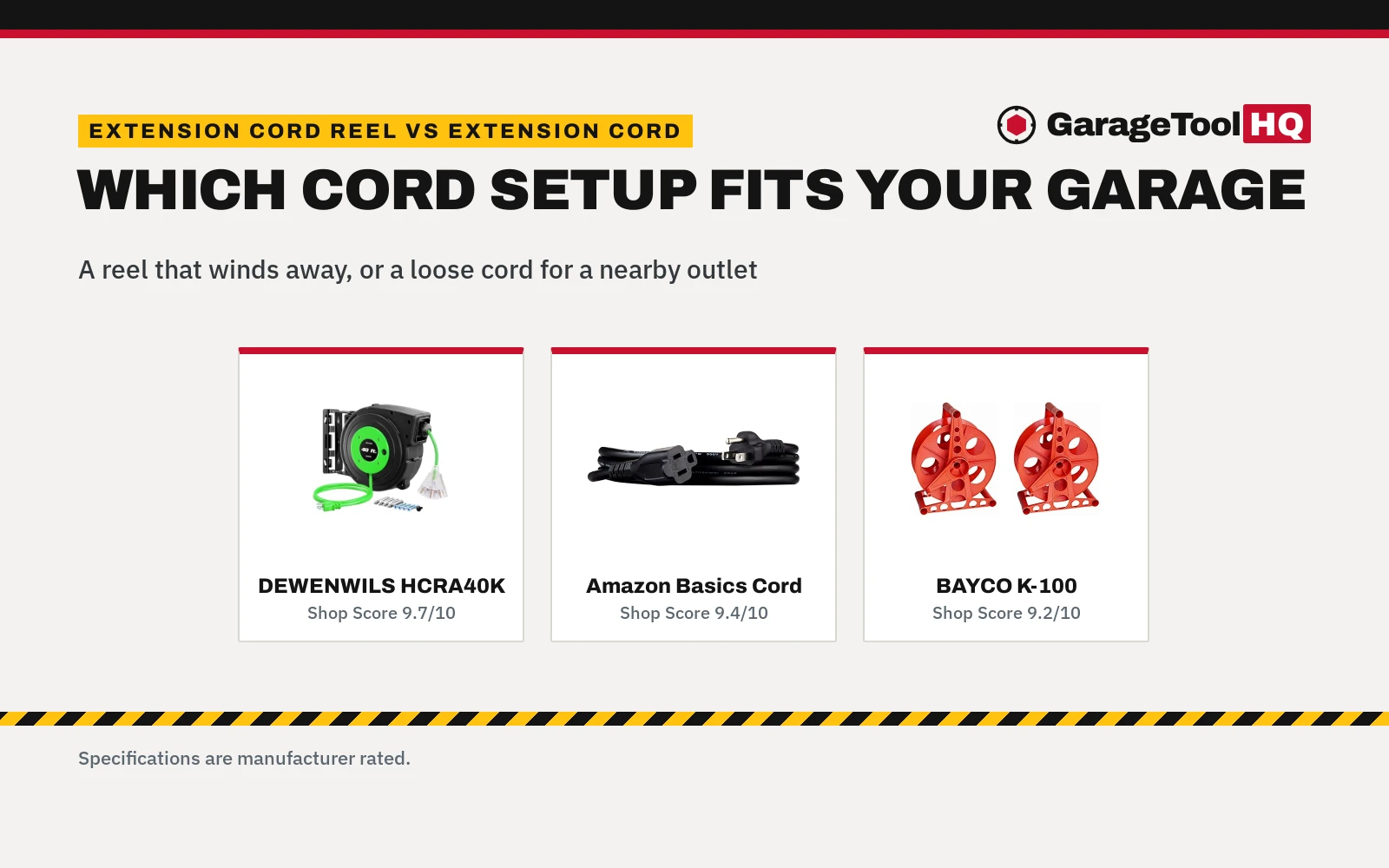
Related: ceiling mounted garage heater picks, the natural gas garage heater picks, the propane gas heaters for indoor use, the electric garage heater picks for larger garages and the diesel heater picks. Also see our extension cord picks for garage heaters.