Mig vs Stick Welder: Which One Should You Buy?
MIG and stick compared for garage work: how each process works, which to buy, and four multiprocess MIG machines that also run stick.

On this page
Top picks at a glance
As an Amazon Associate we earn from qualifying purchases.
- 1
 ARCCAPTAIN MIG205MP MIG Welder with Plasma Cutter9.7/10View on Amazon
- 2
 HONE Stick Welder 110v9.7/10View on Amazon
- 3
 ARCCAPTAIN 200A MIG Welder 110V 220V 6 in 1 Aluminum Welding9.7/10View on Amazon
- 4
 160Amp 3 IN 1 WelderView on Amazon
- 5
 YESWELDER 165A MIG WelderView on Amazon
- 6
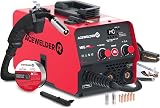 140A Gasless Flux Core MIG Welder/Lift TIG/Stick 3 in 1View on Amazon
- 7
 145A MIG WelderView on Amazon
- 8
 FEMEROL Plasma Cutter Welder Combo 200A Gas MIG/GaslessView on Amazon
- 9
 YESWELDER 140A MIG WelderView on Amazon
A cracked trailer frame and a rusty gate hinge want different welders. mig vs stick welder comes down to this: MIG is the faster, easier process for clean steel in the garage; stick is the tougher process for dirty, rusty or thick metal, especially outdoors. This guide explains both processes and looks at four multiprocess MIG machines that also run stick.
More options to compare
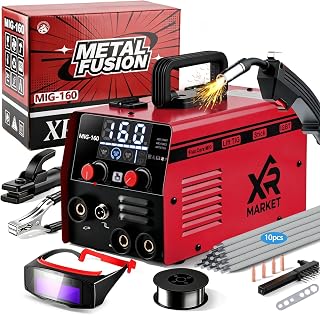 160Amp 3 IN 1 WelderCheck price on Amazon
 YESWELDER 165A MIG WelderCheck price on Amazon
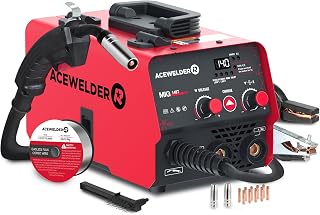 140A Gasless Flux Core MIG Welder/Lift TIG/Stick 3 in 1Check price on Amazon
 145A MIG WelderCheck price on Amazon
 FEMEROL Plasma Cutter Welder Combo 200A Gas MIG/GaslessCheck price on Amazon
 YESWELDER 140A MIG WelderCheck price on Amazon
GarageToolHQ earns a commission when you buy through links on our product pages, at no extra cost to you. Read our affiliate disclosure.
mig vs stick welder: the short answer
Buy MIG if you weld mostly clean mild steel in the garage and want the gentlest learning curve. Buy stick if your metal is rusty, painted or thick, or you weld outside where wind blows shielding gas away. If you want one machine for both, a multiprocess MIG welder with a stick mode covers the middle: all four machines below state MIG plus stick, and all four also state Lift TIG.
How MIG welding works
MIG feeds a consumable wire electrode continuously through the gun; the arc melts the wire and the base metal together. Gas MIG uses an external shielding gas, while flux core wire carries its own flux and needs no gas bottle. It is the quickest process to learn and the fastest way to lay metal down on clean steel. The trade: MIG wants clean metal and calm air, and thin sheet needs a light hand to avoid burn-through.
The listings show the MIG-first shape. The YESWELDER MIG-205DS PRO states Gas MIG, Flux Core MIG, Spool Gun MIG, Lift TIG and Stick in one machine, with 110V and 220V input and a wire feed range of 58 to 858 in/min. The ARCCAPTAIN MIG200 states 6 processes including Gas MIG, Flux Core MIG, Stick, spot welding and Lift TIG, with synergic control that matches current and wire speed to the wire diameter. The YESWELDER 160A states 4 processes with synergic and manual control, and the HITBOX states 3 processes with synergic control. All four state digital or LED displays.
How stick welding works
Stick uses a consumable flux-coated electrode: the flux burns to make its own shielding gas and slag, so there is no gas bottle and wind matters less. That makes stick the process for rusty, painted or dirty steel, for thick sections, and for outdoor repair. The trade: it is slower than MIG, leaves slag to chip, and takes more practice to strike and hold an arc.
Every machine here states a stick mode. The YESWELDER 160A states it runs 6010, 6011, 6013 and 7018 rods in stick mode. The YESWELDER 205A, ARCCAPTAIN and HITBOX all state Stick or MMA among their modes with over-current, over-load and over-heating protection stated. Stick on a multiprocess box will not replace a dedicated engine-driven stick machine on a farm, but for garage repair it is the dirty-metal backup to the MIG gun.
Which one should you buy
Buy MIG if your work is brackets, patches, auto body and general fabrication on clean steel, and you are new to welding: the synergic control all four state flattens the learning curve. Buy stick capability with it if you also fix rusty trailers, gates and farm equipment outdoors. If you only ever weld one kind of joint, a single-process box is simpler; if the garage sees a bit of everything, the multiprocess machines below earn their floor space.
Match the machine to the metal. The YESWELDER 205A and ARCCAPTAIN state 200A-class output with 110V and 220V input; the YESWELDER 160A states 160A; the HITBOX states 200A in its title and bullets. The HITBOX states mild steel up to 4.0 mm. For aluminum, note the YESWELDER 205A states spool gun aluminum MIG with the gun required extra, and the ARCCAPTAIN states a spool gun connector with the gun not included.
The gear: four multiprocess MIG machines
The YESWELDER MIG-205DS PRO is the most process-rich of the four: Gas MIG, Flux Core MIG, Spool Gun MIG, Lift TIG and Stick, with 110V and 220V input, synergic and manual MIG control, a digital display and stated protections against over-current, over-load, over-heating and voltage fluctuation. It states 36.4 pounds. The lift TIG torch and spool gun are required extra, not included.
The ARCCAPTAIN MIG200 states 6 processes, 200A, 110V and 220V, synergic control, 10 storable preset settings, 2T and 4T trigger modes, a large LED display and a 2-year manufacturer warranty, with a handle and shoulder strap stated. One wrinkle: its spec table lists an item weight of 14.1 ounces and dimensions of 3.54 by 2.36 by 2.76 in, which plainly do not describe a 200A welder; the title and bullets are the guide here.
The YESWELDER 160A states 4 processes, 160A, 110V and 220V, synergic and manual control, an LED display and the same protection set, taking 2 and 10 lb spools of .030 and .035 wire plus 6010 through 7018 stick rods. It states 19.4 lb in the bullets against 27.5 pounds in the spec table; we use the bullets. The lift TIG torch is a separate purchase.
The HITBOX HBM1200 is the lightest pick at 8.6 lb per the bullets, stating 3 processes, synergic control and 110V and 220V input with .030 and .035 flux core wire for mild steel up to 4.0 mm. Its spec table disagrees in three places: a 145A model number against the 200A title, 100 volts against the dual-voltage bullets, and 6.6 pounds against the 8.6 lb bullets. The title and bullets are more specific, so we trust them, but confirm with the seller before buying on amps.
Use rated jack stands on solid ground, wear eye protection with power and air tools, keep fuel-burning equipment out of a closed garage, and follow the manual for every tool. Read our Safety Disclaimer.
Frequently Asked Questions
Is MIG or stick better for a beginner?
MIG. All four machines state synergic control that matches voltage and wire speed for you, and all four call themselves beginner friendly. Stick takes more arc time to learn.
Can these machines weld aluminum?
With extras. The YESWELDER 205A states spool gun aluminum MIG with the spool gun required extra, and the ARCCAPTAIN states a spool gun connector with the gun not included. The other two state no aluminum process.
Do these run on a standard 110V outlet?
Yes. All four state 110V and 220V dual voltage, so each runs on a standard household outlet, with 220V available for the top end of their output.
What wire and rods do they take?
The ARCCAPTAIN states .023, .030 and .035 solid wire, .030 and .035 flux core, and .035 and .040 aluminum wire. The YESWELDER 160A states 2 and 10 lb spools of .030 and .035 wire and 6010, 6011, 6013 and 7018 stick rods. The HITBOX states .030 and .035 flux core wire. The YESWELDER 205A states a wire feed range of 58 to 858 in/min.
How heavy are these welders?
The YESWELDER 205A states 36.4 pounds, the YESWELDER 160A states 19.4 lb in its bullets, and the HITBOX states 8.6 lb in its bullets. The ARCCAPTAIN states no usable weight figure.
Related: the stick welder vs wire feed comparison and our best stick welder picks.