OBD2 Scanner vs Reader: Which One Should You Buy?
OBD2 scanner vs reader explained: how basic code readers differ from multi-system scan tools in live data streaming, service resets, and everyday vehicle repairs.

On this page
Top picks at a glance
As an Amazon Associate we earn from qualifying purchases.
- 1
 KINGBOLEN Ediag Elite OBD2 Scanner Bluetooth9.7/10View on Amazon
- 2
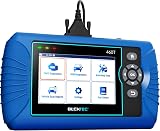 BLCKTEC 460T OBD2 Scanner Car Code Reader Engine ABS SRS9.6/10View on Amazon
- 3
 BlueDriver OBD2 Scanner Bluetooth9.6/10View on Amazon
- 4
 Bluetooth OBD2 Scanner for iOS & AndroidView on Amazon
- 5
 Innova SD35 OBD2 ScannerView on Amazon
- 6
 Portable Bluetooth OBD2 Car Diagnostic ScannerView on Amazon
- 7
 OBDLink MX+ OBD2 Bluetooth Scanner for iPhoneView on Amazon
- 8
 Innova 1000 Bluetooth OBD2 Scanner for iPhone & AndroidView on Amazon
You finish changing spark plugs on a Saturday morning, fire up the engine, and an amber check engine light glows on the cluster. Deciding whether you need an obd2 scanner vs reader depends on your repair plans: simply pull generic trouble codes and clear the warning, or inspect multi-system sensor streams and modules to fix the fault. An OBD2 code reader retrieves powertrain fault codes and checks emissions monitors. An OBD2 scanner provides deeper diagnostics across multiple vehicle computers, graphing sensor data and supporting maintenance resets like electronic parking brake retraction.
More options to compare
 Bluetooth OBD2 Scanner for iOS & AndroidCheck price on Amazon
 Innova SD35 OBD2 ScannerCheck price on Amazon
 Portable Bluetooth OBD2 Car Diagnostic ScannerCheck price on Amazon
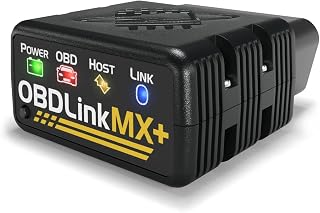 OBDLink MX+ OBD2 Bluetooth Scanner for iPhoneCheck price on Amazon
 Innova 1000 Bluetooth OBD2 Scanner for iPhone & AndroidCheck price on Amazon
GarageToolHQ earns a commission when you buy through links on our product pages, at no extra cost to you. Read our affiliate disclosure.
Below: core diagnostic differences, tool tiers compared side by side, and a checklist to choose the right unit for your workbench.
OBD2 scanner vs reader: core differences in vehicle diagnostics
Gasoline cars and light trucks sold in the United States since 1996 feature a standardized 16-pin Data Link Connector beneath the dashboard. When an onboard computer detects a fault, it stores a Diagnostic Trouble Code (DTC) and turns on the check engine light. While both tool types connect to this identical port, their communication depth differs across four key areas:
- Module access. A basic code reader communicates exclusively with the powertrain module (PCM or ECM). A full OBD2 scanner communicates across auxiliary networks, connecting to anti-lock brakes (ABS), supplemental restraint airbags (SRS), and transmission control (TCM).
- Code databases. Standard readers display generic powertrain codes. Advanced tools include expanded libraries; for example, the UJS SAFESCAN code reader includes 65,000+ built-in DTC lookups to interpret codes on screen without external searches.
- Sensor monitoring. Basic readers retrieve freeze frame data and standard powertrain parameters like coolant temperature and engine RPM. Multi-system scanners graph live data from auxiliary modules, such as transmission temperature and individual wheel speeds.
- Service resets. Dedicated scan tools perform maintenance adaptations that basic readers cannot trigger; for instance, the FOXWELL NT614 Elite provides 4-system diagnostics alongside 5 resets, including electronic parking brake retraction, steering angle calibration, oil reset, and throttle relearn.
Tiers of OBD2 diagnostic tools and what they deliver
| Tool Category | System Access and Capabilities | Best Suited For |
|---|---|---|
| Basic OBD2 Code Reader | Reads and clears generic powertrain fault codes, displays freeze frame data and basic engine sensor readings, checks emissions readiness monitors | Quick check engine light resets and pre-inspection emissions verification |
| DIY Multi-System Diagnostic Scanner | Accesses engine, ABS, airbag, and transmission modules, graphs live sensor data streams, performs common maintenance resets | Home mechanics performing brake jobs, sensor troubleshooting, and routine vehicle maintenance |
| Bidirectional Diagnostic Scan Tool | Full-system diagnostics, active component actuation, advanced adaptation, ECU coding, and specialized service procedures | Advanced troubleshooting, actuator verification, and complex vehicle system repairs |
Diagnostic tools range from compact pocket readers to bidirectional consoles. Entry-level readers focus strictly on powertrain codes. For example, the MOTOPOWER MP69033 features a 2.5 feet cable and a 2.8-inch display for 1996 and newer vehicles, but its maker notes ABS and airbag systems are not supported. Intermediate multi-system scanners add manufacturer-specific software; for example, FOXWELL lists coverage for 10,000+ vehicles from 90+ brands on its NT614 Elite. At the top tier, bidirectional scanners like the thinkcar TK672 deliver factory-level actuation with 28 reset services covering over 140 vehicle brands.
How to choose between an OBD2 scanner and a code reader: a garage checklist
- Clarify repair intentions. If you only need to clear a check engine light after replacing a gas cap or oxygen sensor, an entry-level code reader is enough. If you service brakes with electronic parking calipers or diagnose ABS warning lights, buy a multi-system scan tool.
- Verify protocol compatibility. Passenger vehicles since 1996 support OBDII, but communication speed varies. Confirm Controller Area Network (CAN) support; for example, FOXWELL notes its scanner delivers results in about 15 seconds on CAN vehicles, while older protocols take longer.
- Check live sensor needs. Tracking down misfires or vacuum leaks requires real-time data streams. A scan tool displays and graphs live sensor readings across engine, transmission, and chassis modules.
- Confirm maintenance resets. Servicing modern rear brakes requires putting electric calipers into service mode. Ensure the scanner supports the specific reset routines your vehicle requires.
- Select corded or wireless hardware. Corded handheld units run on vehicle port power without pairing. Wireless Bluetooth adapters connect to smartphone apps for portable convenience.
- Look for onboard DTC libraries. Built-in definitions let you read code descriptions directly on screen without looking up numbers on your phone with greasy hands.
- Check screen size and durability. Handheld tools feature screen sizes such as 1.8 inches and 2.8 inches on compact units, up to 7 inches on consoles like the thinkcar TK672. Choose rugged housings built for garage drops.
Erasing a diagnostic trouble code turns off the dashboard warning light, but if the underlying mechanical or electrical fault remains unresolved, the engine control module will flag the condition again during the next drive cycle.
Use rated jack stands on solid ground, wear eye protection with power and air tools, keep fuel-burning equipment out of a closed garage, and follow the manual for every tool. Read our Safety Disclaimer.
Handheld standalone scan tools vs wireless smartphone adapters
Garage mechanics typically choose between dedicated handheld scanners and wireless smartphone adapters. Both plug into the standard 16-pin vehicle diagnostic port:
- Power and connection: Most compact corded tools draw direct power through the 16-pin port without battery charging, linking instantly on ignition. Wireless adapters also draw vehicle port power but require maintaining your mobile phone battery and establishing a Bluetooth link.
- Screen interface: Handheld scanners feature built-in displays, with screen sizes such as 1.8 inches, 2.8 inches, or 7 inches, paired with glove-friendly buttons. Wireless adapters use your smartphone screen for high-resolution pinch-to-zoom charts.
- Firmware stability: Standalone scanners use dedicated internal firmware that remains stable for years in a toolbox. Wireless adapters rely on companion mobile applications that depend on ongoing phone operating system updates.
For quick glove-box diagnostics and wireless convenience, see our guide to the best Bluetooth OBD2 scanner options. For dedicated shop tools, compare top picks in our best OBD2 scanner for DIY guide, or review multi-module options in our best OBD2 scanner for ABS and SRS guide.
Battery voltage monitoring and diagnostic accuracy
Stable 12V electrical power is vital for diagnostic accuracy. When a vehicle 12V battery drops below normal operating thresholds, onboard computers record phantom communication errors and false misfire codes.
Many scanners monitor battery voltage directly through the diagnostic port. If your scan reveals voltage drops, check the battery with an automotive multimeter or connect a battery charger maintainer to restore full charge before troubleshooting sensor faults.
Frequently Asked Questions
How does an OBD2 scanner work?
An OBD2 scanner connects through the standardized 16-pin port under the dashboard. When the ignition is turned on, the scanner queries vehicle modules, reads stored fault codes and freeze frame snapshots, displays live sensor data, and sends commands to reset dashboard lights once repairs are completed.
Do I need an OBD2 scanner or is a code reader enough?
A basic code reader is enough to read engine trouble codes and clear check engine lights. If you need to service electronic parking brakes, diagnose ABS or airbag lights, or graph multi-system sensor data from transmission computers, an OBD2 scanner is necessary.
How do you use a wireless Bluetooth OBD2 scanner?
Plug the adapter into the 16-pin port, turn the ignition on, enable Bluetooth on your smartphone or tablet, and open the diagnostic app. Follow the prompts to pair the device, then view live graphs and read trouble codes directly on your mobile screen.
Why is an OBD2 scanner not linking to the vehicle?
Check that the 16-pin connector is seated firmly and the ignition is turned to ON. Check the vehicle cigarette lighter or auxiliary fuse, which often powers the diagnostic port pin. Finally, ensure the vehicle battery supplies stable 12V power.
Can a basic OBD2 code reader check ABS and airbag warning lights?
No. Standard code readers only communicate with the emissions and powertrain computer. ABS and airbag modules operate on separate vehicle networks that require a multi-system diagnostic scanner programmed for chassis and restraint systems.
Does an OBD2 scanner work on diesel vehicles?
Yes, if the diesel vehicle is certified for OBDII compliance. Many light-duty diesel passenger vehicles and light trucks communicate through the standard 16-pin port. Heavy-duty commercial diesel trucks use separate commercial protocols and round diagnostic plugs that standard OBD2 scanners do not support.
Related: how to choose an OBD2 scanner, our guide on what OBD2 codes mean, the OBD2 scanner types guide, our diagnostics and electrical hub and the best OBD2 scanner for DIY. Also explore what a bidirectional scan tool is.