Radiator Flush vs Coolant Change: Which One Should You Buy?
A coolant change swaps old coolant for new, while a radiator flush cleans the system first; this guide explains what each service does, when a flush makes sense, and the gear for the job.

On this page
Top picks at a glance
As an Amazon Associate I earn from qualifying purchases.
- 1
 BlueDevil 3 in 1 Radiator Flush9.5/10View on Amazon
- 2
 Triax All Fleet ELC Coolant & Antifreeze9.8/10View on Amazon
- 3
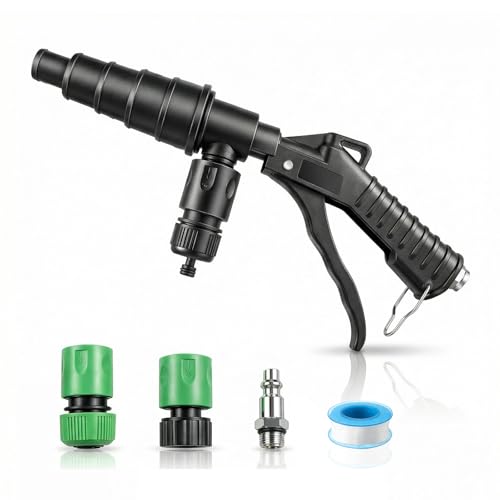 QUFYSK Coolant Flush Gun9.4/10View on Amazon
- 4
 CRC Thermocure Cooling System Rust Remover and FlushView on Amazon
- 5
 BlueDevil Products 00204 Radiator FlushView on Amazon
- 6
 Motor Medic C1412 10-Minute Radiator FlushView on Amazon
- 7
 Radiator FlushView on Amazon
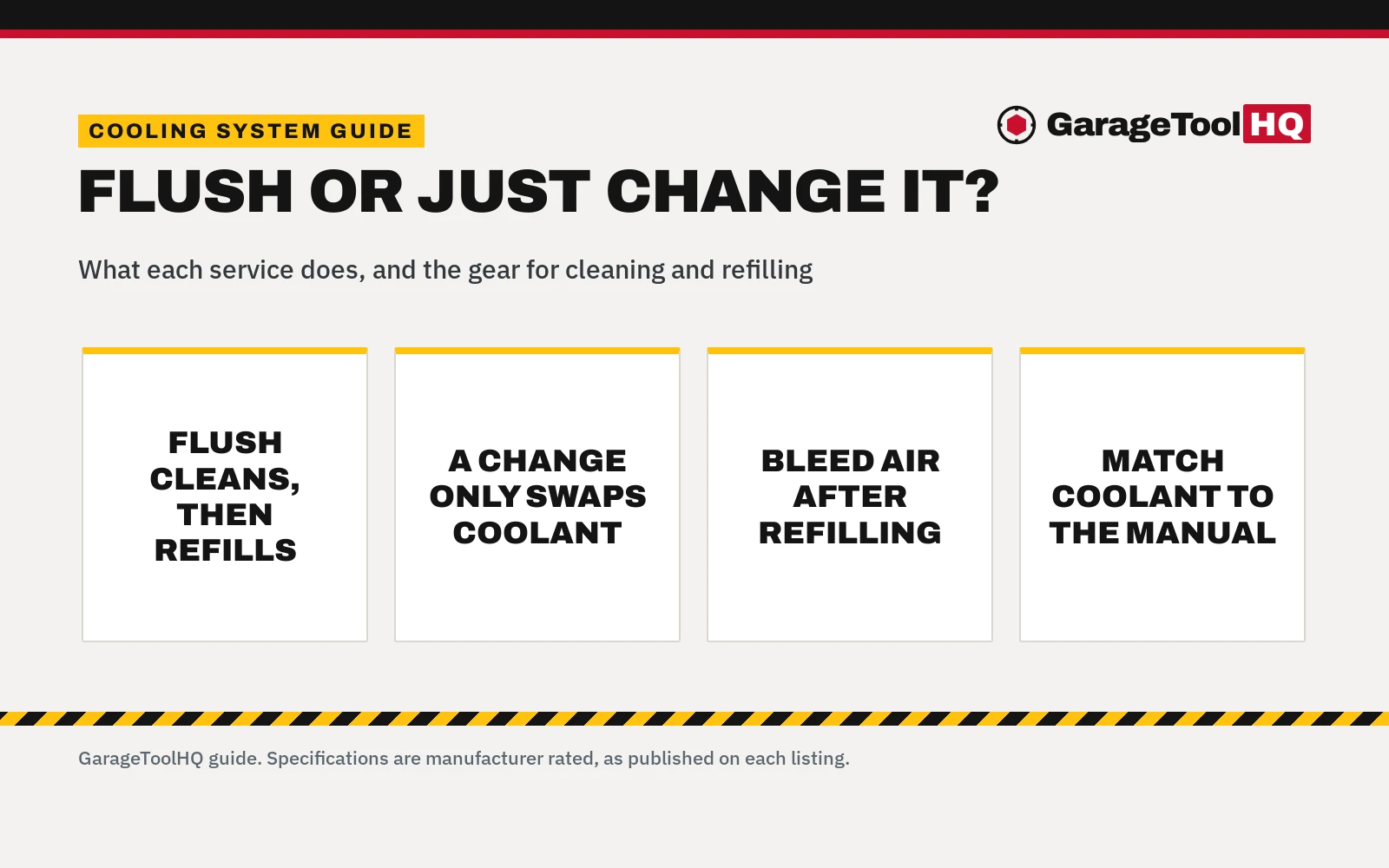
A cooling system that runs hot, or coolant that looks rusty, leaves a car owner with different services to choose from. A coolant change swaps old coolant for new; a radiator flush cleans the system first, then refills it. This radiator flush vs coolant change guide explains what each service does, when a flush makes sense, and the gear for cleaning and refilling.
Other tools worth a look
 CRC Thermocure Cooling System Rust Remover and FlushCheck price on Amazon
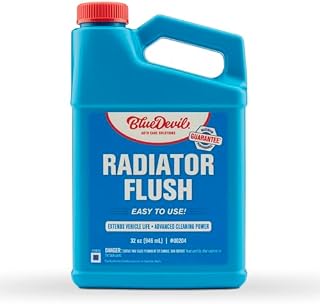 BlueDevil Products 00204 Radiator FlushCheck price on Amazon
 Motor Medic C1412 10-Minute Radiator FlushCheck price on Amazon
 Radiator FlushCheck price on Amazon
GarageToolHQ earns a commission when you buy through links on this page, at no extra cost to you. Affiliate disclosure.
Radiator flush vs coolant change: what each service does
A coolant change is the simpler service: drain the old coolant and refill with new coolant. A radiator flush adds a cleaning step before the refill: a cleaning solution works on deposits in the system, and the system is drained before new coolant goes in. Which deposits a cleaner covers, and whether the steps include flushing with water, depends on the product. The flush is the deeper service; the change is the routine service.
| Radiator flush | Coolant change | |
|---|---|---|
| What happens | Cleaner works on deposits, then the system is drained before refilling | Old coolant is drained and new coolant goes in |
| When it fits | Rust, scale, oil or grease buildup, or a neglected system before a refill | Routine service on a system that already looks clean |
| Gear in this guide | Flush cleaners, plus a funnel kit for a spill-free refill | A funnel kit for bleeding air while refilling |
When a flush makes sense
A flush makes sense when the system shows what a drain alone cannot remove. The CRC rust remover targets rust that causes overheating, and ERRECOM Zeus+ lists oil, grease, rust, scale, sludge and encrustations built up over time. BlueDevil 3 in 1 combines a degreaser with a flush and rust remover, and its listing calls it ideal for high-mileage vehicles needing intensive maintenance. ERRECOM recommends its cleaner before each coolant change. For a system that still looks clean and shows no deposits, a change alone is the lighter service.
How a flush works
The flush listings describe a similar broad shape. The CRC listing lays out the steps: drain the coolant, add the solution and top off with water, let the solution stay in the car for 3-4 hours up to several days, drain the cooling system and flush 3-4 times with water, then refill with the manufacturer’s recommended coolant. ERRECOM describes its formula as dissolving deposits and keeping them suspended until the cooling system is drained. Follow the product’s own instructions and the vehicle manual for the exact procedure on a given car.
Let the engine cool fully before opening any cap or drain. A hot system is under pressure, and opening it can release scalding coolant.
Gear for the job
CRC Cooling System Rust Remover and Flush. A 32 oz water-based bottle that treats cooling systems up to 3 gallons. The listing describes it as non-toxic and non-flammable, and as removing rust that causes overheating. Its stated process is drain, add the solution and top off with water, wait, drain, flush with water and refill. Best for a system where rust is the problem.
ERRECOM Zeus+ Cleaner for Radiators and Cooling Systems. A 12 fl oz bottle (350 mL) at a dilution of 1:33, suitable for systems up to 3 gal (11.5 L). It lists oil, grease, rust, scale, sludge and encrustations among what it removes, and states compatibility with all vehicle cooling systems and all coolants except low conductivity types. Best for a broad clean before a coolant change.
BlueDevil 3 in 1 Radiator Flush. A 1 quart formula sold as a 6 pack, combining an oil degreaser, a radiator flush and a rust remover. The listing states it flushes contaminants while removing oil residue, rust and grease, improves coolant flow and heat transfer, and suits high-mileage vehicles. Best where oil residue joins rust as a problem.
SMART JERRY Coolant Bleeder Funnel Kit. A spill-free funnel kit for the refill side of the job, with a translucent body and clear scale holding up to 77 oz (2.3L) of coolant. It comes with 5 adaptors and 6 caps, 2 straight extension tubes and 2 45 elbows, a rubber gasket for a no-spill seal and a built-in shut-off valve for controlling flow. The listing states it eliminates trapped air pockets that cause erratic cooling system and heater performance. Best for refilling without spills and bleeding air from the system.
Bleeding air after a refill
Air trapped in the cooling system causes erratic cooling system and heater performance, according to the SMART JERRY listing. A burping funnel holds coolant above the filler neck so air can escape while coolant takes its place, and the shut-off valve controls the flow during the job. The kit’s adaptors and caps fit a range of domestic and imported vehicles, and the extension tubes and elbows reach caps under shrouds or in fender wells.
Use rated jack stands on solid ground, wear eye protection with power and air tools, keep fuel-burning equipment out of a closed garage, and follow the manual for every tool. Read our Safety Disclaimer.
FAQ: garage tools
How does a radiator flush work?
A flush cleans before refilling. A cleaning solution works on deposits in the cooling system, then the system is drained and new coolant goes in. Which deposits a cleaner covers, and whether the steps include flushing with water, depends on the product. A coolant change skips the cleaning step and only drains and refills.
Does a radiator need flushing?
Flush when the system shows deposits a drain cannot remove: rust, scale, oil or grease buildup, or a neglected system. ERRECOM recommends its cleaner before each coolant change, while a system that shows no buildup fits a coolant change alone.
How long does a radiator flush take?
It depends on the product. The CRC listing states the solution should stay in the car for 3-4 hours up to several days, followed by draining and flushing 3-4 times with water. Check the product’s own instructions for its timing.
Can a radiator flush remove oil and grease?
Some flush products are made for that. BlueDevil 3 in 1 combines an oil degreaser with a flush and rust remover, and ERRECOM Zeus+ lists oil and grease among the deposits it removes. Use a product made for cooling systems, and follow its instructions.
How is air bled from the cooling system after a refill?
Use a burping funnel that holds coolant above the filler neck so trapped air can escape while coolant takes its place. The SMART JERRY kit states it eliminates trapped air pockets, with a translucent body and clear scale, a shut-off valve and adaptors for a range of vehicles.
Related: the best car radiator flush, the best coolant funnel kit and the engine and shop equipment hub.