Rotating vs Fixed Engine Stand: Which One Should You Buy?
A rotating engine stand spins the engine 360 degrees for rebuild access; a fixed stand holds it still for storage. Which type your garage needs, and the four stands worth a look.

On this page
Top picks at a glance
As an Amazon Associate we earn from qualifying purchases.
- 1
 Forward DT150B 6 Inch Heavy Duty Bench Vise with 360° Swivel9.7/10View on Amazon
- 2
 JEGS 80040 Engine Stand 750lb. Capacity 360-degree Adjustable9.4/10View on Amazon
- 3
 VEVOR Engine Stand9.5/10View on Amazon
- 4
 VEVOR Engine StandView on Amazon
- 5
 BIG RED Steel Rotating Engine Motor StandView on Amazon
- 6
 Pro 1000lb Steel Rotating Engine Stand Motor Hoist AutomotiveView on Amazon
- 7
 Heavy Duty Foldable Engine Stand 2000LBS CapacityView on Amazon
- 8
 Geared Rotating Engine Stand [1500 lb. Capacity] AdjustableView on Amazon
- 9
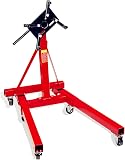 Foldable Engine StandView on Amazon
Rotating vs fixed engine stand? A rotating stand is the right call for a rebuild; a fixed stand only makes sense if the engine will mostly sit in storage. A rotating head spins the engine 360 degrees so you can bring the oil pan, the crank and the mains up to working position without unbolting the block from the stand. A fixed stand holds the engine in one position, which is fine for storage or a quick look but slow for real work.
More options to compare
 VEVOR Engine StandCheck price on Amazon
 BIG RED Steel Rotating Engine Motor StandCheck price on Amazon
 Pro 1000lb Steel Rotating Engine Stand Motor Hoist AutomotiveCheck price on Amazon
 Heavy Duty Foldable Engine Stand 2000LBS CapacityCheck price on Amazon
 Geared Rotating Engine Stand [1500 lb. Capacity] AdjustableCheck price on Amazon
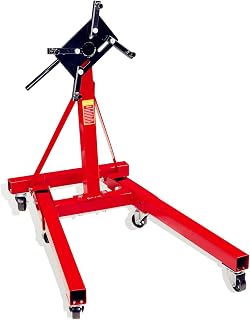 Foldable Engine StandCheck price on Amazon
GarageToolHQ earns a commission when you buy through links on our product pages, at no extra cost to you. Read our affiliate disclosure.
Below: what each type does, how the four listed stands compare, and a checklist to run before you mount an engine.
Rotating vs fixed engine stand: what each one does
A rotating engine stand mounts the engine on a head that turns a full 360 degrees. You bolt the block to the adjustable mounting arms, spin the head to bring the side you need up to working height, and lock it there. Every one of the four stands listed here is a rotating stand, with stated capacities from 1000 to 1500 lbs. A fixed stand has no rotating head: the engine goes on in one position and stays there, which suits storage and display but makes underside work awkward, since flipping the engine over means unbolting the block and re-mounting it turned.
| Rotating | Fixed | |
|---|---|---|
| Head | 360-degree rotating mounting head | Fixed mounting plate |
| Access | Spin the engine to any side | One position only |
| Best for | Rebuilds and assembly | Storage and display |
| Mobility | Casters on all four stands here | Varies; check the listing |
The type decides the workflow. If the engine will be apart for weeks, the rotating head pays for itself the first time you need the bottom end. If the engine is only waiting for its turn in the bay, a fixed stand costs less and has fewer moving parts to wear.
The gear, ranked by stated specs
The four stands here, ranked by what each listing states: the BIG RED AT37912 leads at 1,500 lbs with a folding frame, 5 casters and a limited 1 year manufacturer warranty. Next, the JEGS geared stand matches the 1500 lb rating with a geared rotating head, square tube frame and ball-bearing casters. The VEVOR lists 1300 lbs (3/5 Ton) with a 20 in handle, 6 location holes and 4 casters, two with brakes. The SUNROAD lists 1000 lbs with a 10-3/16 in face plate and 4 adjustable arms. All four spin 360 degrees; none of them is a fixed stand.
Picking the right stand
Match the stated capacity to the engine: the stands here list 1000 to 1500 lbs, and the engine’s weight is in its manual, not on the stand’s box. Check the mounting arms against the block’s bellhousing bolt pattern before you buy, and confirm the casters lock if the stand will live on a sloped driveway. For a deeper look at rated stands, see our best engine stand picks and the best engine stand for engine rebuilds guide.
Before you mount an engine: the checklist
- Confirm the capacity. The stand’s stated rating must cover the engine’s weight with margin. The four stands here list 1000 to 1500 lbs.
- Check the bolt holes. The mounting arms must line up with the block’s bellhousing bolt holes. The VEVOR lists 1.1 in hex head bolts on its arms; use the hardware the listing names and torque to the engine manual’s spec.
- Lock the casters. The VEVOR has brakes on two of its four casters. Lock every brake before you spin the engine, and chock the stand on a slope.
- Plan the fold. The BIG RED frame folds for storage; measure the folded footprint against your garage wall before the engine comes off the hoist.
- Never get under a suspended engine. Lower the engine fully onto the stand and confirm the head holds before you put your hands near it.
The same rule applies to anything that holds weight overhead. Never work under an engine that is hanging from a hoist. Lower it fully onto the stand and confirm the head lock holds before you start work.
Use rated jack stands on solid ground, wear eye protection with power and air tools, keep fuel-burning equipment out of a closed garage, and follow the manual for every tool. Read our Safety Disclaimer.
Frequently Asked Questions
What is the difference between a rotating and a fixed engine stand?
A rotating stand has a head that turns the engine a full 360 degrees, so you can bring the underside up to working height without unbolting and re-mounting the block. A fixed stand holds the engine in one position. All four stands listed here are rotating stands.
How much weight can these engine stands hold?
The four stands here list 1000 to 1500 lbs: the BIG RED and JEGS at 1,500 and 1500 lb, the VEVOR at 1300 lbs and the SUNROAD at 1000 lbs. Check the engine’s weight in its manual and keep margin under the stand’s stated rating.
Do I need a rotating engine stand for a rebuild?
For a rebuild, yes: the rotating head lets you spin the block so the oil pan, crank and mains come up to working position without unbolting and re-mounting the engine. For storage or a quick inspection, a fixed stand is enough.
Can I store an engine on a rotating stand?
Yes, with the head locked and the casters braked. The BIG RED lists a folding frame, which helps when the stand itself needs to store flat against the wall.
What should I check before mounting an engine?
Match the stated capacity to the engine’s weight, confirm the mounting arms fit the block’s bolt holes, and lock the caster brakes. Lower the engine fully onto the stand and confirm the head holds before you start work.
Related: best engine stand, best engine stand for engine rebuilds, engine stand vs engine hoist, how to use an engine hoist safely, how to choose an engine hoist, and the engine and shop equipment hub.