Rust Remover Car Parts: How to Remove Rust from Auto Parts (2026)
How rust remover sprays, penetrating lubricants and rust converters clean car parts: which type fits wheels, bolts and repaint jobs, and the steps to use them.

On this page
Top picks at a glance
As an Amazon Associate I earn from qualifying purchases.
- 1
 Fiberglass Pen Scratch Brush Set9.5/10View on Amazon
- 2
 STAR BRITE Corrosion Buster Pen9.5/10View on Amazon
- 3
 Fiberglass Scratch Brush Pen9.4/10View on Amazon
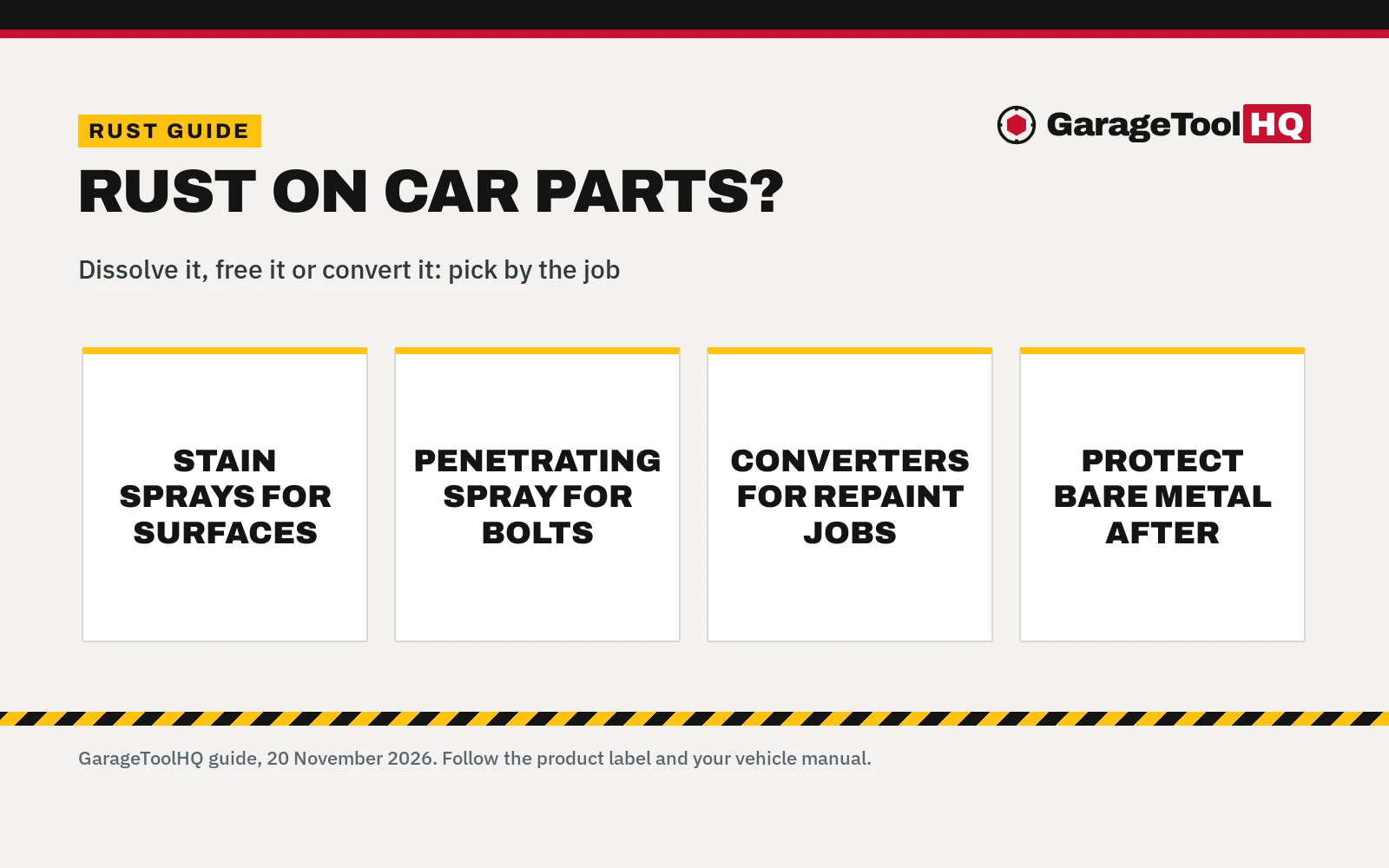
A rust remover for car parts works by dissolving, loosening or converting the rust on a metal part so the part can be cleaned, freed up or repainted. The right choice depends on the job in front of you: a spray that dissolves rust stains on a wheel or bracket, a penetrating rust remover lubricant that frees a seized bolt, or a rust converter that turns rust into a paintable surface. This guide to rust remover car parts options explains how each type works, when to reach for it in the garage, and how to use it without damaging the part.
GarageToolHQ earns a commission when you buy through links on our product pages, at no extra cost to you. Read our affiliate disclosure.
Below: how rust forms on car parts, the main kinds of rust remover and what each one is for, a step by step routine for cleaning a rusty part, and how to keep rust from coming back.
Rust remover car parts: what rust is and why it matters
Rust is iron oxide, the flaky reddish coating that forms when bare steel meets water and air. On car parts it shows up on bolts, brackets, brake hardware, wheels and underbody metal, anywhere paint or plating has chipped away. Left alone, rust keeps eating into the metal, seizes fasteners so they will not turn, and lifts paint so more water gets in. Removing rust is not just cosmetic: a cleaned, protected part lasts longer and takes paint properly.
Not all rust is the same job. Light surface rust on painted or plated parts usually responds to a dissolving spray and a wipe. Rust that has seized a bolt needs a penetrating product that creeps into threads. Heavy rust on a part you plan to repaint is often handled with a converter, which changes the rust into a stable layer you can paint over.
The main kinds of rust remover for car parts
| Type | What it does | Good for |
|---|---|---|
| Rust stain remover spray or gel | Dissolves rust stains and deposits on contact, often with a clinging formula that stays on vertical surfaces | Wheels, chrome, painted brackets, tools and garage equipment with surface rust staining |
| Rust remover lubricant (penetrating spray) | Penetrates rusted threads and joints, loosens stuck fasteners and leaves a protective film | Seized bolts and nuts, hinges, chains and frozen mechanical parts |
| Rust converter spray paint | Converts rust into a flat black, paintable surface and helps prevent future corrosion | Rusty metal parts you will repaint, where sanding to bare metal is slow or impractical |
| Mechanical removal (wire brush, abrasive) | Physically scrubs or grinds rust off the surface | Heavy scale and flaking rust before a chemical treatment or repaint |
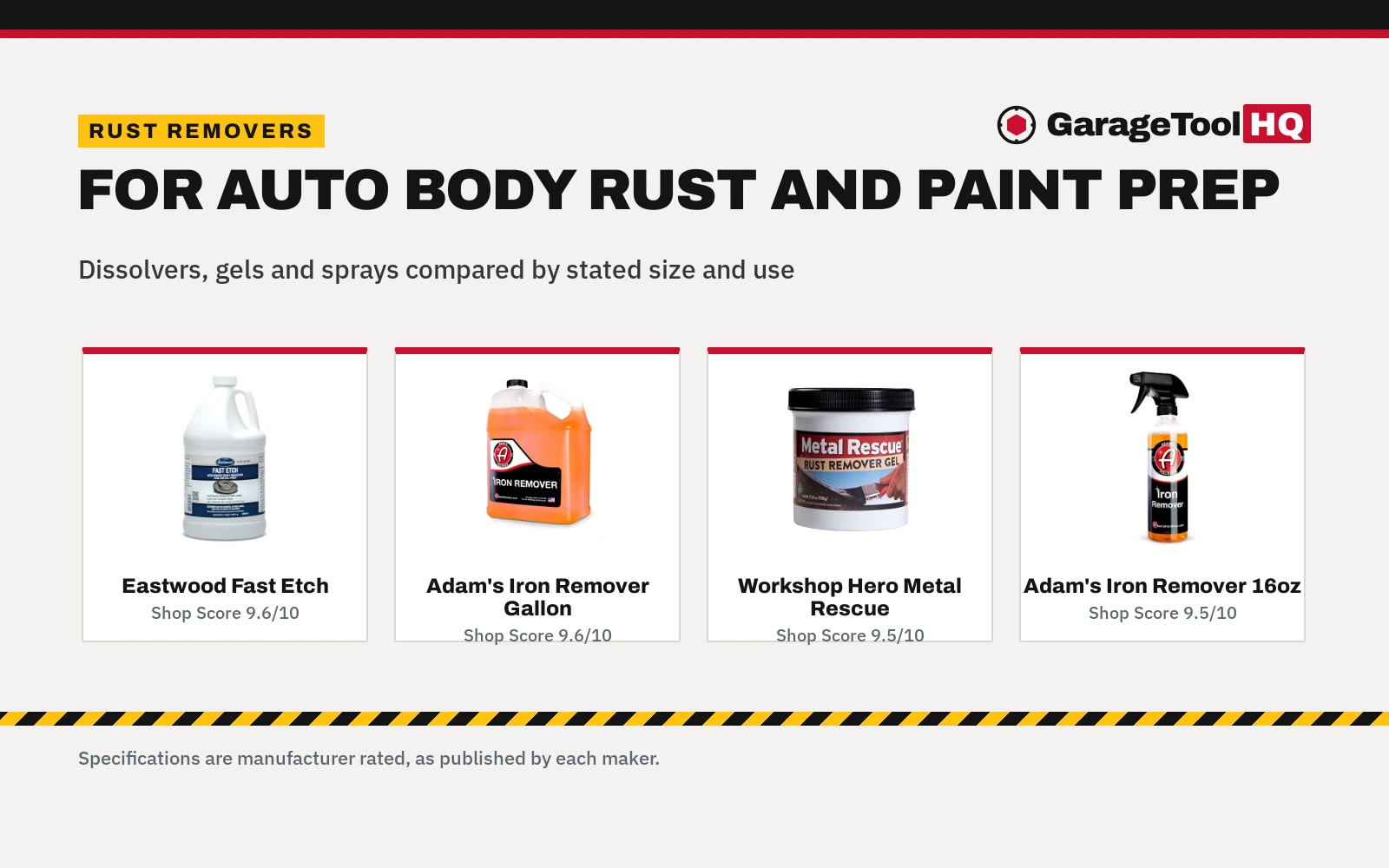
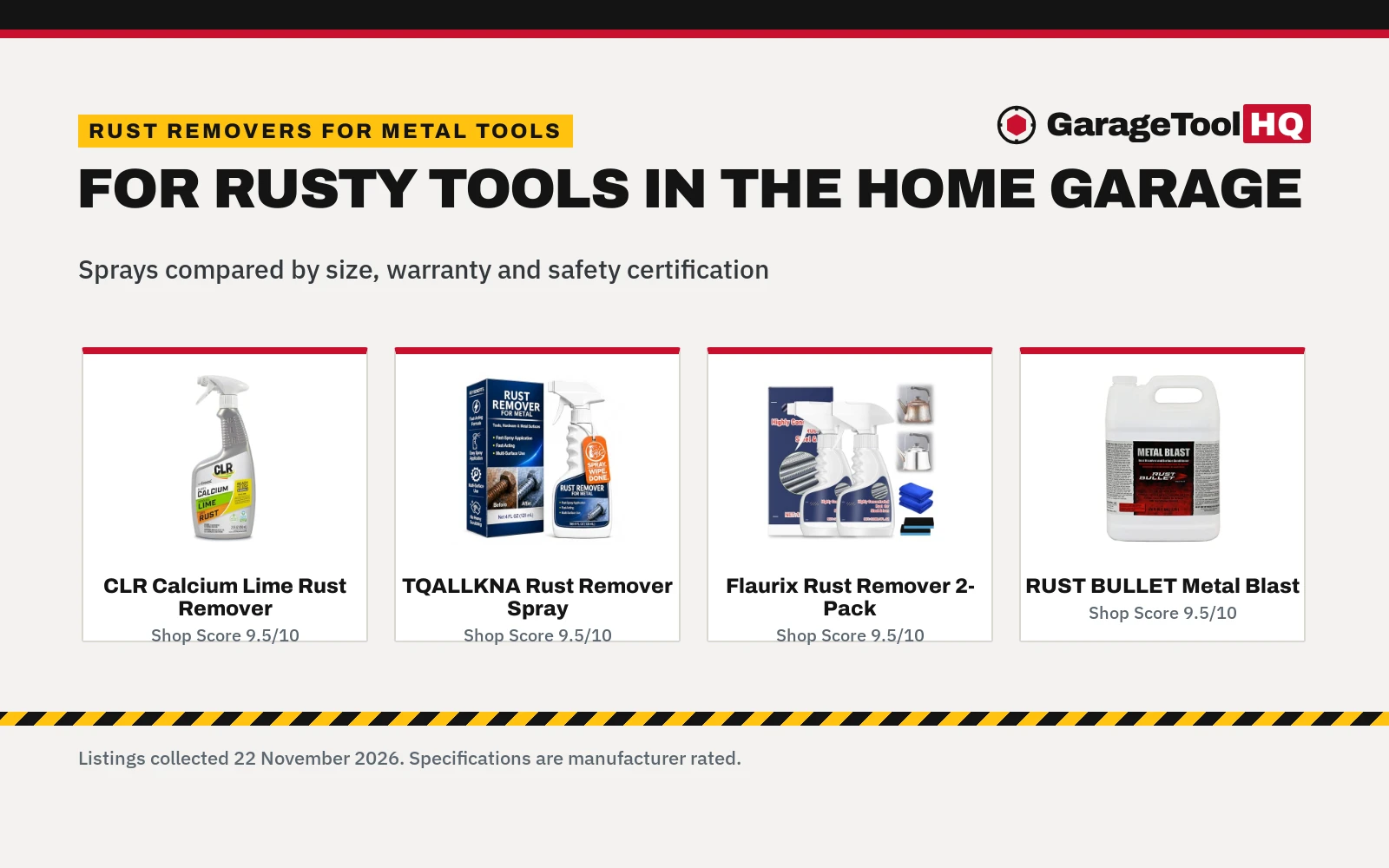
The CLR Calcium, Lime & Rust Remover with Cling comes in a 22 oz spray bottle, and the maker states it adheres to vertical and hard-to-reach surfaces and dissolves rust buildup. The other CLR 22 oz spray is stated for use on car wheels and garage equipment. Iron OUT Rust Stain Remover Spray with Cling is a 24 oz no-scrub gel that the maker says dissolves orange rust stains on contact. For larger jobs, CLR PRO Calcium, Lime & Rust Remover comes in a 1 gallon container, and the maker states it is also used for removing rust on tools, equipment and cars.
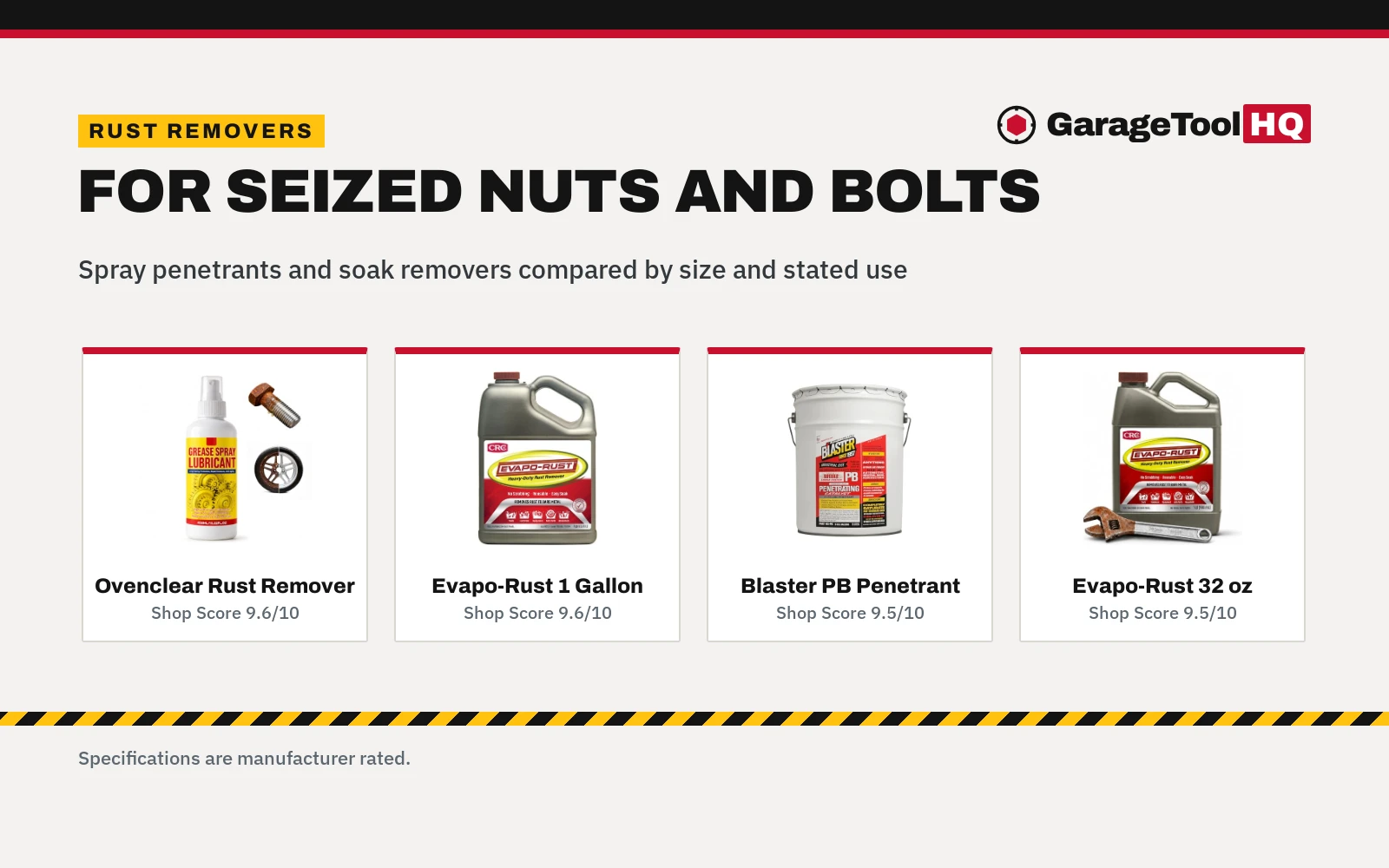
When the problem is a fastener that will not move, a penetrating rust remover lubricant fits better than a stain remover. The HUTTUP Rust Removal Lubricant (on Amazon), in a 15.2 oz bottle, is stated for metal, vehicles, tools, chains, bolts and hinges; the maker says it penetrates rusted parts, loosens stuck bolts and frozen mechanical devices, and leaves a protective film that helps prevent oxidation. For the same kind of job, see our guide to penetrating oil for rusted bolts.
A rust converter takes a different approach: instead of removing rust, it converts it. Rust-Oleum Stops (on Amazon) Rust Reformer is a spray paint in a 10.25 oz can that the maker says converts rust into a flat black, paintable surface, prevents future rust, and can be sprayed from any angle. The maker states it dries tack free in 20-40 minutes and to allow 24 hours before applying a topcoat. Converters suit parts that will be repainted, such as brackets, frames and underbody pieces; our rust converter for auto body guide covers that use in more detail.
How to remove rust from a car part: step by step
- Clean the part first. Wash off dirt, oil and road grime so the rust remover reaches the rust, not the dirt on top of it. Degrease oily parts and let them dry.
- Knock off loose rust. Scrub flaking rust with a wire brush or abrasive pad. Heavy scale blocks sprays from working; our wire brush for rust removal guide covers brush choices, and the same routine works on small parts as in our guide to cleaning rusty drill bits.
- Pick the product for the job. Stain remover for surface staining, penetrating lubricant for seized threads and joints, converter for rusty metal you will repaint. Check the label for the surfaces the maker lists, and try the product on a hidden spot of painted or plated parts first.
- Apply and give it time to work. Spray evenly, and use a clinging gel or foam on vertical parts so it stays in contact instead of running off. Follow the dwell time on the label rather than scrubbing straight away.
- Wipe, rinse and dry. Wipe off dissolved rust, rinse where the label calls for it, and dry the part fully. Bare metal left damp starts rusting again quickly.
- Protect the clean metal. Paint, coat or oil the part right away. A converter coat, a rust preventive paint, or a light oil film on hardware keeps air and water off the fresh surface.
Choosing a rust remover for car parts
Match the product to the part and the finish you need. For wheels, chrome trim and painted parts with rust stains bleeding through, a stain remover spray that the maker lists for those surfaces is the gentle option; harsh abrasives can scratch chrome and paint. For bare steel hardware, brackets and tools, stain removers and penetrating lubricants both work, and the penetrating type also frees moving parts. For parts that will be repainted, a converter saves the long job of sanding every pit back to bright metal, and our rust remover for metal guide compares removal options for bare metal.
Keep rust removers off surfaces the label does not list, wear gloves and eye protection, and work with ventilation in the garage.
Keeping rust from coming back
Clean metal can rust again once water and air reach it, so protection is part of the job, not an extra. Paint repainted parts promptly, oil bare hardware that lives outdoors, and keep threaded fasteners protected so they come apart next time; our guide on whether anti-seize prevents rust explains what thread compounds do and do not do. Store cleaned parts dry, off a damp garage floor, and touch up chipped paint before rust gets a hold.
FAQ: garage tools
What is the best type of rust remover for car parts?
It depends on the job. Use a rust stain remover spray for surface rust and stains on wheels, chrome and painted parts, a penetrating rust remover lubricant for seized bolts and joints, and a rust converter for rusty metal you plan to repaint.
Can I use a household rust stain remover on car parts?
Often yes, if the maker lists the surface. Products such as CLR state use on car wheels and garage equipment, and Iron OUT is made for rust stains on hard surfaces. Check the label for painted, chrome or plated finishes, and try it on a hidden area first.
Does a rust converter remove rust or cover it?
It converts it. A converter such as Rust-Oleum Stops Rust Reformer chemically changes rust into a stable, paintable layer rather than removing it, which is why it suits parts that will be repainted. The maker states it dries tack free in 20-40 minutes, with 24 hours before a topcoat.
How do I free a rusted bolt that will not turn?
Use a penetrating rust remover lubricant, give it time to creep into the threads, then work the bolt back and forth gently instead of forcing it in one direction. Repeat the application if it stays stuck, and protect the threads when you refit the bolt.
Will rust come back after I remove it?
It will if the bare metal is left unprotected. Paint, coat or oil the part as soon as it is clean and dry, and keep it stored away from standing water and damp floors.
Do I need to sand rust off before using a rust remover?
Remove loose, flaking rust with a wire brush first so the product reaches sound metal. Light surface rust and stains usually need no sanding; heavy scale does.
Related: rust remover for metal, rust converter for auto body, penetrating oil for rusted bolts, our engine and shop equipment hub and the safety disclaimer.