Socket Set Types: Complete Guide for Home Garages
A complete guide to socket set types for home mechanics, covering drive sizes, socket depths, opening profiles, impact designs, and drawer storage.

On this page
Top picks at a glance
As an Amazon Associate we earn from qualifying purchases.
- 1
 CRAFTSMAN 230 Pcs Mechanics Tool Set9.8/10View on Amazon
- 2
 CASOMAN 3/8" Drive Impact Socket Set9.8/10View on Amazon
- 3
 VEVOR 3/8" Drive Impact Socket Set9.8/10View on Amazon
When you tackle a brake caliper swap or suspension overhaul on a Saturday morning, grabbing the right socket set types determines whether you loosen stubborn fasteners cleanly or round off bolt heads. The primary socket set types differ by drive square size, socket depth, opening geometry, and metallurgical construction, ranging from compact small-drive sets for dashboard trim to thick-wall impact sets for high-torque chassis work. A standard chrome hand set handles daily ratcheting, deep sockets reach over extended studs, hex sockets maximize grip on stuck hardware, and ductile impact sockets endure severe rotary impact blows. Matching the configuration to the fastener protects your tools and hardware.
GarageToolHQ earns a commission when you buy through links on our product pages, at no extra cost to you. Read our affiliate disclosure.
Below: how socket drive formats differ, how to match depth and opening geometry to the job, and when to grab impact sockets.
Socket set types: how drive sizes, depths, and wall profiles differ
A socket connects to a drive tool at the base and grips a fastener head at the opening. Because automotive fasteners face different torque demands and clearance limits, socket set types divide across key physical variations:
- Drive square size. The square drive recess determines the torque a ratchet or breaker bar can safely transmit. Small-drive sockets navigate tight engine bays and dashboard assemblies where bulky tools cannot fit. Medium-drive sockets serve as the universal garage workhorse for alternator bolts and brake hardware. Large-drive sockets provide the thick steel required for high-torque suspension fasteners, hub assemblies, and truck lugs. Heavy shop sockets handle commercial axles and industrial machinery.
- Socket well depth. Shallow sockets feature a compact profile that slips into tight overhead clearances where long tools strike body panels. Deep sockets feature an extended barrel that swallows protruding threaded studs on exhaust hangers, U-bolts, and valve covers. Deep sockets also reach recessed fasteners inside deep cavities, such as cylinder head bolts and suspension strut top nuts.
- Fastener opening profile. Internal broaching geometry dictates how the socket contacts fastener flanks. Hex sockets deliver broad contact across fastener flats, minimizing the risk of rounding seized bolt corners. Multi-point sockets offer double-hex broaching for multiple engagement angles where obstacles restrict handle positioning. Specialty profiles include external star sockets for inverted Torx hardware and driver bit sockets for internal hex or star fasteners.
- Wall thickness and metallurgy. Hand-drive chrome sockets use hardened alloy steel with thin walls for cramped engine bays. Impact sockets use ductile chrome molybdenum steel with thick walls and a dark manganese phosphate finish to absorb repetitive hammer blows without shattering.
Comparing socket set categories: drive formats, depth profiles, and intended duty
| Socket category | Primary design feature | Best garage application |
|---|---|---|
| Small-drive chrome sockets | Compact outer diameter and slender profile | Interior trim, electronics, and small engine carburetors |
| Medium-drive chrome sockets | Balanced wall thickness and leverage capacity | Brake caliper brackets, water pumps, and alternator mounts |
| Large-drive chrome sockets | Thick-wall forged steel for manual leverage | Suspension control arms, subframe bolts, and wheel lug servicing |
| Deep-well chrome sockets | Extended cavity accommodating protruding studs | Exhaust manifold hardware, U-bolts, and recessed strut mounts |
| Heavy-duty impact sockets | Thick ductile steel with manganese phosphate finish | Powered impact wrench duty on seized chassis hardware |
| Universal swivel sockets | Integrated flexible pivot joint behind broach | Angled access around bellhousing bolts and steering shafts |
| Internal hex and star bit sockets | Rigid tool steel bit pressed into chrome socket | Brake caliper slide pins, intake bolts, and sensor mounts |
The label on the storage case and the broaching stamped on the steel define operational limits. Using a chrome socket on a powered impact wrench risks metal fragmentation, while using an oversized drive format in a tight engine bay causes awkward angles and damaged threads.
How to choose and use socket set types safely: the garage checklist
- Confirm the drive tool matches fastener demand. Reach for small-drive ratchets on small fastener heads to prevent stripped threads. Use medium-drive tools for underhood hardware, and reserve large-drive ratchets or breaker bars for stubborn chassis bolts.
- Inspect the fastener head before selecting an opening. If a bolt head shows corrosion or rounding, choose a hex socket instead of a multi-point model. Broader flat contact grips securely and avoids point loading on damaged corners.
- Check well clearance and stud protrusion. Check whether protruding threads push the ratchet drive anvil out of engagement. If the stud hits the drive anvil before the broach fully seats over the nut flats, switch to a deep-well socket.
- Match socket material to the power source. Only pair impact-rated sockets with pneumatic or cordless impact wrenches. Standard chrome sockets possess brittle surface hardness that can crack under hammer blows.
- Verify full seating onto the fastener. Push the socket square and flat against the bolt head before applying leverage. Cocked sockets concentrate torque on fastener edges, causing slippage and rounded heads.
- Support flexible joints during off-angle pulls. When using universal swivel sockets or wobble extensions, steady the pivot head with your free hand while pulling the ratchet handle to prevent binding or snapping.
- Always pull the ratchet handle toward you. Pull the handle rather than pushing it. If a seized bolt suddenly yields, pulling keeps knuckles from striking sharp metal brackets or radiator fins.
- Wear approved eye protection during high-torque breaking. Fasteners under high load can shear unexpectedly. Quality safety glasses prevent flying metal shards or rust scale from reaching your eyes.
- Return sockets to designated organizers immediately. Keep sockets arranged systematically on labeled rails or molded trays by drive format and depth to prevent lost sizes and maintain a clear workspace.
Never attach standard chrome-plated sockets to powered impact wrenches. Chrome sockets are heat-treated for static rigidity, making them brittle under impact hammer cycles. Rotary impact shock can shatter chrome walls, hurling sharp steel fragments across the shop. Always use dedicated, ductile impact sockets for power tools.
Use rated jack stands on solid ground, wear eye protection with power and air tools, keep fuel-burning equipment out of a closed garage, and follow the manual for every tool. Read our Safety Disclaimer.
Impact sockets vs chrome hand sockets
Choosing between chrome hand sockets and heavy-duty impact sockets is a critical decision in outfitting a garage workshop:
- Material composition: chrome sockets rely on chrome alloy steel heat-treated for static torsional strength, keeping walls rigid and thin. Impact sockets use ductile chrome molybdenum steel formulated to flex minutely under impact hammer pulses without shattering.
- Wall thickness and clearance: chrome hand sockets feature slender outer dimensions that slip easily into tight gaps around engine accessories. Impact sockets feature thicker walls to withstand radial expansion forces, which can restrict access in tight counterbores.
- Protective surface finish: chrome sockets sport polished plating that resists corrosion and wipes clean easily. Impact sockets feature a matte black manganese phosphate or black oxide conversion coating that holds oil and cannot chip or flake under hammer blows.
- Drive retention mechanism: chrome sockets utilize internal detent grooves to engage the ball bearing of a hand ratchet. Impact sockets include cross-hole pinning ports and ring grooves to accept positive locking pins or friction rings on power anvils.
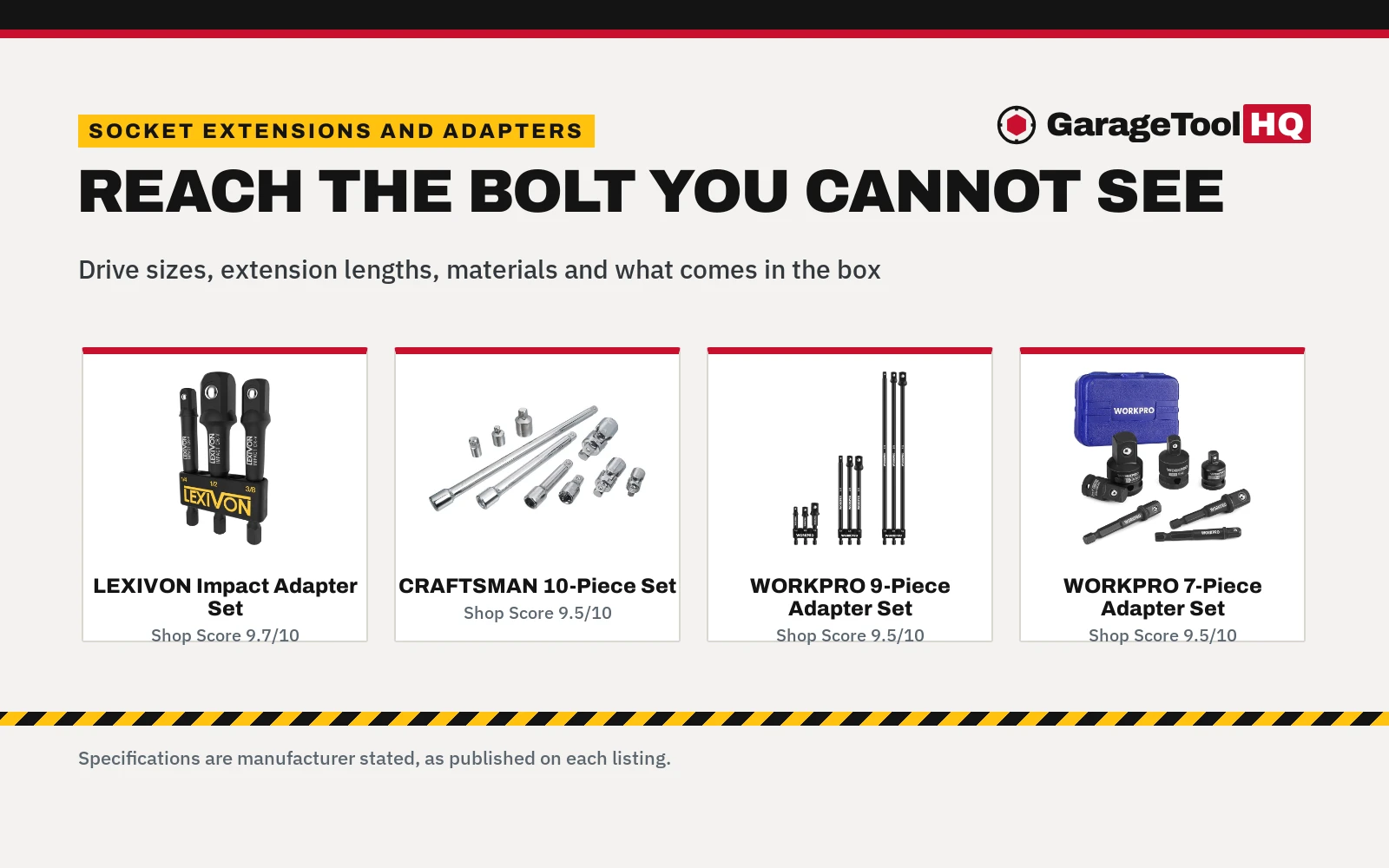
For routine manual wrenching with hand ratchets and torque wrenches, a complete best socket set for mechanics provides the ideal balance of clearance and precision. When switching to cordless or pneumatic impact guns for tire rotations and suspension tear-downs, always reach for a dedicated socket set for impact to preserve safety and prevent tool failure.
Socket organization and drawer storage
A scattered pile of loose sockets in a drawer wastes time and leads to rounded fasteners when you grab an incorrect size. Proper organization protects your investment and streamlines repairs:
- Socket rails with spring clips: metal or composite rails with retention clips hold sockets firmly upright or horizontal. These rails make it easy to carry an entire drive set under a vehicle on a mechanic creeper without loose pieces tumbling across the floor.
- Pegged molded trays: rigid plastic trays feature vertical posts labeled with fastener dimensions. They offer immediate visual inventory, showing instantly if a socket was left on a suspension arm or dropped in an engine valley.
- Magnetic socket organizers: magnetic bases secure sockets inside molded wells while adhering firmly to steel tool chest drawer bottoms, keeping sockets locked in position when drawers open and close.
Equipping your collection with the best socket organizer or dedicated socket organizer for tool box drawer transforms your workflow. If reconfiguring your storage setup, read our guide on how to organize a tool chest and check how to choose a tool chest to ensure your drawers have sufficient vertical clearance for deep-well sockets standing on end.
Frequently Asked Questions
What are the most common socket set types for home mechanics?
The most widely used configurations are standard-depth chrome hand sockets, deep-well chrome sockets, and heavy-duty impact sockets across small, medium, and large drive sizes. Most home garages rely primarily on medium-drive sets for general maintenance, paired with large-drive sockets for chassis bolts and wheel lugs.
When should I use deep sockets instead of shallow sockets?
Reach for a deep socket whenever a fastener nut sits on a long threaded stud that bottoms out against the anvil of a shallow socket. Deep sockets are also essential for reaching recessed hardware located inside deep pockets, such as suspension strut mounts.
What is the difference between hex and multi-point sockets?
Hex sockets have internal flat sides that grip fastener flats, providing superior grip and minimizing the risk of rounding stubborn hardware. Multi-point sockets feature double-hex broaching that allows seating at twice as many rotational angles, which proves valuable where obstacles restrict handle positioning.
Can I use chrome sockets on a cordless impact wrench?
No. Standard chrome sockets are hardened for manual torque and lack the metallurgical ductility needed to absorb violent impact pulses. Using chrome sockets on powered impact tools can cause socket walls to shatter, posing severe injury risks from flying metal fragments.
What drive size should a beginner mechanic start with?
A medium-drive socket set is the ideal starting point for a home garage. It offers the versatility to handle typical automotive maintenance tasks, from oil changes and battery brackets to brake calipers, balancing clearance and torque capacity.
Do I need both metric and standard sockets in my garage?
Most modern domestic and import passenger vehicles use metric fasteners almost exclusively. However, standard imperial fasteners remain common on older trucks, classic cars, lawn equipment, and trailers. Having a collection that includes metric and imperial socket sizes ensures you are prepared for whatever fastener you encounter.
Related: our guide to best socket set for mechanics, the socket set for impact overview, our best torque wrench for home mechanics guide, drawer layouts in how to organize a tool chest, and the main tool storage hub.