Types of Air Hoses: Materials and Best Uses
Rubber, PVC, hybrid and recoil hoses compared by material, size and pressure rating, so you can match the right air hose to your compressor and your garage jobs.

On this page
Picture a Saturday brake job: the impact wrench is on the bench, the tire needs air, and the blow gun is ready to clear dust off the rotors. Every job on that list runs through the same link, the hose between the compressor and the tool, and the wrong hose turns a quick job into a slow one. The types of air hoses differ by material, size, pressure rating and fittings, and the right choice matches the tool, the compressor and the space it has to cross.
As an Amazon Associate I earn from qualifying purchases. GarageToolHQ earns a commission when you buy through links on our product pages, at no extra cost to you. Read our affiliate disclosure.
Below: the materials you will meet, the sizes and ratings that matter, the fittings that connect it all, and a short checklist for picking a hose that fits your garage.
Types of air hoses: the materials you will meet
Material decides how a hose feels, how it coils, and how it behaves in cold weather:
- Rubber. The classic garage hose: heavy and flexible in cold weather compared with PVC. Rubber composite also shows up in heavy-duty spray sets.
- PVC. Light and easy to coil. It stiffens as the temperature drops, so it suits mild weather and light duty.
- Hybrid rubber and PVC. A blend of rubber and PVC, like the YOTOO hose (on Amazon) listed at 1/4 in x 50 ft: lighter than rubber, more flexible than PVC, and listed for all-weather use. FYPower kits pair one with a tire inflator gauge and a blow gun.
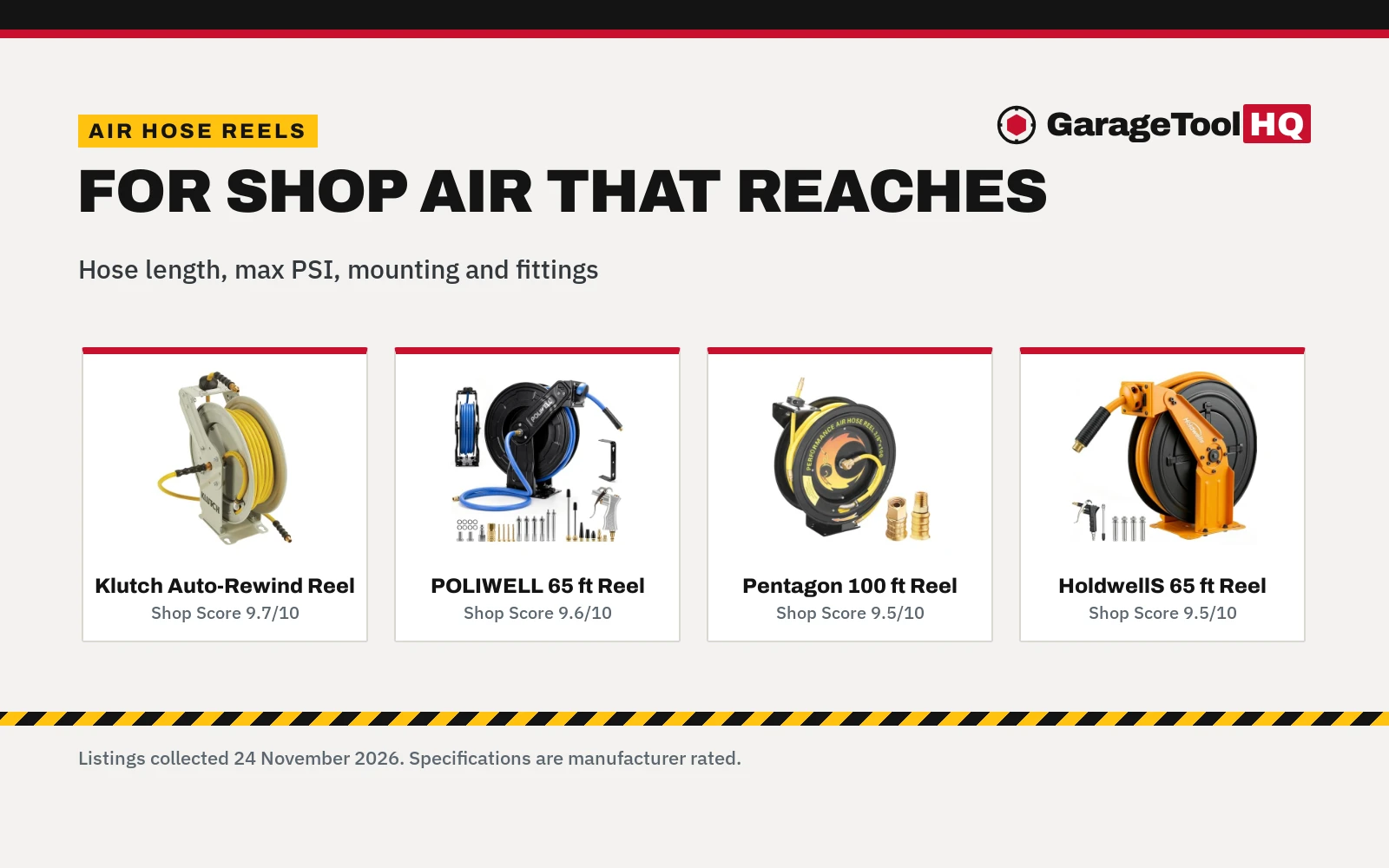
- Recoil poly. A coiled hose that stretches to the job and springs back for storage, like the FYPower recoil poly hose at 1/4 in x 25 ft. It keeps the floor clear, but the coil fights back on long reaches.
- Thermoelastic truck lines. The semi-truck air lines use a thermoelastic material with a double-braided build and spring joints at both ends, built for the gap between a truck and a trailer, not a garage compressor.
No single material suits every job. Rubber suits cold garages and heavy use, PVC suits light duty and a tight budget, hybrid suits the middle ground, and recoil poly suits short reaches where storage matters.
Diameter, length and pressure rating
After material, diameter, length and pressure rating decide whether a hose can feed the tool.
- Inside diameter. Garage hoses in the reference listings run from 1/4 in to 3/8 in, with a 5/16 in inside diameter on the spray-gun air hose. At the same length and pressure, a wider hose can feed more air, so an impact wrench can pair better with 3/8 in hose when its manual calls for that bore, while a 1/4 in hose suits a blow gun or a tire inflator.
- Length. The listings show 12 ft and 15 ft truck lines, a 25 ft recoil hose, a 30 ft spray set and 50 ft hybrid hoses. Measure from the compressor to the farthest corner you work in, then add slack for bends. A hose that is too short gets dragged and kinked.
- Pressure rating. The YOTOO hybrid hose carries a 300 PSI working pressure and a 1200 PSI burst pressure. The FYPower hybrid kits also list 300 PSI, the recoil poly kit lists 120 PSI, and the tire inflator gauges in those kits read to 100 PSI. Working pressure is the ceiling for everyday use; burst pressure is the maker figure for the pressure at which the hose is rated to burst. Never run a hose above its working pressure.
Fittings, couplers and ends
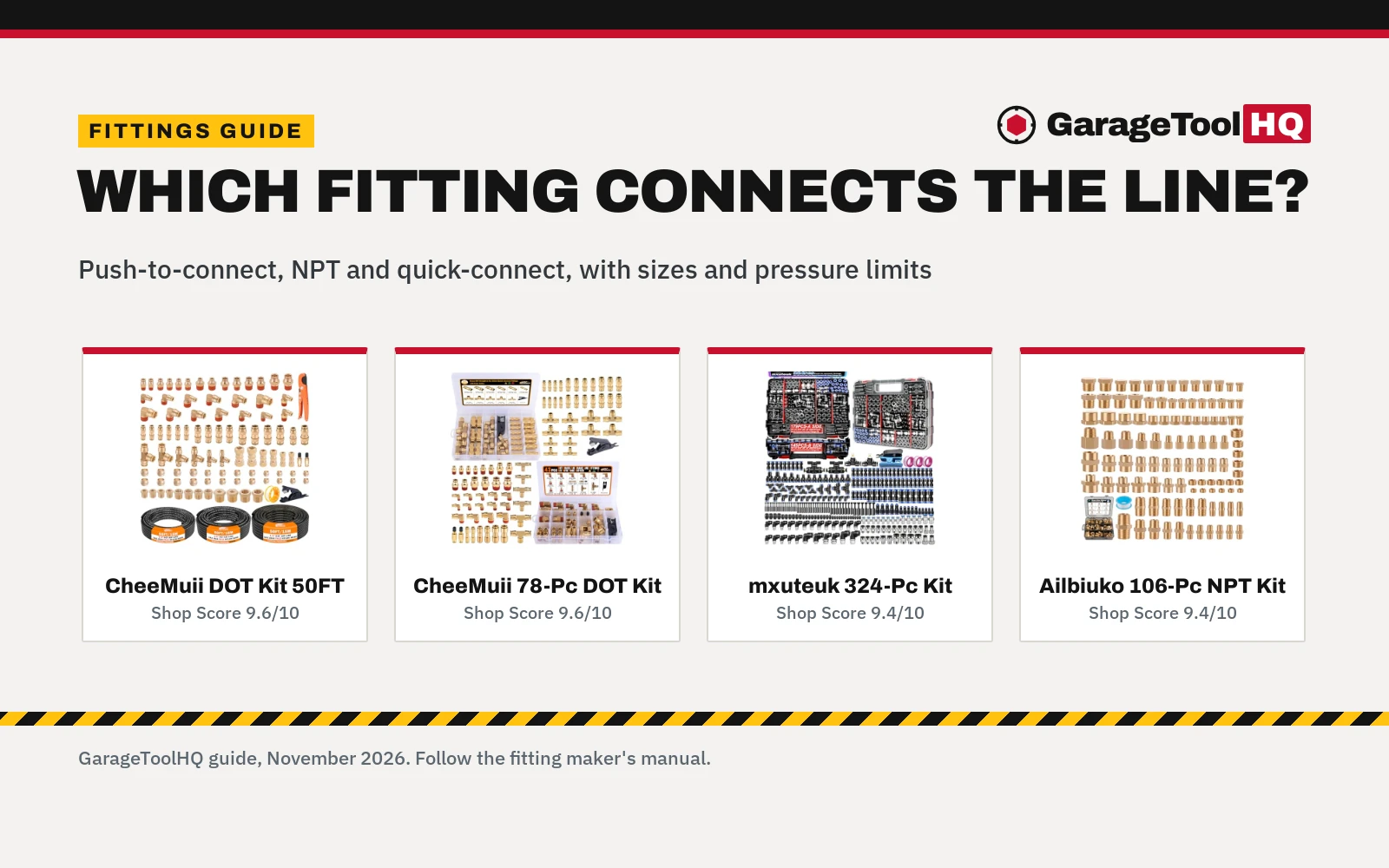
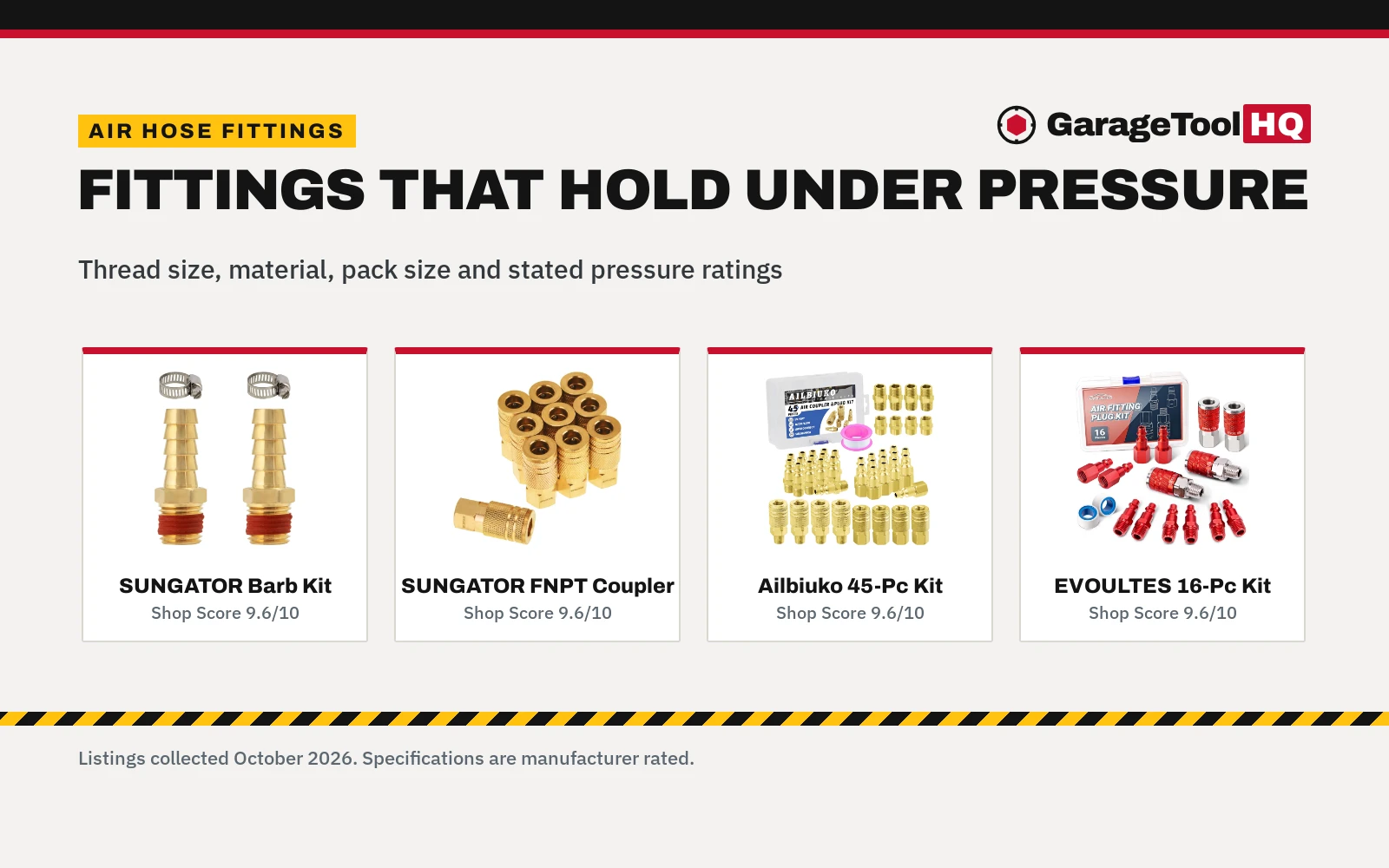
Garage hoses in the listings use 1/4-inch industrial fittings, with 1/4 inch FNPT and MNPT couplers on the FYPower kits, and a quick coupler that snaps onto the compressor and the tool. The YiaChuii truck line (on Amazon) uses a 1/2 inch NPT port with a 360° swivel fitting, and the spray set uses 3/8″ NPS air fittings and 1/4″ NPS fluid fittings. Match the thread size and the coupler style on both ends. Bend restrictors at both ends cut kinking where the hose meets the fitting. See the guide to air compressor nozzle tips.
Semi-truck air lines are a different job
The CheeMuii 3-in-1 kits and the YiaChuii set look like air hoses, but they serve a truck, not a garage. They run 12 FT or 15 FT between a tractor and a trailer, with red and blue lines for service and emergency brakes, a 7-way trailer cord, glad hands, a gladhand holder and tender springs in 16 inch and 20 inch lengths. The air hose inside is 3/8″ ID and meets DOT SAE J1402A, with SAE J2394 and SAE J560 on the cord and plugs, and the YiaChuii lines are rated to -65F. None of that fits a garage compressor: glad hands connect to a trailer, not to a coupler, and the 7-way cord carries trailer power and signals. For garage air tools, pick a compressor hose instead.
How to pick the right hose for your garage
- Start with the tool. Check the tool manual for the fitting size and the air it needs. A blow gun and a tire inflator run fine on a 1/4 in hose; an impact wrench wants the wider 3/8 in hose.
- Measure the reach. A 25 ft recoil hose covers a bench and the car beside it; a 50 ft hose reaches across a garage and out the door. Coil the extra length out of the walkway so nobody trips on it.
- Match the rating. Pick a working pressure at or above the compressor output and the tool rating. Compare the hose working pressure with your compressor output and tool rating; a 120 PSI recoil hose suits light duty and tire work when those ratings allow it.
- Think about the weather. A garage that freezes in winter suits rubber or hybrid hose; PVC stiffens in the cold. Truck lines rated to -65F show how far cold-weather ratings go, but a garage hose only needs to handle your local winter.
- Check the warranty. Terms run from a 1 year manufacture term on the CheeMuii kits to a 2 year term on the YOTOO hose and the SMZTools set.
Drain the tank after use so water does not rust it from the inside, never exceed the tool's rated pressure, wear eye protection, and run 240V units on the circuit the manual calls for. Do not run a gas engine compressor in a closed garage. Read our Safety Disclaimer.
FAQ: garage tools
What size air hose do I need for an impact wrench?
A 3/8 in hose is the usual pick for an impact wrench, since the wider bore feeds more air to the tool than a 1/4 in hose. The 3/8 in x 50 ft hybrid kits carry a 300 PSI rating; compare that figure with your compressor output and the wrench rating. Check the wrench manual for its fitting size and air needs.
Can I leave a PVC air hose outside in winter?
PVC stiffens in cold weather, so a PVC hose left outside in winter gets hard to coil and harder to handle. Rubber and hybrid hoses stay flexible in the cold, and the YOTOO hybrid hose is listed for all-weather use.
What does the PSI rating on an air hose mean?
Working pressure is the maximum the hose is rated to carry in everyday use; burst pressure is where it fails. The YOTOO hose lists a 300 PSI working pressure and a 1200 PSI burst pressure, so the burst figure sits above the working figure on that hose. Never run a hose above its working pressure.
Are air hose fittings universal?
Not quite. Most garage hoses use 1/4-inch industrial fittings, but sizes vary: the listings show 1/4 inch and 1/2 inch NPT ports, plus 3/8″ NPS and 1/4″ NPS fittings on the spray set. Match the thread size and the coupler style on the compressor and the tool, and keep fitting types consistent across the garage so hoses and tools match without adapters. See the guide to air compressor fittings types.
How long should a garage air hose be?
Long enough to reach the farthest job from the compressor, with slack for bends. A 25 ft recoil hose suits a bench and the car beside it, a 30 ft set suits spray work around a car, and a 50 ft hose reaches across a garage and out the door. Measure the run before you buy.
Can I use a semi-truck air line kit with a garage compressor?
No. The CheeMuii and YiaChuii kits are built for the gap between a truck and a trailer, with glad hands, a 7-way cord and tender springs, and the air lines meet the DOT SAE J1402A brake hose standard. Glad hands do not mate with compressor couplers. For garage air tools, pick a compressor hose with standard couplers instead.
Related: the best air compressor for air tools, CFM vs PSI for matching a compressor to the job, the air compressor hose repair guide, and the air compressors hub. Also see air compressor uses at home for jobs a hose can serve.