Air Compressor Uses at Home: Tires, Tools and Cleanup
A home air compressor fills tires, runs air tools, blows dust off the bench and powers paint prep, and this guide shows which jobs suit it and how to set it up.

On this page
A tire looks soft before a morning drive, the workbench is buried under sawdust from a shelf project, and a lug nut will not budge under a hand wrench. Air compressor uses at home cover all of those moments: the same tank of air that tops off a tire can also spin an air tool, blow a bench clean, and feed a paint gun. A home compressor earns its floor space when it handles everyday jobs that would otherwise mean a trip to a service station or a long afternoon with hand tools, and it stays useful when it matches the jobs it is asked to do.
As an Amazon Associate I earn from qualifying purchases. GarageToolHQ earns a commission when you buy through links on our product pages, at no extra cost to you. Read our affiliate disclosure.
Below: the jobs a home compressor handles well, the ones that call for more air than a home unit holds, and the setup habits that keep it running.
The main air compressor uses at home
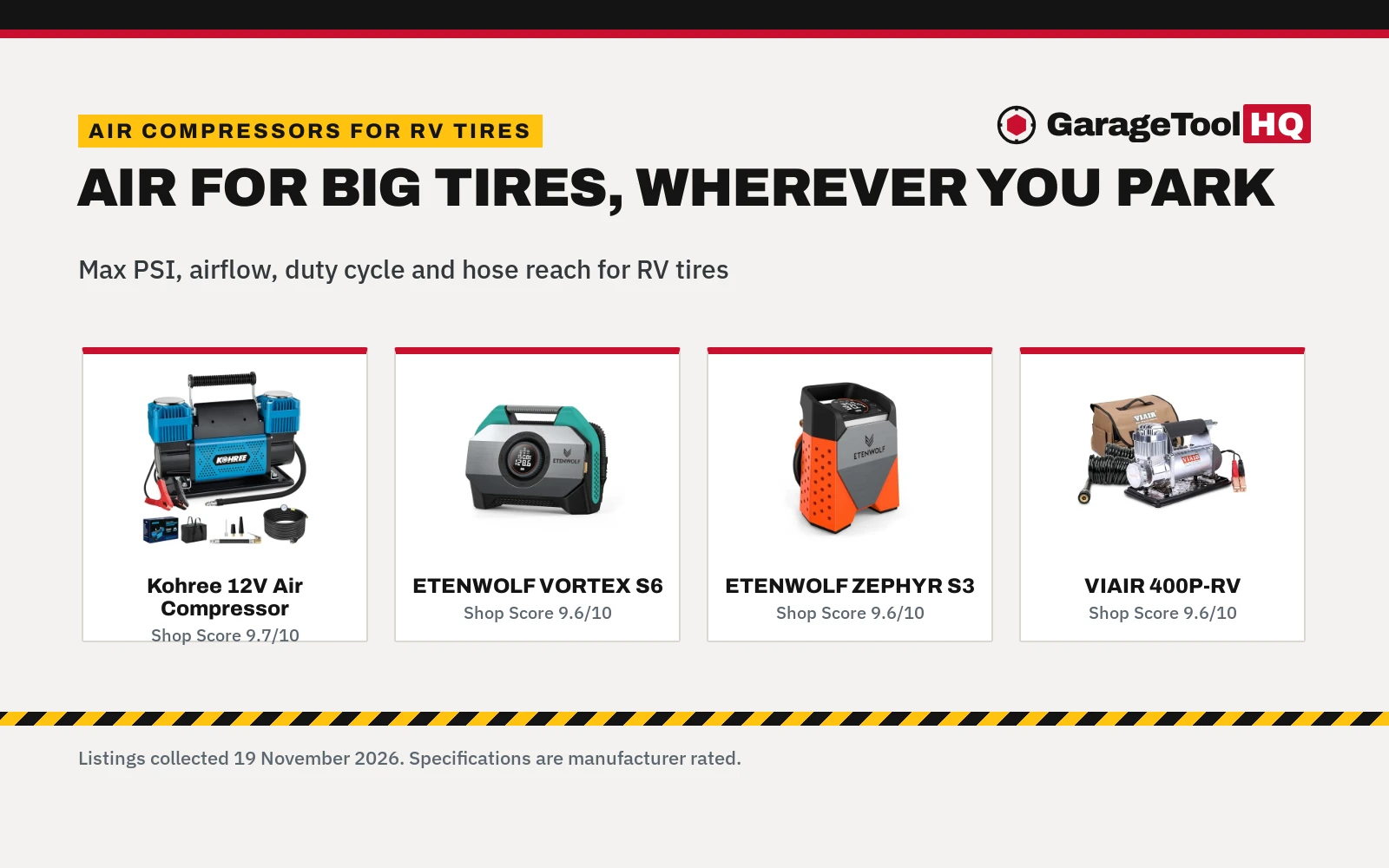
Tires lead the list for most home garages. A compressor with a tire chuck and a gauge tops off car tires, bike tires, wheelbarrow tires and mower tires without a drive to a service station, and it lets you set the pressure the tire maker states. A tire inflation chart helps with the reading, and a portable tire inflator for cars covers the road when the garage unit stays home.
Inflation goes past tires. The same hose fills sports balls, air mattresses and pool toys with a low-pressure adapter. Keep the pressure gentle on soft goods: a tire chuck delivers far more air than a ball or a mattress needs, so add air in short bursts and check the feel as it fills.
Air tools in the home garage
Air tools are the reason many home garages own a compressor at all. An impact wrench breaks loose lug nuts and rusted bolts, an air ratchet spins fasteners in tight spots, and a die grinder cleans up metal edges. A nailer and a stapler handle trim and upholstery work, and a blow gun cleans as it goes. See the types of air tools that suit a home garage, and the best air compressor for air tools when the tool list grows.
Tools that work in short bursts suit a home compressor. Tools that run without a break, like a sander or a grinder held against metal for long stretches, drain a tank fast and leave the compressor running to catch up. Every air tool states the airflow and pressure it needs, so match those figures against the compressor rating before buying a tool. The guides to what air compressor CFM means and CFM vs PSI explain the figures in plain terms.
Cleaning with compressed air
A blow gun turns a compressor into a fast cleanup tool in the garage. It clears sawdust off the bench, dust out of a mower deck, leaves off a driveway edge, and grit out of crevices that a rag cannot reach. For car care it blows water out of mirrors, badges and trim after a wash, which helps keep drips off fresh paint. The best air compressor for detailing pairs this job with a quiet motor and a long hose.
Compressed air demands respect. Wear eye protection, keep the nozzle away from skin, and never point the stream at people or pets. A blow gun tip with a shield helps keep debris from bouncing back toward the face, and a regulator keeps the pressure gentle for delicate parts.
Painting and finishing
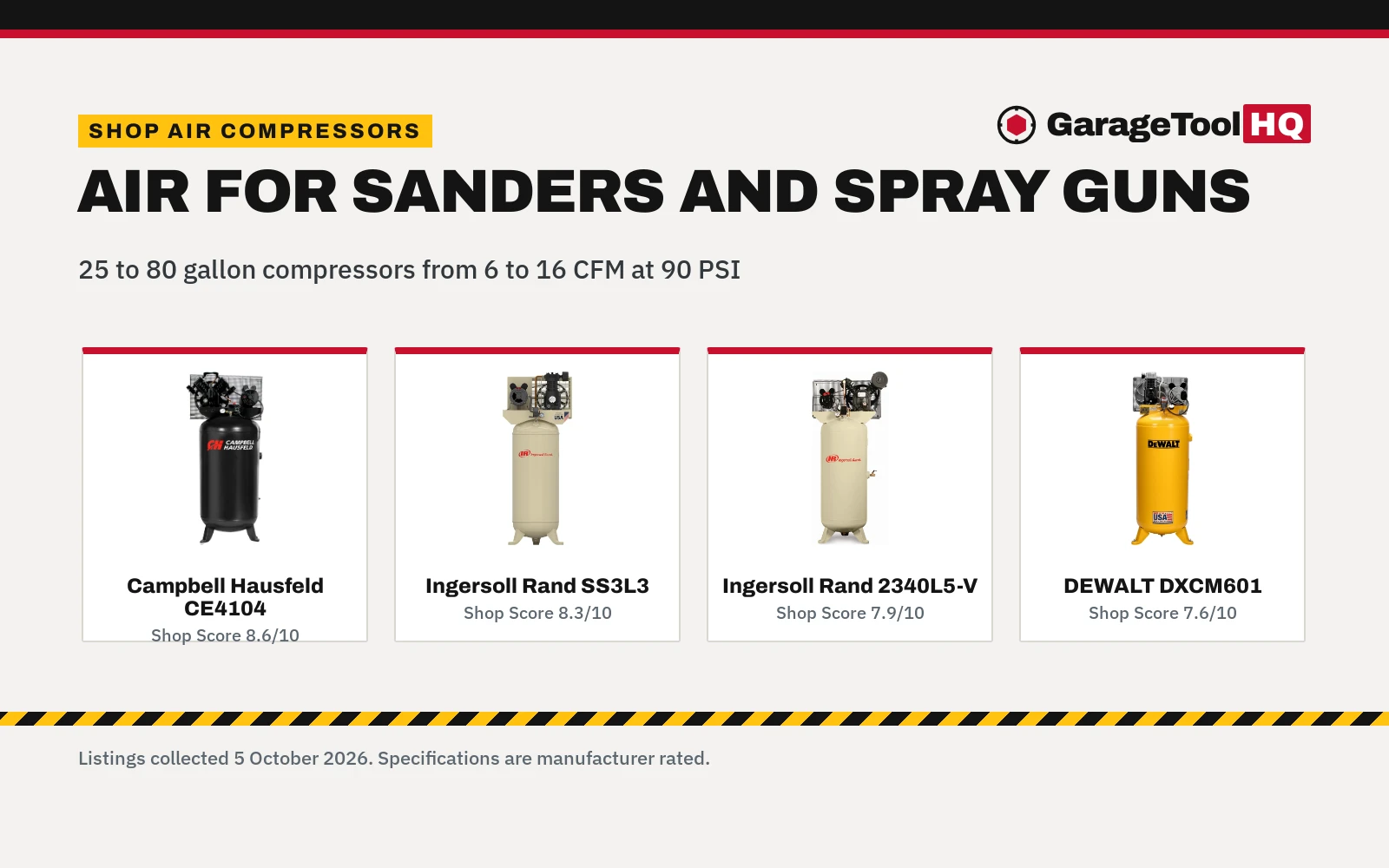
A spray gun is the most satisfying use of a home compressor, and the use that punishes sloppy air. Furniture, fences, shutters and car panels all take paint faster with a gun than with a brush, and the finish comes out smoother when the air is dry and steady. Fit a moisture trap and a filter in the line, drain the tank before painting, and practice on scrap until the spray pattern looks even. The air compressor filter assembly guide shows where the filter goes and how to fit it.
Jobs that call for more air than a home compressor holds
Not every air job belongs in a home garage. Sandblasting, long grinding sessions and running a shop full of tools through a workday all ask for far more air than a home tank holds, and the compressor will run without a break while the tool starves for air. For those jobs, a larger stationary unit or a trip to a pro shop makes more sense. Compare stand-up air compressors and pancake and upright compressor styles when the home unit starts to feel small.
| Job | What to check |
|---|---|
| Fill a tire | Gauge reading and the pressure the tire maker states |
| Run an impact wrench | Airflow and pressure the tool needs |
| Blow the bench clean | Eye protection and a blow gun tip |
| Spray paint | Dry filtered air and a moisture trap |
| Inflate sports gear | Low-pressure adapter and short bursts of air |
Setting up a home compressor
A home compressor works best when the setup is simple and the habits are steady:
- Park it on a level floor with room for air to move around the motor and the tank, close to the work but clear of the path.
- Match the hose and fittings to the tools. The air hose sizes chart and the guide to air compressor fittings types cover the sizes.
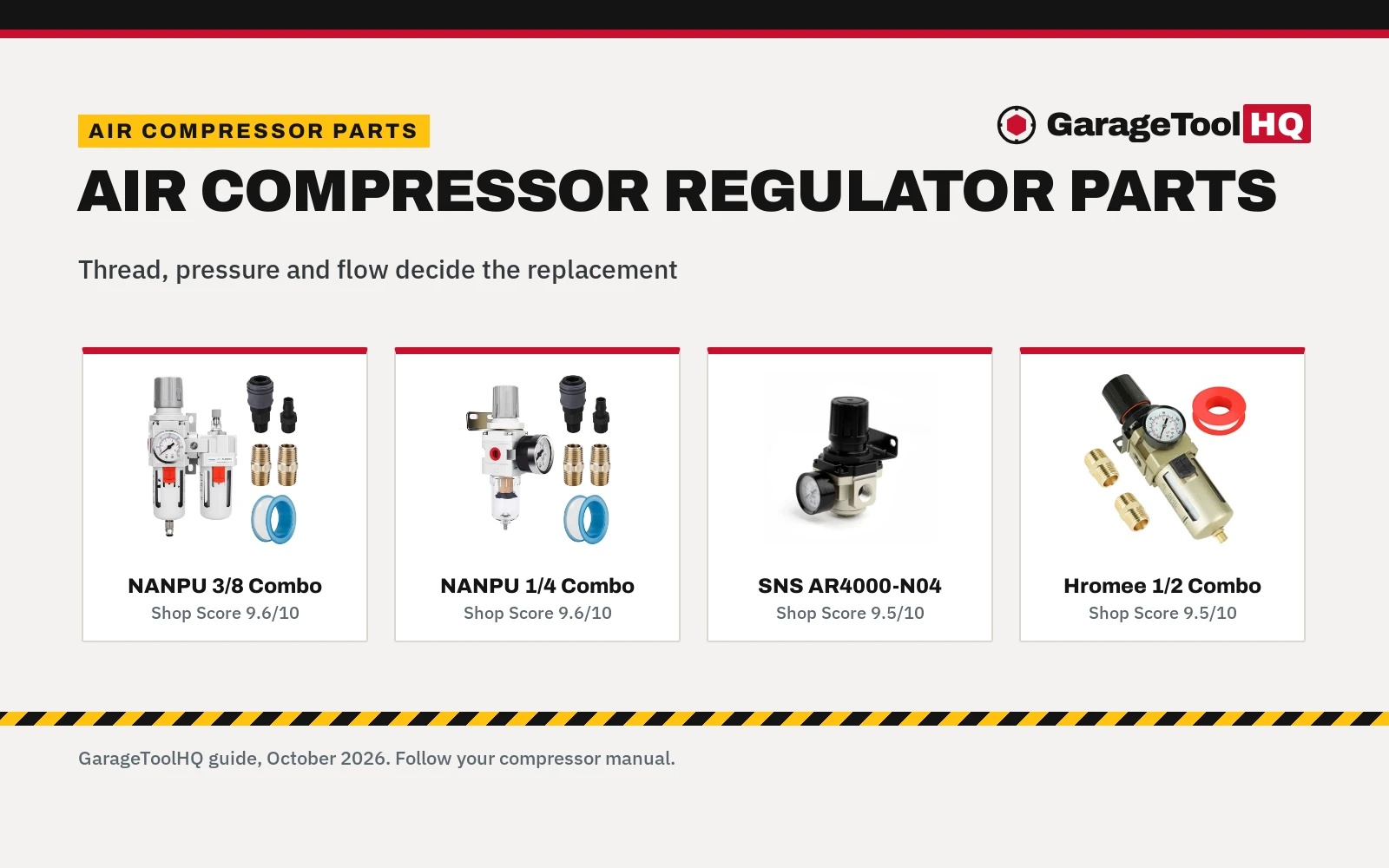
- Fit a regulator and a moisture trap so tools get steady pressure and paint gets dry air.
- Drain the tank after use to let the moisture out before it rusts the tank from inside.
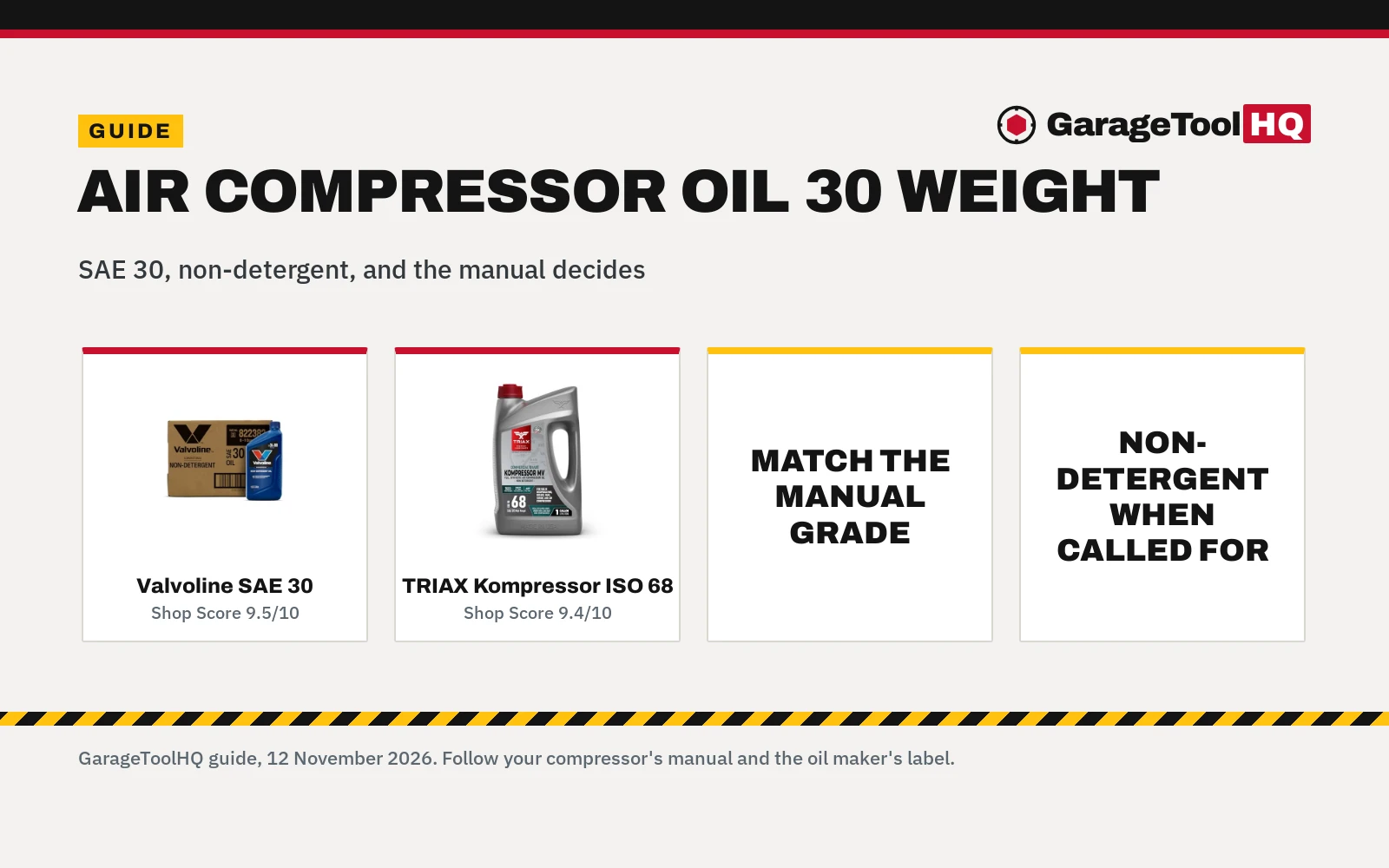
- Check the oil the way the manual states, where the model uses oil. The air compressor oil types guide covers the grades.
- Coil the hose and hang the tools when the job ends, so the next job starts with the gear in reach.
Compressed air can injure when it is misused. Never point a blow gun at skin, never use air to clean dust off clothing while it is worn, and keep the pressure gentle around eyes and ears. The air compressor safety valve guards against overpressure: leave it alone and let it do its job. Larger stationary models may need a dedicated circuit, so check the manual and local code and call a licensed electrician for the circuit.
Drain the tank after use so water does not rust it from the inside, never exceed the tool's rated pressure, wear eye protection, and run 240V units on the circuit the manual calls for. Do not run a gas engine compressor in a closed garage. Read our Safety Disclaimer.
FAQ: garage tools
Can a home air compressor fill car tires?
Yes. Fit a tire chuck, check the pressure with a gauge, and fill to the pressure the tire maker states on the tire or the door placard. A home compressor handles routine top-offs with ease.
Which tools suit a home compressor?
Tools that work in short bursts suit it best: impact wrenches, air ratchets, nailers, staplers and blow guns. Tools that run without a break, like sanders and grinders, drain the tank fast. Match the airflow and pressure each tool needs against the compressor rating, and read the guide to air compressor CFM when the figures look confusing.
Does the tank need draining after every use?
Yes, draining the tank after use is the simplest habit in compressor care. Air carries moisture into the tank, and that moisture sits at the bottom and rusts steel over time. Open the drain valve with the tank under light pressure and let the water out, then close the valve.
Can a home compressor spray paint?
Yes, with a spray gun, dry filtered air and a moisture trap in the line. Practice on scrap until the spray pattern looks even, keep the gun moving, and work in a ventilated space with a respirator rated for paint. Thin paint the way the paint maker states, and clean the gun right after the job.
How do you match a compressor to your tools?
Read the airflow and pressure each tool needs, then check those figures against the compressor rating. Check the tool with the highest airflow need first, and remember that tools running at the same time add their needs together. When the rating is close, give the tank time to refill between bursts rather than holding the trigger down.
Is it safe to blow dust off with compressed air?
Yes, with eye protection and the nozzle kept away from skin. Never point the stream at people or pets, and never use it to clean dust off clothing while it is worn. A blow gun tip with a shield and a regulator set low keeps the job comfortable.
Related: the air compressor uses at home hub, the best air compressors, the best quiet air compressor for a garage and the best air compressor for air tools.