Types of Automotive Primer: Which One to Buy
Types of automotive primer explained: sandable, high-heat and filler primers, what each type does, and the sprays to compare for car and shop jobs.
On this page
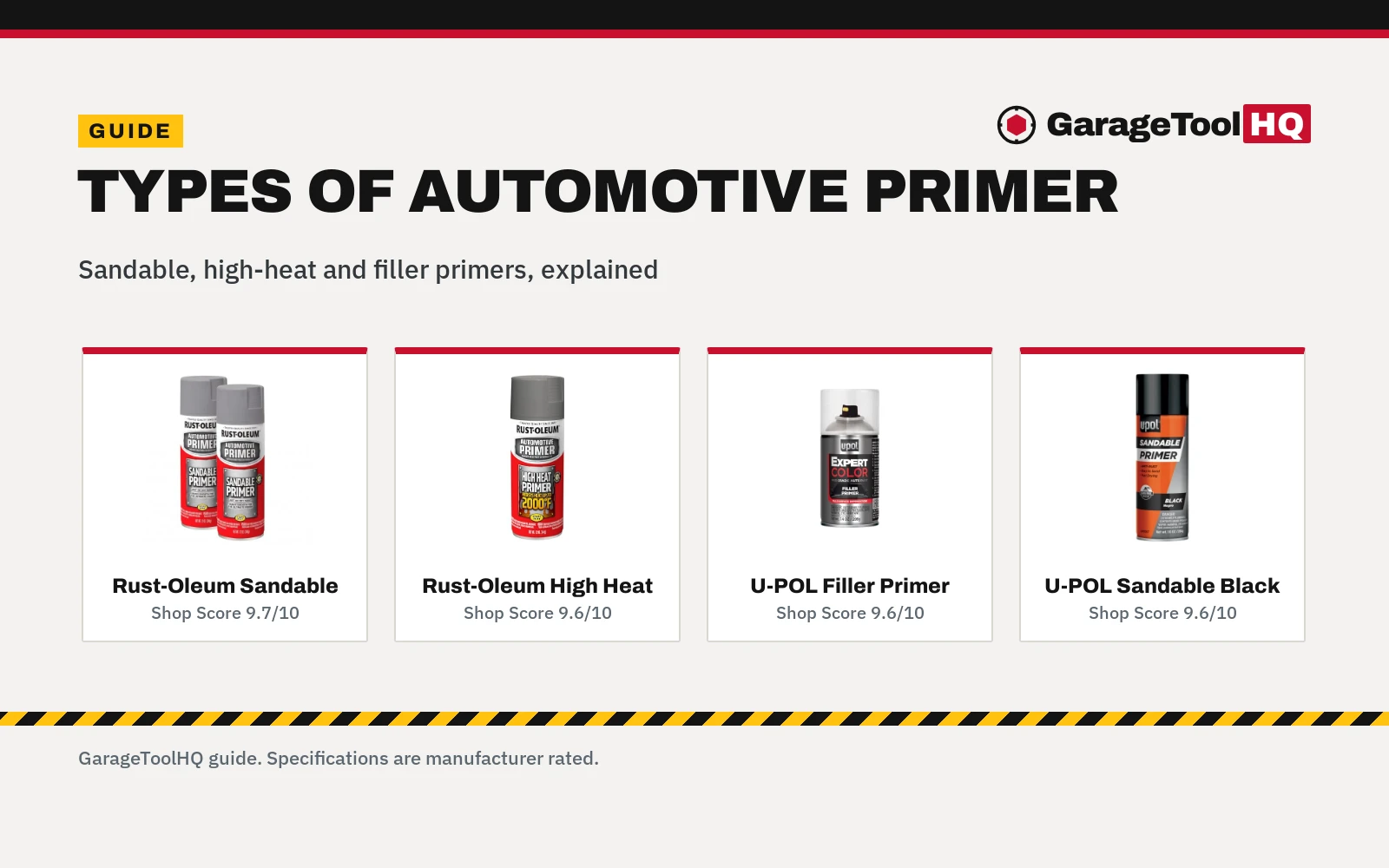
Top picks at a glance
As an Amazon Associate I earn from qualifying purchases.
- 1
 Rust-Oleum 249415 Automotive Sandable Primer9.7/10View on Amazon
- 2
 Rust-Oleum Automotive High Heat Primer Spray9.6/10View on Amazon
- 3
 U-POL Expert Color Filler Primer9.6/10View on Amazon
- 4
 U-POL Sandable Primer, Fast-Drying, Black9.6/10View on Amazon
A fresh repair panel, sanded smooth and ready for paint, still needs primer before the topcoat goes on. Types of automotive primer are the answer: a sandable primer for a smooth base, a high-heat primer for engines and exhausts, and a filler primer for small surface flaws. The sprays in this guide cover sandable, high-heat and filler primers, and the right type depends on the surface and the heat it will see.
GarageToolHQ earns a commission when you buy through links on our product pages, at no extra cost to you. Read our affiliate disclosure.
Below: what each primer type does, which surface and heat each one suits, and the sprays in this guide.
Rust-Oleum 249415 Automotive Sandable Primer
A 12 oz gray sandable primer spray in a pack of 2, wet and dry sandable for wood, metal and fiberglass.
Pros
- Wet and dry sandable for a smooth surface
- Covers up to 15 sq ft
- Dries to the touch and can be recoated in 10 minutes
- Stops Rust formula for a rust resistant base coat
Cons
- Pack of 2 means buying two cans at once
- Gray finish, so the topcoat does the color work
- Flat finish, so gloss comes only from the topcoat
- Not the pick for engines or exhaust parts; the high-heat primer below is
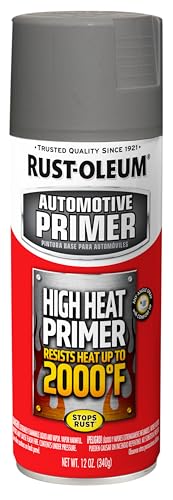
Rust-Oleum Automotive High Heat Primer Spray
A 12 oz flat gray high-heat primer spray for metal surfaces, resisting heat up to 2000°F.
Pros
- Resists heat up to 2000°F
- Made for engines, mufflers and head pipes
- Dries to the touch in 30 minutes, topcoat in 1 hour
- Any-angle spray, even upside down
Cons
- Covers up to 12 sq ft, less coverage than the sandable primer in this guide
- Flat gray finish with no gloss of its own
- Sold as a single can, so a spare means another purchase
- Satisfaction promise carries no stated term
U-POL Expert Color Filler Primer
A 7.04 oz gray filler primer aerosol with a wide fan spray nozzle, for car touch-ups and DIY use.
Pros
- Fills minor surface imperfections
- Aids color match accuracy
- Wide fan spray nozzle
- Dries to the touch in 30 minutes
Cons
- 7.04 oz can, the smallest here
- No warranty term is stated
- Gray finish, so the topcoat does the color work
- Full routine needs the matching paint and clearcoat from the same range
U-POL Sandable Primer, Fast-Drying, Black
A 10 oz black sandable primer spray for vehicles and other metal and plastic surfaces.
Pros
- Works on metal and plastic surfaces
- Anti-clog spray nozzle for steady application
- Sands easily to a smooth, even surface
- Black, gray, white and red shades to match the car
Cons
- This can is black; other shades are separate buys
- No warranty term is stated
- 10 oz can, smaller than the 12 oz Rust-Oleum cans
- Needs cleaning, degreasing and sanding before use
Types of automotive primer: what each type does
Primer is the base coat between bare surface and topcoat: it grips the surface and gives the topcoat something to hold. The type matters because each one is made for a different job, and the wrong type can peel or burn off where it gets hot.
Sandable primer
A sandable primer is the general-purpose type: it lays down a base that sands to a smooth surface before the topcoat. The Rust-Oleum sandable primer below is wet and dry sandable on wood, metal and fiberglass, covers up to 15 sq ft and dries to the touch in 10 minutes, with a Stops Rust formula for a rust resistant base coat. The U-POL sandable primer below is fast-drying and easy to sand on metal and plastic surfaces, with an anti-clog spray nozzle and a choice of gray, black, white and red shades.
High-heat primer
A high-heat primer is for metal that gets hot: engines, mufflers, head pipes and engine blocks. The Rust-Oleum high-heat primer (on Amazon) below resists heat up to 2000°F, covers up to 12 sq ft, dries to the touch in 30 minutes and can be topcoated in 1 hour, with any-angle spray that works even upside down. Its flat finish can be covered with any topcoat.
Filler primer
A filler primer fills minor surface imperfections and helps the color match, so the topcoat goes on smooth. The U-POL filler primer below uses a wide fan spray nozzle, dries to the touch in 30 minutes and sands easily, and it is part of a 3-step routine: prime, paint and protect with the matching paint and clearcoat.
Automotive primer sprays for the shop
Once you know which type the job needs, match the spray to the surface and the heat: the sprays below cover sandable, high-heat and filler primers for car and shop jobs.
Keep electric pressure washers on a GFCI outlet, never point the wand at people or pets, wear eye protection with polishers and chemicals, and read the label before mixing any cleaning products. Read our Safety Disclaimer.
FAQ: garage tools
What type of primer do I need for bare metal?
A sandable primer is the usual pick for metal panels: the Rust-Oleum sandable primer below works on metal, and the U-POL sandable primer below works on metal and plastic. For metal that gets hot, such as an engine or muffler, use the high-heat primer instead, since it resists heat up to 2000°F.
Can I use automotive primer on plastic?
Yes, if the primer lists plastic: the U-POL sandable primer below is made for metal and plastic surfaces. The Rust-Oleum sandable primer below lists wood, metal and fiberglass instead, so check the surface list on the can before spraying.
How long does automotive primer take to dry?
It depends on the spray: the Rust-Oleum sandable primer dries to the touch in 10 minutes, while the Rust-Oleum high-heat primer and the U-POL filler primer both dry to the touch in 30 minutes. The high-heat primer can be topcoated in 1 hour.
Do I need a high-heat primer for an engine?
Yes. The Rust-Oleum high-heat primer below is made for automotive engines and other metal surfaces that reach high temperatures, and it resists heat up to 2000°F. Neither sandable primer in this guide states a heat rating for that job.
What is filler primer for?
Filler primer fills minor surface imperfections and aids color match, giving the topcoat a smooth base. The U-POL filler primer below is made for that job, with a wide fan spray nozzle and a smooth base ready for overpainting.
Related: epoxy primer vs filler primer, the best automotive epoxy primer, the best primer for automotive plastic and car touch up paint spray vs brush.