Types of Electric Sanders for Garage Projects
Types of electric sanders explained: random orbital, quarter-sheet, belt and detail sanders, with four garage picks for wood and paint prep.

On this page
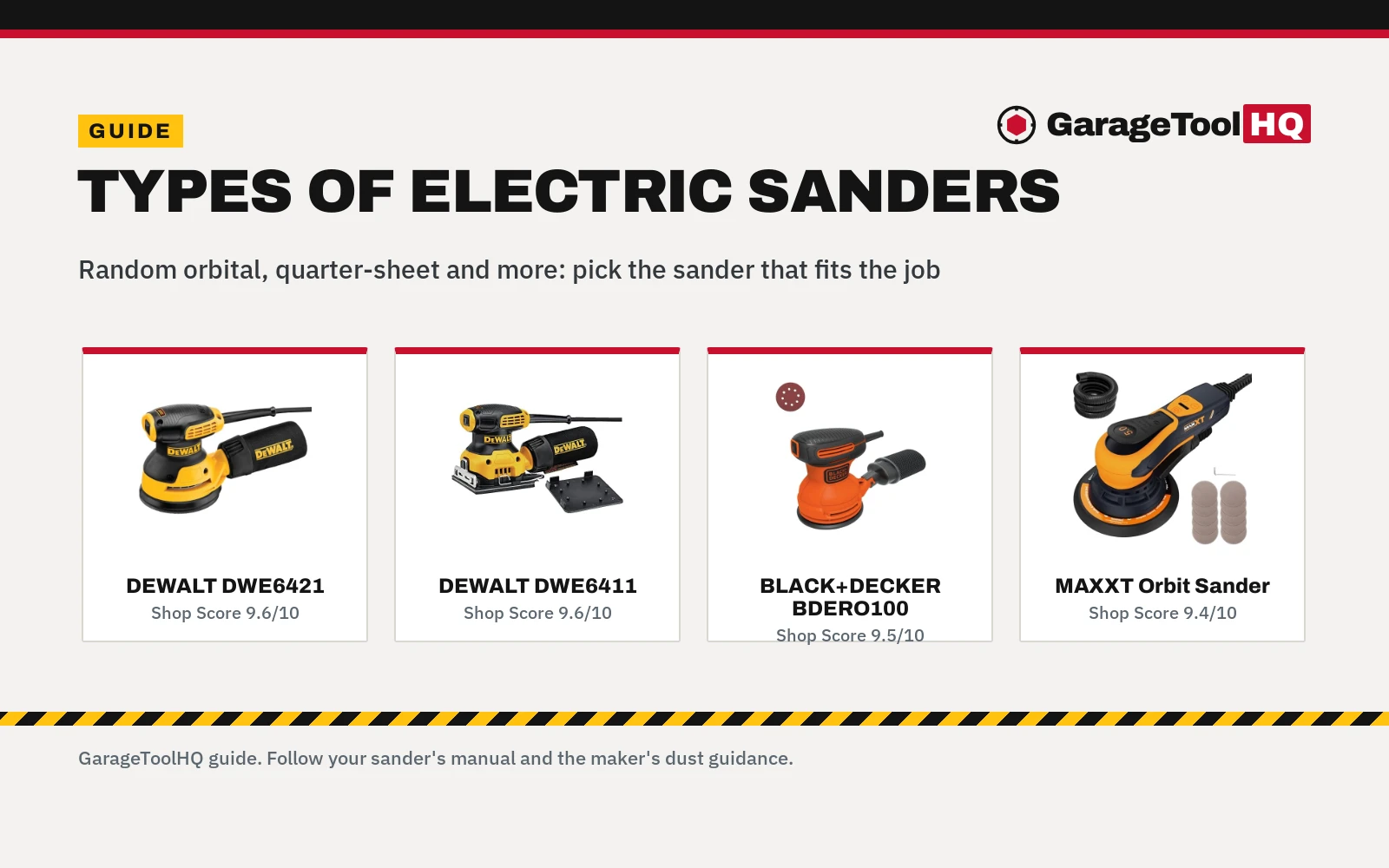
Top picks at a glance
As an Amazon Associate I earn from qualifying purchases.
- 1
 DEWALT Orbital Sander, 5 Inch Palm Sander Tool9.6/10View on Amazon
- 2
 DEWALT Electric Sander, 1/4 Sheet, 149.6/10View on Amazon
- 3
 BLACK+DECKER Orbital Sander, 5 Inch, 2.0 Amp9.5/10View on Amazon
- 4
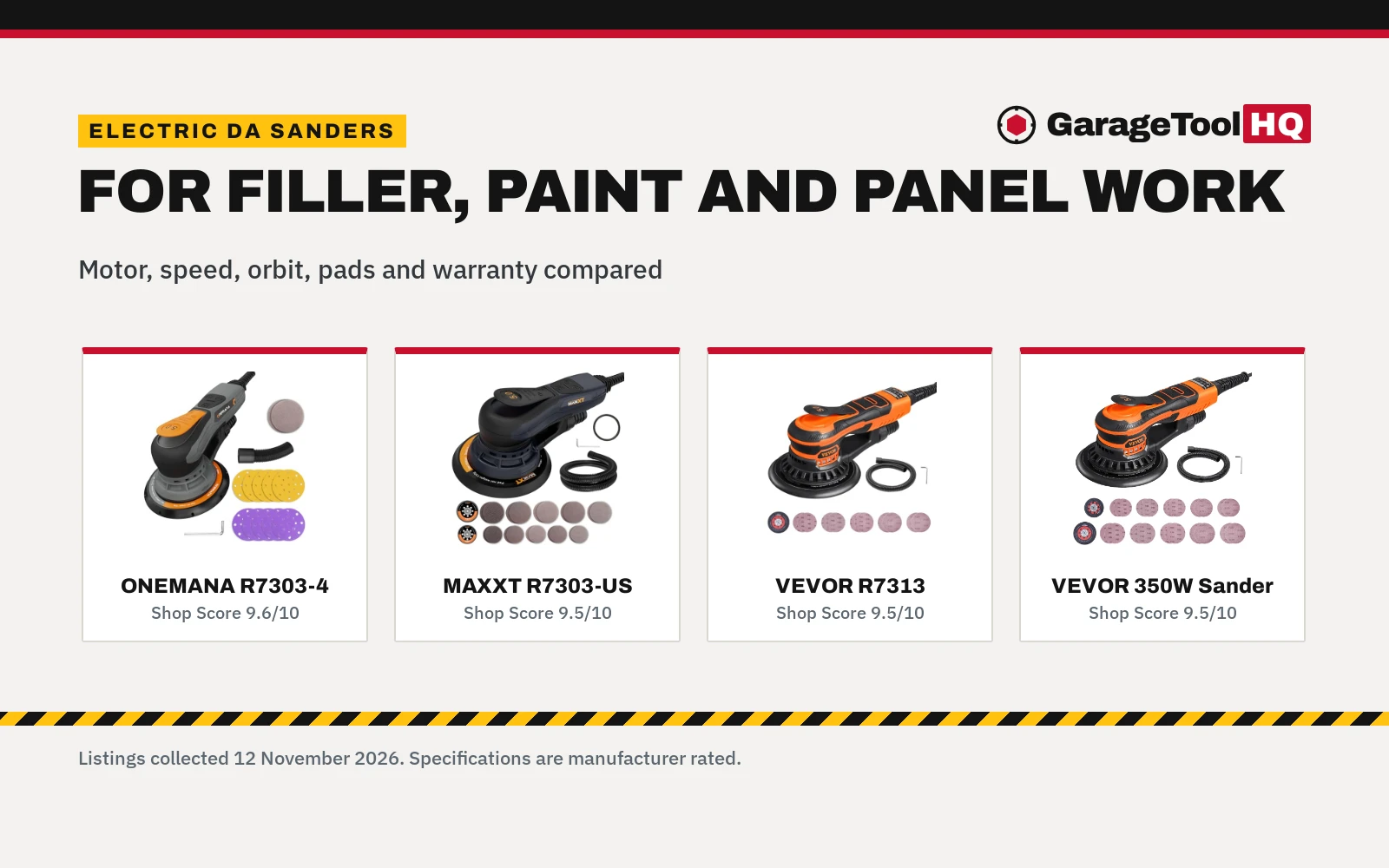
 5mm Random Orbit Sander 350W, Brushless Motor9.4/10View on Amazon
A shelf board that feels rough under the hand, a door panel with peeling paint, or a rough workbench top all point to the same gap in the garage: the right sander for the job. Types of electric sanders differ in how the pad moves and how fine a finish they leave, so matching the tool to the task matters.
GarageToolHQ earns a commission when you buy through links on our product pages, at no extra cost to you. Read our affiliate disclosure.
Below: the main types of electric sanders, how each one moves, and the picks for garage work.
DEWALT Orbital Sander, 5 Inch Palm Sander Tool
A 5-inch random orbital sander with a 3.0-amp motor spinning at 12,000 OPM, a separate counterweight for less vibration and a dust-sealed switch, backed by a 3 year limited warranty.
Pros
- 3.0-amp motor at 12,000 OPM
- Separate counterweight design reduces vibration
- Dust-sealed switch protects against dust ingestion
- 3 year limited warranty
Cons
- No variable speed stated
- No dust bag or sandpaper stated in the box
- 5-inch pad is small for wide panels
- 3.4 lb suits bench work more than overhead sanding
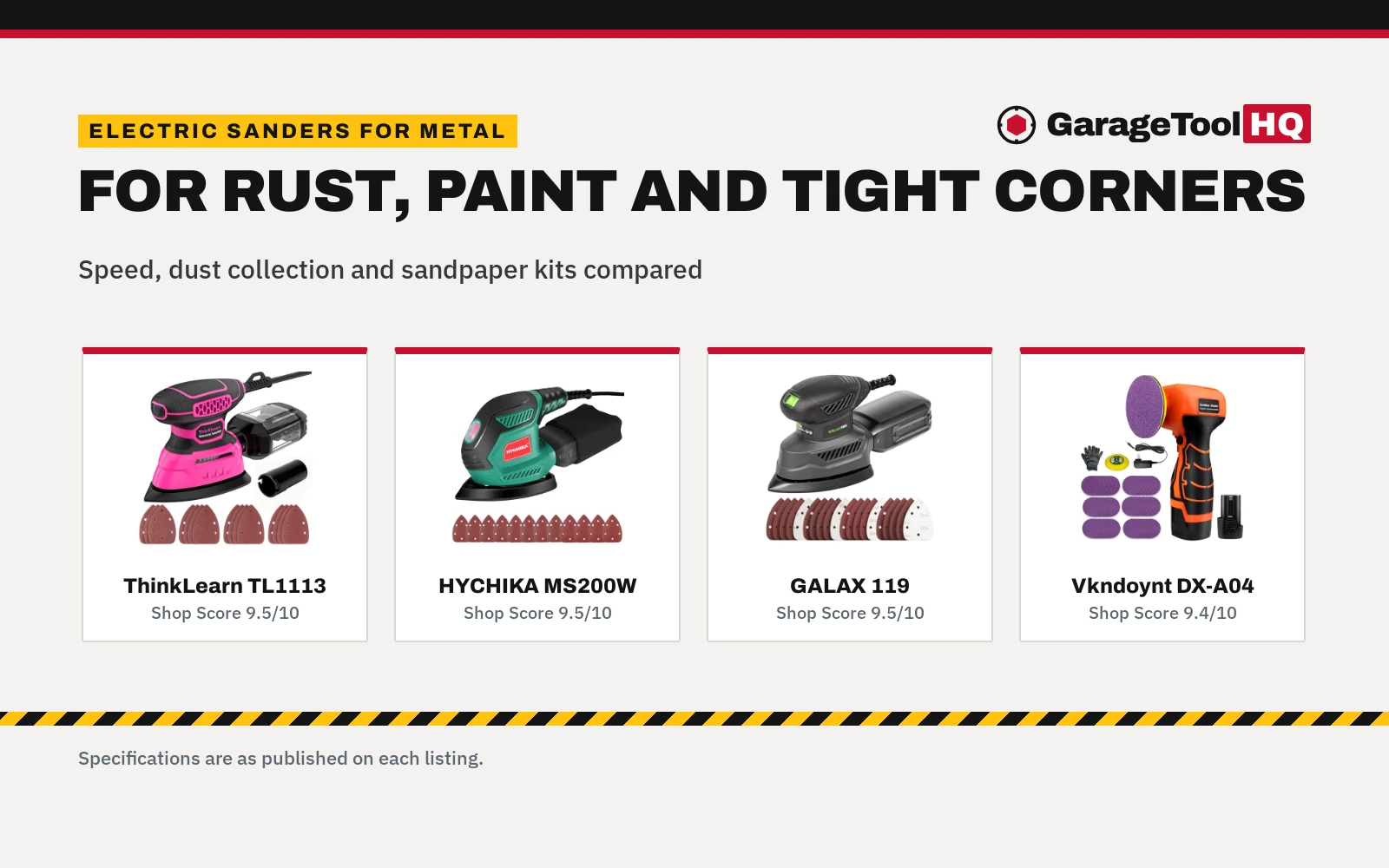
DEWALT Electric Sander, 1/4 Sheet, 14
A quarter-sheet electric sander with a 2.3-amp motor at 14,000 OPM, a locking dust-port system and a rubber dust boot over the switch, backed by a 3 year limited warranty.
Pros
- 14,000 OPM from a 2.3-amp motor
- Locking dust-port system for vacuum hookup
- Rubber dust boot protects the switch
- 3 year limited warranty
Cons
- Heaviest pick at 3.7 lb
- No sandpaper stated in the box
- No variable speed stated
- Dust port needs the maker's quick connector for some hoses
BLACK+DECKER Orbital Sander, 5 Inch, 2.0 Amp
A corded 5-inch random orbital sander with a 2.0-amp motor at 12000 OPM, a hook-and-loop paper system and a dust collection bag, backed by a 2 year limited manufacturers warranty.
Pros
- 12000 OPM for a swirl-free finish
- Dust collection bag included
- Hook-and-loop system for fast paper changes
- Comfort grip handle for less fatigue
Cons
- 2.0-amp motor suits light sanding more than heavy stock removal
- One sandpaper sheet in the box
- No variable speed stated
- 2 year warranty is shorter than the 3 year DEWALT cover
5mm Random Orbit Sander 350W, Brushless Motor
A 6-inch brushless random orbit sander with a 350W motor, variable speed from 4000 to 10000 RPM across 6 levels, a 5.0 mm orbit and a quick-stop brake, with 10 sandpaper discs and a 16.5 ft cable.
Pros
- Brushless 350W motor with variable speed
- 6 speed levels from 4000 to 10000 RPM
- Quick-stop brake halts the pad fast
- 10 sandpaper discs and a 6-inch backing plate
Cons
- No warranty term stated
- Noise rated at 83 dB
- Dust collection needs a vacuum hookup or the included hose
- 6-inch pad is wide for tight corners
Types of electric sanders and what each one does
An electric sander moves an abrasive pad across the surface. The pad shape and the motion decide what the tool does well:
| Type | How it moves | Good for |
|---|---|---|
| Random orbital | Round pad spins and wobbles at the same time | Smooth finishes on wood and paint prep |
| Quarter-sheet finishing | Square pad vibrates in small circles | Flat panels, edges and corners |
| Belt | A loop of abrasive runs in one direction | Removing stock fast from rough boards |
| Detail | Small pointed pad vibrates | Tight corners and shaped trim |
Most garage jobs need only a random orbital sander and a quarter-sheet sander between them. Match the pad to the surface, then check speed control and dust collection before choosing a model.
Random orbital vs quarter-sheet sanders
The two types in the picks below work differently. A random orbital sander spins a round pad while it wobbles, which spreads the sanding marks and leaves a smooth finish. A quarter-sheet sander vibrates a square pad, which keeps straight edges true and reaches into square corners. A related comparison of straight line vs random orbital sanders covers the motion in more detail.
Electric sanders for garage projects
Sanding a panel smooth needs a pad that covers the surface and a motor that holds its speed, so the picks below cover random orbital and quarter-sheet sanding.
Read the manual before first use, wear eye protection, keep the work area clear and ventilated, and stay within every stated rating. Read our Safety Disclaimer.
How to pick the right electric sander
Start with the job: a broad tabletop suits a round random orbital pad, while a flat shelf suits a quarter-sheet pad. Then check the details that decide how the sander feels in use:
- Pad size. A 5-inch pad covers everyday panels, while a 6-inch pad covers more surface on each pass. The MAXXT pick uses a 6-inch backing plate; the DEWALT DWE6421 (on Amazon) and BLACK+DECKER picks use 5-inch pads.
- Speed control. A fixed-speed sander suits steady work. A variable-speed sander runs slower for delicate finishes: the MAXXT pick adjusts across 6 levels from 4000 to 10000 RPM.
- Dust collection. A dust bag keeps the bench clear on small jobs; a locking dust port connects to a vacuum for longer sessions.
- Weight and grip. The picks run from 2.79 lb to 3.7 lb, so a lighter sander suits longer sessions. A rubber over-mold or a comfort grip handle helps with control.
Check the manual for the maker’s guidance on paper and dust before the first job.
FAQ: garage tools
What type of electric sander is best for wood?
A random orbital sander is the usual pick for wood: the round pad spins and wobbles, which leaves a smooth finish. A quarter-sheet sander suits flat panels and edges where a square pad reaches into corners.
Can I use an electric sander on paint?
Yes, for paint prep: a random orbital sander smooths old paint before a fresh coat. Keep the pad moving and clear dust before painting.
Do I need a dust bag or a vacuum with an electric sander?
A dust bag or a vacuum hookup keeps dust off the bench. The BLACK+DECKER pick ships with a dust collection bag, while the DEWALT quarter-sheet sander has a locking dust port for a vacuum hose.
What is the difference between a random orbital sander and a quarter-sheet sander?
A random orbital sander uses a round pad that spins and wobbles, which suits smooth finishes on broad surfaces. A quarter-sheet sander uses a square pad that vibrates, which suits flat panels and corners, and its paper clamp holds the sheet.
Can an electric sander replace hand sanding?
For most garage work, yes: an electric sander covers a panel faster and leaves a more even finish. Hand sanding still suits small touch-ups where a pad cannot reach.
Which electric sander should a beginner start with?
A 5-inch random orbital sander is the usual starting point: the round pad is easy to control and the finish suits most garage jobs.
Related: straight line vs random orbital sander, sponge sanding pads for orbital sanders, interface pads for DA sanders and corded vs cordless DA sanders.