Types of Fire Extinguishers: Which One to Buy
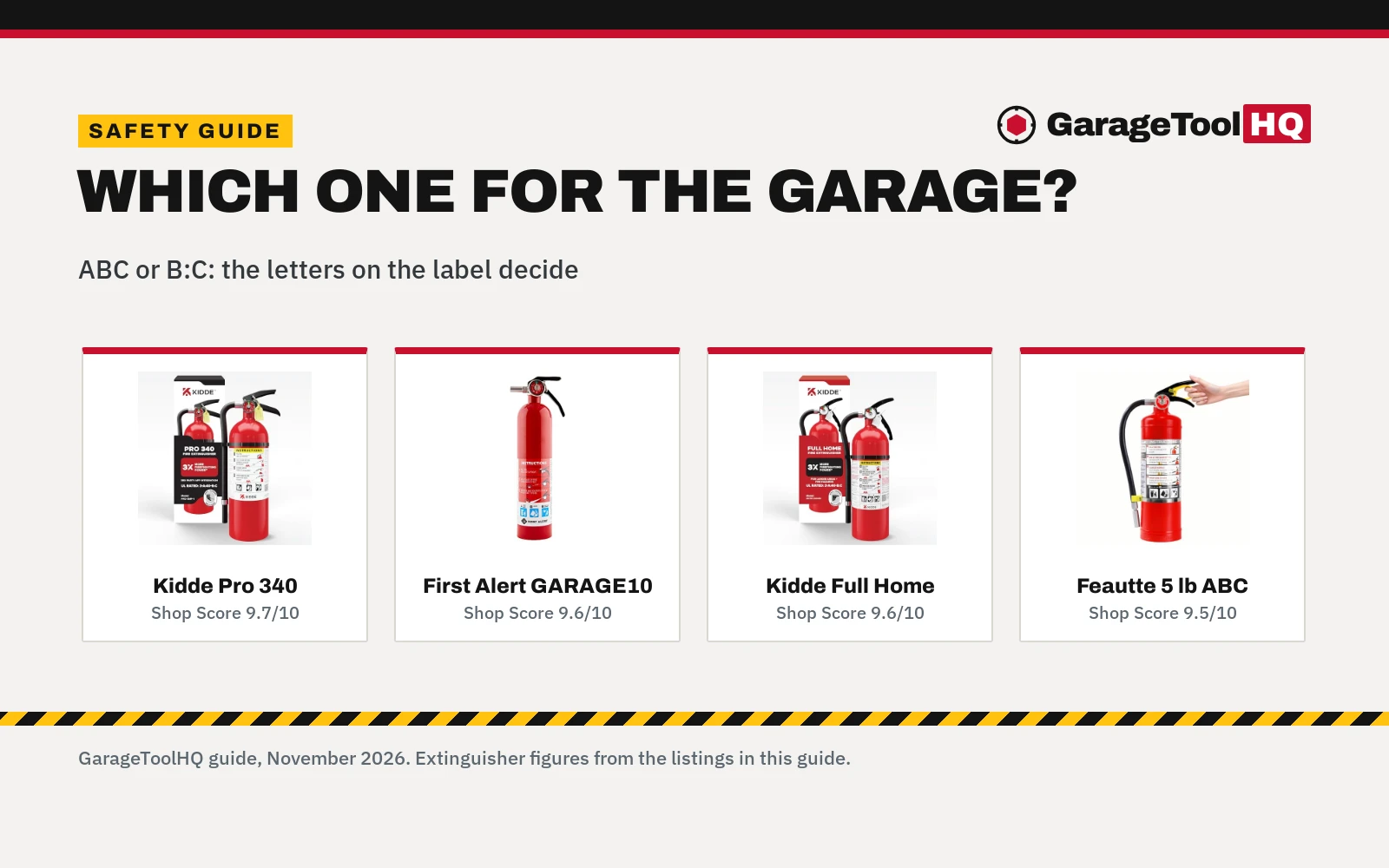
Fire extinguishers are typed by the fires they fight, and this guide explains the A, B and C ratings and which type suits a garage.

On this page
A brake job leaves rags, solvents and a parts washer in the same small room, and a spark or a hot surface is never far away. That is the moment to know the types of fire extinguisher, because the wrong type for the fire in front of you does not help, and the right type only helps if it is charged, mounted where hands can reach it, and matched to the fire it faces. The types are named by the fire they fight: ordinary combustibles, flammable liquids and electrical equipment, and the label on each extinguisher states which of those it covers.
As an Amazon Associate I earn from qualifying purchases. GarageToolHQ earns a commission when you buy through links on our product pages, at no extra cost to you. Read our affiliate disclosure.
Below: what the letters and numbers on the label mean, which type suits a garage, and how to use one.
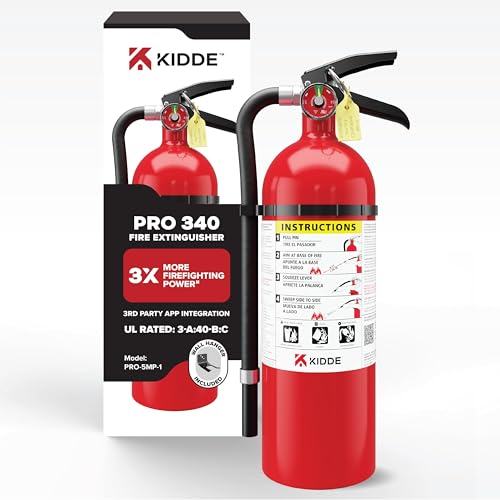
Kidde Pro 340 Commercial Fire Extinguisher
A rechargeable 5.5 lb dry chemical extinguisher rated 3A:40-B:C, with a 13 to 15 second discharge, a 12 to 18 foot range and a 6-year limited warranty.
Pros
- Rated 3A:40-B:C for common, liquid and electrical fires
- Rechargeable after professional servicing
- Discharge of 13 to 15 seconds, range of 12 to 18 feet
- UL-approved metal wall hanger included
Cons
- Recharge needs professional servicing, per the listing
- No dimensions are stated in the spec table
- No temperature range is stated
- The 3X more power claim names no comparison unit

First Alert Fire Extinguisher
A garage extinguisher rated 10-B:C for flammable liquid and electrical fires, with a metal head, a commercial grade valve and a 10-year limited warranty.
Pros
- UL rated 10-B:C, per the listing
- Metal head with commercial grade valve and trigger
- US Coast Guard approved for marine use, per the listing
- Mount, bracket and strap included
Cons
- Rated B:C only, with no Class A coverage
- Spec table lists item weight as 0.000625 pounds, which does not describe an extinguisher
- No discharge time or range is stated
- No agent weight is stated

Kidde Full Home Fire Extinguisher, 3-A:40-B:C
A residential 5.5 lb dry chemical extinguisher rated 3-A:40-B:C, single-use only, with a 13 to 15 second discharge and a 6-year limited warranty.
Pros
- Rated 3-A:40-B:C for common, liquid and electrical fires
- Discharge of 13 to 15 seconds, range of 12 to 18 feet
- UL-approved plastic wall hanger included
- Monoammonium phosphate agent, per the listing
Cons
- Single-use only, per the listing
- The 12-year service free design is stated without detail
- No operating pressure is stated
- The 3X more power claim names no comparison unit

Feautte 5 lb ABC Dry Chemical Fire Extinguishers
A 5 lb ABC dry chemical extinguisher rated 3-A:40-B:C, with a 14 to 16 second discharge, a -40°F to 120°F operating range and a wall-mount hook included.
Pros
- Rated 3-A:40-B:C for Class A, B and C fires
- Discharge of 14 to 16 seconds, per the listing
- Rated for -40°F to 120°F operation
- Wall-mount hook, location sticker and inspection card included
Cons
- No warranty term is stated
- No certification is stated
- No dimensions are stated
- No unit weight is stated in the spec table
Types of fire extinguisher: what the letters mean
The letters come first. Class A covers ordinary combustibles such as trash, wood and paper, Class B covers flammable liquids and gases, and Class C covers energized electrical equipment, and those three classes are the ones the Kidde and Feautte listings name. The rating printed on the listing, such as 3A:40-B:C, lists the classes the extinguisher is rated for, and a rating that reads 10-B:C covers B and C only. Read the rating before buying, because the letters decide which fires the extinguisher is made for.
| Type | Fires it covers | In this guide |
|---|---|---|
| ABC dry chemical | Ordinary combustibles, flammable liquids, electrical equipment | Kidde Pro 340, Kidde Full Home, Feautte 5 lb ABC, all rated 3A:40-B:C |
| B:C dry chemical | Flammable liquids and electrical equipment only | First Alert GARAGE10, rated 10-B:C, with no Class A rating |
The numbers in the rating are part of the printed rating, and the listings here do not explain the scale behind them, so compare the letters first and the numbers second. What matters in the garage is coverage: an ABC extinguisher covers all three classes in the listings here, while the B:C extinguisher covers two.
Which type suits a garage
A garage holds all three classes at once: wood and paper, gasoline and solvents, and electrical equipment, so an ABC dry chemical extinguisher is the general pick for the room. The Kidde Pro 340 and Kidde Full Home listings and the Feautte listing all state ABC coverage for those fires, with the Pro 340 rechargeable after professional servicing and the Full Home single-use only. The First Alert GARAGE10 is sold for standard garage use and rated 10-B:C, which covers flammable liquid and electrical fires but carries no Class A rating, so it does not cover wood, paper and trash. Keep one extinguisher mounted where it is easy to reach, and know which classes it covers before the day it is needed.
How to use one: PASS
The Feautte listing prints the PASS steps: pull the pin, aim at the base from about 6 ft away, squeeze the handle and sweep side to side, and read the full label before use. The discharge is short, 13 to 15 seconds on the Kidde listings and 14 to 16 seconds on the Feautte listing, so aim at the base of the fire and sweep side to side, as the PASS steps say, rather than spraying the flames above it. The Kidde listings state a discharge range of 12 to 18 feet, which is how far the agent reaches, while the Feautte instructions give about 6 ft as the distance to stand from the fire, so the two figures describe different things and the label on the unit in hand is the one to follow. The Feautte listing states its extinguisher is for small, incipient-stage fires only, so if the fire grows past that stage, leave the garage and call the fire department.
Extinguishers for the garage
Each extinguisher below handles the fire types its rating covers, and the one to pick turns on its rating, its discharge time and range where stated, and whether it is rechargeable or single-use.
Use rated jack stands on solid ground, wear eye protection with power and air tools, keep fuel-burning equipment out of a closed garage, and follow the manual for every tool. Read our Safety Disclaimer.
FAQ: garage tools
What does 3A:40-B:C mean?
The rating lists the fire classes the extinguisher covers: A for ordinary combustibles such as trash, wood and paper, B for flammable liquids and gases, and C for energized electrical equipment. The Kidde and Feautte listings carry a 3A:40-B:C rating, which covers all three classes. The numbers are part of the printed rating, and the listings do not explain the scale behind them.
Can I use a B:C extinguisher on a wood fire?
No. The First Alert GARAGE10 is rated 10-B:C for flammable liquid and electrical fires, with no Class A rating. For wood, paper and trash, use an ABC extinguisher such as the Kidde or Feautte listings in this guide.
How long does a fire extinguisher discharge last?
Not long. The Kidde listings state a discharge time of 13 to 15 seconds, and the Feautte listing states 14 to 16 seconds. Aim at the base of the fire and sweep side to side, and read the label before use.
Rechargeable or single-use: which is better?
It turns on how the extinguisher will be kept. The Kidde Pro 340 listing states it is rechargeable after professional servicing, while the Kidde Full Home listing states residential, single-use only. The First Alert and Feautte listings state no recharge information, so their recharge status cannot be checked from the listings.
Where should a garage extinguisher go?
Mounted on the wall where it is easy to reach. The Kidde listings include a wall hanger, the First Alert listing includes a mount, bracket and strap, and the Feautte listing includes a wall-mount hook. Hang it where hands can reach it on the way out, without crossing the fire.
What temperatures can an extinguisher handle?
The Feautte listing states an operating range of -40°F to 120°F. The other listings state no temperature range, so their limits cannot be checked from the listings.
Related: fire extinguisher for garage picks, ABC vs CO2 fire extinguisher, fire blanket vs fire extinguisher, our garage upgrades hub and the safety disclaimer.