Types of Wire Crimpers and Which to Buy
Insulated, ratcheting, hydraulic and ferrule crimpers explained, with how to match the tool to the terminal and the wire.

On this page
A trailer light that flickers over bumps or a battery cable lug that slips off its post is usually a crimp that never held, and the types of wire crimpers on the shelf differ mainly in the terminal they squeeze and the force they apply. A wire crimper presses a metal terminal barrel around a stripped wire end so the joint stays tight and carries current, and the right type follows the terminal shape, the wire size and how often the job repeats. This guide walks through the common types, what each type handles, and how to match a crimper to garage wiring jobs.
As an Amazon Associate I earn from qualifying purchases. GarageToolHQ earns a commission when you buy through links on our product pages, at no extra cost to you. Read our affiliate disclosure.
Below: the common crimper types at a glance, how each type works, and how to pick the right tool for the terminal in hand.
Types of wire crimpers at a glance
| Type | What it crimps | Garage use |
|---|---|---|
| Insulated terminal crimper | Insulated ring, spade and butt terminals | Trailer lights and accessory wiring |
| Non-insulated crimper | Bare open-barrel terminals and lugs | Battery cables and ground straps |
| Ratcheting crimper | Insulated and bare terminals, often with swap dies | Repeat terminal work |
| Hydraulic crimper | Large lugs and heavy cable | Battery cables and winch leads |
| Ferrule crimper | Wire ferrules for stranded ends | Terminal blocks and charger leads |
| Coax crimper | Coax connectors | Antenna and camera cable |
| 3-in-1 stripper crimper | Terminals, with stripping and cutting built in | Small jobs where a tool that strips, cuts and crimps helps |
The label and the die set decide which group a crimper is in, not the handle color or the shape of the case. A crimper made for insulated terminals forms the wrong shape on a bare open-barrel terminal, and a crimper made for bare terminals can crack the plastic sleeve on an insulated terminal, so match the tool to the terminal before squeezing.
Insulated terminal crimpers
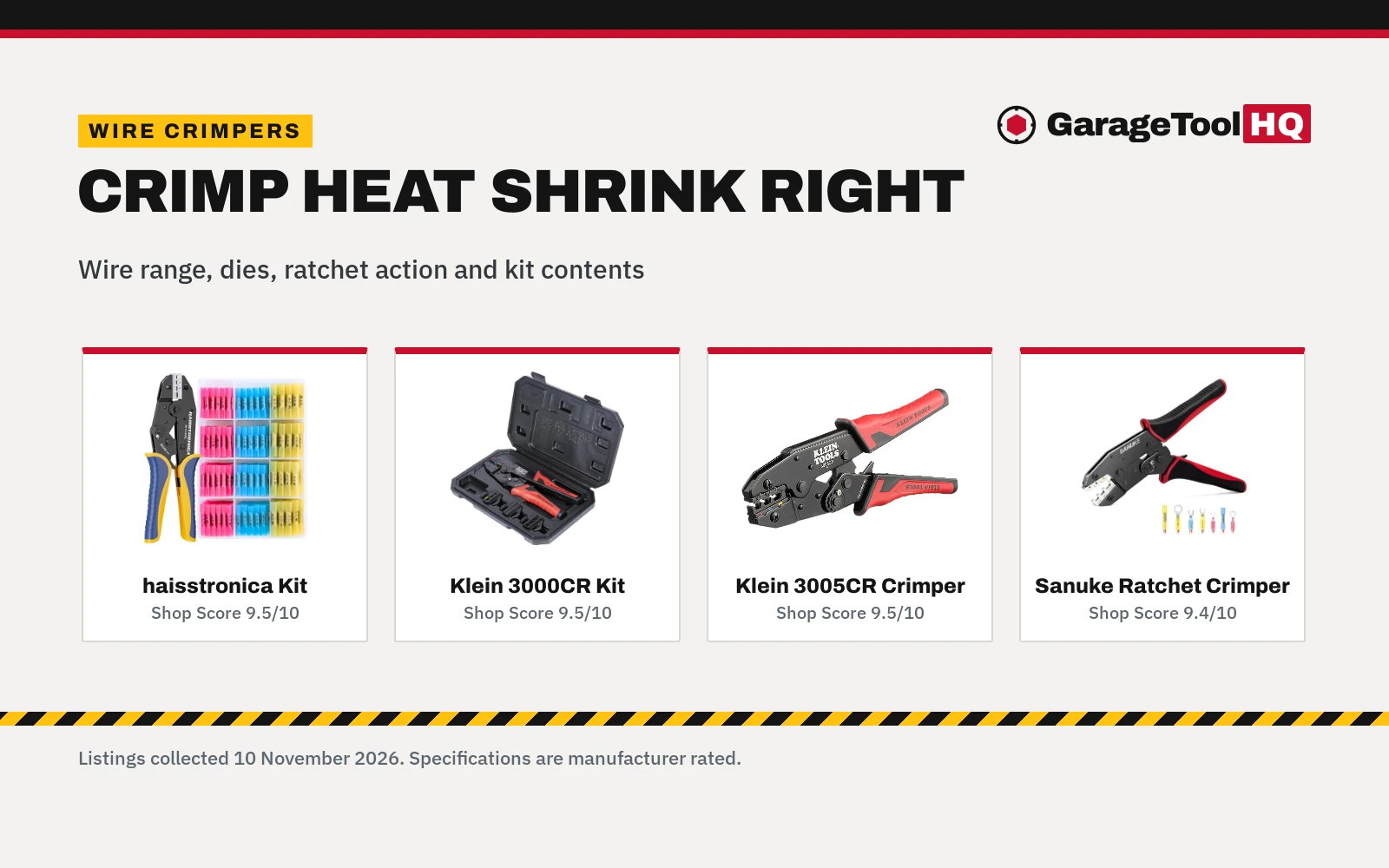
Ring, spade and butt terminals with a plastic sleeve are the most common terminals in garage wiring, from trailer lights to accessory circuits, and the insulated terminal crimper is the tool made for them. Its dies have a nest shaped for the sleeve, so the crimp presses the metal barrel without splitting the plastic. Color-coded nests mark the die positions; match the nest to the terminal sleeve the maker lists for the wire in hand. A kit such as the WORKPRO crimping tool kit covers AWG 22-10 wire and packs 582 terminals and accessories, including ring terminals, spade terminals, butt connectors and quick-connects, with heat shrink tubing and a storage case, and the maker lists the terminals, connectors and shrink tubes as UL certified. That range covers light accessory wiring through heavier trailer circuits, and the storage case keeps the terminals sorted by type.
Non-insulated and open-barrel crimpers
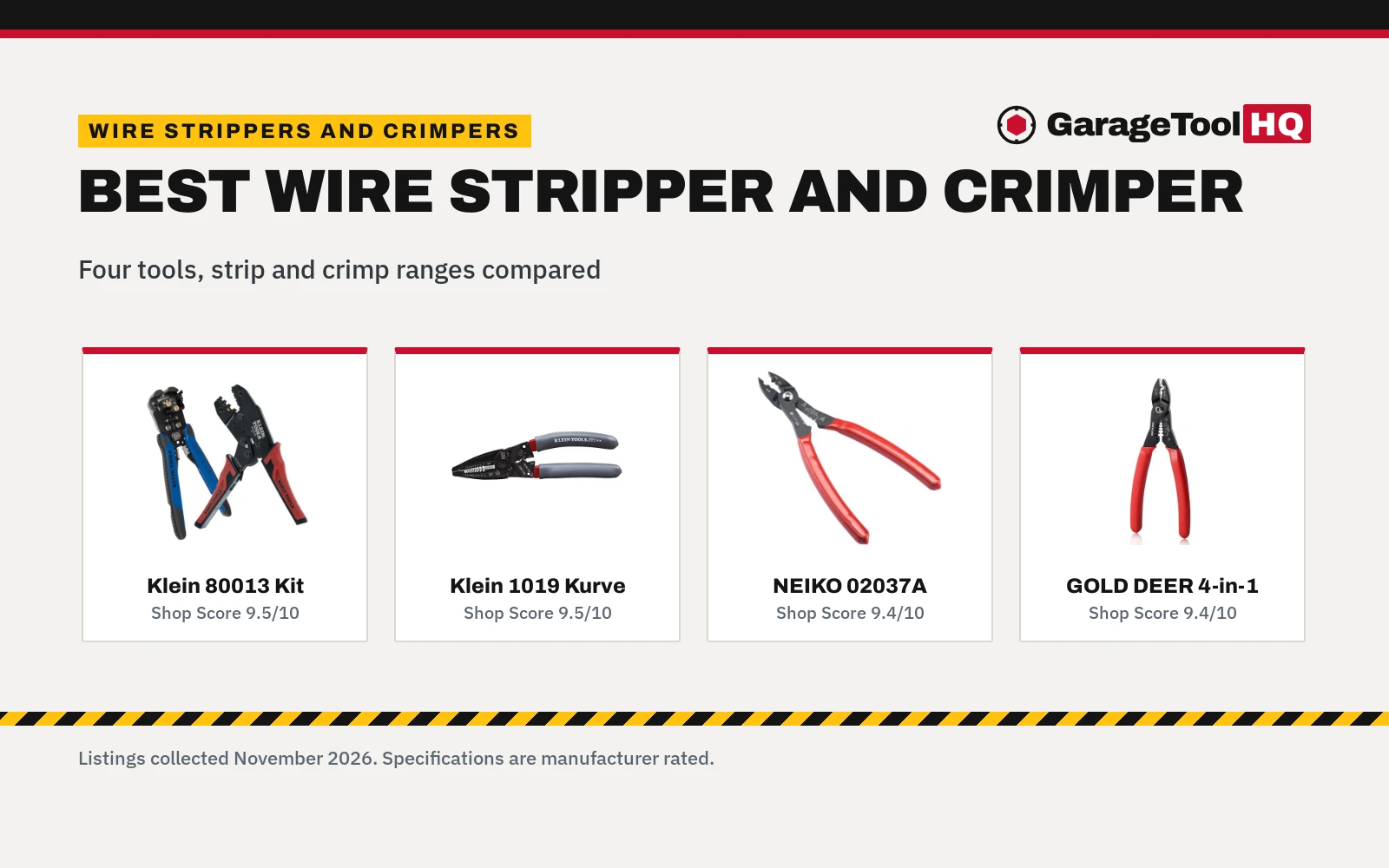
Bare terminals have no plastic sleeve, and the open-barrel crimper folds the barrel wings around the wire and the insulation in separate nests. Small lugs and ground straps often take this style, since the bare metal needs a full fold to hold under vibration and heat. Some tools of this type also carry a wire cutter and a stripper in the jaws, so a lug can go from stripped wire to finished crimp without swapping tools. Check the die markings before crimping: a barrel crimped in the wrong nest stays loose, and a loose lug on a battery cable shows up as slow cranking or a hot terminal.
Ratcheting crimpers
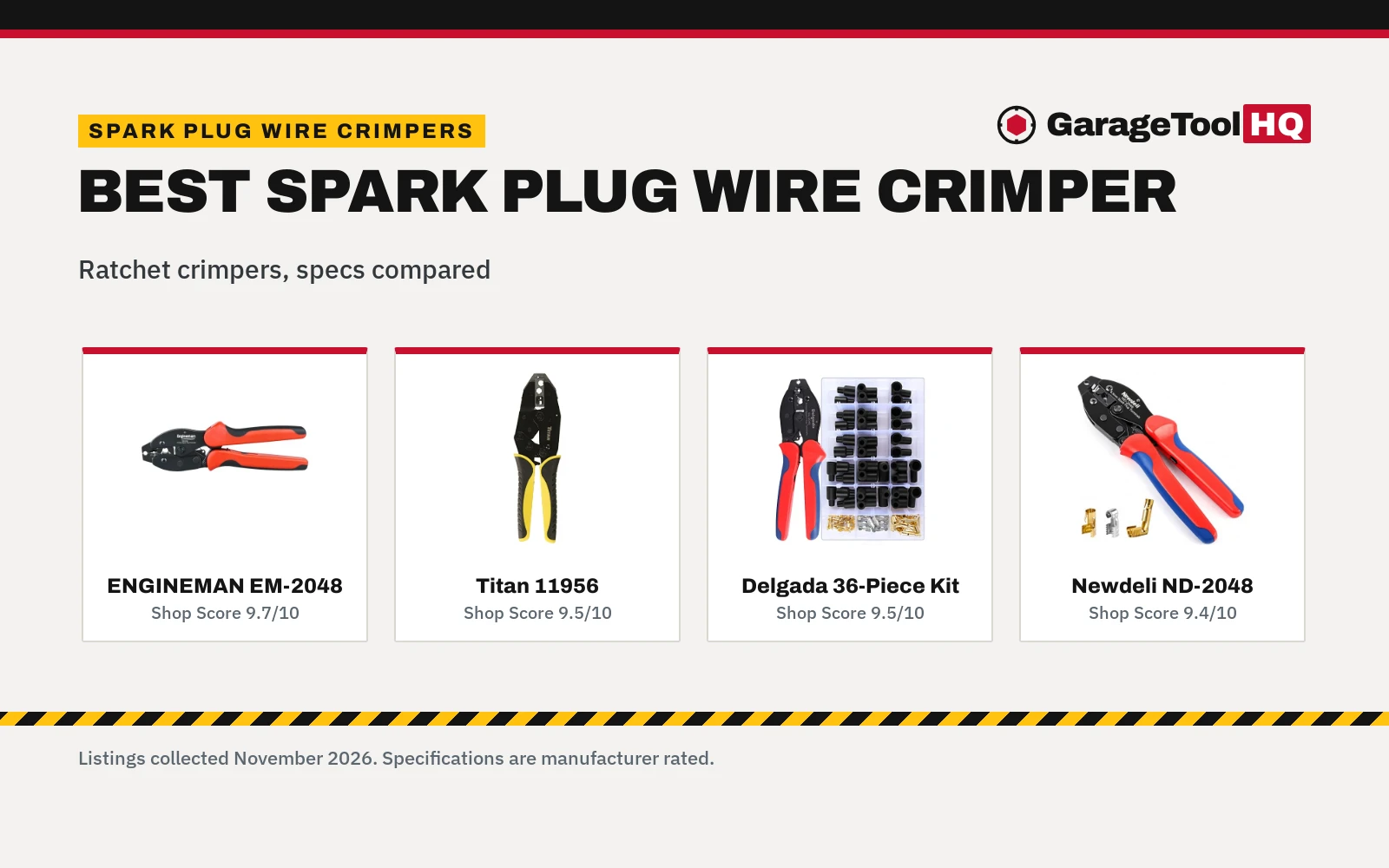
A ratcheting crimper adds a ratchet that holds the handles closed until the crimp reaches full pressure, then releases. That gives the same squeeze on every terminal, which matters when a wiring job repeats the same crimp across a harness or a trailer loom. Dies swap out on many ratcheting frames, so a frame can cover insulated terminals, bare terminals and ferrules with the right die set. For a garage that rewires trailers or adds accessories often, the ratchet is the upgrade that pays off in consistent joints. For occasional use, a manual crimper with the right dies does the same job with more attention to hand pressure.
Hydraulic crimpers for heavy cable
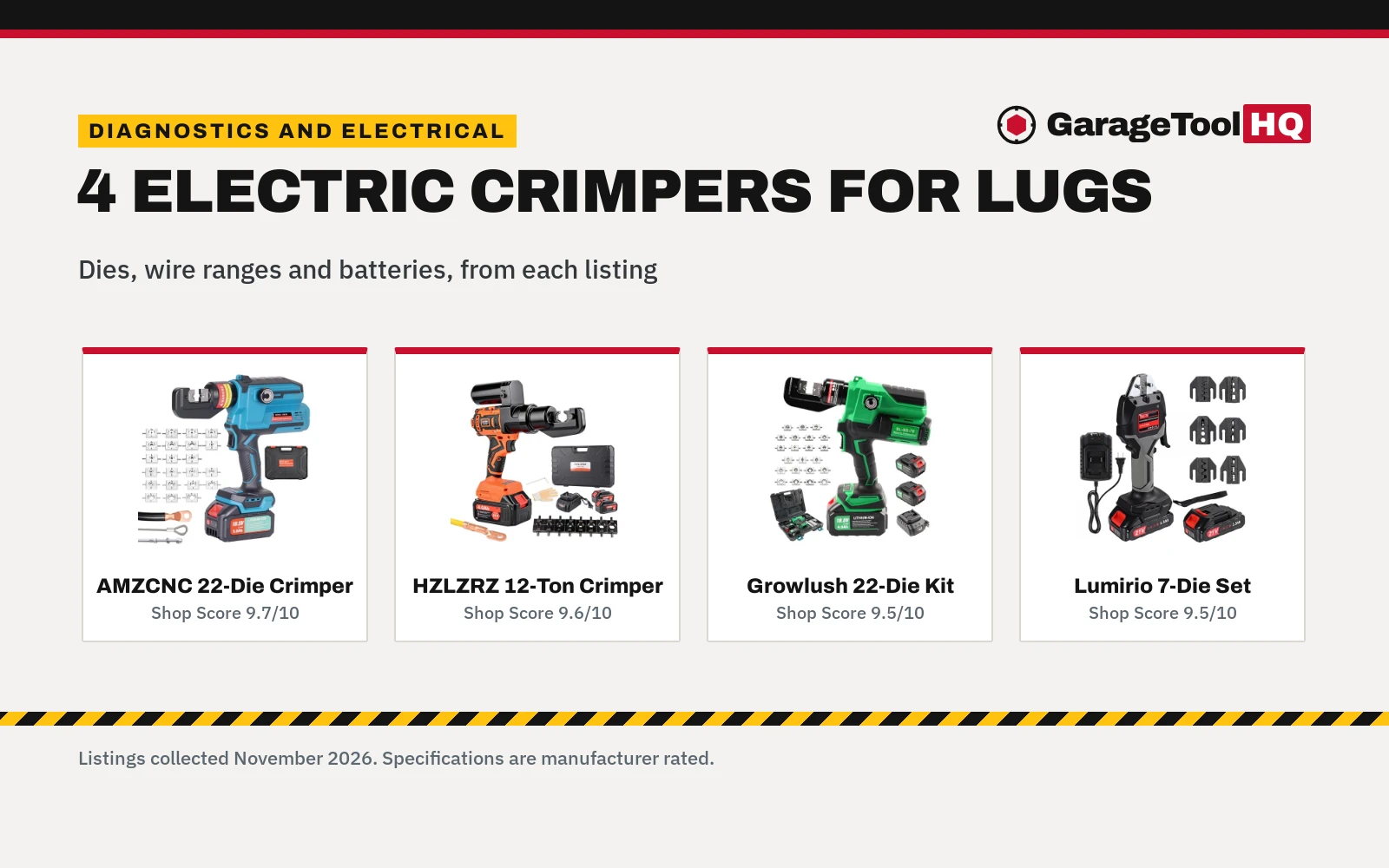
Heavy battery cable and winch leads need more force than hands can give through a manual tool, and the hydraulic crimper supplies it with a pump handle and a set of dies sized for large lugs. The dies close slowly and evenly, which suits thick stranded cable that needs steady force to deform fully. These tools are heavy and live in a case rather than a pocket, so they suit a garage bench more than a roadside kit. Match the die to the lug size the maker lists; a lug crimped with an oversized die stays loose, and an undersized die can crack the lug.
Ferrule and coax crimpers
Ferrule crimpers press a small metal sleeve over a stranded wire end so the strands stay together inside a terminal block or a charger lead, and they stop stray strands from shorting to the next terminal. Coax crimpers press connectors onto antenna and camera cable, and they use hex or round dies matched to the connector the maker lists. These are specialty tools: a garage that runs radios or a rear camera over coax cable may use them, while a garage that only joins accessory wires will not. Our picks for the wire crimping tool kit with insulated terminals cover the everyday terminal work, and the wire crimping tool for non-insulated terminals covers bare lugs.
How to pick a crimper for your garage
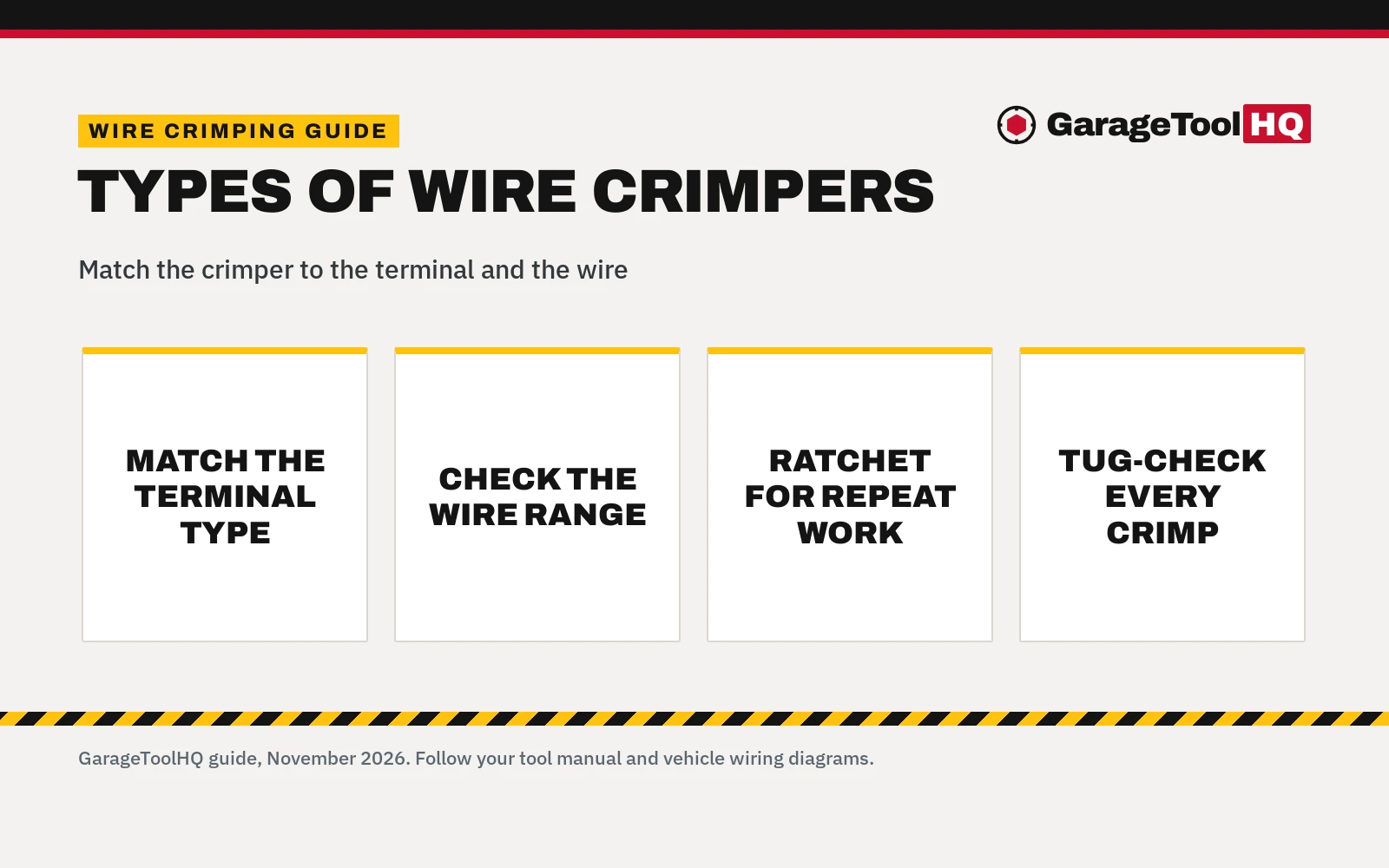
Start with the terminal, not the tool. List the terminals the job needs: insulated ring, spade and butt terminals for accessory wiring, bare lugs for battery cables, ferrules for terminal blocks. Then check the wire range the maker lists for the tool; the WORKPRO kit lists AWG 22-10, which covers light accessory wiring through trailer circuits. A ratchet helps when the same crimp repeats, and a storage case keeps dies and terminals together between jobs. For terminal sizing, see our ring terminal sizes guide, and for stripping, see our spring loaded wire stripper picks.
Disconnect the battery before cutting into vehicle wiring, and never crimp a live wire. A crimper is a hand tool, not insulation: treat every wire as live until the battery is disconnected and the circuit is checked.
Read the manual before first use, wear eye protection, keep the work area clear and ventilated, and stay within every stated rating. Read our Safety Disclaimer.
FAQ: garage tools
Can I use pliers instead of a crimper?
Pliers crush a terminal barrel flat, which leaves gaps around the wire and a joint that loosens with vibration. A crimper forms the barrel around the wire in a shaped nest, so the metal grips the strands all the way around. For a joint that has to survive a garage and a road, use the crimper.
What wire range should a crimper cover?
Match the range the maker lists to the wire in the job. The WORKPRO crimping tool kit lists AWG 22-10, which covers light accessory wiring through trailer circuits. If the wire falls outside the listed range, the crimper will not form the barrel correctly.
Do I need a ratcheting crimper?
A ratchet is not required, but it holds the handles closed until the crimp reaches full pressure, so every terminal gets the same squeeze. That helps when a job repeats the same crimp many times; for occasional terminal work, a manual crimper with the right dies does the job.
Can I re-crimp a terminal?
No. A crimp reshapes the barrel around the wire, and squeezing it again will not fix a loose joint. Cut the terminal off, strip a fresh end and crimp a new terminal.
Do heat shrink terminals need heat?
Yes. Heat shrink tubing shrinks around the joint when warmed, covering the joint and holding the sleeve tight. The WORKPRO kit includes heat shrink connectors and tubing; warm the sleeve evenly until it hugs the wire and the terminal.
Related: electric wire crimpers, electrical measuring tools and our diagnostics and electrical hub.