Vinyl vs Epoxy Garage Floor: Which One Should You Buy?
Vinyl and epoxy garage floors compared on install, durability, repair and warranty, with three vinyl listings as concrete examples.

On this page
Top picks at a glance
As an Amazon Associate we earn from qualifying purchases.
- 1
 MOUNTO 12-Inch Heavy Duty Cylinder Axial Fan with 25-Foot9.5/10View on Amazon
- 2
 Gorilla Epoxy Garage Floor Coating Kit9.7/10View on Amazon
- 3
 ArmorPoxy 100% Solids Garage Epoxy Floor Kit9.7/10View on Amazon
- 4
 Art3d 36-Pack Peel and Stick Vinyl Floor TilesView on Amazon
- 5
 RESILIA Black Plastic Floor RunnerView on Amazon
- 6
 TUFFIOM 7.5 x 17 FT Garage Floor MatView on Amazon
- 7
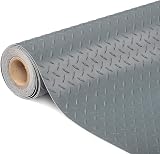 TUFFIOM 7.5 x 20 FT Garage Floor MatView on Amazon
- 8
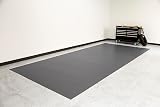 Lite Diamond Tread Pattern Slate Grey Vinyl Rollout GarageView on Amazon
- 9
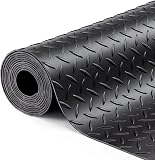 SEAL 8 x 20 FT Premium Garage Floor MatView on Amazon
The vinyl vs epoxy garage floor question comes down to how you use the garage. Vinyl wins for easy install and easy replacement; epoxy wins for a hard, seamless surface that takes hot tires and chemicals. Vinyl tiles and mats go down with basic tools, while epoxy coats the concrete itself as a permanent surface. This guide compares the two side by side, works through three vinyl listings as concrete examples, and shows how to read an epoxy kit listing with the same checklist.
More options to compare
 Art3d 36-Pack Peel and Stick Vinyl Floor TilesCheck price on Amazon
 RESILIA Black Plastic Floor RunnerCheck price on Amazon
 TUFFIOM 7.5 x 17 FT Garage Floor MatCheck price on Amazon
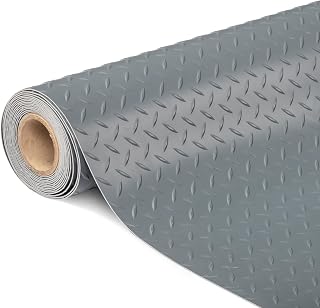 TUFFIOM 7.5 x 20 FT Garage Floor MatCheck price on Amazon
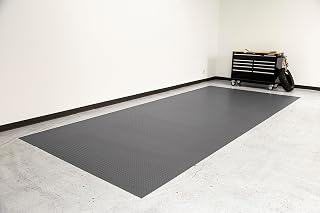 Lite Diamond Tread Pattern Slate Grey Vinyl Rollout GarageCheck price on Amazon
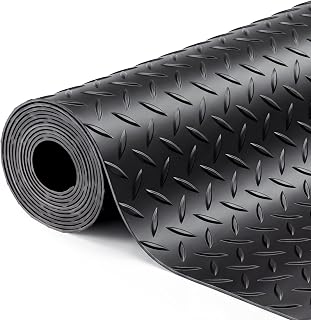 SEAL 8 x 20 FT Premium Garage Floor MatCheck price on Amazon
GarageToolHQ earns a commission when you buy through links on our product pages, at no extra cost to you. Read our affiliate disclosure.
Below: what separates vinyl from epoxy, a side-by-side table, the three vinyl listings we compared, and a checklist for reading an epoxy kit listing.
Vinyl vs epoxy garage floor: the difference in one paragraph
Vinyl floor coverings sit on top of the concrete: peel-and-stick tiles, mats and runners that you lay down, trim and replace as needed. Epoxy is a coating that bonds to the concrete itself, applied as a liquid that hardens into a continuous surface. Vinyl is a floor covering you can change; epoxy is a floor treatment that becomes part of the floor. That one difference decides the install effort, the durability and what happens when either one wears out.
Side by side
| Factor | Vinyl | Epoxy |
|---|---|---|
| What it is | Tiles, mats or runners laid over concrete | A liquid coating that hardens onto the concrete |
| Install | Peel and stick, or roll out and trim | Prep, mix, roll on, wait for hardening |
| Durability (stated) | Water and stain resistant per the listings | No epoxy listing here; check the kit’s stated rating |
| Repair | Replace a tile or roll up a mat | Recoat the worn area |
| Warranty (stated) | 5-year limited on the ACHIM tiles; none on the other two | No epoxy listing here |
The table above uses the vinyl listings for the vinyl column. No epoxy listing was provided with this guide, so the epoxy column says what to check rather than what a listing states.
The three vinyl listings in this guide
We scored the three listings on what their spec tables state. The ACHIM tiles lead on the stated warranty and easy install, the TUFFIOM mat follows as the only garage-specific covering, and the RESILIA runner is the small-format option for entryways and work zones.
1. ACHIM Nexus Peel and Stick Vinyl Tiles: A 20-pack of 12 by 12 in peel-and-stick tiles, 1.2 mm thick, with a stated coverage of 20 square feet in the bullets and 20.25 square feet in the spec table. The listing states water resistance, a semi-gloss patterned finish in black and white, an item weight of 16 oz, and a 5-year limited warranty, the only stated warranty of the three.
2. TUFFIOM 7.5 by 17 ft Garage Floor Mat: A thickened PVC roll at 7.5 by 17 ft, 204 by 90 by 0.08 in and 2 mm thick, weighing 61.6 lb. The listing states a coin pattern surface for grip, water and stain resistance against dirt, mud and automotive fluids, and trimming with scissors or a utility knife. It was first listed on August 6, 2024, and states no warranty term.
3. RESILIA Black Plastic Floor Runner: A 15 by 48 in waterproof vinyl runner, 0.5 in thick and 6.25 sq ft, with an embossed wide rib pattern. The listing states it is made in the USA and spot clean only. It is the smallest format of the three and states no warranty term.
When vinyl is the better choice
- Fast install. Peel-and-stick tiles go down on a flat, dry surface with no tools; the TUFFIOM mat simply rolls out.
- Easy replacement. A damaged tile swaps out without redoing the floor, and a mat rolls up and moves.
- Renters and uncertain plans. Vinyl comes back up; epoxy does not.
- Targeted coverage. Runners and mats cover the work zone or the parking spot without doing the whole floor. See our garage floor mats for a 2-car garage.
When epoxy is the better choice
- A permanent surface. Epoxy bonds to the concrete and stays put through hot tires and traffic.
- Seamless coverage. No tile edges or mat seams to trap dirt and fluids.
- Chemical resistance. A rated epoxy kit resists the automotive fluids a garage sees; check the kit’s stated rating.
- Whole-floor finish. For a full garage makeover, one coating covers the whole floor at once. Compare kits in our garage floor coating kits guide.
How to read an epoxy kit listing
No epoxy listing was provided with this guide, so this section is a checklist. When you open one, look for the same fields used above: coverage in square feet, number of coats, stated hardening time and temperature range, surface prep requirements, and warranty term. Compare those against your garage’s size and condition the way the vinyl listings compare above. The epoxy side is not better or worse on any spec here, because no epoxy listing stated one. For more comparisons, see epoxy vs acrylic garage floor and garage floor mats vs epoxy.
Use rated jack stands on solid ground, wear eye protection with power and air tools, keep fuel-burning equipment out of a closed garage, and follow the manual for every tool. Read our Safety Disclaimer.
Frequently Asked Questions
Is vinyl flooring good for a garage?
For light to medium use, yes. The TUFFIOM listing states its mat withstands trailers, trucks and SUVs without deforming, and the ACHIM tiles are water resistant. For heavy shop use with welding and grinding, a coated floor holds up better.
How much coverage do the vinyl listings state?
The ACHIM 20-pack states 20 square feet in the bullets and 20.25 in the table. The TUFFIOM mat is 7.5 by 17 ft, and the RESILIA runner is 15 by 48 in at 6.25 sq ft.
Can I install vinyl tiles myself?
The ACHIM listing describes peel-and-stick install on a flat, dry surface with no glue. The TUFFIOM mat rolls out and trims with scissors or a utility knife.
Which vinyl listing states a warranty?
Only the ACHIM tiles, with a 5-year limited warranty. The TUFFIOM and RESILIA listings state no warranty term.
What should I check on an epoxy kit listing?
Coverage, number of coats, stated hardening time and temperature, surface prep, and warranty. Without those stated, a kit cannot be compared to the vinyl listings here.
Related: garage floor coating kits, epoxy vs acrylic garage floor, mats vs epoxy, and our garage upgrades hub.