What Size C Clamp for Brake Caliper: Choosing the Right One
How jaw opening and throat depth decide what size C clamp fits a brake caliper, with stated sizes and forces from clamp sets and a measuring routine.

On this page
The brake job stalls at the same point in garage after garage: the new pads are thicker than the worn set, and the caliper piston has to go back into its bore before the caliper will fit over them. What size c clamp for brake caliper work comes down to fit, not force: the right clamp is one whose jaw opening clears the caliper and pad stack with room to spare, and whose throat reaches the center of the piston so the screw pushes straight.
As an Amazon Associate I earn from qualifying purchases. GarageToolHQ earns a commission when you buy through links on our product pages, at no extra cost to you. Read our affiliate disclosure.
Below: how jaw opening and throat depth decide the size, how to measure your caliper before buying, and when a clamp is the wrong tool for the piston in front of you.
what size c clamp for brake caliper: the short answer
Measure the stack the clamp has to span, then pick a clamp with a stated jaw opening larger than that measurement. Clamp sets from the makers here run from small to large: the ATE Pro set states 3″, 4″, 6″ and 8″ clamps and states brake use, the JEUIHAU set states jaw openings of 3 in, 4 in and 6 in, and the KARRYTON set states jaw openings of 4″/101mm, 6″/152mm and 8″/203mm. A clamp that only just reaches the measurement leaves no room to start the screw, so the stated opening needs to clear the stack, not merely match it.
Throat depth matters as much as opening. The throat is the distance from the screw centerline to the back of the frame, and it decides whether the screw can sit on the piston center or only on its edge. The IRWIN clamp states an 8-inch clamping capacity with a 4-inch throat depth, and the KARRYTON set states throat depths of 2-3/4″/70mm, 3-3/8″/86mm and 3-3/4″/95mm across its sizes. A wide opening with a shallow throat can still fail the job if the frame fouls the caliper body before the pad sits square.
Jaw opening and throat depth in the listings
| Brand | Stated jaw opening | Stated throat depth | Stated clamping force |
|---|---|---|---|
| KARRYTON | 4″/101mm, 6″/152mm, 8″/203mm | 2-3/4″/70mm, 3-3/8″/86mm, 3-3/4″/95mm | 1700LB, 2310LB, 2930LB |
| JEUIHAU | 3 in, 4 in, 6 in | 2 in, 2.25 in, 2.75 in | Not stated |
| IRWIN | 8-inch clamping capacity | 4-inch | Not stated |
| Wilton | 0-2″, 0-4″, 0-6″ models in kit | Not stated | Up to 1,700 pounds of force |
| ATE Pro | 3″, 4″, 6″, 8″ clamps in set | Not stated | Not stated |
Read the table by fit, not by force. Clamping force figures such as the KARRYTON ratings of 1700LB, 2310LB and 2930LB describe what the frame and screw can apply, while a caliper piston should move with steady, even pressure through a flat pad or block. If the piston needs heavy force to move, that is a sign to stop and check the caliper, not a reason to choose a stronger clamp.
How to size a C clamp for a brake caliper
- Support the vehicle safely. Park on solid, level ground, chock the wheels that stay on the ground, and support the vehicle on rated stands. Never get under a vehicle held by a jack alone.
- Measure the stack. With the caliper off its bracket and supported so the hose carries no weight, measure across the caliper body, the piston as it sits, and the pad or flat block the clamp will push on.
- Compare the measurement with stated jaw opening. Pick a clamp whose stated opening clears that measurement with room to start the screw, using the stated sizes in the table above.
- Check throat depth against the piston center. The screw and swivel pad need to land on the center of the piston or on a flat pad covering it, so pressure stays even as the piston moves.
- Push slowly and watch the piston. Turn the screw in small steps, keep the pad square, and watch the brake fluid level in the reservoir as the piston goes back, since displaced fluid returns there.
- Stop if the piston will not move evenly. A piston that cocks sideways, sticks, or needs heavy force points to a caliper fault, and forcing it can damage the piston or its seal.
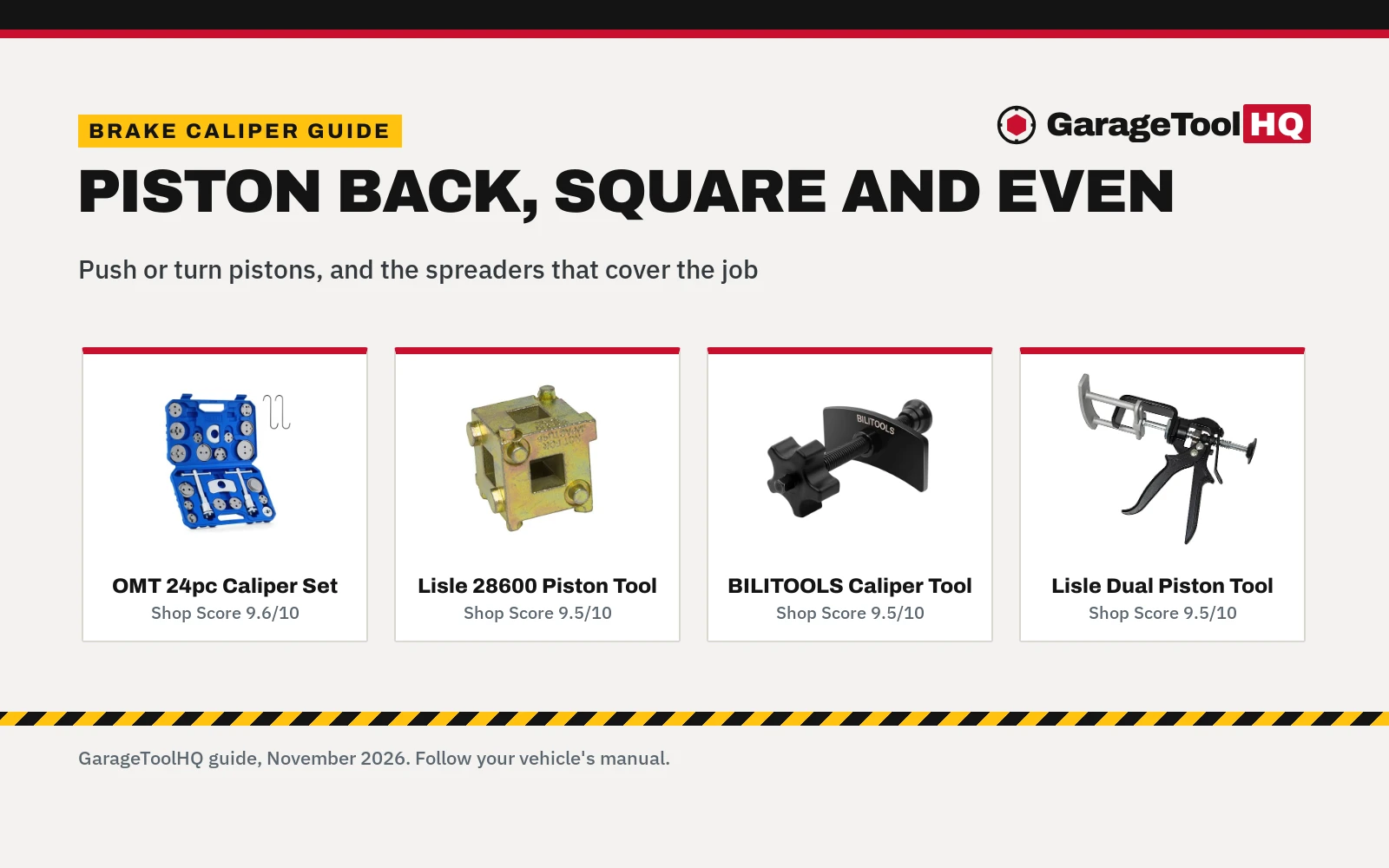
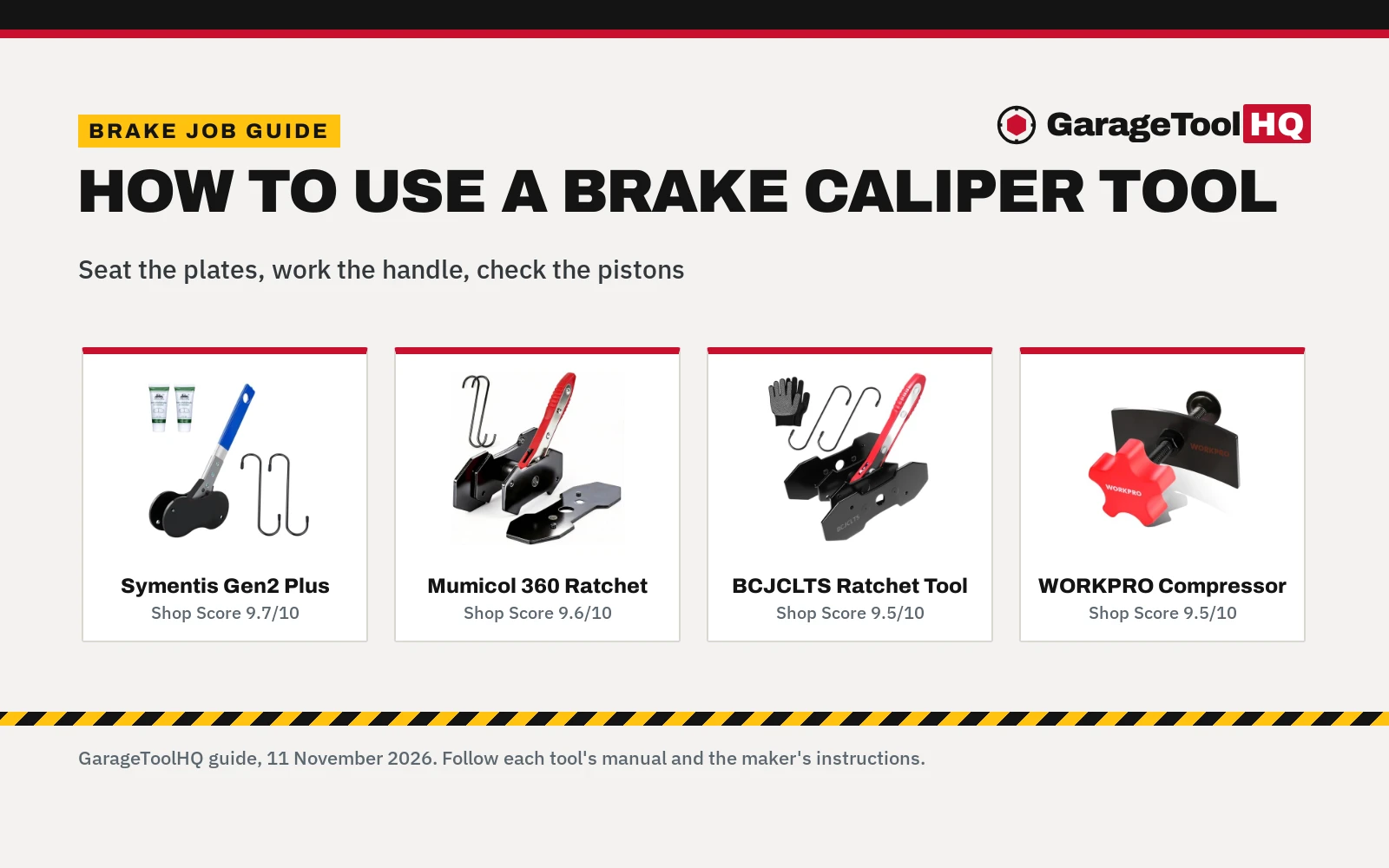
Many rear calipers with an integrated parking brake need the piston rotated as it retracts, and a plain clamp pushing straight can damage the mechanism. Check the vehicle manual for your caliper before choosing a clamp, and use the wind-back tool the manual calls for where one is specified.
Read the manual before first use, wear eye protection, keep the work area clear and ventilated, and stay within every stated rating. Read our Safety Disclaimer.
When a C clamp is the wrong tool
A clamp only suits a piston that is made to push straight back and that moves freely in its bore. Torn dust boots, a seized or cocked piston, heavy corrosion, or a wind-back design all call for caliper service or the correct wind-back tool instead of more clamp force. The clamp also has to fit the caliper shape: a frame that fouls the bracket, hose or bleeder before the pad sits square is the wrong size even when its stated opening looks large enough on paper. In those cases the size question has no clamp answer, and the brake work stops until the caliper is sorted.
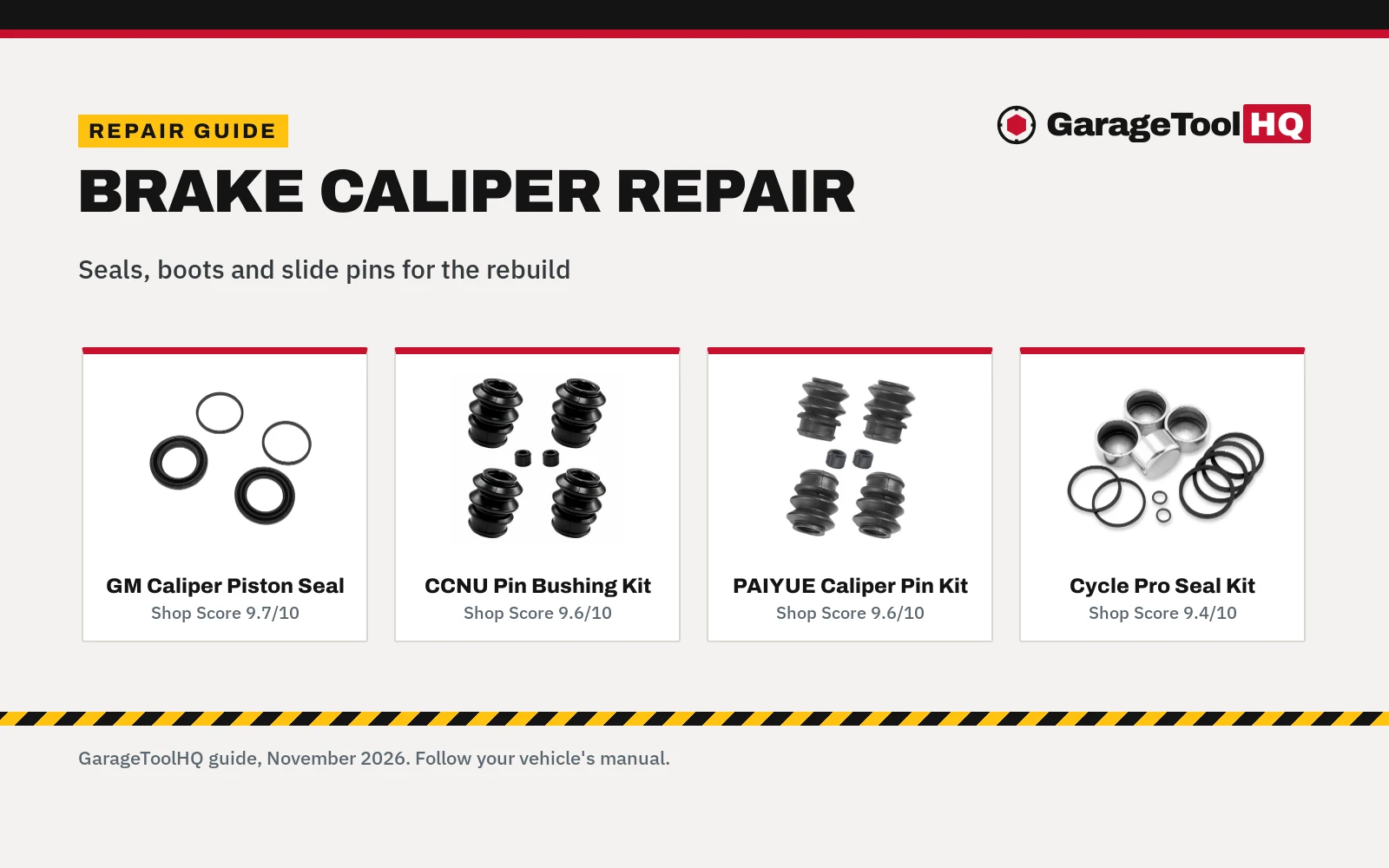
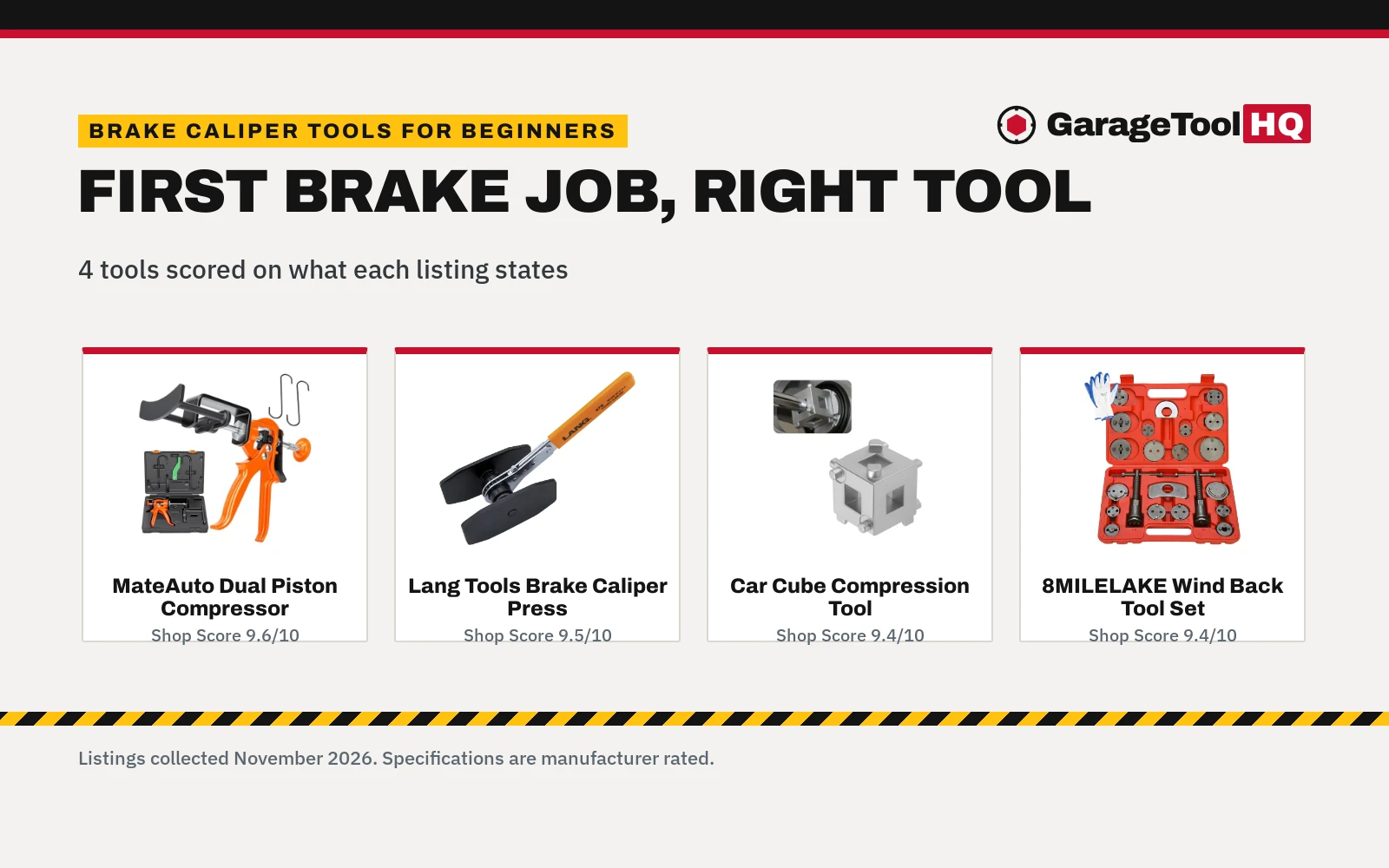
For the wider brake job, see the guide to how to repair a brake caliper and the best brake caliper tool for beginners picks. For clamp sizing in general, the C clamp sizes chart sets out throat depth and capacity across common sizes.
FAQ: garage tools
What size C clamp do I need for a brake caliper?
Measure across the caliper, piston and pad or block stack, then choose a clamp with a stated jaw opening larger than that measurement and a throat that reaches the piston center. Makers here state openings from 1 in to 8″/203mm across sets.
Is a 6 inch C clamp big enough for a brake caliper?
It depends on the measured stack and the throat depth, not on the size label alone. The JEUIHAU 6 in clamp states a throat depth of 2.75 in, and the KARRYTON 6″/152mm clamp states 3-3/8″/86mm, so compare both figures with your caliper.
What throat depth does a caliper clamp need?
The throat has to let the screw land on the piston center with the frame clear of the caliper body. Stated throat depths here run from 2 in on the JEUIHAU 3 in clamp to a 4-inch throat depth on the IRWIN 8-inch clamp.
Should I buy a single clamp or a set?
A set covers calipers of different sizes with one purchase. The ATE Pro set states 3″, 4″, 6″ and 8″ clamps for brake use, and the Wilton kit states models at 0-2″, 0-4″ and 0-6″ with clamping pressure up to 1,700 pounds of force.
Can I push a rear caliper piston back with a clamp?
Only where the vehicle manual allows a straight push. Rear calipers with an integrated parking brake often need the piston wound back as it retracts, so check the manual first and use the specified wind-back tool where one is called for.
How much clamping force does a caliper piston need?
No force figure for caliper pistons is stated here, and force is not the sizing figure to shop by. Stated clamp forces run to 2930LB on the KARRYTON 8″/203mm clamp, but a healthy piston should move with steady, even pressure through a flat pad.
More garage guides
See the C clamp sizes chart, how to repair a brake caliper, the best brake caliper tool for beginners and the engine and shop equipment hub.