Straight vs Angled Die Grinder: Which One Should You Buy?
An informational guide comparing straight and angled die grinders by reach, speed, power and air supply, with figures from real listings and their contradictions.

On this page
Top picks at a glance
As an Amazon Associate we earn from qualifying purchases.
- 1
 WORKPRO Pneumatic Straight Die Grinder9.4/10View on Amazon
- 2
 Chicago Pneumatic CP8759.6/10View on Amazon
- 3
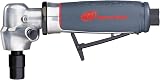 Ingersoll Rand 5102MAX 1/4" Collet Air Die Grinder Max free9.6/10View on Amazon
- 4
 Ingersoll Rand 3107G 1/4-Inch Straight Air Die Grinder withView on Amazon
- 5
 AIRCAT 6260 1.0 HP Composite Straight Die GrinderView on Amazon
Straight vs angled die grinder comes down to where the work sits. A straight die grinder holds the bit in line with the body, like a pencil, and reaches into tight, narrow spaces; the straight listings here run 20,000 to 28,000 RPM at 0.7 to 1.6 pounds. An angled die grinder puts a 90-degree head on the tool so the bit meets the surface in front of you; the angled listings here run 20,000 to 25,000 RPM at about a pound. Pick straight for reaching in, angled for working faces. Listings referenced were collected 19 October 2026.
More options to compare
 Ingersoll Rand 3107G 1/4-Inch Straight Air Die Grinder withCheck price on Amazon
 AIRCAT 6260 1.0 HP Composite Straight Die GrinderCheck price on Amazon
GarageToolHQ earns a commission when you buy through links on our product pages, at no extra cost to you. Read our affiliate disclosure.
Every reference listing for this guide is a pneumatic die grinder; no electric or cordless model is among them. Every number below comes from the listings cited by brand, and several listings contradict themselves on speed and head shape, which we flag where it happens.
Straight vs angled die grinder: the short answer
Choose the straight grinder when the job is inside something: ports, welds in corners, deburring holes, work down a bore. The Ingersoll Rand 307B is the extreme here at 5.2 inches and 0.7 pounds with 28,000 RPM; the NEIKO 30062A is 5 inches and under a pound at 24,000 RPM. Choose the angled grinder when the job is a surface in front of you: the WORKPRO’s 90-degree head and 6-5/16 inch body suit grinding and deburring you can see straight on. Both types need an air compressor, and no listing here includes one.
How a straight die grinder works
A straight die grinder is a pencil with a motor. The collet sits in line with the body, so the bit extends straight ahead and the tool follows your hand into narrow openings. The listings show the pattern clearly: 1/4 inch collets are standard across all of them, with the WORKPRO, AEROPRO and CILEONBE adding a 1/8 inch collet for smaller bits. Free speeds run 24,000 RPM on the NEIKO mini to 28,000 on the Ingersoll Rand 307B, with the 3107G and 308B at 27,000 and 25,000. Weights run 0.7 pounds on the 307B to 1.6 on the 1.0 hp AIRCAT 6260, and lengths from 5 inches to 6.9. Safety throttles are the norm: self-locking or safety-lock levers on the Ingersoll Rand, WORKPRO, AEROPRO and CILEONBE listings keep the tool from starting by accident.
How an angled die grinder works
An angled die grinder bends the business end 90 degrees. The head turns the bit perpendicular to the body, so you hold the tool like a handle and work the surface in front of you without bending your wrist sideways. The WORKPRO lists the classic 90-degree head at 20,000 RPM, 90psi operating pressure and 3cfm air consumption, with a rear exhaust and a 1/8 inch collet alongside the 1/4 inch. The AEROPRO AP17315 matches that at 20,000 RPM and 3cfm and suggests a 1.5HP compressor. The Ingersoll Rand 5108MAX is the outlier: 0.4 hp and 25,000 RPM at 1.0 pound, the highest-speed angled head here; the listing mixes straight and right-angle wording, which we flag below.
Speed, power and size: what the listings state
| Straight examples | Angled examples | |
|---|---|---|
| Free speed | 20,000 to 28,000 RPM | 20,000 to 25,000 RPM |
| Power cited | 0.25 to 1.0 hp | 0.4 hp on the 5108MAX; others not stated |
| Weight | 0.7 to 1.6 lb | About 1 lb |
| Length | 5 to 6.9 in | 6-5/16 in (WORKPRO); 6.6 in (5108MAX) |
| Collets | 1/4 in standard; some add 1/8 in | 1/4 in; WORKPRO adds 1/8 in |
| Air demand | 90psi typical; 20 CFM at load on the CP872 | 90psi and 3cfm on the WORKPRO and AEROPRO |
The table pairs examples, not whole categories. Straight grinders reach higher on speed, but the listings overlap enough that shape, not speed, should decide.
Listing contradictions worth knowing
Several listings mix up their own shape and speed, so read them carefully. The Ingersoll Rand 3107G title says straight while its bullets call it an air angle grinder. The 5108MAX bullets call it a straight die grinder in one breath and describe a right-angle configuration in the next. The AEROPRO AP17315 title says angle in one breath and straight die grinder in the next. On speed, the Chicago Pneumatic CP872 bullets claim 27,000 RPM and 0.63 HP while its spec table says 22,500 RPM and 0.3 HP, and its Angle Type field says 90 degrees against a Style Name of Straight/Tool. The CILEONBE bullets claim 25,000 RPM while its spec table says 20,000, and the AIRCAT 6260 bullets say 20,000 RPM against 22,000 in the spec table. Our rule throughout: trust the title and bullets over the spec table, and confirm with the seller where the gap matters.
Air supply: the number that decides
Both shapes live or die on the compressor. Operating pressure is 90psi on the WORKPRO, CILEONBE and CP872 listings, and air consumption runs 3cfm on the WORKPRO and AEROPRO up to 20 CFM at load on the CP872, which is a serious jump. The AEROPRO suggests a 1.5HP compressor. No listing here includes a compressor, and several say so outright. Size the compressor to the hungriest tool you will run; our air compressor sizing guide and CFM guide for air tools walk through the math.
Which one suits your work
- Straight, for reaching in. Porting, weld dressing in corners, deburring holes, detail work inside engine bays. The 5-inch NEIKO goes where the 6.9-inch 308B cannot.
- Angled, for working faces. Surface grinding, blending welds on flat work, rust removal you watch as you go. See our air die grinders for rust removal.
- Either, for general shop use. Most home shops end up with one of each, since the jobs rarely overlap. Compare models in our best air die grinder roundup.
Frequently Asked Questions
Can I use the same bits in straight and angled grinders?
Yes. Every listing here uses a 1/4 inch collet, with several adding a 1/8 inch, so the bits interchange freely. The head shape changes the reach, not the shank size.
Why do the listings disagree on speed?
Because some listings were written carelessly. The CP872 claims 27,000 RPM in the bullets against 22,500 in its spec table, the AIRCAT 20,000 against 22,000, and the CILEONBE 25,000 against 20,000. Trust the title and bullets over the table, and confirm with the seller if the speed decides your purchase.
Does it matter if a listing says both straight and angled?
Yes, check before buying. The 3107G, 5108MAX and AEROPRO listings mix the terms, and the head angle decides which jobs the tool suits. Look at the product shape rather than the title wording.
What compressor do I need for a die grinder?
Plan on 90psi operating pressure and match the CFM: 3cfm covers the WORKPRO and AEROPRO class, while the CP872 lists 20 CFM at load. Our compressor sizing guide covers the rest.
Do air die grinders need oil?
Only the Ingersoll Rand 5108MAX listing claims a lube-free design; the others do not state it either way. Our how to oil air tools guide covers the routine for tools that need it.
Related: our pneumatic vs cordless die grinder comparison, the best air die grinder roundup and air die grinders for rust removal.