Belt Sander vs DA Sander: Which One to Buy? (2026)
Belt sanders strip material fast in a straight line; DA sanders finish smooth without swirls. Compare both, then see four belt sanders.

On this page
Top picks at a glance
As an Amazon Associate we earn from qualifying purchases.
- 1
 Astro Pneumatic 3037 Air Belt Sander9.5/10View on Amazon
- 2
 Professional Air Random Orbital Palm Sander9.6/10View on Amazon
- 3
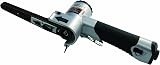 Astro Tools 3036 Air Belt Sander9.5/10View on Amazon
- 4
 WEN Benchtop Belt and Disc Sander with 4 x 36 in. BeltView on Amazon
- 5
 SKIL 6 Amp 3"x18" Belt Sander with Pressure ControlView on Amazon
- 6
 Makita 9403 4" x 24" Belt SanderView on Amazon
- 7
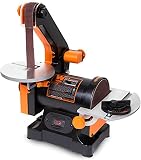 WEN Benchtop Belt and Disc Sander with 1 x 30 in. Belt and 5View on Amazon
- 8
 CRAFTSMAN Electric 7 Amp Belt SanderView on Amazon
- 9
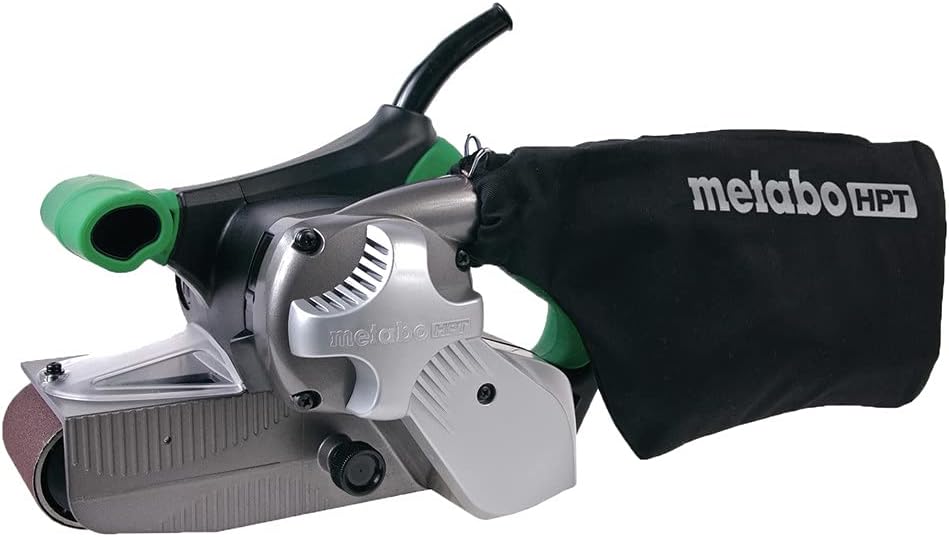 Metabo HPT Belt SanderView on Amazon
One tool strips paint to bare metal in minutes, the other feathers a repair so the primer disappears. Belt sander vs da sander is the choice between aggressive straight-line stock removal and swirl-free finishing: a belt sander runs a loop of abrasive in one direction for fast material removal, while a DA (dual action) sander spins and orbits a disc at the same time for a finish without swirl marks. All four listings compared here are belt sanders; none of them is a DA sander, so this guide explains the difference from the designs themselves, then shows what belt sanders look like on the shelf.
More options to compare
 WEN Benchtop Belt and Disc Sander with 4 x 36 in. BeltCheck price on Amazon
 SKIL 6 Amp 3"x18" Belt Sander with Pressure ControlCheck price on Amazon
 Makita 9403 4" x 24" Belt SanderCheck price on Amazon
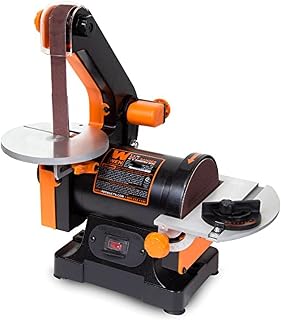 WEN Benchtop Belt and Disc Sander with 1 x 30 in. Belt and 5Check price on Amazon
 CRAFTSMAN Electric 7 Amp Belt SanderCheck price on Amazon
 Metabo HPT Belt SanderCheck price on Amazon
GarageToolHQ earns a commission when you buy through links on our product pages, at no extra cost to you. Read our affiliate disclosure.
Belt sander vs da sander: the short answer
Pick a belt sander for stripping and shaping: removing paint, rust and old filler fast, leveling welds and taking wood down to size. The listings here run 3 by 18 and 3 by 21 inch belts at 6 and 7 amps, with the CRAFTSMAN stating a max 800 feet per minute for fast material removal. Pick a DA sander for finishing: feather-edging filler, scuffing paint before primer and polishing panels without swirls. For auto body work you want both: the belt for the rough work, the DA for everything after.
What a belt sander gives you
Straight-line aggression. A belt sander’s loop runs in one direction, so it cuts fast and flat: the CRAFTSMAN states max 800 feet per minute for fast material removal, and the WEN detailing file sander runs its 1/2 by 18 inch belt from 1080 to 1800 feet per minute with a pivoting head for tight spots. The trade is control: a belt sander can gouge in a heartbeat if it sits still, which is why the SKIL includes pressure control that warns when excessive pressure is applied. Belt widths here are 1/2 inch on the detailing file sander and 3 inch on the rest, in 18 and 21 inch lengths. Dust handling varies: the SKIL has micro-filtration and vacuum compatibility, the CRAFTSMAN and Jellas include dust bags, and the WEN includes a dust port attachment.
What a DA sander gives you
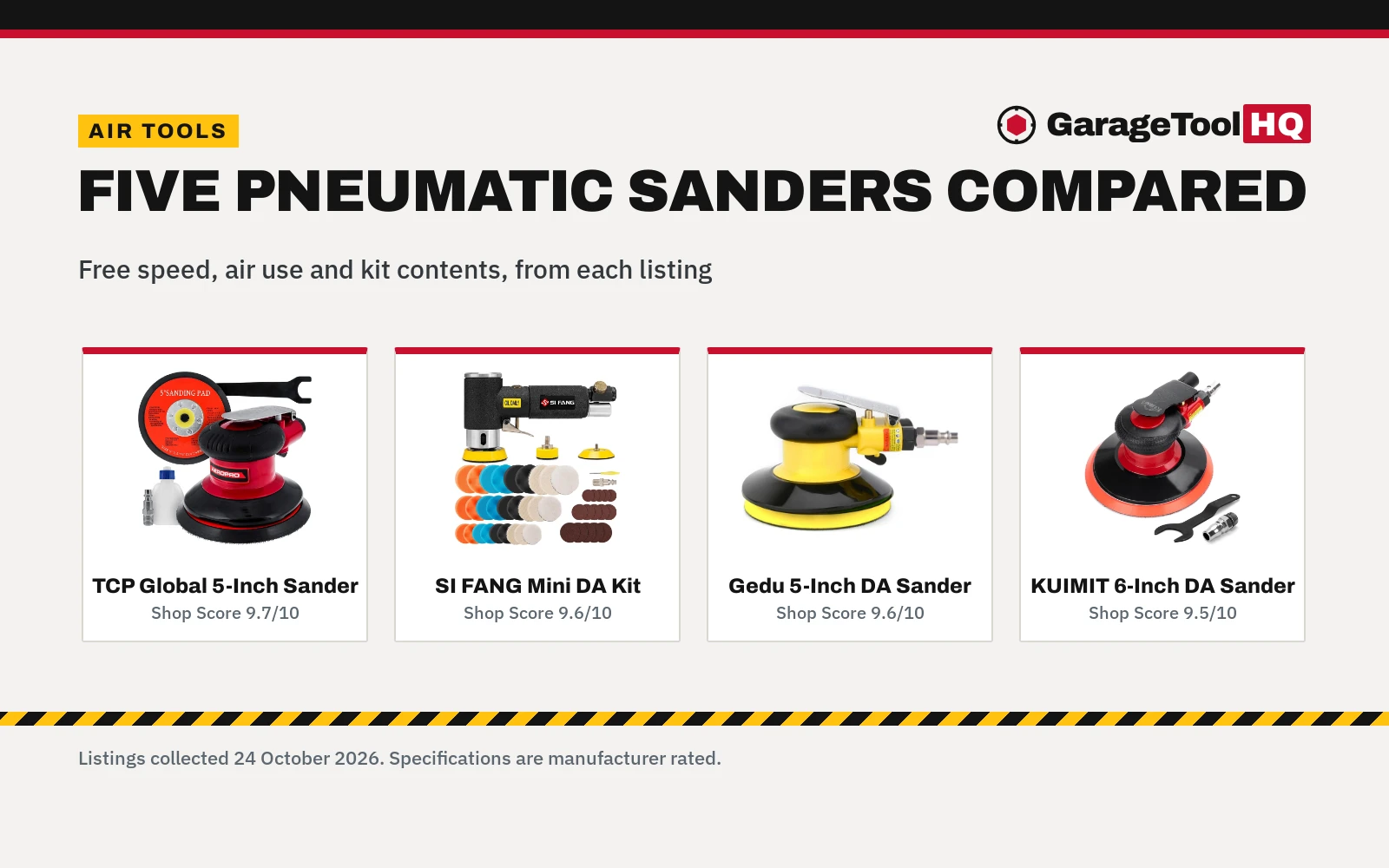
A finish without swirls. A DA sander’s disc spins while it orbits, so no single scratch pattern repeats and the surface comes out ready for paint. That makes it the pick for feather-edging body filler, scuffing clear coat before a respray and final sanding before primer. It removes material far slower than a belt sander, which is the point: on a car panel, slow and even beats fast and wavy. None of the four listings here is a DA sander, so compare on the principle: random orbit motion, discs instead of belts, finishing instead of stripping.
Four belt sanders, ranked
Every pick below is a belt sander listing, ordered by how completely each listing delivers what it promises. There is no DA sander in these listings.
1. CRAFTSMAN CMEW213 3 x 21 in belt sander
The listing describes a corded 7 amp belt sander with a 3 by 21 inch belt, stating max 800 feet per minute for fast material removal. The angled belt design sands closer to adjoining surfaces, belt changes are tool-free, and the on-board dust bag handles collection. The 3-position over-molded handle improves comfort. Item weight is 6.6 pounds.
Who it suits: heavy stripping where amps and belt size matter most. Tied with the Jellas for the highest stated amperage here.
2. SKIL 7510-01 3 x 18 in belt sander
The listing describes a corded 6 amp belt sander with a 3 by 18 inch belt. Pressure control technology warns when excessive pressure is applied, micro-filtration captures fine dust, auto track belt alignment keeps the belt centered, and it fits standard 1-1/4 inch vacuum hoses. Flush edge sanding reaches right up to edges. Item weight is 5.5 pounds.
Who it suits: controlled sanding where the pressure warning and dust filtration matter. The best dust story here.
3. WEN 6307 detailing file sander
The listing describes a variable speed detailing file sander with a 1/2 by 18 inch belt, running 1080 to 1800 feet per minute with auto-tracking that needs no tensioning. The belt pivots up to 55 degrees for tight spots, belt installation is tool-free, and the box includes three abrasive belts and a dust port attachment. The listing states a two-year warranty. Item weight is 2.4 pounds.
Who it suits: detail work and tight spots where a full-size belt sander cannot fit. The only stated warranty here.
4. Jellas 3 x 21 in belt sander
The listing describes a 7 amp handheld belt sander with a 3 by 21 inch belt and a variable speed knob with 6 dials from 120 to 400 rpm. Two metal C clamps let it flip over and fix to a table as a bench sander, and the box includes 10 aluminum oxide sanding belts from 40 to 180 grit plus a detachable dust bag. The listing states 2 year customer support. Item weight is 4.4 kg.
Who it suits: the bench-and-handheld 2-in-1, with the most included belts here. Check your outlet voltage against the 230 volt spec table entry before buying.
Sander care in the garage
Let the belt do the work: the SKIL’s pressure warning exists because leaning on a belt sander gouges the work. Keep the belt tracking centered; the WEN auto-tracks and the SKIL auto-tracks, while the others need a glance now and then. Match the belt direction arrow to the machine arrow on the Jellas. Empty the dust bag or hook up the vacuum before the fine dust finds your lungs, and change belts when the cutting slows: a dull belt burns instead of sands.
Use rated jack stands on solid ground, wear eye protection with power and air tools, keep fuel-burning equipment out of a closed garage, and follow the manual for every tool. Read our Safety Disclaimer.
Frequently Asked Questions
Which is better for auto body work?
Both. The belt sander strips paint and levels filler fast; the DA sander feathers and finishes without swirls. The listings here are all belt sanders.
Can a belt sander damage a car panel?
Yes, if it sits still or leans hard: straight-line sanding gouges. The SKIL’s pressure control warns against excessive pressure.
What belt size do I need?
The listings here offer 1/2 by 18 inch on the detailing sander and 3 by 18 or 3 by 21 inch on the rest. Wider belts cover faster; the narrow belt fits tight spots.
Which of these state a warranty?
The WEN states a two-year warranty and the Jellas states 2 year customer support. The SKIL and CRAFTSMAN state no warranty term.
Do these collect dust?
The SKIL has micro-filtration and vacuum compatibility, the CRAFTSMAN and Jellas include dust bags, and the WEN includes a dust port attachment.
Related: the best DA sander for auto body, DA sander vs orbital sander, best air DA sander and best DA sander for feather edging roundups.