Rubber vs Aluminum Jack Pads: Which One Should You Buy?
Rubber vs aluminum jack pads: four pads compared on capacity, grip, magnets and warranty, for pinch weld lifting.

On this page
Top picks at a glance
As an Amazon Associate we earn from qualifying purchases.
- 1
 MaxxHaul Rubber Wheel Chock 2 Pack9.7/10View on Amazon
- 2
 MaxxHaul Aluminum Ramp Top Kit 2 Pack Turns 2x8 Boards into9.2/10View on Amazon
- 3
 3 Ton Low Profile Floor Jack Heavy Duty Hydraulic Jack for9.5/10View on Amazon
- 4
 Rubber Jack Pads Compatible Corvette Lift Puck c5-c8View on Amazon
- 5
 Corvette Jack PadsView on Amazon
- 6
 12x12x1in Non-Slip Rv Jack PadsView on Amazon
- 7
 Mytee Products 1.5" Thick Medium Outrigger Pads 18" x 18" forView on Amazon
- 8
 Rubber-Cal Diamond-Plate Rubber Flooring RollView on Amazon
A jack pad is the small part that saves the expensive part: it sits between the jack saddle and the pinch weld so the lift does not bend the seam. Rubber cushions, aluminum holds shape, and both beat bare metal on paint.
This is the rubber vs aluminum jack pads comparison: two rubber pads and two aluminum pads, compared on capacity, grip, fit and warranty. Every figure is manufacturer rated.
GarageToolHQ earns a commission when you buy through links on this page, at no extra cost to you. Read our affiliate disclosure.
Verdict: choose rubber for cushioning and pinch weld protection on daily drivers: the PLANGER pad carries a 1-year warranty and the TONDA adds a waffle grip surface. Choose aluminum for rigidity and easy positioning: the DEDC pads use magnets to hold themselves on the jack while you line up, with a 4-ton capacity.
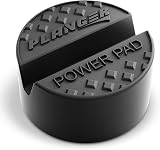


PLANGER® - Power PAD Flat
A universal flat rubber jack pad rated 3 tons with a 1-year warranty for pinch weld sills.
Pros
- 1-year warranty stated
- 3-ton capacity
- Universal fit
- Pinch weld protection
Cons
- Single pad only
- Flat face, no slot stated
- Heavier vehicles need 4-ton
- No magnet positioning

DEDC Universal Aluminum Magnetic Grooved Pinch
An aircraft-grade aluminum magnetic pad with nylon insert, 4-ton capacity and 2 magnets.
Pros
- 4-ton capacity
- 2 installed magnets
- Nylon weld insert
- Aircraft grade billet
Cons
- No warranty term stated
- Single pad only
- Aluminum needs nylon insert
- Orange color loud

DEDC Red Universal Aluminum Magnetic Grooved Pinch
A 2-pack of red aluminum magnetic pads with nylon inserts and 4-ton capacity.
Pros
- 2-pack value
- 4-ton capacity
- Magnetic positioning
- Nylon weld insert
Cons
- No warranty term stated
- 1 magnet per pad
- Title says red, bullets say orange
- Two pads to store

Floor Jack Pad, Pinch Weld Jack Adapter
A slotted rubber pad, 4.92 in diameter, with waffle grip for 2 to 3 ton lifting.
Pros
- Waffle texture grip
- Slotted cross-groove
- Cushioned contact
- Easy installation
Cons
- No warranty stated
- Weight figures contradict
- 2-3 ton range lowest
- Single pad only
More options to compare
 Rubber Jack Pads Compatible Corvette Lift Puck c5-c8Check price on Amazon
 Corvette Jack PadsCheck price on Amazon
 12x12x1in Non-Slip Rv Jack PadsCheck price on Amazon
 Mytee Products 1.5" Thick Medium Outrigger Pads 18" x 18" forCheck price on Amazon
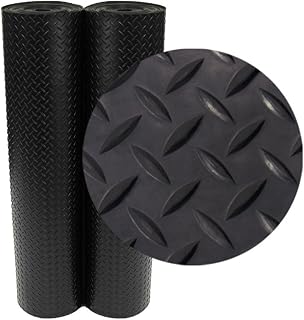 Rubber-Cal Diamond-Plate Rubber Flooring RollCheck price on Amazon
Side by side
| Pad | HQ Score | Material | Capacity | Standout |
|---|---|---|---|---|
| PLANGER Power PAD Flat | 9.6/10 | Rubber | 3 ton | 1-year warranty |
| DEDC Orange Magnet Pad | 9.6/10 | Aluminum | 4 tons | 2 magnets |
| DEDC Red 2-Pack Pad | 9.6/10 | Aluminum | 4 tons | 2-pack, 1 magnet each |
| TONDA Rubber Jack Pad | 9.6/10 | Rubber | 2-3 tons | Waffle grip |
Example figures are manufacturer rated, as published on each listing and collected 22 October 2026. Where a listing states a figure two ways, the table follows the title and bullets.
Rubber vs aluminum jack pads: how each side works
The rubber pads compress slightly under load, spreading pressure across the pinch weld. The PLANGER Power PAD Flat is a universal rubber pad for trolley jacks, lifts and axle stands, rated at 3 tons and backed by a 1-year warranty. The TONDA pad is 4.92 inches in diameter and 1.02 inches thick, rated 2 to 3 tons, with a slotted cross-groove that aligns with the pinch weld and a waffle-textured top for grip.
The aluminum pads do not compress: they are machined pucks that hold their shape. Both DEDC pads are aircraft grade billet aluminum with a nylon insert protecting the pinch weld, a 2.7 by 0.47 inch slot opening, 1.38 inch height and a 4-ton capacity. The differences between them are color, magnet count and pack size: the orange pad is a single with 2 installed magnets, the red 2-pack has 1 magnet per pad. The magnets hold the pad on the jack saddle while you position it, which is the aluminum side’s real convenience win.
Capacity
The aluminum pads lead on paper: both DEDC pads list a 4-ton load capacity. The PLANGER rubber pad lists 3 tons and the TONDA 2 to 3 tons. In the listings, the PLANGER names car and SUV, the DEDC pads name car, SUV, truck and van, and the TONDA covers vehicles up to 3 tons; the 4-ton figure matters if you lift heavier trucks. Note the capacities are the listings’ own figures, not independently verified.
Grip and fit
Rubber grips by friction: the TONDA’s waffle texture increases contact friction, and the PLANGER presents a flat face to the weld. Aluminum grips by magnets: the DEDC pads hold themselves in place while you align the jack, freeing both hands. The nylon insert in the DEDC pads is the detail that keeps aluminum from chewing the pinch weld it is meant to protect. All four are made for pinch welds. The TONDA and the DEDC pads are slotted: the TONDA’s cross-groove centers the seam and the DEDC slot measures 2.7 by 0.47 inches. The PLANGER is flat and takes the weld across its face. If your car uses a flat jacking point instead of a pinch weld, the flat PLANGER is the natural choice of the four.
Warranty and listing quirks
The PLANGER is the only one with a stated warranty: 1 year. The TONDA spec table states no warranty. Neither DEDC listing states a term. Two listings contradict themselves: the TONDA bullets give the weight as both 0.11 lb and 245 g, which do not agree, against a spec table 9.92 ounces; and the red DEDC title says red while its bullets say anodized orange, apparently copied from the orange version. In both cases the title wins.
When each material wins
Rubber wins on painted pinch welds and underseal: it deforms just enough to spread the load without biting the coating. That is why both rubber listings emphasize protection from metal-to-metal contact. Aluminum wins on speed and repeatability: the puck goes on the saddle, the magnets hold it, and the lift starts. In a busy home garage doing tire rotations, the magnetic aluminum pads save a fiddly step every time. For a concours car where the welds must stay perfect, rubber’s cushioning is the safer bet.
Example pads
For more choices, see the best floor jack for garage floor and the air jack vs floor jack.
A jack is for lifting, not holding. Never work under a vehicle supported only by a jack: set it on rated jack stands, on solid, level ground, at the manufacturer's lift points, chock the wheels, and give the car a firm shake before you go under. Read our Safety Disclaimer.
Frequently Asked Questions
Can one pad serve two cars?
Yes, within reason. All four are universal fit for pinch welds, so one pad can move between vehicles. The 2-pack DEDC exists because lifting usually happens one side at a time, and a second pad means never waiting. Keep a spare in the trunk and roadside tire changes get safer too.
Do I need a jack pad?
If you lift at the pinch weld, yes. The pad spreads the load and stops the saddle from bending the seam or stripping underseal. All four listings here are made for pinch welds. Never lift on the floor pan or a suspension arm with these pads; they are shaped for the vertical seam of the pinch weld, and using them elsewhere defeats the design.
Rubber or aluminum for a daily driver?
Rubber for cushioning: the PLANGER and TONDA pads absorb contact pressure and protect the lifting point from metal-to-metal contact. Aluminum for rigidity and the magnetic positioning the DEDC pads offer.
What do the magnets do?
The DEDC pads have magnets in the slot that hold the pad on the jack saddle while you align the jack under the car. The orange pad has 2 magnets; the red 2-pack has 1 per pad.
What capacity do I need?
Match the pad to the vehicle: the DEDC pads list 4 tons, the PLANGER 3 tons and the TONDA 2 to 3 tons. Any of the four suits cars and SUVs; heavier trucks want the 4-ton figure. Remember the pad is only as strong as the jack under it: a 4-ton pad on a 2-ton jack does not make a 4-ton lift.
Which pads have a warranty?
Only the PLANGER, with a stated 1-year warranty. The other three listings state no warranty term.
Related: the best floor jack for garage floor, the heavy duty vs standard floor jack and the jacks and stands hub.