Steel vs Aluminum Floor Jack: Which One Should You Buy?
Key differences between steel and aluminum floor jacks, covering weight, durability, lifting stability, and which build fits your garage setup.

On this page
Top picks at a glance
As an Amazon Associate we earn from qualifying purchases.
- 1
 AV Steel Low Profile Floor Jack 3 Ton9.7/10View on Amazon
- 2
 Jack Boss 3 Ton Low Profile9.7/10View on Amazon
- 3
 YELLOW JACKET Floor Jack 3 Ton Hydraulic Low Profile Aluminum9.7/10View on Amazon
- 4
 2.5 Ton Steel Floor JackView on Amazon
- 5
 VEVOR 2.5 Ton Low Profile Heavy-Duty Steel Racing Floor JackView on Amazon
- 6
 Maxority 3-TonView on Amazon
- 7
 AV Steel Low Profile Floor Jack 2.5 TonView on Amazon
- 8
 AV Steel 3 Ton Floor JackView on Amazon
- 9
 SATA 3-TonView on Amazon
Steel vs aluminum floor jack: which one should you buy? Choose a steel floor jack if you want maximum long-term durability for stationary shop work on heavy vehicles, and choose an aluminum floor jack if you need portable lifting equipment for track days, mobile roadside repairs, or frequent transport. Steel jacks provide superior structural rigidity and wear resistance at a lower initial cost, whereas aluminum jacks reduce physical strain during transport. Neither material replaces rated jack stands, which must always support the vehicle before you begin work.
More options to compare
 2.5 Ton Steel Floor JackCheck price on Amazon
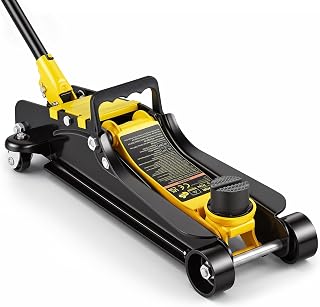 VEVOR 2.5 Ton Low Profile Heavy-Duty Steel Racing Floor JackCheck price on Amazon
 Maxority 3-TonCheck price on Amazon
 AV Steel Low Profile Floor Jack 2.5 TonCheck price on Amazon
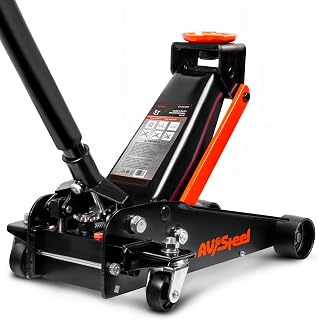 AV Steel 3 Ton Floor JackCheck price on Amazon
 SATA 3-TonCheck price on Amazon
GarageToolHQ earns a commission when you buy through links on our product pages, at no extra cost to you. Read our affiliate disclosure.
Below: how steel and aluminum hydraulic floor jacks compare on weight, frame strength, service life, and garage mobility, plus a practical checklist to help you select the right build for your vehicle.
Steel vs aluminum floor jack: where the key differences matter
Floor jacks rely on the same fundamental hydraulic mechanics regardless of frame material: a hydraulic cylinder, a release valve, and a lifting arm that pivots upward on side plates. What changes between steel and aluminum is how the tool handles physical movement, structural load, and workshop wear:
- Tool weight and portability. Compact steel models like the BIG RED weigh 27.7 pounds, while full-size steel service jacks reach 76.8 pounds on the ARCAN or 100 pounds on the Maxority. Aluminum alloy has lower density, allowing manufacturers to build full-size service frames that are far easier to carry across a driveway or pit lane.
- Structural rigidity and chassis flex. Heavy-gauge steel side plates resist twisting under uneven loads. Aluminum provides high strength relative to its mass, but aluminum plates must be made thicker than steel plates to prevent chassis flex under hydraulic pressure.
- Long-term durability in shop environments. Carbon steel and alloy steel withstand abrasive contact, rough concrete, and dropped tools over decades of shop service. Aluminum is softer, meaning aluminum side plates and mounting holes can gouge or show wear sooner under harsh commercial duty.
- Manufacturing complexity and cost. Steel is straightforward to form, stamp, and weld into rigid assemblies. Aircraft-grade aluminum alloy demands precision machining and specialized hardware, raising manufacturing expense for comparable rated capacity.
Comparing jack construction materials: steel vs aluminum at a glance
| Jack Construction | Primary Strength | Main Trade-Off | Best Application |
|---|---|---|---|
| All-Steel Floor Jack | High rigidity, long service life, and lower purchase cost | Substantial weight on full-size models makes transport difficult | Permanent home garage bays, professional service shops, and heavy truck maintenance |
| All-Aluminum Floor Jack | Low overall weight for easy carrying and swift maneuvering | Higher manufacturing cost and thicker side plates required for equal rigidity | Track days, mobile mechanics, autocross pits, and roadside emergency use |
| Hybrid (Steel and Aluminum) | Balances aluminum side plates with steel lift arm strength | Heavier than pure aluminum and more complex multi-metal bolted assembly | DIY mechanics wanting moderate portability with reinforced steel lifting arms |
Your workspace and mobility needs decide which group fits your garage, not marketing claims. If the jack never leaves your smooth garage slab, steel provides lasting service. If you regularly lift the jack into a vehicle for mobile repairs, aluminum protects your back from fatigue.
How to choose between steel and aluminum: the garage checklist
- Assess how often you move the jack. If your jack remains on your garage floor and only rolls between storage and vehicle lift points, an all-steel chassis is ideal. If you travel to track days, maintain vehicles at multiple locations, or store tools in a basement, an aluminum jack is worth the investment.
- Verify vehicle weight and match rated capacity. Consult your vehicle owner’s manual for curb weight and axle ratings before shopping. Floor jacks lift one end or one corner at a time rather than supporting the entire vehicle weight, but choosing a jack with a rated capacity that comfortably exceeds your target axle load provides an essential margin of safety. Standard capacities include 1.5 ton, 2 ton, 2.5 ton, 3 ton, and 4 ton ratings.
- Check minimum saddle clearance and lifting range. Low-profile vehicles, sports cars, and compact sedans require a shallow frame to reach factory lift points without body contact. Our guide on what is a low profile floor jack explains how low saddle heights fit shallow clearances.
- Review published unit weights before buying. Listing weights reveal how demanding a jack will be to handle physically. For example, ARCAN lists its 3-Ton steel floor jack at 76.8 pounds with a 6,000 lb capacity, while Maxority lists its 5-ton steel model at 100 pounds with an 11,000 lbs capacity and a 22 inches maximum lifting height. For lighter steel builds, LARBANKE lists its 3 ton carbon steel jack at 46 pounds with a 6,600 pounds capacity, and BIG RED lists its 2.5 Ton jack at 27.7 pounds with a 5,000 lb capacity and a 3.3 inches to 14.9 inches range. Aluminum models eliminate much of this mass, making full-size jacks substantially easier to carry.
- Examine frame construction and fasteners. Steel jacks frequently feature welded chassis plates that remain tight under severe torsional stress. Aluminum floor jacks rely on bolted side plates, tie rods, and threaded fasteners that should be inspected periodically for tightness.
- Confirm safety valves and hydraulic bypass systems. A dependable hydraulic floor jack includes an internal overload valve that prevents lifting beyond rated capacity, plus a bypass system preventing ram over-extension.
- Locate designated vehicle lift points. Never place a saddle beneath floorboards or steering components. Always lift at factory points listed in your vehicle owner’s manual.
- Always pair lifting equipment with rated jack stands. A hydraulic jack raises a vehicle, but mechanical stands support it safely. Set rated stands on solid, level ground before starting work.
A hydraulic floor jack is designed strictly to raise a vehicle, never to hold it in place while you work. Hydraulic fluid can bypass internal seals, or release valves can slip under sustained load. Never get under a vehicle on a jack alone. As soon as the vehicle reaches working height, lower it onto rated jack stands set on solid, level ground before placing any part of your body underneath.
A jack is for lifting, not holding. Never work under a vehicle supported only by a jack: set it on rated jack stands, on solid, level ground, at the manufacturer's lift points, chock the wheels, and give the car a firm shake before you go under. Read our Safety Disclaimer.
Rated capacity, low-profile frames, and vehicle clearance
Choosing between steel and aluminum also intersects with vehicle clearance and weight requirements:
- Low-profile access for performance cars: If you work on lowered sports cars or compact hatchbacks, a low minimum saddle height is mandatory to reach factory lift points without body contact. Steel low-profile jacks slide beneath shallow bodywork and offer rigid leverage, while aluminum low-profile models deliver equivalent low clearances with a lighter frame that is easier to transport. Explore top picks in our guide to the best low-profile floor jack.
- Mid-capacity garage work: A 2 ton, 2.5 ton, or 3 ton capacity handles most family sedans, crossovers, and midsize SUVs when lifting one axle at a time. For general home shop duties where the jack stays parked under a bench, steel delivers dependable strength. If you want a 3 ton rating without handling a heavy steel chassis, compare options in our guide to the best aluminum floor jack 3 ton.
- Heavy trucks and large SUVs: Full-size pickup trucks, commercial vans, and large body-on-frame SUVs require robust 3 ton, 4 ton, or 5-ton lifting equipment with extended maximum lift heights. Because heavy vehicles produce substantial side loads if the chassis shifts slightly, heavy-gauge steel side plates offer maximum rigidity. For broader automotive choices, review our roundup of the best floor jack for cars.
Hydraulic jack maintenance and why a floor jack loses lift
Proper hydraulic maintenance ensures consistent lifting performance whether your jack is built from steel or aluminum alloy. Understanding hydraulic circuits helps you maintain your equipment:
- Trapped air in the hydraulic circuit: When a floor jack will not pump to full height or feels spongy under load, air has entered the hydraulic reservoir during shipping or handling. Purging air is straightforward: open the release valve counterclockwise, pump the handle repeatedly to circulate fluid and vent trapped bubbles, then close the valve firmly clockwise.
- Low hydraulic fluid level: If the ram fails to achieve maximum lifting stroke after bleeding air, check the fluid plug per maker instructions. Always use dedicated hydraulic jack oil; never use motor oil or brake fluid, which destroy internal wiper seals.
- Loose or dirty release valve: Debris on the release valve seat can prevent a full hydraulic seal, causing the lift arm to drift downward. Closing the release handle firmly and flushing clean fluid prevents bypass.
- Structural inspection: On aluminum jacks, inspect side plate hex bolts and caster hardware periodically, as aluminum threads can loosen under transport vibration. On steel jacks, check for corrosion and lubricate caster bearings to ensure smooth rolling.
No matter which material you choose, mechanical support is indispensable. Always position the vehicle over sturdy stands selected from our guide to the best jack stands before removing wheels or starting repairs.
Frequently Asked Questions
What is the best floor jack material for a home garage?
For a dedicated home garage where the tool remains on a smooth concrete floor, steel is generally the superior choice due to high rigidity, wear resistance, and lower initial cost. An aluminum floor jack is better if you must carry the jack up stairs, haul it to track events, or store it in a vehicle trunk.
Are aluminum jacks safe for automotive repairs?
Yes, quality aluminum floor jacks are fully safe for lifting automotive loads up to their stated rated capacity. However, like any hydraulic jack, an aluminum jack must only be used to raise the vehicle, and rated jack stands must support the load before you begin maintenance.
Why won’t my floor jack go up or lift under load?
A floor jack that fails to rise typically suffers from an open release valve, trapped air in the hydraulic circuit, or low hydraulic oil. Ensure the release valve is fully closed clockwise, or bleed the system by opening the valve and pumping the handle repeatedly before closing it firmly.
What is the best aluminum floor jack capacity for general use?
A 3 ton aluminum floor jack is the most versatile capacity for home mechanics owning cars, crossovers, and light SUVs. Compact 1.5 ton or 2 ton aluminum jacks work well for small passenger cars, while a 3 ton or 4 ton model provides the capacity and frame width needed for larger family vehicles.
What is the difference between a floor jack and a trolley jack?
Floor jacks feature a wider stance, longer chassis, and larger wheels for greater stability during garage service, whereas trolley jacks are more compact with narrower tracks. Learn more about these designs in our detailed guide on floor jack vs trolley jack.
Do aluminum floor jacks wear out faster than steel models?
Aluminum is softer than carbon steel, so aluminum side plates and mounting holes can suffer more surface wear and thread fatigue under heavy commercial use. For typical home garage and weekend track use, an aluminum jack that is kept clean and lubricated will provide many years of dependable service.
Related: our guide on what is a low profile floor jack, the best aluminum floor jack 3 ton, the best floor jack for cars, our floor jack vs trolley jack comparison, and the jacks and stands hub.