What PSI Pressure Washer Is Safe for Cars? What to Know
What psi pressure washer is safe for cars: why 1450 to 1800 PSI electric washers protect vehicle paint, nozzle selection, and a pre-wash safety checklist.

On this page
Top picks at a glance
As an Amazon Associate we earn from qualifying purchases.
- 1
 Westinghouse ePX3100v Electric Pressure Washer9.8/10View on Amazon
- 2
 Westinghouse ePX3500 Electric Pressure Washer9.6/10View on Amazon
- 3
 Westinghouse WPX3400 Gas Pressure Washer9.6/10View on Amazon
- 4
 Pressure WasherView on Amazon
- 5
 Active 2.0 GPM Electric High-Pressure WasherView on Amazon
- 6
 Greenworks 1800 PSIView on Amazon
- 7
 CRAFTSMAN Electric Pressure WasherView on Amazon
- 8
 Sun Joe Pressure WasherView on Amazon
- 9
 Westinghouse Foam Cannon for Pressure WashersView on Amazon
What psi pressure washer is safe for cars? A pressure washer operating between 1450 PSI and 1800 PSI is safe for washing cars when paired with an appropriate wide fan nozzle. Dedicated automotive electric pressure washers operate within this 1450 PSI to 1800 PSI window, providing sufficient cleaning energy to strip away road grime, bugs, and mud without lifting clear coat, tearing vinyl decals, or forcing moisture past sensitive vehicle weatherstripping. High-pressure machines delivering 3000 max PSI or 4200 PSI generate far too much concentrated force and can easily strip paint or etch automotive finishes.
More options to compare
 Pressure WasherCheck price on Amazon
 Active 2.0 GPM Electric High-Pressure WasherCheck price on Amazon
 Greenworks 1800 PSICheck price on Amazon
 CRAFTSMAN Electric Pressure WasherCheck price on Amazon
 Sun Joe Pressure WasherCheck price on Amazon
 Westinghouse Foam Cannon for Pressure WashersCheck price on Amazon
GarageToolHQ earns a commission when you buy through links on our product pages, at no extra cost to you. Read our affiliate disclosure.
Below: why excessive water pressure damages vehicle paint, how spray nozzles alter surface impact, pressure washer ratings compared by class, a step-by-step pre-wash safety checklist, electric versus gas machines, and why water volume matters just as much as pressure.
What psi pressure washer is safe for cars? Where the paint damage risk comes from
Automotive finishes consist of a thin primer layer, a base color coat, and an exterior clear coat. While modern factory paint is durable, concentrated water pressure acts like a hydraulic wedge against paint defects, stone chips, and trim seams. On a vehicle exterior, excessive water pressure introduces several distinct hazards:
- Clear coat delamination. High water pressure entering through rock chips or scratches gets under the clear coat layer, acting as a hydraulic wedge that shears the clear coat away from the base coat.
- Seal and weatherstripping displacement. Narrow streams of water force their way past rubber door seals, window gaskets, and sunroof drains, flooding vehicle interiors and damaging sensitive cabin electronics.
- Decal and exterior trim erosion. Factory vinyl stripes, protective film edges, and plastic badges rely on adhesive backing that peels away when struck by excessive water pressure.
- Moisture intrusion into electrical housings. High-velocity water penetrates headlight assemblies, camera lenses, and under-hood wiring harnesses, causing corrosion and persistent condensation.
Pressure washer ratings compared, and which ones belong on car paint
| Pressure Range | Typical Power Source | Safe for Car Paint? |
|---|---|---|
| Light-duty (1450 PSI to 1800 PSI) | Handheld cordless and compact electric units (such as KEEPEAK, MIMYTH, Greenworks, or Active) | Yes, ideal for body panels, glass, and wheels when using 25° or 40° fan tips |
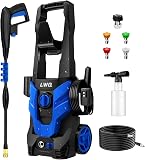
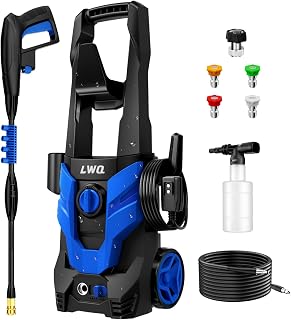
| Medium-duty (2030 PSI to 2600 rated PSI / 3000 max PSI) | Higher-output electric units (such as LWQ or Westinghouse) | Use caution: safe on paint only with wide 40° or 60° tips while maintaining increased standoff distance, or reserved for concrete and chassis |
| Heavy-duty commercial (3200 PSI to 4200 PSI) | Commercial gas-powered machines (such as Steupoek) | High risk: requires extreme caution, wide 60° nozzle, and large standoff distance; primarily intended for concrete, masonry, and heavy stripping |
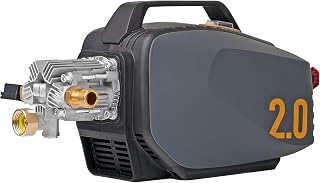
The pressure rating and nozzle angle decide which category a washer falls into, not product marketing. Dedicated car washers balance force and safety. For instance, Active lists 1500 psi working pressure and 1800 Peak PSI for automotive care to prevent paint damage, while Greenworks lists 1800 PSI at 1.1 GPM for cleaning vehicles. Compact cordless washers like KEEPEAK deliver 1450 PSI, and MIMYTH lists 1650 PSI for vehicle and patio maintenance. In contrast, higher-pressure residential electric units like Westinghouse deliver 1800 rated PSI and 2100 max PSI, while its larger WPX3000e unit reaches 2600 rated PSI and 3000 max PSI. LWQ lists 2030 psi maximum pressure. Commercial gas machines like Steupoek deliver 4200 PSI working pressure and 4.0 GPM flow from a 212CC engine, delivering heavy stripping power for concrete and paint removal, while providing a wide 60° nozzle when used on vehicles and furniture.
How to wash a car with a pressure washer safely: the checklist
- Confirm the pressure rating. Verify the pressure rating of your machine before spraying bodywork. Units operating around 1450 PSI to 1800 PSI provide effective cleaning while minimizing clear coat risks. If using a machine capable of 2100 max PSI, 3000 max PSI, or higher, increase your standoff distance and use wider nozzles.
- Select a wide fan nozzle. Use a wide fan nozzle, such as a 25°, 40°, or 60° tip, on painted body panels. Never use a 0° pinpoint nozzle or a rotating turbo nozzle on vehicle paint, as both concentrate water into a cutting stream.
- Put on impact-rated eye protection. High-velocity water rebounds from wheel arches, curved panels, and tires, carrying dislodged sand and grit toward the operator. Always wear eye protection before squeezing the spray gun trigger.
- Never direct the spray wand toward people or pets. High-pressure water penetrates soft tissue and causes severe injuries. Treat the spray wand with the care required for any power tool.
- Inspect the bodywork for rock chips and peeling paint. Check panels for preexisting paint damage before spraying, keeping the wand directed away from raw edges so water cannot wedge beneath the clear coat.
- Maintain a safe standoff distance. Begin rinsing with the spray nozzle positioned well back from the surface, observing water impact on a lower panel before moving closer as needed.
- Apply detergent through a dedicated foam dispenser. Pre-soak road grime using an attached foam cannon or soap applicator to break down surface film before applying rinse pressure.
- Rinse from top to bottom. Begin rinsing at the vehicle roof and work downward so dislodged dirt flushes toward the ground rather than settling back onto clean sections.
- Route cords and hoses clear of vehicle tires. Use power cords with built-in GFCI protection, such as the 35-foot cords on Westinghouse and Greenworks units, and keep high-pressure hoses away from vehicle corners to prevent rubbing against paint.
A 0° nozzle tip or an oscillating turbo nozzle focuses water into an intense cutting jet. Even at 1800 PSI, a narrow pinpoint spray can gouge clear coats, slice rubber weatherstripping, and shred exterior plastic trim. Reserve turbo nozzles and 0° tips for concrete driveways, brick walkways, and masonry.
Keep electric pressure washers on a GFCI outlet, never point the wand at people or pets, wear eye protection with polishers and chemicals, and read the label before mixing any cleaning products. Read our Safety Disclaimer.
Electric vs gas pressure washers for car detailing
When selecting equipment for automotive care, compare these key operational differences:
- Pressure output: Many electric pressure washers deliver between 1450 PSI and 2100 max PSI, which suits automotive cleaning when paired with fan nozzles, though heavy-duty electric units can reach 3000 max PSI. In contrast, commercial gas models like Steupoek reach 4200 PSI working pressure, requiring wide spray patterns like a 60° nozzle and greater standoff distance to protect clear coat.
- Water flow rate: Cleaning power equals water pressure multiplied by flow rate. Electric and cordless models publish flow rates ranging from 1.1 GPM on Greenworks to 2.0 GPM on Active, 2.5 GPM on LWQ, 3.0 GPM on KEEPEAK, and 3.7 GPM on MIMYTH, while the gas-powered Steupoek delivers 4.0 GPM. Higher water flow flushes away loosened grit smoothly without needing excessive PSI.
- Operating environment: Electric machines run quietly on standard AC 120V household power or rechargeable batteries (such as the 21V battery on MIMYTH or dual 4.0Ah batteries on KEEPEAK), producing no exhaust emissions so they can operate right outside garage doors. Gas engines generate carbon monoxide fumes and must never run inside a garage or enclosed shop bay.
- Simplicity and maintenance: Electric washers (such as Greenworks) feature push-button starting with no engine oil, fuel storage, or spark plugs. Gas models (such as Steupoek) require engine oil, such as SAE 10W-30, fuel management, and regular engine care.
For home vehicle maintenance, dedicated electric machines provide the ideal balance of paint safety and steady water volume. Compare top models in our guide to the best electric pressure washer for cars. To loosen road grime before rinsing, combine your machine with our picks for the best foam cannon or review proper application in our guide on how to use a foam cannon.
Safe washing prevents swirl marks before polishing
Using a pressure washer within the safe 1450 PSI to 1800 PSI range lifts loose grit without mechanical contact, preventing the micro-marring and swirl marks that occur when dragging a wash mitt across dry dirt. Blasting away heavy road grime with a 25° or 40° fan nozzle prepares the vehicle finish for safe hand washing. If improper washing practices or weathered clear coat have already left swirl marks and light haze across your paint, you can restore surface clarity using the best dual action polisher for beginners. For guidance on machine types, stroke lengths, and pad selection, read our guide on how to choose a car polisher.
Frequently Asked Questions
Is 2100 PSI safe for washing a car?
A rating of 2100 max PSI, as listed on the Westinghouse ePX3050, is at the upper boundary for vehicle paint. While an electric machine with 2030 psi (listed by LWQ) or 2100 max PSI can clean vehicles, you must use a wide 40° fan nozzle and increase your working distance from the panels. Never use a narrow spray pattern or hold the spray wand close to paint at 2100 max PSI.
What nozzle degree is safe for car paint?
Wide fan nozzles delivering 25°, 40°, or 60° spray patterns are safe for vehicle washing. Steupoek lists 25° for painted surfaces and 60° for cars, while Greenworks specifies a 40° nozzle for gentle cleaning. These wide angles disperse water across a broad fan, lowering impact pressure while rinsing grime. Never use a 0° pinpoint nozzle on car paint.
Can a pressure washer damage car tires or rubber seals?
Yes. Narrow, high-pressure water jets can slice through rubber door gaskets, dislodge window weatherstripping, and gouge tire sidewalls. Even with machines operating between 1450 PSI and 1800 PSI, avoid spraying directly into door jambs or window seals at close range.
Does GPM matter more than PSI when washing cars?
Water volume (GPM) is just as important as PSI for car washing because high flow flushes abrasive grit off paint safely. Cleaning efficiency depends on pressure and flow combined. A pressure washer delivering 1500 psi to 1800 PSI with 2.0 GPM, such as Active, cleans faster and rinses road grime more effectively than a high-pressure machine with low water flow.
Can I use a gas pressure washer on a car?
Commercial gas pressure washers rated at 3200 PSI or 4200 PSI (such as Steupoek) deliver substantial pressure built for peeling paint and concrete. When washing a vehicle with a high-output unit, use the widest available fan pattern, such as the 60° nozzle listed by Steupoek for cars, maintain a substantial standoff distance from body panels, and avoid direct contact with chipped paint or plastic trim.
Is a cordless battery pressure washer powerful enough for cars?
Yes for regular maintenance and light mud. Cordless models from MIMYTH (1650 PSI) and KEEPEAK (1450 PSI) provide enough water pressure to rinse road dust, pollen, and light film safely. Corded AC 120V electric models provide continuous runtime for deeper cleaning and heavier foam applications.
Related: our guide to the best electric pressure washer for cars, our picks for the best foam cannon, the best car detailing kit and our car detailing hub.