How to Choose an Engine Hoist: What to Know
A practical guide to choosing an engine hoist: boom capacity across extension positions, reach, leg clearance, folding frame storage and load levelers.

On this page
Top picks at a glance
As an Amazon Associate we earn from qualifying purchases.
- 1
 VEVOR Transmission Jack9.5/10View on Amazon
- 2
 VIVOHOME 1100 Lbs Motorcycle Lift Jack with Dolly Wheels9.4/10View on Amazon
- 3
 VEVOR Engine Stand9.5/10View on Amazon
- 4
 Engine LevelerView on Amazon
- 5
 Garvee 2 Ton Engine HoistView on Amazon
- 6
 2 Ton Engine Hoist with LeverView on Amazon
- 7
 2 Ton Engine Hoist Foldable Cherry PickerView on Amazon
- 8
 Garvee 2 Ton Engine Hoist with LeverView on Amazon
How to choose an engine hoist comes down to calculating the boom capacity you need at maximum extension, checking front-leg clearance beneath the vehicle, and selecting a folding frame that fits your garage storage space. While common shop cranes carry a 2 ton maximum rating at their shortest boom position, that rating drops to 1/2 ton or 1000 lb once the arm extends over the grille to reach the engine mounts. Selecting the correct crane requires matching this extended rating to your fully dressed motor weight, confirming the hydraulic cylinder provides sufficient vertical lift, and pairing the hoist with an engine leveler for controlled tilt.
More options to compare
 Engine LevelerCheck price on Amazon
 Garvee 2 Ton Engine HoistCheck price on Amazon
 2 Ton Engine Hoist with LeverCheck price on Amazon
 2 Ton Engine Hoist Foldable Cherry PickerCheck price on Amazon
 Garvee 2 Ton Engine Hoist with LeverCheck price on Amazon
GarageToolHQ earns a commission when you buy through links on our product pages, at no extra cost to you. Read our affiliate disclosure.
Below: how telescoping boom ratings change with extension, how to compare folding shop cranes with rigid models, how leg clearance affects vehicle access, and a practical checklist for planning a pull.
How to choose an engine hoist: boom capacity, reach and clearance
Selecting an engine hoist starts with understanding mechanical leverage. The advertised capacity of a shop crane represents the maximum weight the frame and hydraulic ram can lift when the boom is fully retracted. As you extend the boom forward to reach into an engine bay, the lifting arm acts as a longer lever against the hydraulic cylinder and upright mast, reducing the safe working capacity. Several mechanical factors determine whether a hoist suits your workspace:
- Telescoping boom capacity. A crane’s advertised maximum capacity applies only to the shortest boom position. As the telescoping arm extends outward to reach across deep engine bays, mechanical leverage reduces lifting capacity. As listed by MOTOOS, a 2 ton crane provides 4400 lb capacity at its retracted position, but drops across intermediate settings of 3300 lb and 2200 lb down to 1100 lb or 1000 lb when fully extended. YUASDUU lists similar boom capacity steps of 4409, 3306, 2204, and 1102 pounds. Always size your hoist so the fully extended boom rating exceeds your total engine package weight.
- Boom reach and lifting height. You need enough horizontal reach for the lifting hook to center directly over the engine balance point without the vertical mast pressing into the front bumper. You also need sufficient vertical rise to lift the oil pan clear of the core support. MOTOOS lists a maximum lifting height of 220 centimeters, which allows lifting engines clear of standard passenger cars and light trucks.
- Leg clearance and straddle width. The front support legs must roll under the vehicle frame or between the tires to allow the boom to reach the engine compartment. Confirm that the front valence, crossmember, and steering components provide sufficient clearance for the crane legs to slide inward. If a car sits low, checking clearance beneath the front end before positioning the crane prevents body contact.
- Hydraulic ram operation. Engine hoists rely on a long hydraulic bottle jack cylinder to elevate the boom. Garvee and YUASDUU equip their 2 ton folding cranes with an 8-ton hydraulic pump. A larger pump rating provides reliable hydraulic pressure and smoother lifting action when handling heavy assemblies.
Engine hoist designs: folding shop cranes vs rigid frames
| Crane Design | Frame Structure and Storage | Best Suited For |
|---|---|---|
| Folding hydraulic shop crane | Hinged front legs fold vertically toward the mast, reducing floor footprint when not in use | Home garages and shared workshops where floor space is limited between projects |
| Rigid heavy-duty shop crane | Fixed welded or bolted legs that do not fold, requiring dedicated floor area | Dedicated engine rebuild shops or commercial bays where the hoist remains assembled |
| Gantry crane or overhead beam | Overhead crossbeam on twin uprights spanning the bay, using a trolley and chain hoist | Dedicated tall shops pulling machinery straight up without floor leg interference |
Storage footprint is a primary consideration for residential garages. While rigid cranes occupy permanent floor space, folding shop cranes allow the outrigger legs to hinge upright against the mast when work is finished. Listings from Garvee and MOTOOS highlight folding frames designed to store compactly against a wall. Swivel casters allow rolling the folded unit out of the way, with models from MOTOOS, Garvee, and YUASDUU incorporating 6 casters for mobility.
How to use an engine hoist safely: the pre-lift checklist
- Confirm boom reach and capacity before rigging. Extend the telescoping arm to the position required to center the hook directly over the engine lift points, then check the capacity stamped at that specific extension. Never lift if the assembly weight exceeds the rating of the chosen boom position.
- Inspect hydraulic cylinder and release valve. Check the hydraulic ram for fluid leaks around the seal and verify the bleed valve closes securely. Use only dedicated hydraulic jack oil if topping off fluid.
- Level the lifting surface. Operate the shop crane only on smooth, solid, level concrete. Never use an engine hoist on asphalt, dirt, gravel, or sloped surfaces where casters can sink or tilt under load.
- Connect at balanced lift points. Secure high-strength lifting brackets or cleats to factory engine lift bosses or cylinder head bolt holes. Never attach lifting chains to intake manifolds, sheet metal brackets, or accessory mounts.
- Attach an engine load leveler. Rig a load leveler between the crane hook and the engine chains. Tilting the engine makes guiding the bellhousing around firewall pinch points far safer and smoother.
- Check vertical and bumper clearances. Ensure the crane legs clear suspension components and the lower valence. Verify overhead clearance so the boom does not contact open garage door panels or ceiling beams at full lift.
- Lift slowly and verify stability. Raise the engine just enough to relieve tension on the mounts before removing the final fasteners. Stop lifting to verify the balance point, and check that wiring harnesses, ground straps, coolant hoses, and lines remain clear.
- Never work beneath a suspended engine. An engine hoist is designed solely for raising, lowering, and transferring loads, not for sustained load holding. Keep hands and body clear of the suspended load at all times.
- Transfer immediately to an engine stand. Move the crane clear of the vehicle bay and lower the engine block directly onto a dedicated, rated engine stand. Fasten all mounting arms before releasing crane tension.
Never leave an engine suspended from a hydraulic crane unattended, and never climb into the bay beneath a hanging motor. Hydraulic pressure can drop if a seal or valve weeps. Always transfer the engine to a secure, rated engine stand before beginning teardown, cleaning, or repairs.
Use rated jack stands on solid ground, wear eye protection with power and air tools, keep fuel-burning equipment out of a closed garage, and follow the manual for every tool. Read our Safety Disclaimer.
Choosing between 1 ton and 2 ton engine hoists
Most residential mechanics choose between cranes marketed as 1 ton or 2 ton models. Compare how their real-world capabilities differ before purchasing:
- Extended capacity: A crane rated for 2 ton maximum capacity delivers 1000 lb or 1100 lb at full extension, as listed by MOTOOS. In comparison, a lighter crane with a lower closed-boom rating delivers proportionally lower capacity when the arm extends across a long nose, leaving less safety margin for an engine assembly with manifolds and transmission attached.
- Hydraulic ram size: Heavy-duty 2 ton shop cranes frequently incorporate an 8-ton hydraulic ram, as listed by Garvee and YUASDUU. The higher-rated ram operates under lower hydraulic stress when lifting vehicle engines, providing smooth lifting action with less physical pumping effort.
- Structural weight: Larger cranes require thicker steel uprights and outriggers. Garvee lists overall unit weights between 129.6 pounds and 145.5 pounds for its 2 ton folding cranes, while MOTOOS lists 101.4 pounds. A heavier bare frame offers greater stability but requires more muscle to roll over floor seams.
- Caster configuration: Maneuvering a shop crane demands functional wheels. Listings from MOTOOS, Garvee, and YUASDUU specify 6 casters, with models utilizing swivel casters to help steer around vehicle tires and equipment on smooth concrete.
Before pulling an engine, check our guides on what size floor jack do I need and what size jack stands do I need to lift the car frame safely, or explore our transmission jack guide if dropping the gearbox beneath the car.
Why an engine load leveler is a necessary accessory
Lifting an engine straight up is rarely enough to remove it from a crowded engine bay. The motor mounts, oil pan, and bellhousing frequently catch on crossmembers, brake lines, and the firewall. An engine load leveler attaches between the crane hook and the engine block to tilt the engine along its horizontal axis.
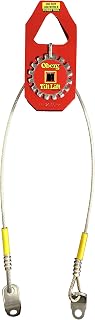
Manufacturers build levelers with different capacities and adjustment mechanisms. For instance, the Oberg Tilt Lift uses a cable sling system rated for 1 Ton (2,000 lb) working load with a 3:1 safety factor, providing 45° tilt controlled with a 1/2″ ratchet. Traditional threaded-rod levelers from YELLOW JACKET provide 1500 lbs (3/4 ton) capacity with 4 chains of 14″ length, while VIVOHOME lists a heavy-duty leveler supporting up to 5000 lb using 2 chains measuring 21.7 in with 9.5 mm link thickness and a 2.5 in crank handle. Parts-Diyer lists a 2 Ton (4000 lb) leveler with 3 position chain mount holes. Using a leveler allows adjusting the tilt angle smoothly throughout the extraction process.
Frequently Asked Questions
What size engine hoist do I need for a home garage?
For most DIY automotive projects, a folding crane with a 2 ton maximum rating is the standard choice. Although few passenger vehicle engines weigh 4400 lb, the boom must extend outward over the bumper, where leverage reduces lifting capacity to around 1000 lb or 1100 lb. A 2 ton crane provides the necessary working margin when the arm is fully extended.
Can an engine hoist lift an engine and transmission together?
Yes, provided the combined assembly weight does not exceed the boom capacity at your required extension setting. Removing both components together requires extra reach and steep tilting, making a heavy-duty load leveler essential to clear the firewall and core support.
How much ceiling clearance do I need to use an engine hoist?
Ceiling height must accommodate the crane mast, the raised boom at maximum stroke, the length of the chain and leveler, and the height of the engine itself. MOTOOS lists a maximum lifting height of 220 centimeters for its hydraulic crane, so verify your garage door tracks and rafters clear that vertical elevation before beginning a pull.
Can I leave an engine hanging on a hoist overnight?
No. Hydraulic rams rely on internal seals and bleed valves that can gradually lose pressure over time. A hanging load also presents a severe tip-over hazard if bumped. Always transfer the pulled engine onto a dedicated engine stand immediately after clearing the bay.
How do I store an engine hoist in a small garage?
Choose a folding shop crane with retractable or hinged legs. Folding models from Garvee fold vertically to minimize their floor footprint when not in use, allowing the unit to roll on its casters against a wall or into a corner between projects.
Do I need an engine leveler with an engine hoist?
While not strictly mandatory, an engine leveler is strongly recommended. Levelers like the 1 Ton Oberg Tilt Lift or 1500 lb YELLOW JACKET allow fine angle adjustments via a crank or ratchet, preventing the transmission tailhousing or engine pulleys from colliding with the vehicle body.
Related: best engine stand, engine and shop equipment hub, what size floor jack do I need and what size jack stands do I need.