Single Channel vs Dual Channel Dash Cam: Which One Should You Buy?
A front-only camera misses what happens behind the car, while a dual channel unit adds a rear view; this comparison weighs the sides using the dual channel listings collected for it.

On this page
Top picks at a glance
As an Amazon Associate I earn from qualifying purchases.
- 1
 360 View 4 Channel Dash Cam Front and Rear Left Right Inside9.7/10View on Amazon
- 2
 Dash Cam Front and Rear: 4K Dual Channel Dash Cam9.6/10View on Amazon
- 3
 Icesky 4K Dash Cam Front and Rear Left Right with GPS9.7/10View on Amazon
- 4
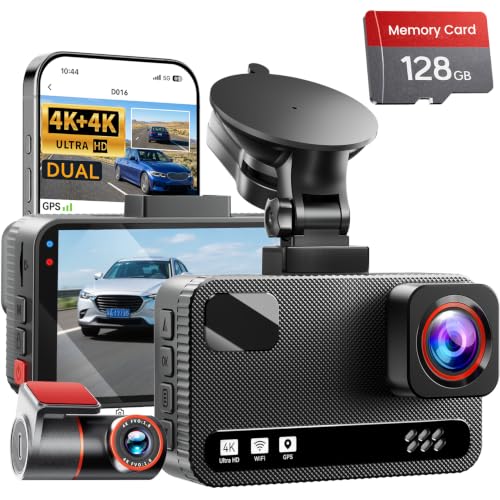 4K+4K Dual Dash Cam Front and RearView on Amazon
- 5
 IIWEY N5 4 Channel Dash Cam for CarsView on Amazon
- 6
 Affver 4K+2.5K Dash Cam Front and RearView on Amazon
- 7
 XYGCACO 4-Channel 360° Dash Cam for CarsView on Amazon
- 8
 4K Dual Dash Cam Front and RearView on Amazon
- 9
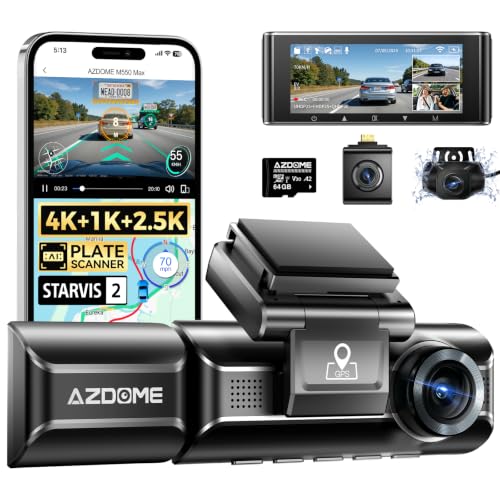 AZDOME M550 Max 4K 3 Channel Dash Cam Front and Rear InsideView on Amazon
Verdict: Choose a single channel dash cam if you only need the road ahead recorded and want the simplest setup. Choose a dual channel dash cam if you want the rear covered too, for rear-end incidents and parking bumps, and you are willing to run a rear camera cable.
A parking lot bump or a rear-end shunt is where a front-only view runs out: the camera sees the road ahead and nothing behind the car. Single channel vs dual channel dash cam is the choice between recording the front alone and recording front and rear together, and the difference matters most when the incident happens behind you. This comparison covers what each side records, then the dual channel listings collected for it.
GarageToolHQ earns a commission when you buy through links on this page, at no extra cost to you.

Dual Dash Cam Front and Rear
A front-and-rear dash cam with 4K front and 2.5K rear recording, 5GHz WiFi, a 3 inch IPS screen and a 64GB card included.
Pros
- 4K front and 2.5K rear recording stated
- 170° front lens with F1.6 lens and WDR stated
- 64GB card included, expandable to 256GB stated
- 2 Year warranty stated
Cons
- Spec table dimensions of 1.0 inch per side do not match a unit with a 3 inch screen
- Hardwire kit sold separately for time-lapse recording stated
- Rear camera install needs the included cable run to the back of the car
- Spec table NumberOfItems of 0 clashes with the full kit in the bullets
Dash Cam Front and Rear: 4K Dual Channel Dash Cam
A front-and-rear dash cam with 4K front and 1080P rear recording, 5GHz WiFi, a 2 inch IPS screen and a 64GB card included.
Pros
- 4K front and 1080P rear recording stated
- 170° front lens and 120° rear lens stated
- 64GB card included with loop recording stated
- 1-Year warranty stated
Cons
- Spec table dimensions of 19.5 x 6.5 x 10.5 inches clash with the compact mounting claim
- Memory card must be formatted regularly per the listing note
- Hardwire kit sold separately for parking mode stated
- Rear records at 1080P, below the 2.5K rear of the DIWYJ example
Other tools worth a look
 4K+4K Dual Dash Cam Front and RearCheck price on Amazon
 IIWEY N5 4 Channel Dash Cam for CarsCheck price on Amazon
 Affver 4K+2.5K Dash Cam Front and RearCheck price on Amazon
 XYGCACO 4-Channel 360° Dash Cam for CarsCheck price on Amazon
 4K Dual Dash Cam Front and RearCheck price on Amazon
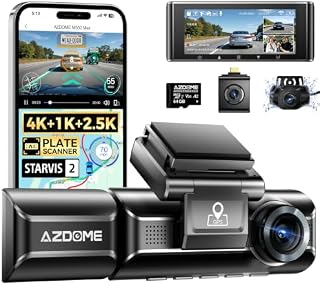 AZDOME M550 Max 4K 3 Channel Dash Cam Front and Rear InsideCheck price on Amazon
Single channel vs dual channel dash cam side by side
| Single channel | Dual channel | Listings in this guide | |
|---|---|---|---|
| Cameras | Front camera only | Front and rear cameras | Both listings here are dual channel |
| Front resolution | Not stated in this guide’s listings | 4K on both listings here | WANLIPO and DIWYJ both state 4K front |
| Rear resolution | No rear camera | Rear camera included | 1080P on WANLIPO; 2.5K on DIWYJ |
| Rear coverage | Road ahead only | Front and rear for rear-end incidents | Both listings state rear coverage |
| Screen | Not stated in this guide’s listings | Screen on the unit | 2 inch IPS on WANLIPO; 3 inch IPS on DIWYJ |
| Parking mode | Not stated in this guide’s listings | Parking monitor on impact | Both listings state a 15-second parking clip |
| Storage | Not stated in this guide’s listings | Card included | 64GB card in both listings; DIWYJ expandable to 256GB |
| Warranty | Not stated in this guide’s listings | Varies by listing | 1 Year on WANLIPO; 2 Year on DIWYJ |
The dual channel figures in the table come from the listings in this guide. Both listings here are dual channel examples, so the single channel column describes that type in general words, and no single channel listing is included in this guide.
How each one records
A single channel camera records the road ahead through a front lens. It covers collisions in front of the car, lane markings and road signs ahead, and nothing behind. A dual channel camera records front and rear at once. The WANLIPO example records 4K at the front and 1080P at the rear, with a 170° front lens and a 120° rear lens. The DIWYJ example records 4K at the front and 2.5K at the rear, with a 170° front lens, an F1.6 lens and WDR. Both listings state 5GHz WiFi, a G-sensor and a 64GB card included, and the WANLIPO listing states loop recording, and both use the Viidure app for viewing, playback and downloading clips on a phone.
Rear coverage and parking mode
Rear coverage is the whole point of the rear channel. The DIWYJ listing states that footage from both ends of the car covers a rear-end hit or a hit-and-run, where a front-only camera would miss the rear view. The WANLIPO listing states that the front and rear lenses together minimize blind spots and preserve evidence during incidents such as collisions. Both listings state a parking monitor: after the car is turned off, a strong vibration or impact wakes the camera and saves a protected 15-second clip. Both listings state that a hardwire kit is sold separately, and the DIWYJ listing states the kit adds time-lapse recording.
Install and screens
Both listings describe a discreet mount behind the rearview mirror, with a hidden-wire install. The WANLIPO example has a 2 inch IPS screen, and the DIWYJ example has a 3 inch IPS screen, so on-camera playback and setup are handled on the unit itself. Both listings include a 64GB card, and the DIWYJ listing states the card is expandable to 256GB. The WANLIPO listing carries a note to format the memory card regularly, warning that a full card left unformatted may revert the file storage time. The WANLIPO listing states loop recording, so the oldest files are overwritten when storage is full, except clips the G-sensor locks on impact. The DIWYJ listing states its G-sensor locks the current clip so it can never be overwritten.
Choose a single channel if
- You only need the road ahead recorded
- You want the simplest install, with no rear camera cable to run
- Your driving is mostly forward-facing incidents you want on record
Choose a dual channel if
- You want rear coverage for rear-end incidents and parking bumps
- You want a parking monitor that wakes on vibration or impact
- You are willing to run the rear camera cable to the back of the car
Example dash cams
For more choices, see the best front and rear dash cam guide, and the front vs front and rear dash cam comparison.
Use rated jack stands on solid ground, wear eye protection with power and air tools, keep fuel-burning equipment out of a closed garage, and follow the manual for every tool. Read our Safety Disclaimer.
Garage Fit Check
- Plan the rear camera cable route before mounting, since both listings here are dual channel units with a rear camera to place.
- Both listings include a 64GB card, and the WANLIPO listing states the card must be formatted regularly.
- Parking mode on the WANLIPO listing requires a hardwire kit, which is sold separately; on the DIWYJ listing the kit is stated for time-lapse recording.
- Screen size differs between the listings here, at 2 inch IPS on the WANLIPO example and 3 inch IPS on the DIWYJ example, so check the mount space behind the mirror.
- Storage expands to 256GB on the DIWYJ listing, while the WANLIPO listing states a 64GB card with no expansion stated.
FAQ: garage tools
Can a single channel camera record behind the car?
No. A single channel camera records through a front lens only, so it covers the road ahead and nothing behind. Rear coverage needs a dual channel unit with a rear camera, like the listings in this guide.
Do both examples record in 4K?
At the front, yes: both listings state 4K front recording. At the rear they differ, with the WANLIPO example stating 1080P and the DIWYJ example stating 2.5K. Check the rear figure separately, since front and rear resolutions are stated independently.
What happens when the G-sensor detects an impact?
Both listings state the G-sensor locks the current clip so it cannot be overwritten. That locked clip preserves the footage from the impact for later viewing or sharing through the app.
Does parking mode work without a hardwire kit?
On the WANLIPO listing, parking monitoring requires a hardwire kit, which is sold separately. On the DIWYJ listing, parking mode wakes and saves a protected 15-second clip while the car is off, and the hardwire kit is stated for time-lapse recording.
Can I expand the storage beyond the included card?
The DIWYJ listing states its 64GB card is expandable to 256GB. The WANLIPO listing states a 64GB card included, with no expansion stated. The WANLIPO listing states loop recording, which overwrites the oldest files when storage fills, except locked clips. The DIWYJ listing states its G-sensor locks the current clip so it can never be overwritten.
Related: the best front and rear dash cam guide, the dual vs single lens dash cam comparison, the cloud vs SD card dash cam comparison, and the dash cams hub.