AGM vs Gel Battery Charger: Which One Should You Buy?
AGM vs gel battery charger: four chargers with AGM and gel modes compared on charge rate, protections and warranty for the right setting.

On this page
Top picks at a glance
As an Amazon Associate we earn from qualifying purchases.
- 1
 NOCO GENIUS2D 2A 12V Onboard Battery Charger9.8/10View on Amazon
- 2
 TowerTop 2/10/25 Amp 12V Smart Car Battery Charger9.7/10View on Amazon
- 3
 NOCO GENIUS5 5A 6/12V Smart Battery Charger9.7/10View on Amazon
- 4
 20-Amp Car Battery ChargerView on Amazon
- 5
 20-Amp Smart Battery ChargerView on Amazon
- 6
 12-Amp Smart Battery ChargerView on Amazon
- 7
 lifepo4 Charger 16-Amp Fully-Automatic MaintainView on Amazon
- 8
 OPTIMA® Batteries High Performance 78 REDTOP® Sealed AGMView on Amazon
The agm vs gel battery charger question has a simple answer: you do not need two chargers, you need one charger with the right mode. Three of the four listings state compatibility with both AGM and gel batteries; the Schumacher states AGM among its battery types but does not state gel. The YDBAO puts AGM and gel on a single AGM/GEL mode. The real choice is charge rate, protections and warranty, which is what the table below compares, ranked by our scores.
More options to compare
 20-Amp Car Battery ChargerCheck price on Amazon
 20-Amp Smart Battery ChargerCheck price on Amazon
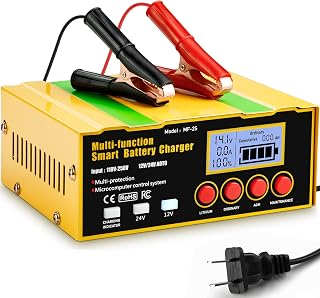 12-Amp Smart Battery ChargerCheck price on Amazon
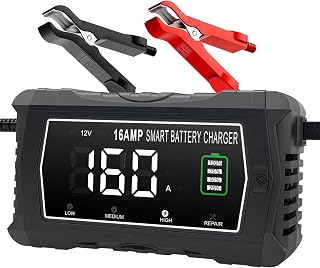 lifepo4 Charger 16-Amp Fully-Automatic MaintainCheck price on Amazon
 OPTIMA® Batteries High Performance 78 REDTOP® Sealed AGMCheck price on Amazon
GarageToolHQ earns a commission when you buy through links on this page, at no extra cost to you. Read our affiliate disclosure.
The four chargers in this guide
| Product | Charge rate | AGM / gel mode | Protections | Weight | Warranty |
|---|---|---|---|---|---|
| YDBAO 10A Smart Charger | 10A (stated) | AGM/GEL mode (stated) | 8-layer protection (stated) | 0.58 kg (stated) | 1-year (stated) |
| Schumacher SC1308 | 6A, 30A boost, 100A start (stated) | 6V/12V AGM (stated) | Not stated | 12.6 lb (stated) | 1-year (stated) |
| Battery Tender 5A | 5A with float mode (stated) | AGM and gel (stated) | Spark-proof, reverse polarity (stated) | 1.4 lb (stated) | 5-year (stated) |
| DEWALT DXAEC100 | 30A, 100A start, 3A maintainer (stated) | WET, GEL and AGM (stated) | Reverse-polarity protection (stated) | 4 lb (stated) | 1-year (stated) |
The YDBAO is the mode specialist: five charging modes including a combined AGM/GEL/LiFePO4 mode, a WET mode and a pulse repair mode, with an LCD showing voltage, current, battery level and ambient temperature, and automatic temperature compensation for summer and winter. The listing states 8 layers of protection including reverse polarity, short circuit, overheating and overcurrent safeguards, and CE, FCC and UL marks, at 0.58 kg with a 1-year warranty.
The Schumacher SC1308 is the heavyweight at 12.6 lb: 6A charging with a 30A boost and a 100A engine start, 6V and 12V compatibility, and stated compatibility with standard, AGM, deep-cycle and 12V lithium batteries. The listing states a desulfation mode and a 1-year warranty with a CSA mark. The DEWALT DXAEC100 offers 30A charging with a 100A engine start and a 3A maintainer, stated for 12V WET, GEL and AGM batteries, with an LCD display, automatic reconditioning and an alternator check, reverse-polarity protection, an ETL mark and a 1-year warranty at 4 lb.
The Battery Tender 5A is the maintainer of the group: 5A charging that drops into float mode to hold voltage without overcharging, stated for lead-acid including flooded, AGM and gel plus LiFePO4. The listing states spark-proof connection, reverse polarity detection, UL/CSA, CE and BC approval, 11 feet of combined cable reach, and a 5-year manufacturer warranty, the longest here, at 1.4 lb.
AGM vs gel battery charger safety: what the listings state
The YDBAO states 8 layers of protection and CE, FCC and UL marks. The Battery Tender states spark-proof connection, reverse polarity detection and UL/CSA, CE and BC approval. The DEWALT states reverse-polarity protection and an ETL mark. The Schumacher states a CSA mark. Match the charger to your battery chemistry using the stated mode, and never leave a charger running unattended beyond what the listing allows: the YDBAO states not to operate it unattended for more than 12 hours.
Charge rates and what they mean
The stated charge rates split this group in two. The DEWALT states 30A charging with a 3A maintainer, and the Schumacher states 30A boost charging with 6A to 2A charge-and-maintain modes. The YDBAO states 10A, and the Battery Tender states 5A that drops into float mode. The spec tables state battery charge times of 12.5 hours for the DEWALT, 10 hours for the Schumacher and 72 hours for the Battery Tender. Higher amps refill a dead battery faster; lower amps with float mode suit long-term maintenance, which is the Battery Tender use case.
Engine start and boost
Two listings state engine-start capability. The DEWALT states a 100A engine start for a high-current boost when the battery cannot start the vehicle on its own. The Schumacher also states a 100A engine start, plus a 30A boost mode. The YDBAO and Battery Tender state no engine start, so they are chargers and maintainers only. If your use case is reviving a dead battery in the driveway, the engine-start listings are the ones to shortlist.
Modes and displays
The YDBAO states the most modes: CAR, AGM/GEL/LiFePO4, WET, MOTO and PULSE REPAIR, selected with a MODE button, plus an LCD showing voltage, current, battery level, ambient temperature and seasonal summer/winter modes, with automatic temperature compensation. The DEWALT states one-touch operation with an LCD display and an alternator check. The Battery Tender states a two-color LED for charging status with ISM adaptive charging that resumes full output when voltage drops. The Schumacher states fully automatic operation. Pick the display you will actually read: the LCDs here show progress, the LED shows status.
Cables, reach and portability
The Battery Tender states 11 feet of combined reach from a 6 ft AC cord and a 5 ft DC cord, with ring terminal and alligator clip cables, at 1.4 lb. The YDBAO states 0.58 kg with a 110 to 240V input for different outlets. The DEWALT states 4 lb, and the Schumacher states 12.6 lb, the heaviest here by far. If the charger moves between vehicles, weight and cord reach decide; if it lives on a bench, they do not.
Lead-acid batteries can release hydrogen while charging, so charge in a ventilated space away from sparks and flames, connect positive first and negative last, set the charger to the battery type (flooded, AGM, gel, lithium), and wear eye protection. Read our Safety Disclaimer.
Frequently Asked Questions
Do I need a separate charger for AGM and gel?
Not necessarily. Three of the four listings state compatibility with both AGM and gel batteries, and the YDBAO has a single combined AGM/GEL mode. The Schumacher states AGM but does not state gel, so check the listing before buying for a gel battery.
Which charges the fastest?
The DEWALT states 30A charging and the Schumacher states a 30A boost with a 100A engine start. The YDBAO states 10A and the Battery Tender states 5A with float maintenance.
Which has the longest warranty?
The Battery Tender states a 5-year manufacturer warranty. The YDBAO, Schumacher and DEWALT each state a 1-year warranty.
Which state safety protections?
The YDBAO states 8 layers of protection, the Battery Tender states spark-proof connection with reverse polarity detection, and the DEWALT states reverse-polarity protection. The Schumacher states a CSA mark.
Can these charge lithium batteries too?
The YDBAO, Schumacher and Battery Tender listings state LiFePO4 or lithium compatibility. The DEWALT is stated for 12V lead-acid types only: WET, GEL and AGM.
Related: AGM vs flooded battery charger, the best battery charger maintainer, best car battery charger for winter and battery charger vs battery maintainer guides.