Borescope Cost: What to Expect Before You Buy
Borescope cost comes down to the display, the steering head, cable length and sealing, and this guide explains what each feature adds before you buy.


On this page
Top picks at a glance
As an Amazon Associate I earn from qualifying purchases.
- 1
 KAIWEETS Two-Way Articulating Borescope Camera with Light9.7/10View on Amazon
- 2
 UNI-T Inspection Camera UT663B 1m/2m/3m Industrial Borescope9.7/10View on Amazon
- 3
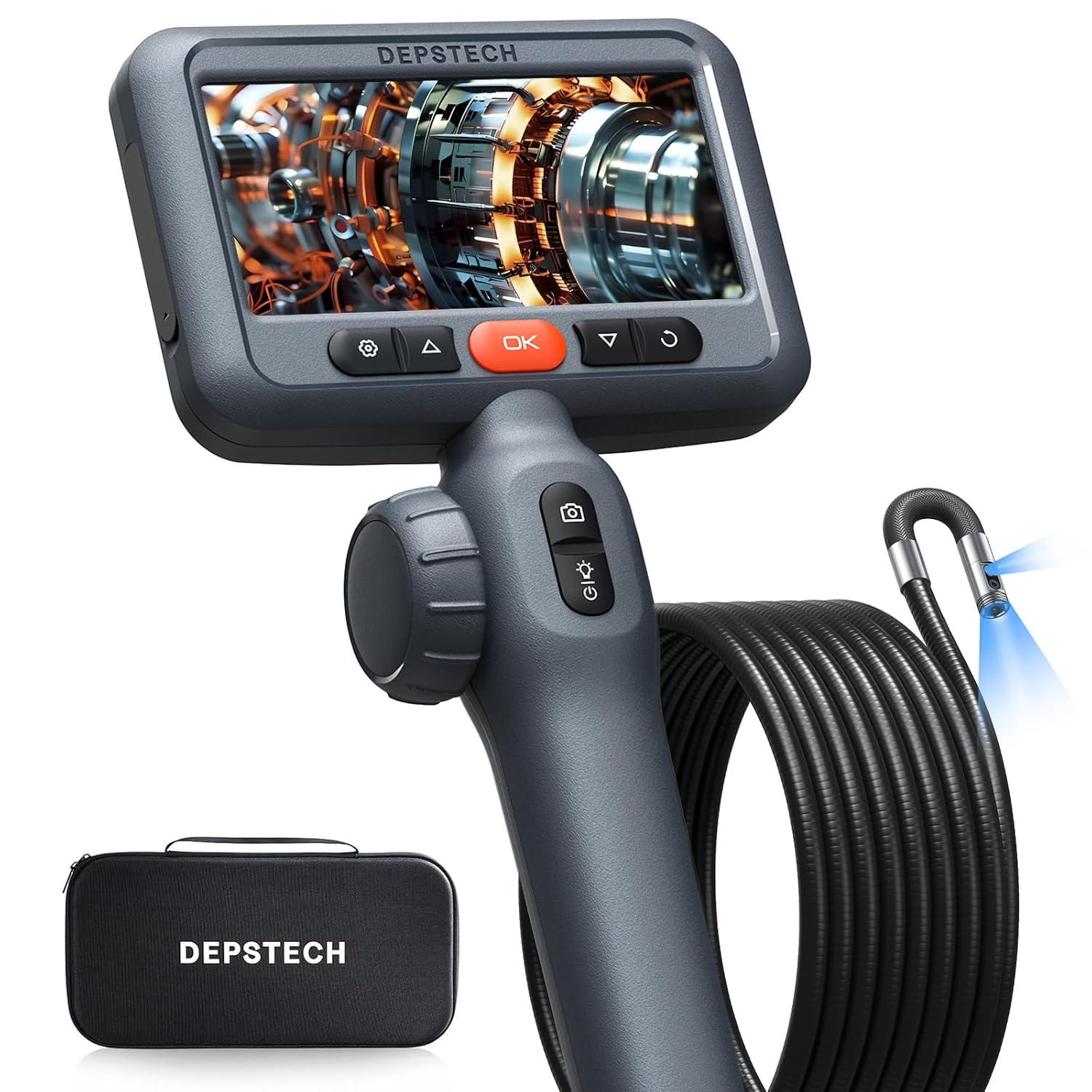 DEPSTECH 10FT Articulating Borescope9.6/10View on Amazon
Borescope cost is the question that comes up the moment a hidden leak or a rattle inside an engine bay refuses to show itself. A borescope lets a home mechanic look inside an air conditioning housing, behind a dashboard or down a drain opening while reducing unnecessary panel removal, and the price of that view depends on what the scope can do. This guide explains the features that move the price, from the display and the steering head to cable length and sealing, so the scope matches the inspection jobs in a home garage.
GarageToolHQ earns a commission when you buy through links on our product pages, at no extra cost to you. Read our affiliate disclosure.
Below: the features that set borescope cost, how display and probe choices change the price, and the questions to ask before buying.
Borescope cost: what sets the price
A borescope is a camera on a slim probe, and the price follows what the camera and the probe can do in a tight space. The display is a major price driver, because it decides whether the scope works on its own. A scope with a built-in screen costs more than a scope that borrows a phone, because the screen, the battery and the controls live in the handle. A dual-lens probe with a 210-degree steering head costs more than a fixed probe, because the head bends to look around a bend in a duct or a line. A slim 6mm probe passes through small access ports, and the camera and the light inside the narrow tube still have to bend with the steering head. Cable length, image sharpness and sealing add to the price in the same way.
The TORQBEAST scope shows how the features stack up in a tool built for garage work. It pairs a dual-lens probe with a 210-degree steering head, a slim 6mm probe, a 5-foot semi-rigid cable and a 1920 by 1080 display, and it seals the probe to IP67 for damp and oily service environments. The unit weighs 1.26 pounds and measures 1.97 by 12.6 by 4.92 inches, so it rides in a tool bag without adding much bulk. It charges over USB-C and supports Micro SD card expansion for photos and videos, with the card sold separately.
| Feature | What it does | How it moves the price |
|---|---|---|
| Display | Built-in screen or phone link | A built-in screen adds cost; a phone link keeps the scope simpler |
| Steering head | Dual-lens head bends 210 degrees to look around bends | Articulation adds cost over a fixed probe |
| Probe diameter | Slim 6mm probe passes through narrow access ports | A slimmer probe can add cost |
| Cable | 5-foot semi-rigid cable bends and holds its shape | A longer cable adds cost |
| Image | 1920 by 1080 display shows fine detail | A sharper display adds cost |
| Sealing | IP67 probe stands up to damp and oily service environments | Sealing adds cost |
Built-in screen or phone display
The display is a major price driver, because it decides whether the scope works on its own. A scope with a built-in screen carries its own display, battery and controls, so it works straight out of the case with no phone or app required. The TORQBEAST scope carries a 1920 by 1080 display, and the image stays on the handle while the probe goes into the space. A phone scope leaves the screen out and shows the image on a phone instead, which keeps the scope itself simpler and lighter. The trade is convenience against bulk: a built-in screen adds weight and cost, while a phone scope needs a charged phone nearby.
Screen size also matters, though less than the choice between a built-in screen and a phone. A larger screen shows the same image bigger at a glance, which helps when the probe sits in a dark duct. The detail comes from the 1920 by 1080 resolution, not the screen size. A smaller screen keeps the handle light and the scope easy to hold with greasy hands.
Articulation and probe size
A steering head is what turns a borescope from a straight peeking tube into a tool that looks around corners. The TORQBEAST dual-lens (on Amazon) scope steers its head through 210 degrees, so the camera can look forward and back along a line or a duct without moving the probe. A fixed probe can only look where it points, so it suits straight runs and open spaces, while a steering head suits bends, elbows and housings where the view sits off the line of entry. Probe diameter decides which openings the scope can enter: a slim 6mm probe passes through air conditioning access ports, ventilation ducts and condensate drain openings that a wider probe may not fit. The slim probe packs the lens, the light and the steering parts into a narrow tube, and the narrow tube still has to bend.
Cable length, light and sealing
Cable length decides how far the probe can travel from the handle. The TORQBEAST scope carries a 5-foot semi-rigid cable that bends and holds its shape, so the probe stays where it is put while the image stays steady. A longer cable reaches deeper into a duct or a line, and a semi-rigid cable holds a bend better than a soft cable that flops. Light matters as much as reach: an adjustable LED brightens dark spaces so the image stays clear. Sealing decides whether the probe survives the spaces a garage throws at it: an IP67 probe stands up to damp and oily service environments, from condensate drains to engine compartments, while a probe without sealing belongs in dry spaces only.
Read the manual before first use, wear eye protection, keep the work area clear and ventilated, and stay within every stated rating. Read our Safety Disclaimer.
How to match a borescope to garage jobs
Start from the job, not the feature list. For air conditioning work, the probe has to pass through access ports and reach evaporator housings and condensers, so a slim probe with a steering head earns its keep. For engine bays, oil and high temperatures are the risks, so sealing and an overheat alert matter more than extra cable. The TORQBEAST scope carries a built-in overheat alert: a smart temperature sensor displays a warning icon in high-temperature maintenance environments, which helps when the probe goes into an engine compartment. For drains and damp spaces, sealing matters most, and a probe that handles condensate drains and oily surfaces suits those jobs better than a dry-use probe. Before buying, check the manual for the probe size, the cable length and the sealing, and compare scopes on those points.
For phone scopes, see the guide to borescope cameras for phones, and for inspection picks, see the best borescope inspection camera picks. For a sense of how cost guides on this site weigh features, see the cost of thermal cameras and how much a laser level costs.
FAQ: garage tools
What does a borescope cost?
There is no set price for a borescope: a scope with a built-in screen and a steering head costs more than a phone scope with a fixed probe, because each feature adds parts and capability. The display, the steering head, the probe size, the cable and the sealing all move the price, so match the scope to the jobs in the garage.
Is a built-in screen worth it on a borescope?
A built-in screen is worth it when the scope has to work on its own, away from a phone, or when gloves and grease make a phone awkward to hold. The TORQBEAST scope carries a 1920 by 1080 display with no phone or app required, so the image stays on the handle. A phone scope suits a buyer who always has a phone nearby and wants a simpler scope.
What probe size fits garage inspection work?
A slim probe fits the openings a garage presents. A 6mm probe passes through air conditioning access ports, ventilation ducts and condensate drain openings, while a wider probe may not fit those openings. Check the access ports on the job before buying.
Does a borescope need a long cable?
It depends on the depth of the space. The TORQBEAST 5-foot semi-rigid cable reaches into ducts and lines while holding its shape, which suits garage inspection jobs. Deeper runs need more cable, and a cable that holds its bend keeps the probe where it is put. Measure the run before buying rather than guessing.
Can a borescope go into wet or oily spaces?
It can when the probe is sealed for it. The TORQBEAST IP67 probe stands up to damp and oily service environments, from condensate drains to engine compartments, and its adjustable LED keeps the view clear in dark spaces. A probe without sealing belongs in dry spaces, so check the sealing before the probe goes near water or oil.
Related: how to use a borescope, the dual camera borescope picks, the diagnostics and electrical hub and the rigid vs flexible borescope comparison.