Cordless Ratchet vs Impact Wrench: Which One Should You Buy?
How cordless ratchets and impact wrenches differ in mechanism, torque, speed, and access, and how to choose the right tool for automotive and shop tasks.

On this page
Top picks at a glance
As an Amazon Associate we earn from qualifying purchases.
- 1
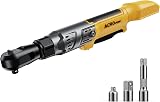 3/8" Cordless Ratchet Wrench for Dewalt 20V Battery9.5/10View on Amazon
- 2
 DEWALT 20V MAX Cordless Impact Wrench9.6/10View on Amazon
- 3
 Impact Wrench 664 Ft-lbs9.4/10View on Amazon
- 4
 LLNDEI 3/8" Extended Reach Cordless Ratchet Set 102Pcs 12VView on Amazon
- 5
 Egofine 12pcs 1/4 Inch Mini Ratchet Socket Wrench SetView on Amazon
- 6
 Egofine 12pcs 1/2 Inch Ratchet Socket Wrench SetView on Amazon
- 7
 Amazon Basics 3/8-inch Drive Click Torque Wrench RatchetView on Amazon
- 8
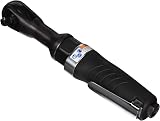 Ingersoll Rand 170G 3/8" Drive Air Ratchet Wrench Features upView on Amazon
- 9
 AIRCAT 805-HT 3/8" High Torque Ratchet WrenchView on Amazon
Cordless ratchet vs impact wrench: which one should you choose for garage work? A cordless ratchet is built for speed and access in confined spaces, while an impact wrench is built for high breakaway torque to break loose stubborn fasteners. A cordless ratchet replaces manual hand ratcheting to run fasteners in and out quickly where clearance is tight, such as under the dashboard or inside a crowded engine bay. An impact wrench uses a hammering mechanism to deliver heavy rotational blows that break free seized lug nuts and suspension bolts. Most mechanics eventually keep both tools in the shop because neither tool can do the job of the other.
More options to compare
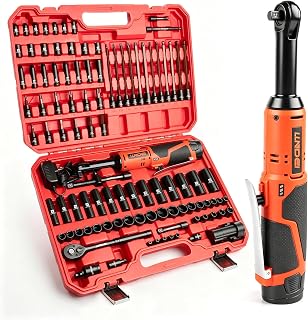 LLNDEI 3/8" Extended Reach Cordless Ratchet Set 102Pcs 12VCheck price on Amazon
 Egofine 12pcs 1/4 Inch Mini Ratchet Socket Wrench SetCheck price on Amazon
 Egofine 12pcs 1/2 Inch Ratchet Socket Wrench SetCheck price on Amazon
 Amazon Basics 3/8-inch Drive Click Torque Wrench RatchetCheck price on Amazon
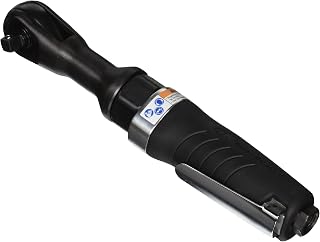 Ingersoll Rand 170G 3/8" Drive Air Ratchet Wrench Features upCheck price on Amazon
 AIRCAT 805-HT 3/8" High Torque Ratchet WrenchCheck price on Amazon
GarageToolHQ earns a commission when you buy through links on our product pages, at no extra cost to you. Read our affiliate disclosure.
Below: how the internal mechanisms differ, a direct comparison of torque, speed, and access, and how to decide which tool belongs in your tool chest first.
Cordless ratchet vs impact wrench: how the mechanisms differ
The fundamental distinction between these tools lies in how they generate rotational force and how that energy reaches the fastener:
- Cordless ratchet mechanism. A cordless ratchet uses an electric motor coupled to a planetary gear reduction assembly, driving a conventional ratchet head and pawl. The drive anvil turns continuously to run threaded fasteners down or back them off. Because the motor applies steady, continuous twisting force rather than percussive impacts, the tool produces moderate torque. When the motor stops, the internal gear train locks mechanically against the casing, allowing the tool to function like a traditional manual hand ratchet for extra leverage.
- Cordless impact wrench mechanism. An electric cordless impact wrench uses an electric motor connected to a rotating spring-loaded hammer and anvil assembly. As the socket meets resistance on a bolt, the internal hammer draws back against a spring and strikes the anvil repeatedly with rapid rotational blows. This concussive impact mechanism generates massive peak breakaway torque that shocks stubborn fasteners loose. Because each impact lasts only a fraction of a second, the twisting force is contained within the rotating mass, transferring minimal reactive torque into the user’s wrist. However, an impact wrench cannot be used manually like a ratchet.
Comparing cordless ratchets and cordless impact wrenches
| Feature | Cordless Ratchet | Cordless Impact Wrench |
|---|---|---|
| Primary purpose | Running fasteners quickly in tight spaces | Breaking loose seized, high-torque fasteners |
| Drive mechanism | Electric motor with planetary gears and pawl | Electric motor with rotating hammer and anvil |
| Rotational action | Smooth, continuous rotation | Rapid concussive rotational impacts |
| Common drive sizes | 1/4-inch, 3/8-inch, and 1/2-inch | 3/8-inch and 1/2-inch |
| Reaction torque | Transfers to user wrist when fastener snugs | Minimal reaction force transferred to user wrist |
| Manual leverage | Yes; locks unpowered for manual hand ratcheting | No; internal anvil cannot hold manual torque |
| Working clearance | Slim head and neck for cramped engine bays | Bulky motor and hammer case needing open access |
| Socket compatibility | Standard chrome sockets and thin-wall bit sockets | Thick-wall impact-rated alloy steel sockets only |
Published specifications from tool makers illustrate the vast difference in torque delivery between these categories. Cordless ratchets prioritize precision and run-down speed rather than brute force. For example, Milwaukee rates its M12 sub-compact cordless ratchet (model 2457-20) at 35 ft-lbs of torque and 250 RPM, weighing 16 ounces bare and 1.9 pounds for the 2457-21 kit. KIMO lists 40 ft-lbs and 400 RPM on its 12V tool, stating a weight of 2.2 lbs with battery and 1.7 pounds bare in its spec table. AOBEN lists 40 ft-lbs and 280 RPM for its 12V ratchet, including a long-reach model with an 11.7cm (4.7-inch) extended neck and a weight of 4.7 pounds. For heavier mechanical tasks, DEWALT lists up to 70 ft-lbs for its 20V MAX ATOMIC ratchet (model DCF513B, weighing 2.6 pounds) and up to 75 ft-lbs with a no-load speed of 300 RPM on its 20V MAX XR model (model DCF510B, weighing 3.1 pounds with interchangeable 3/8-inch and 1/2-inch anvils). FULLYEA lists 45 ft-lbs and 550 RPM on an 18V tool weighing 2.2 lbs, while ALLOY POWER lists a 5.5-inch extended neck model providing 60 ft-lbs (80 Nm) and 250 RPM from a 12V motor.
In contrast, a cordless 1/2 in. impact wrench bypasses continuous gear drive entirely. By using percussive hammer strikes, an impact wrench produces far greater breakaway force, making it the tool of choice for removing wheel lug nuts, suspension ball joints, and driveline bolts where lower-torque tools simply stall.
How to choose between them: a garage checklist
- Examine physical access to the bolt. If the fastener is recessed beneath an intake manifold, behind a strut tower, or inside a dashboard assembly, reach is the deciding factor. A cordless ratchet features a slim profile and narrow neck that slips into tight clearances where no impact gun can fit. An impact wrench requires straight, unobstructed access due to its wide hammer casing and motor body.
- Determine the required breaking force. Fasteners that have been torqued to high factory specifications, or that have seized from road salt and rust, demand concussive rotational energy. If you are loosening lug nuts, axle nuts, or caliper brackets, an impact wrench is required. Attempting to force a low-torque cordless ratchet on high-torque bolts will simply stall the motor.
- Identify the fastener size and material. Small fasteners like 10mm or 12mm bolts in aluminum engine blocks, valve covers, oil pans, and water pumps require gentle handling. Using an impact wrench on small bolts can instantly strip delicate threads or shear the fastener head off. A cordless ratchet provides the finesse and variable-speed trigger control necessary to protect fragile components.
- Consider user fatigue and wrist strain. A cordless ratchet delivers reaction torque to your hand when a bolt seats tight. If you run down a fastener at full throttle without releasing the trigger in time, the tool can twist your wrist or pinch your knuckles against adjacent steel. An impact wrench isolates rotational shocks inside the hammer mechanism, allowing you to loosen or snug large bolts with negligible twisting force on your arms.
- Assess socket and accessory requirements. Running an impact wrench requires dedicated, thick-walled impact sockets forged from impact-grade alloy steel. Using standard chrome sockets on an impact tool risks catastrophic shattering. Cordless ratchets generate smooth continuous drive, making them compatible with standard chrome sockets and shallow bit drivers.
- Evaluate battery platform compatibility. Compact 12V batteries keep cordless ratchets nimble and light for under-hood reaching, while 18V and 20V battery packs supply the sustained current needed by high-demand impact tools. Selecting a tool compatible with your current battery lineup minimizes clutter on your charging bench.
Impact wrenches produce rapid concussive blows that will crack or shatter standard chrome-plated hand sockets, sending sharp metal fragments across the shop. Always use designated impact sockets forged from ductile alloy steel when operating any impact wrench. Standard chrome sockets are suitable only for manual tools and smooth-drive cordless ratchets.
Use rated jack stands on solid ground, wear eye protection with power and air tools, keep fuel-burning equipment out of a closed garage, and follow the manual for every tool. Read our Safety Disclaimer.
Application guide: when to use each tool
Understanding the exact tasks where each tool excels prevents wasted time, stripped fasteners, and shop injuries:
- When to use a cordless ratchet: Engine bay maintenance such as changing alternators, water pumps, thermostat housings, and serpentine belt tensioners; removing valve covers and oil pans; interior disassembly including center consoles, seats, and dashboard trim; brake caliper slide pin removal; and any assembly with long-threaded bolts in confined spaces. For our evaluation of top-rated ratchet models, explore our guide to the best cordless ratchet wrench.
- When to use a cordless impact wrench: Wheel service and tire rotations, where high breakaway torque removes lug nuts rapidly; suspension overhauls including control arms, ball joints, sway bar links, and shock absorbers; exhaust flange hardware and seized underbody chassis bolts; and driveline repairs on differential covers and transmission crossmembers. To review top-performing impact tools, check our guides to the best cordless impact wrench for automotive, the best cordless impact wrench 1/2, and the best compact cordless impact wrench. For wheel service guidance, see what size cordless impact wrench for lug nuts and our picks for the best cordless impact wrench for lug nuts.
Torque accuracy and preventing fastener damage
Neither a cordless ratchet nor a cordless impact wrench is a measuring instrument, and neither tool should ever be used for final torque specification on critical vehicle fasteners. An impact wrench applies uncontrolled hammer blows that can easily over-stretch wheel studs, warp brake rotors, or crush alloy wheels. Conversely, a cordless ratchet will simply stop driving once fastener resistance matches its motor torque, leaving the joint under-tightened unless torqued manually.
The correct workshop practice is to use your cordless power tool solely for rapid run-down or disassembly. For final tightening, always snug the fastener and then complete the job with a calibrated click-type or digital torque wrench set to the vehicle manufacturer specification. You can compare reliable measuring tools in our guide to the best torque wrench.
For mechanics working with pneumatic shop equipment alongside cordless gear, understanding how compressed-air ratchets and impact guns operate is equally valuable. Explore our step-by-step tutorial on how to use air impact wrench and our comparison of the best air ratchet.
Frequently Asked Questions
Can a cordless ratchet replace an impact wrench?
No. A cordless ratchet cannot replace an impact wrench because it lacks the concussive hammering mechanism and high breakaway torque required to break loose heavy, rusted, or high-torque fasteners. Attempting to use a cordless ratchet to loosen wheel lug nuts or suspension bolts will stall the motor and can strip internal gears.
Can an impact wrench be used like a ratchet in tight spaces?
No. An impact wrench has a wide motor housing and heavy hammer casing that physically prevents it from fitting into cramped engine compartments, behind dashboards, or around brake shields. In addition, its intense percussive torque will instantly strip or shear smaller bolts commonly found in confined automotive locations.
Can you use a cordless ratchet as a regular manual ratchet?
Yes. Most cordless ratchets are designed with a mechanical pawl and gear head that locks solidly when the electric motor is switched off. This allows you to apply manual muscle power to crack a stubborn fastener loose before pulling the trigger to spin it off, or to snug a bolt by hand before applying a torque wrench.
What is best cordless impact wrench for home automotive work?
For general home automotive maintenance, a cordless impact wrench 1/2 inch with battery provides the optimal balance of breakaway power and versatility. A 1/2-inch cordless impact wrench handles wheel lug nuts, brake caliper brackets, and suspension bolts effortlessly. DIY mechanics often pair a 1/2-inch impact wrench with a 3/8-inch cordless ratchet to cover both heavy chassis work and delicate under-hood repairs.
Do cordless ratchets require special impact sockets?
No. Cordless ratchets produce smooth, continuous rotational torque without concussive hammer blows, making them completely safe to use with standard chrome vanadium sockets, shallow bit drivers, and thin-wall sockets. In contrast, impact wrenches require thick-wall impact-rated sockets to prevent dangerous metal fractures.
Which tool should a DIY mechanic buy first?
The decision comes down to the projects you perform most often. If you regularly handle tire rotations, brake jobs, and suspension work, an electric cordless impact wrench is the more critical purchase because manual hand tools struggle with high-torque, rusted chassis hardware. If your projects involve routine engine maintenance, sensors, valve covers, and interior work, a cordless ratchet will save you the most time and wrist fatigue.
Related: our guide to the best cordless ratchet wrench, our roundup of the best cordless impact wrench for automotive, the heavy-duty best cordless impact wrench 1/2, and our hub for cordless tools. Also see our advice on what size cordless impact wrench for lug nuts.