Epoxy Putty vs JB Weld: Which One Should You Buy?
Epoxy putty is a form and JB Weld is a brand, and the metal putty, the plastic formula and the general filler each suit a different job.

On this page
Top picks at a glance
As an Amazon Associate I earn from qualifying purchases.
- 1
 J-B Weld 8297 HighHeat 500 Degree Epoxy Putty Stick9.7/10View on Amazon
- 2
 ARCCAPTAIN Argon/CO2/Helium Regulator9.7/10View on Amazon
- 3
 J-B Weld 8277 WaterWeld Epoxy Putty Stick9.6/10View on Amazon
- 4
 J-B Weld SteelStikView on Amazon
- 5
 J-B Weld WaterWeldView on Amazon
- 6
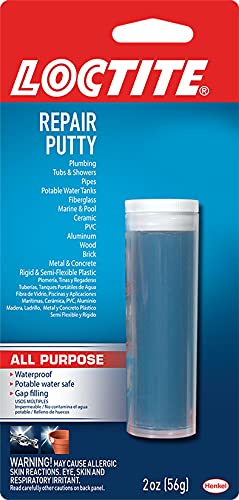 Loctite Epoxy Multi Purpose Repair PuttyView on Amazon
- 7
 Hercules Pro Poxy 20 4 oz. Epoxy PuttyView on Amazon
- 8
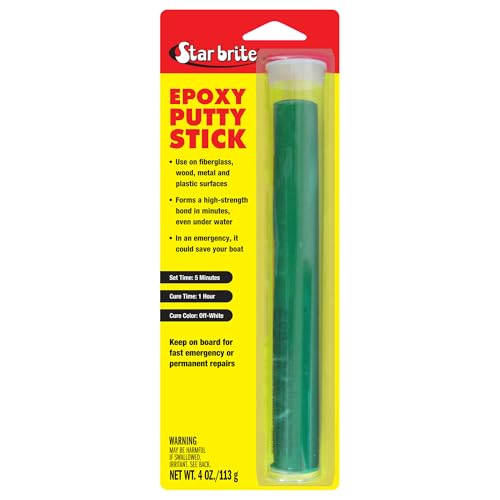 STAR BRITE Epoxy Putty Stick for QuickView on Amazon
- 9
 RECTORSEAL 97601 Rectorseal Ep-200 Epoxy PuttyView on Amazon
Epoxy putty vs JB Weld: they are not different things, and that is the point. Epoxy putty is a hand-mixable stick that fills gaps and rebuilds shapes, and JB Weld makes epoxy putty sticks of its own: SteelStik for metal and PlasticWeld for plastic. Pick the putty by the material and the gap, not by the name on the stick.
Other tools worth a look
 J-B Weld SteelStikCheck price on Amazon
 J-B Weld WaterWeldCheck price on Amazon
 Loctite Epoxy Multi Purpose Repair PuttyCheck price on Amazon
 Hercules Pro Poxy 20 4 oz. Epoxy PuttyCheck price on Amazon
 STAR BRITE Epoxy Putty Stick for QuickCheck price on Amazon
 RECTORSEAL 97601 Rectorseal Ep-200 Epoxy PuttyCheck price on Amazon
GarageToolHQ earns a commission when you buy through links on our product pages, at no extra cost to you. Read our affiliate disclosure.
Below: what the names mean, how to read the figures, and the putties for metal, plastic and general repairs.
Epoxy putty vs JB Weld: what the names actually mean
Epoxy putty is a form, not a brand: a two-part stick you knead by hand, press into place, and shape before it sets. JB Weld is a brand, and two of the 3 putties here carry its name. SteelStik is JB Weld’s steel-reinforced putty for metal, and PlasticWeld is JB Weld’s putty for plastic. Boncart is a general-purpose putty that lists metal, plastic, wood, tile and ceramic in one stick.
The confusion comes from the names: putty describes the form, JB Weld describes the maker, so the two can overlap on one stick. The putty stick is the right form when the repair needs filling, shaping or rebuilding, and the formula matters more than the brand: SteelStik for metal, PlasticWeld for plastic, Boncart when the job crosses materials.
How to read a putty listing: set time, hardening time, strength and temperature
4 figures help judge whether a putty suits a job, alongside the material list: set time, or how long you have to work the putty after kneading; hardening time, or how long before the repair is fully hard; strength, the load figure the maker states; and temperature, the range the hardened repair can stand.
| Putty | Set time | Fully hard in | Strength | Temperature |
|---|---|---|---|---|
| J-B Weld SteelStik | 5 minutes | 1 hour | 4000 PSI tensile | 350F (176C) continuous, 450F (232C) intermittent |
| J-B Weld PlasticWeld | 25 minutes | 3 hours | 600 PSI lap shear | 250F (121C) continuous, 300F (148C) intermittent |
| Boncart AB Epoxy Putty | Not stated | 24 hours | Not stated | -58°F to 266°F |
SteelStik sets in 5 minutes and hardens in 1 hour, while PlasticWeld gives 25 minutes to set and 3 hours to harden. Boncart states no set time, only a 30-minute working window, and it is fully hard after 24 hours. The two strength figures are different measures, so they do not compare directly: SteelStik lists tensile strength at 4000 PSI, PlasticWeld lists lap shear strength at 600 PSI, and Boncart states no strength figure at all.
SteelStik stands continuous heat up to 350F (176C) and intermittent heat to 450F (232C), PlasticWeld stands 250F (121C) continuous and 300F (148C) intermittent, and Boncart stands -58°F to 266°F. Match the figure to the job: check the temperature the repair will actually see against the range each listing states, and note that Boncart is the only putty here to state a low end.
The Boncart listing says to avoid using epoxy putty underwater, even though the hardened repair resists water. Mix and place it on a dry surface, and let it harden before the repair meets water.
Use rated jack stands on solid ground, wear eye protection with power and air tools, keep fuel-burning equipment out of a closed garage, and follow the manual for every tool. Read our Safety Disclaimer.
The gear: 3 epoxy putties for metal, plastic and general repairs
The putties below are listed by material: SteelStik for metal, PlasticWeld for plastic, and Boncart for general repairs.
J-B Weld SteelStik, 2 oz, 2-pack. The metal putty here, strongest on stated figures: steel-reinforced, non-rusting, with a tensile strength of 4000 PSI and heat to 350F (176C) continuous and 450F (232C) intermittent. It sets in 5 minutes, hardens in 1 hour, is NSF certified and safe for contact with potable water, and resists petroleum, hydraulic fluids and other chemicals when fully hardened. It molds, shapes, sands, drills and taps, and suits iron and stainless steel, copper and brass, aluminum and bronze, fiberglass, and plastic and PVC. Who it is for: a metal repair that must hold heat and chemicals. Who should skip it: a plastic-only repair, where PlasticWeld is the stated formula.
J-B Weld PlasticWeld, 2 oz. The plastic putty here, made for ABS, PVC and CPVC pipes and plastics, auto bumpers and trim, vinyl surfaces and siding, marine repairs and fiberglass parts, plastic water tanks, and plumbing repair. It sets in 25 minutes and hardens in 3 hours, with a lap shear strength of 600 PSI and heat to 250F (121C) continuous and 300F (148C) intermittent. It is certified by the NSF and safe for contact with potable water, does not shrink, and can be molded, shaped, sanded, drilled and cut. Who it is for: a cracked bumper, a split pipe or a plastic tank. Who should skip it: a metal repair, where SteelStik is the stated formula.
Boncart AB Epoxy Putty, 400g. The general-purpose putty here, in a 400g pack, with a broad material range: metal, plastic, stone, wood, tile, ceramic, acrylic, glass and sculpture. Its jobs run from plumbing leaks and pool leaks to holes, cracks, breaks and uneven surfaces. Mix it 1:1, knead until it turns off-white, place it within 30 minutes, and it is fully hard after 24 hours. It resists corrosion, acids, oils, water and impact, stands -58°F to 266°F, and can be sanded, drilled, tapped and painted. Apply it dry: the listing says to avoid using it underwater. Who it is for: a mixed-material repair where one stick must cover metal, wood and tile. Who should skip it: anyone who needs a stated strength figure or a fast hardening time.
Epoxy putty by material: metal, plastic, wood and more
Metal comes first. SteelStik lists iron and stainless steel, copper and brass, aluminum and bronze, and Boncart lists metal among its materials. For a steel repair, SteelStik is the stated formula, with 4000 PSI tensile strength and heat to 450F (232C) intermittent. Plastic is PlasticWeld’s ground: ABS, PVC and CPVC pipes and plastics, auto bumpers and trim, vinyl surfaces and siding, and plastic water tanks. Wood belongs to Boncart alone: it is the only putty that lists wood, named as a filler for wood furniture.
Tile, ceramic, stone, acrylic and glass are Boncart’s ground too, with pipes, sculptures, bathtubs, pools, concrete and faucets among its jobs. Fiberglass sits with both JB Weld putties: SteelStik lists fiberglass, and PlasticWeld lists marine repairs and fiberglass parts. Check the material list before the strength figure: the right putty names the material first.
What putty cannot do
Putty is a filler, not a thin glue: the listings describe holes, cracks, breaks and uneven surfaces, and rebuilding shapes. Knead it, press it into the gap, and shape it before it sets: SteelStik gives 5 minutes, PlasticWeld gives 25 minutes, and Boncart gives a 30-minute working window. Do not expect a putty to replace a weld: the listings describe repairs and rebuilds, and SteelStik’s 4000 PSI is a tensile figure for the hardened putty. Apply putty on a dry surface: the Boncart listing says to avoid using epoxy putty underwater, and neither JB Weld listing states underwater application.
FAQ: garage tools
Is JB Weld the same as epoxy putty?
JB Weld is a brand, and epoxy putty is a form. SteelStik and PlasticWeld are JB Weld putty sticks, one for metal and one for plastic, while Boncart is a general-purpose putty from another maker. Match the putty to the material, not the name.
How long does epoxy putty take to set and harden?
It depends on the putty. SteelStik sets in 5 minutes and hardens in 1 hour, PlasticWeld sets in 25 minutes and hardens in 3 hours, and Boncart gives a 30-minute working window and hardens in 24 hours. Work the putty inside its stated working window, then leave the repair alone until fully hard.
Can epoxy putty fix a leaking pipe?
Yes, for the leaks the listings name. Boncart lists plumbing leaks and pool leaks, PlasticWeld lists plumbing repair and plastic water tanks, and SteelStik is certified by the NSF and safe for contact with potable water. Apply it on a dry surface, and let it harden before the repair meets water; the Boncart listing says to avoid using epoxy putty underwater.
Can you sand and drill epoxy putty?
Yes, after it hardens. SteelStik can be molded, shaped, sanded, drilled and tapped, PlasticWeld can be molded, shaped, sanded, drilled and cut, and Boncart can be sanded, drilled, tapped and painted. Shape it while soft, and sand or drill only after the stated hardening time.
Can epoxy putty be used on wet repairs?
Apply it on a dry surface. The Boncart listing says to avoid using epoxy putty underwater, and its water resistance applies to the hardened repair. SteelStik and PlasticWeld are NSF certified and safe for contact with potable water once hardened, not during application.
What temperature can epoxy putty handle?
SteelStik stands 350F (176C) continuous and 450F (232C) intermittent, PlasticWeld stands 250F (121C) continuous and 300F (148C) intermittent, and Boncart stands -58°F to 266°F. Pick the putty whose range covers the heat the repair will see.
Related: best epoxy putty for cast iron, epoxy putty vs body filler, best epoxy putty for aluminum and the engine and shop equipment hub.