Hole Saw Guide: Sizes and Types
How to pick a hole saw by size, tooth type and material, with four kits ranked for wood, thin metal and hard metal.

On this page
Top picks at a glance
As an Amazon Associate I earn from qualifying purchases.
- 1
 EZARC 30PCS Bi-Metal Hole Saw Kit, 3/4"-4-1/2"9.7/10View on Amazon
- 2
 33PCS (1/2'' to 4'') Hole Saw kit for Metal,TCT9.6/10View on Amazon
- 3
 EZARC 16PCS Bi-Metal Hole Saw Kit, 3/4"-2-1/2"9.6/10View on Amazon
- 4
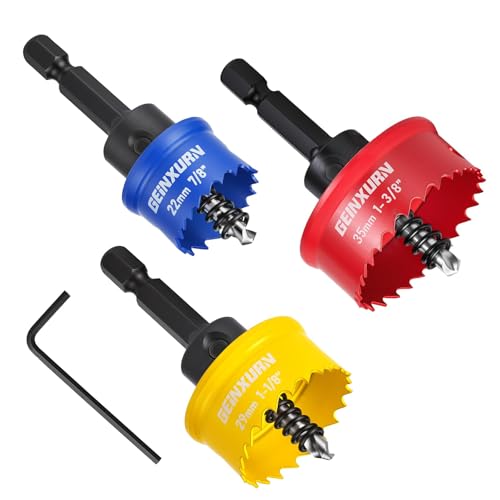 Geinxurn 4PCS Impact Small Thinwall Hole Saw Kit9.5/10View on Amazon
A door that needs a new lockset, a ceiling that needs a recessed light, or a desk that needs a cable hole all leave the same problem: a clean round hole in a flat surface, cut without tearing the face around it. This hole saw guide explains how a hole saw works, the sizes and saw types on the shelf, and how to match a saw to the material and the hole. A hole saw is a cup-shaped cutter that spins on a drill and cuts a circle, with a pilot drill in the center that keeps the cup from walking across the surface.
GarageToolHQ earns a commission when you buy through links on our product pages, at no extra cost to you. Read our affiliate disclosure.
Below: how a hole saw cuts, the three saw types, how to pick a size, and four kits ranked for garage and home jobs.
EZARC 30PCS Bi-Metal Hole Saw Kit, 3/4"-4-1/2"
A 30-piece M42 bi-metal kit with 24 hole saws from 3/4" to 4-1/2", a 7/16" arbor, 4 pilot drills and a hex key, in a heavy-duty case.
Pros
- 24 saws from 3/4" to 4-1/2", the widest range here
- M42 bi-metal with 8% cobalt and a 4/6 TPI pitch
- 4 pilot drills and a 7/16" arbor included
- Heavy-duty case with a latch and a clear lid with size labels
Cons
- Smallest saw is 3/4", so holes under 3/4" need another saw
- No carbide teeth for stainless steel or hard metal
- 1.89" cutting depth suits sheet goods, not thick timber
- One 7/16" arbor for all 24 saws
33PCS (1/2'' to 4'') Hole Saw kit for Metal,TCT
A 33-piece TCT carbide-tipped kit with 24 saws from 1/2" to 4", 6 center drills and 3 L-wrenches, for hard metal, stainless steel, iron, aluminum and plastic.
Pros
- TCT carbide teeth for hard metal and stainless steel
- 24 saws from 1/2" to 4" in one kit
- 6 titanium-plated center drills and 3 L-wrenches included
- Cuts iron, aluminum, FRP and plastic as well as steel
Cons
- Not for tile, glass, concrete or stone
- No storage case, pieces come in individual packaging
- Needs coolant during continuous high-speed drilling
- Carbide teeth suit metal, so wood-only jobs gain nothing from them
EZARC 16PCS Bi-Metal Hole Saw Kit, 3/4"-2-1/2"
A 16-piece M42 bi-metal kit with 10 hole saws from 3/4" to 2-1/2", 3/8" and 7/16" arbors, pilot drills and a hex key, in a heavy-duty case.
Pros
- M42 bi-metal with 8% cobalt and a 4/6 TPI pitch
- 10 saws from 3/4" to 2-1/2" with a 1.89" cutting depth
- All-access eject slots for fast chip clearance
- Heavy-duty case with a latch and a clear lid label
Cons
- Largest saw is 2-1/2", so bigger holes need another kit
- Thin-metal focus, not hard metal or stainless steel
- 1.89" cutting depth suits sheet goods, not thick timber
- Two arbors, an adapter nut and a washer add small parts to track
Geinxurn 4PCS Impact Small Thinwall Hole Saw Kit
A compact 4-piece M42 bi-metal thinwall kit with 7/8", 1-1/8" and 1-3/8" saws, a 1/4-inch quick-change hex shank and a hex key, for thin metal, wood, PVC and drywall.
Pros
- M42 bi-metal build for thin metal and wood
- 1/4-inch quick-change hex shank fits standard drills and impact drivers
- Small kit that carries to any job site
- Color-coded saws: blue 7/8", yellow 1-1/8", red 1-3/8"
Cons
- Only 3 saw sizes, from 7/8" to 1-3/8"
- No latching case, only a storage box
- Thinwall build aimed at thin metal, not thick stock
- Sizes suit recessed lights, vents and cable holes, not larger openings
Hole saw guide: how a hole saw cuts
A hole saw is a short open cylinder with teeth on one rim. The saw threads onto an arbor, and a pilot drill sticks out of the center of the arbor. The pilot drill bites first and holds the cup in place while the rim teeth cut the circle, and the plug of material comes free when the cut goes through. Chips clear through slots in the cup wall, and a steady feed keeps the teeth cutting instead of rubbing.
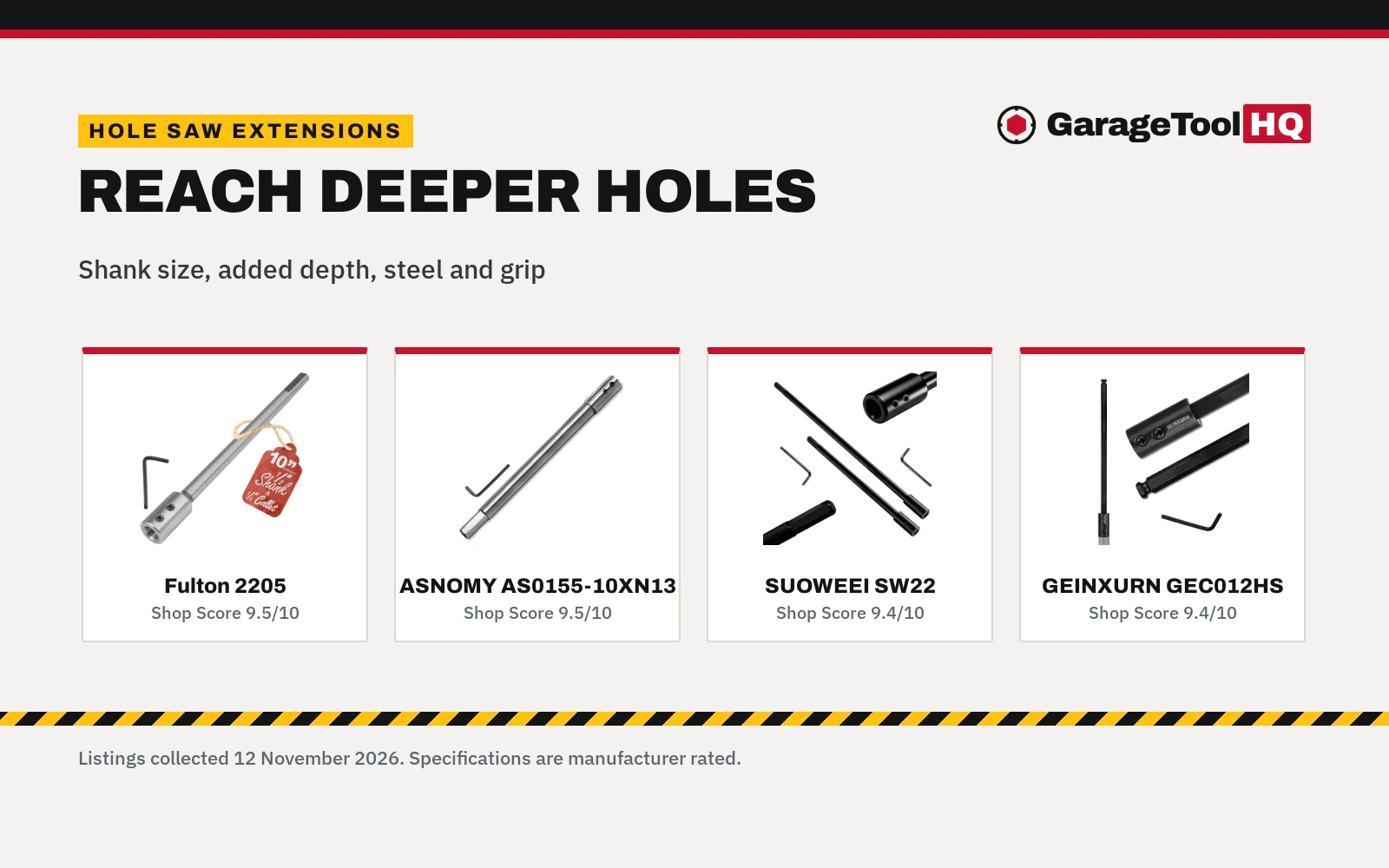
The arbor sets the fit to the drill, and the shank must match the drill chuck. A 1/4-inch quick-change hex shank, like the one on the GEINXURN kit, fits standard drills and impact drivers. Keep the saw square to the surface as the teeth bite.
Hole saw types: bi-metal, carbide and thinwall
| Type | Teeth and build | Cuts well | Watch out |
|---|---|---|---|
| Bi-metal M42 | M42 bi-metal teeth with 8% cobalt | Wood, plywood, plastic, drywall, thin metal | Cutting depth limits thick stock |
| TCT carbide tipped | Tungsten carbide tipped teeth | Stainless steel, hard metal, iron, aluminum | Not for tile, glass, concrete or stone |
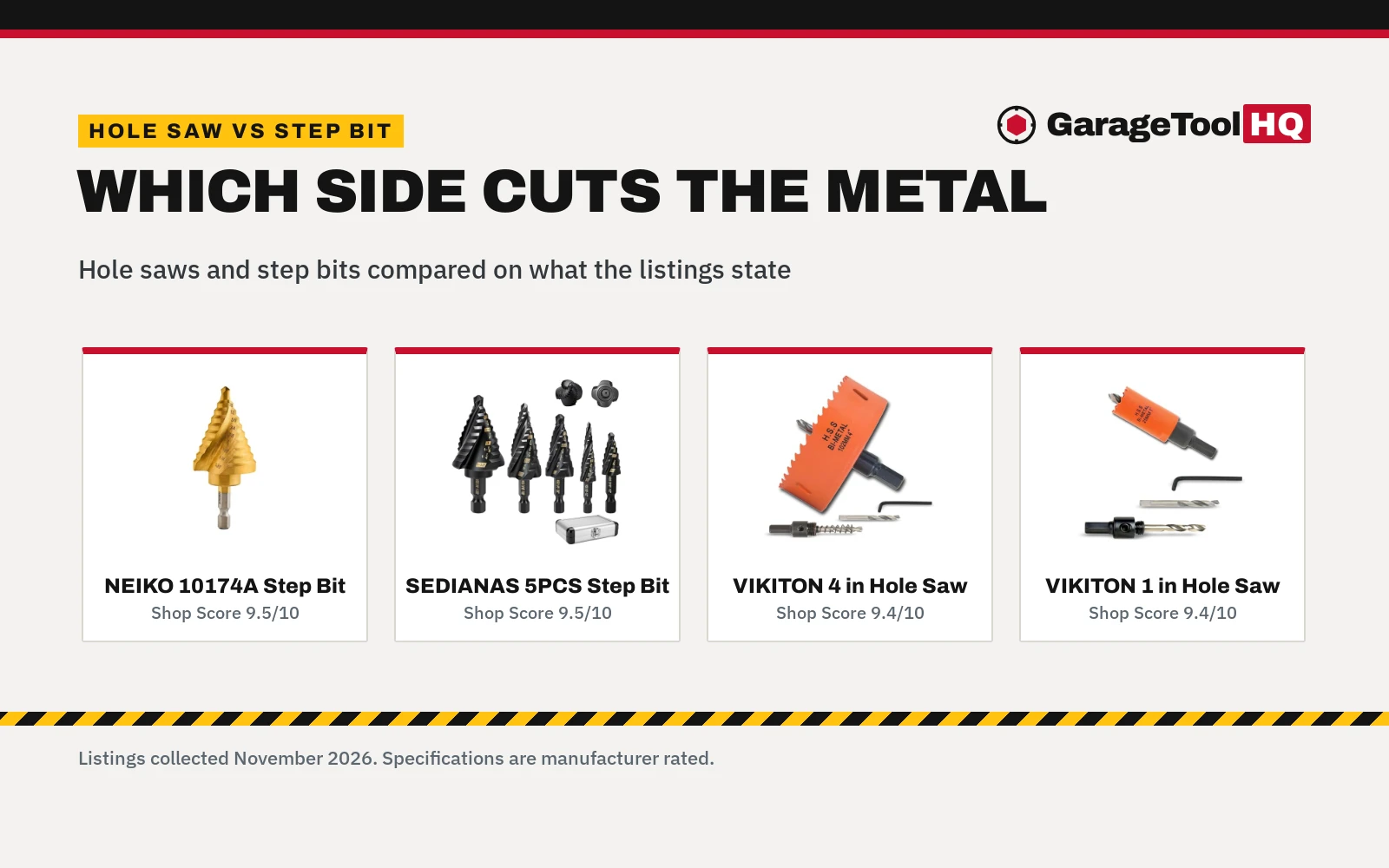
| Thinwall | Thinwall M42 bi-metal cup | Thin metal, wood, PVC, drywall | Thin stock only |
The tooth type decides the material, not the brand on the cup: bi-metal covers wood, plastic, drywall and thin metal, while carbide-tipped saws suit stainless steel and hard metal.
Hole saw sizes and how to pick one
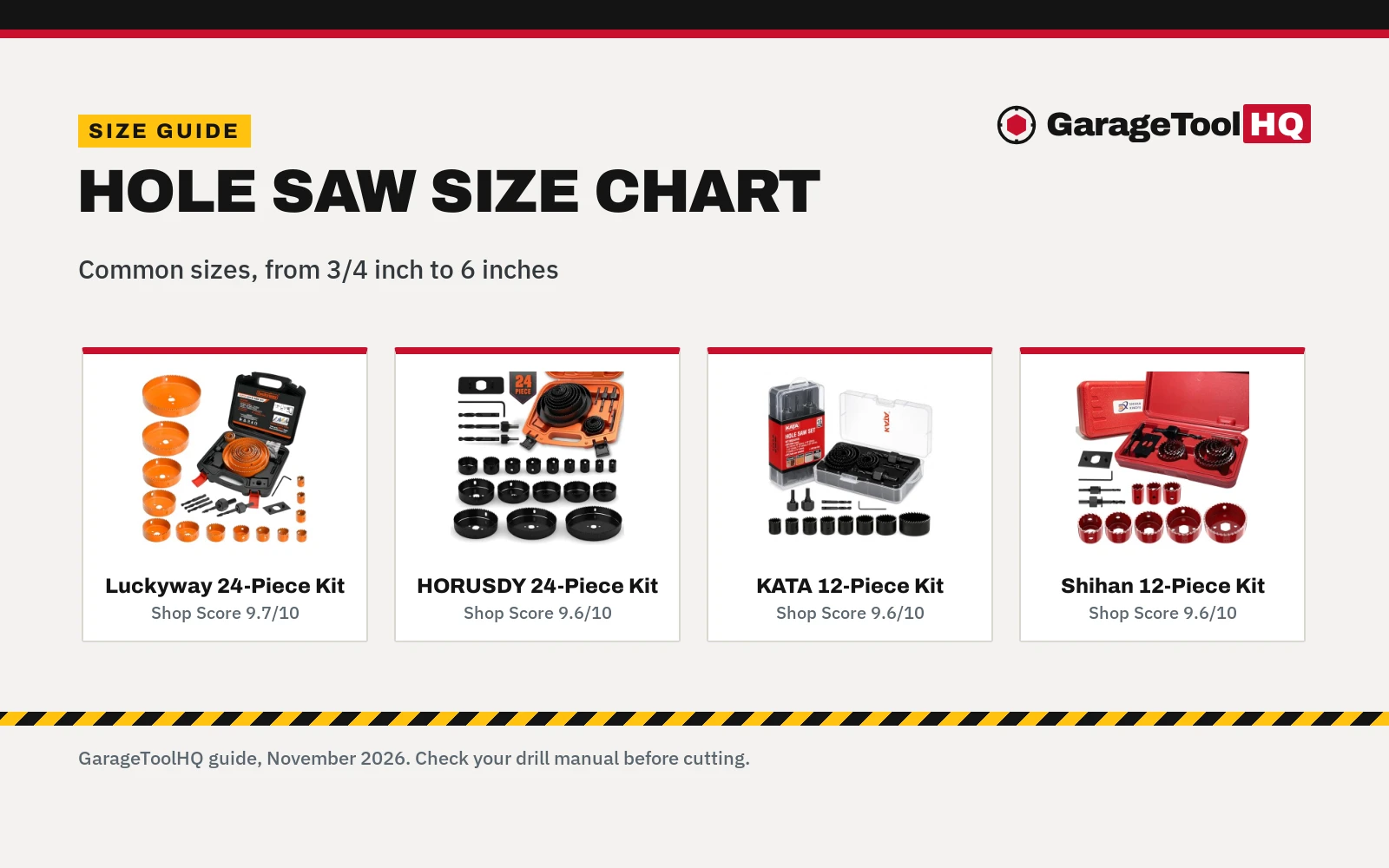
Measure the fitting, pipe or light that has to pass through the hole, then pick a saw that leaves a little clearance around it. A kit that spans 3/4″ to 4-1/2″ covers most garage and home holes, from cable runs to vent pipes, while a kit that spans 1/2″ to 4″ adds the small end for cable holes. The EZARC 30-piece kit spans 3/4″ to 4-1/2″ with 24 saws, and the METOTY kit spans 1/2″ to 4″ with 24 saws.
Check the cutting depth too: both EZARC kits state a cutting depth of 1.89″ (48mm), which suits sheet goods, plywood and drywall. Both EZARC kits also use a 4/6 TPI variable tooth pitch, which the maker pairs with eject slots for chip clearance and less heat buildup.
Guide plates and starting the cut
A hole saw guide plate is a flat plate with a hole that holds the saw steady while the teeth bite. Set the plate on the surface, start the saw through the plate hole, and lift the plate away once the rim has cut a groove deep enough to hold the cup. A pilot drill does the same job when the surface is flat and the drill stays square, so a plate earns its place on slick surfaces and on holes that must land in an exact spot.
Hole saw kits for the garage
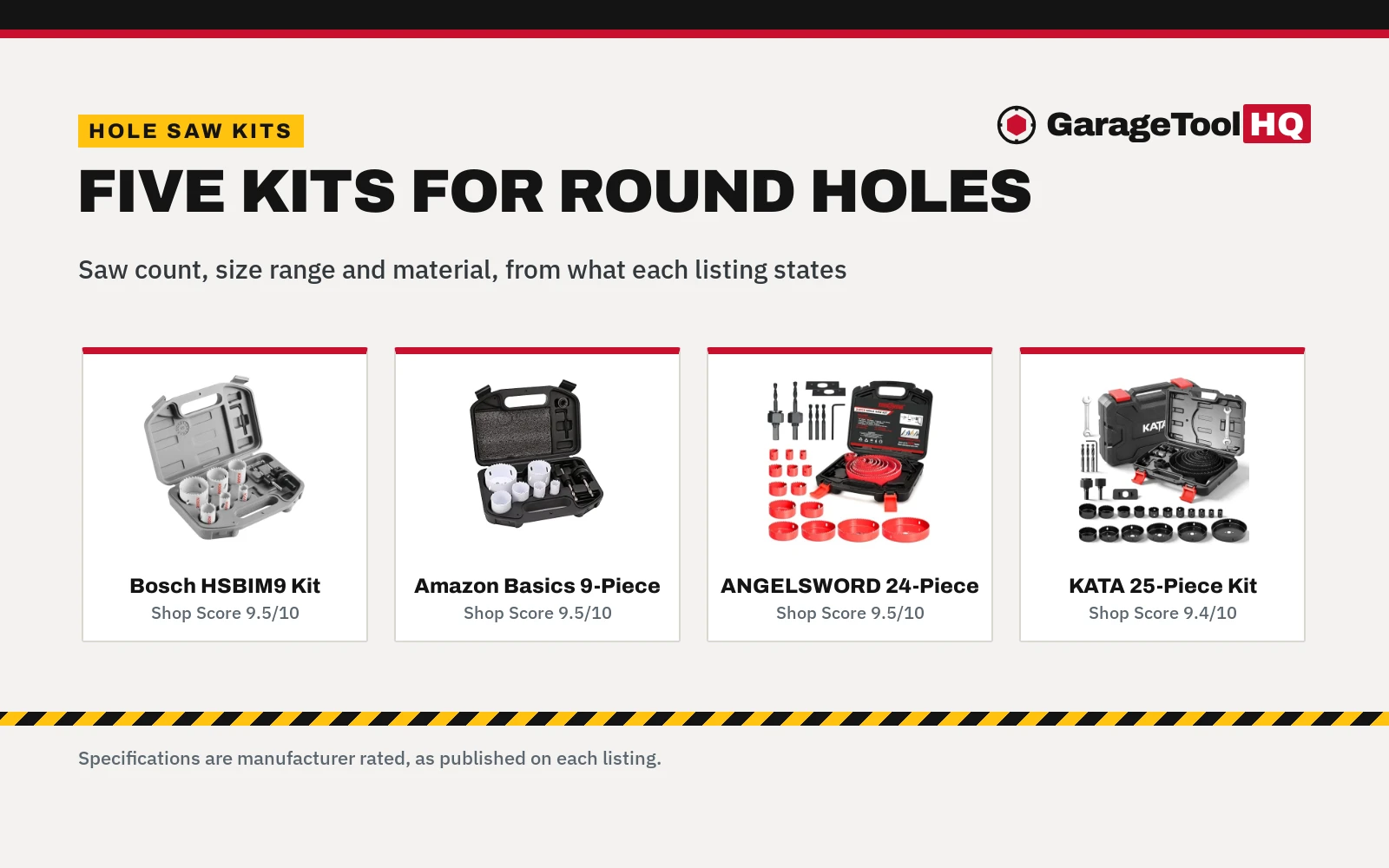
The kits below cover the sizes this guide walks through, from small cable holes to wide vent holes, and each card says which part of the job it handles.
Wear protective goggles and gloves when cutting metal, and add coolant during continuous high-speed drilling. Clamp the work, keep hands clear of the cup, and let the saw stop before lifting it out of the hole.
Read the manual before first use, wear eye protection, keep the work area clear and ventilated, and stay within every stated rating. Read our Safety Disclaimer.
FAQ: garage tools
What size hole saw do I need?
Measure the fitting or pipe that passes through the hole, then pick a saw that leaves a little clearance around it. A kit that spans 3/4″ to 4-1/2″ covers most garage and home holes. Measure the fitting and check the saw size on the cup before cutting.
Can a hole saw cut metal?
Yes, with the right teeth. TCT carbide-tipped saws cut stainless steel, hard metal, iron and aluminum, while M42 bi-metal saws cut thin metal. The METOTY kit states it is not for tile, glass, concrete or stone.
Do I need a pilot drill?
Yes, for most holes. The pilot drill holds the cup in place while the rim teeth bite, and the kits here include pilot drills or center drills. The GEINXURN kit uses a 1/4-inch quick-change hex shank with a pilot bit, and the EZARC kits include pilot drills with their arbors.
What does 4/6 TPI mean?
It is a variable tooth pitch of 4 to 6 teeth per inch along the rim. Both EZARC kits state a 4/6 TPI pitch, which the maker pairs with eject slots for chip clearance and less heat buildup.
How deep can a hole saw cut?
It depends on the cup. Both EZARC kits state a cutting depth of 1.89″ (48mm), which suits sheet goods, plywood and drywall. For thicker stock, cut from each side.
Related: hole saw size chart, bi-metal vs carbide hole saw, best hole saw kit and the cordless tools hub.