How to Use a Floor Jack Safely
How to use a floor jack safely to lift and support a vehicle: stable ground, factory lift points, rated jack stands and step-by-step operating rules.

On this page
Top picks at a glance
As an Amazon Associate we earn from qualifying purchases.
- 1
 AV Steel Low Profile Floor Jack 3 Ton9.7/10View on Amazon
- 2
 Jack Boss 3 Ton Low Profile9.7/10View on Amazon
- 3
 AV Steel 3 Ton Floor Jack9.7/10View on Amazon
- 4
 LARBANKE 3Ton Hydraulic Floor JackView on Amazon
- 5
 Pro-Lift Low Profile Floor Jack Color GreyView on Amazon
- 6
 BIG RED Hydraulic Trolley Service/Floor Jack with Extra SaddleView on Amazon
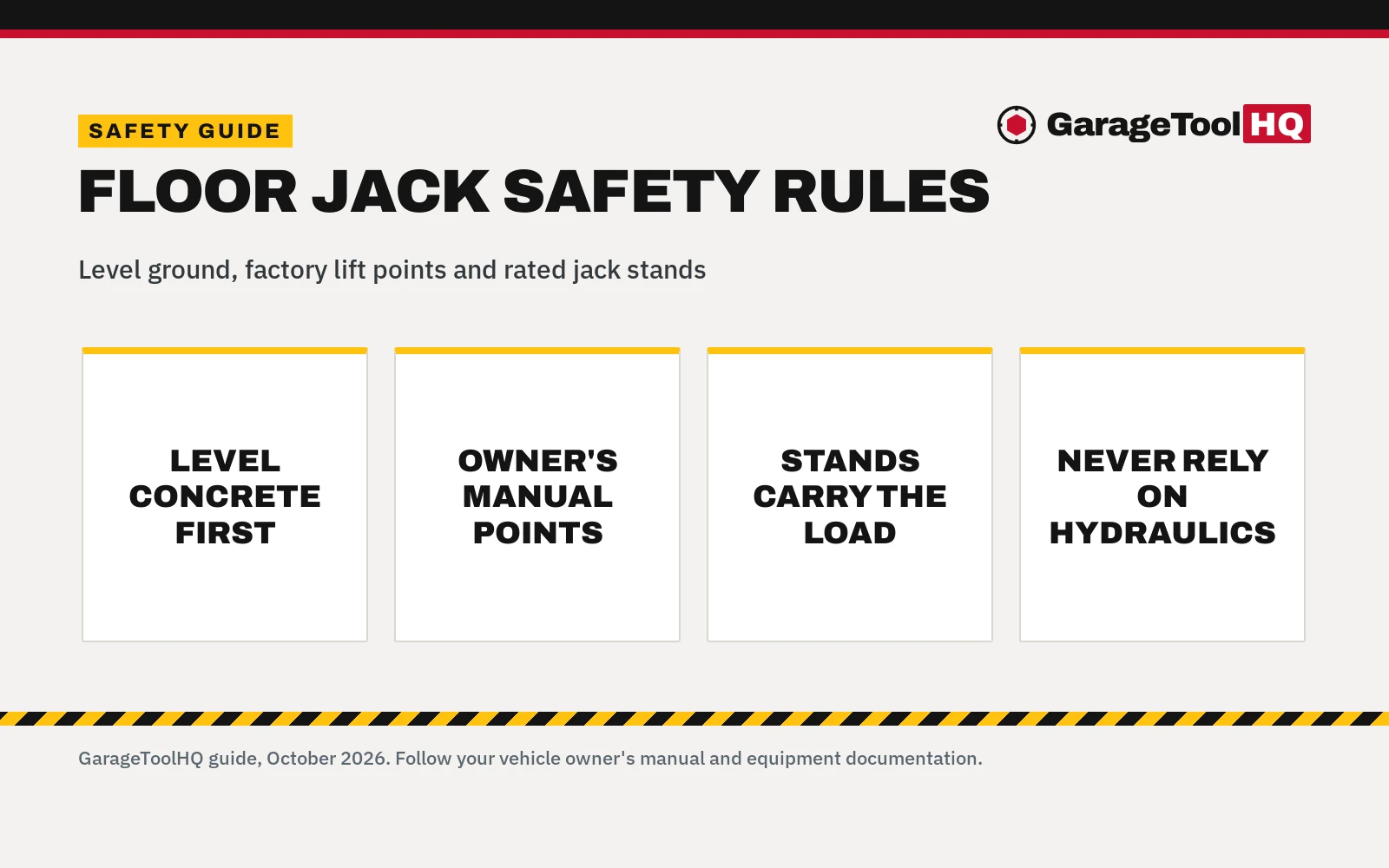
How to use a floor jack safely begins with solid, level ground, factory lift points, and rated jack stands. To lift a vehicle safely, chock the wheels that remain on the ground, roll the jack saddle directly under the manufacturer’s designated jacking point, and pump the handle until the vehicle reaches working height. Immediately place rated jack stands beneath structural support points, lower the hydraulic pressure so the stands support the entire weight, and never get under a vehicle supported only by a jack.
More options to compare
 LARBANKE 3Ton Hydraulic Floor JackCheck price on Amazon
 Pro-Lift Low Profile Floor Jack Color GreyCheck price on Amazon
 BIG RED Hydraulic Trolley Service/Floor Jack with Extra SaddleCheck price on Amazon
GarageToolHQ earns a commission when you buy through links on our product pages, at no extra cost to you. Read our affiliate disclosure.
Below: why hydraulic jacks fail, how to choose suitable lift equipment, a step-by-step lifting checklist, and essential safety rules for working underneath a vehicle.
How to use a floor jack safely: where the hazards come from
A hydraulic floor jack uses pressurized fluid to lift heavy vehicles, relying on internal seals, check valves, and release screws. If a seal fails or fluid bypasses a valve seat, hydraulic pressure can drop rapidly or bleed down over time. Key mechanical hazards include:
- Hydraulic pressure loss. A floor jack is a lifting tool, not a support stand. Seals can weep or fail without warning. Never rely on hydraulic fluid to suspend a vehicle while working beneath the chassis.
- Vehicle roll. Raising an axle shifts vehicle weight. Without wheel chocks, the vehicle can roll forward or backward, dislodging the jack saddle.
- Soft or sloped surfaces. Operating on asphalt, dirt, gravel, or slopes pushes steel wheels into the ground, causing the jack to tilt and drop the load.
- Chassis damage. Placing the saddle against floorboards, rocker panels, or suspension arms crushes sheet metal and severs lines. Lift strictly at reinforced factory points.
Lifting equipment types and how to use them safely
| Equipment Type | Primary Function | Safe Garage Role |
|---|---|---|
| Hydraulic floor jack | Raises vehicle axles or corners with fluid pressure | Lifting only; never hold weight for undercarriage work |
| Mechanical jack stands | Supports chassis mechanically at fixed heights | Mandatory support; bears load during work |
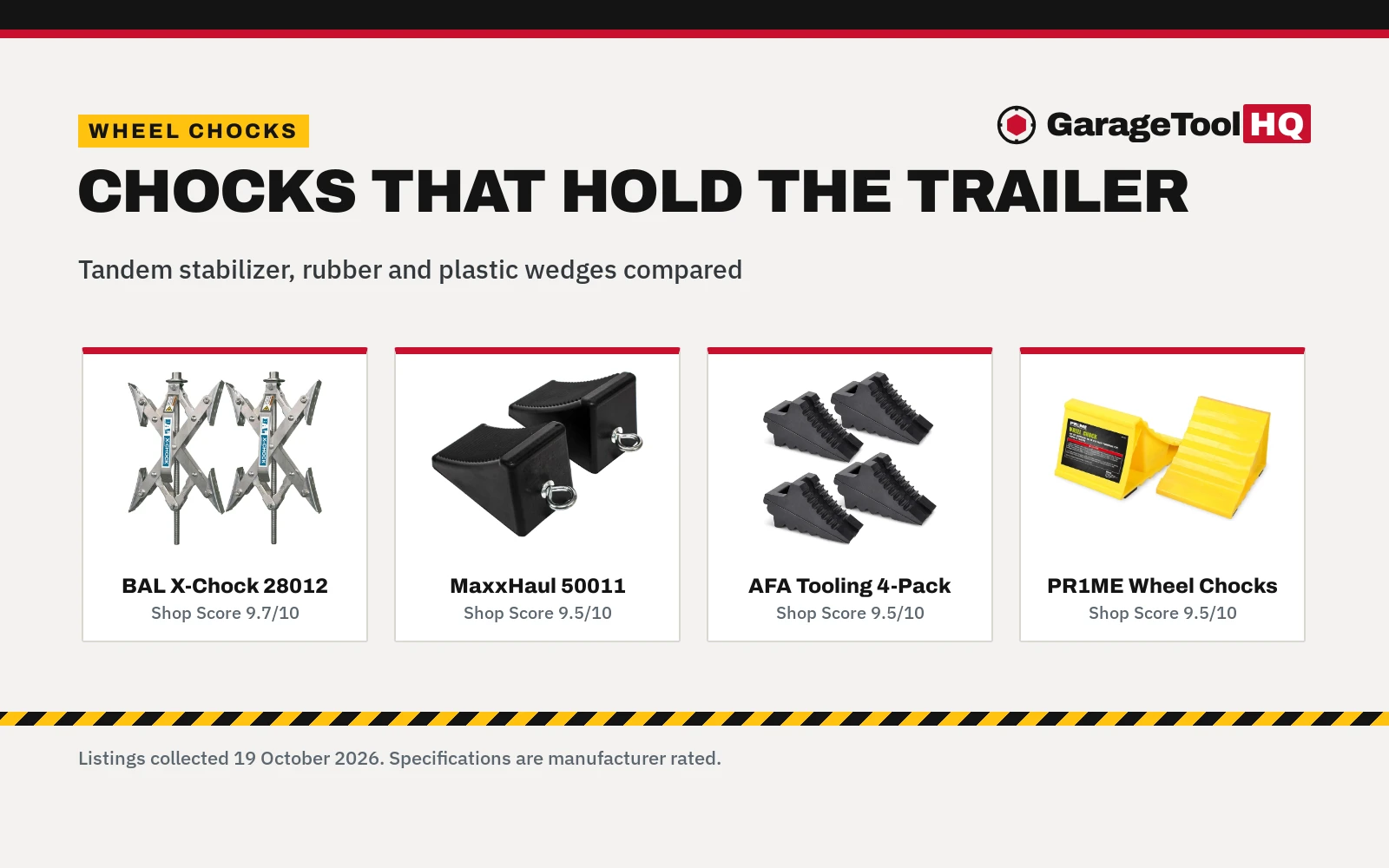
| Wheel chocks | Blocks tires against rolling | Stabilization; wedge against tires before lifting |
| Drive-on car ramps | Elevates tires along an incline | Drive-on elevation; alternative to floor jacks |
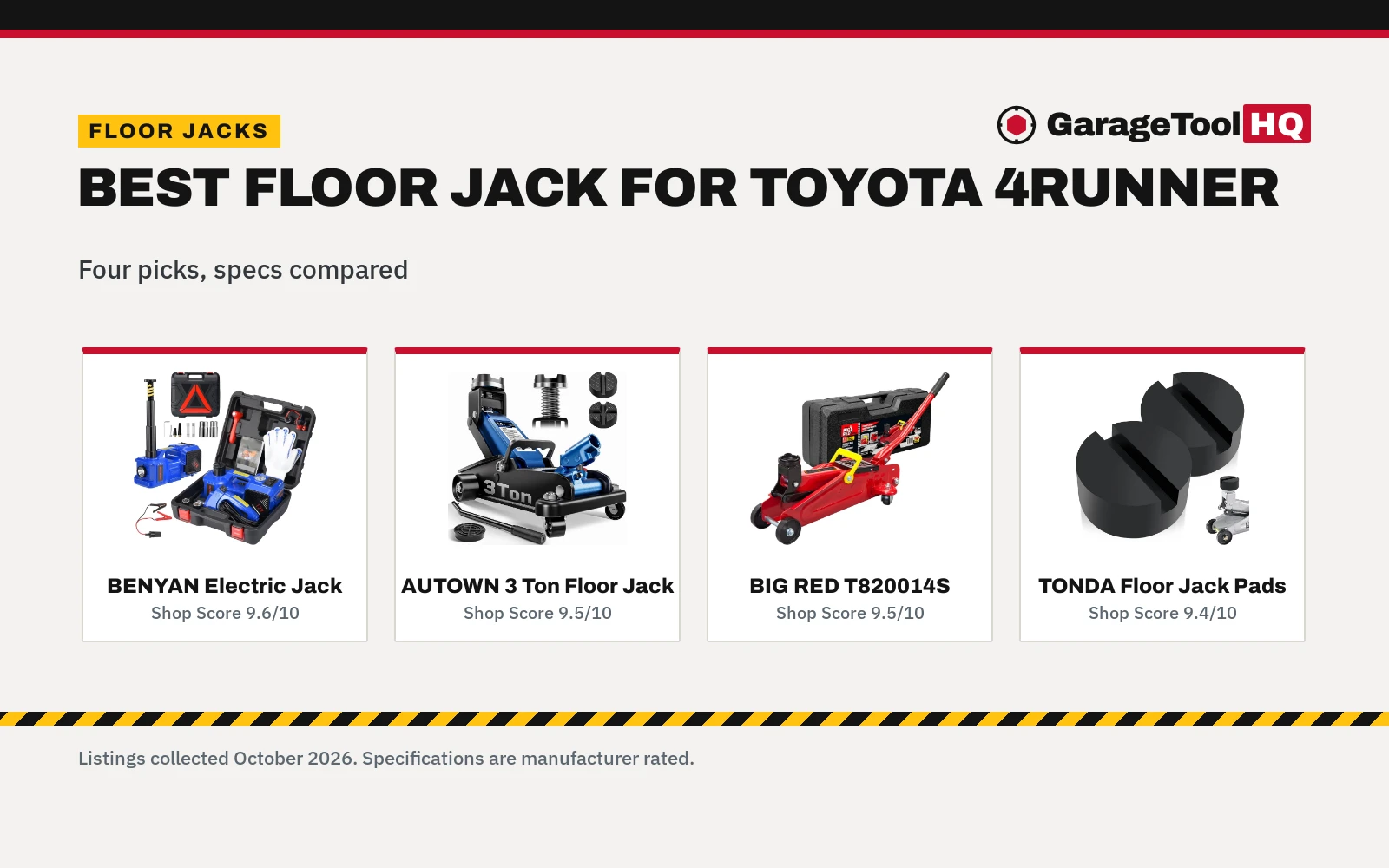
Choose equipment complying with ASME PASE standards for structural proof loads and overload protection. Specifications vary across listings. For example, the LARBANKE heavy-duty steel floor jack listing specifies a 3 ton load capacity (6,600 pounds), a lift range from 5.31 inches to 18.11 inches, steel front casters, 360-degree rear swivel casters, and an item weight of 46 pounds. For pinch weld protection, the TONDA rubber jack pad listing specifies a slotted cross-groove with a diameter of 4.92 inches, a thickness of 1.02 inches, and a rated capacity of 2-3 tons. For lifting saddles, the KishYa alloy steel saddle listing specifies a 4 ton load capacity, a saddle diameter of 4.8 inches, and an item weight of 1.9 pounds.
How to use a floor jack safely: the step-by-step checklist
- Park on solid, level concrete. Position the vehicle on a flat concrete floor. Avoid asphalt, dirt, gravel, or slopes. Shift automatic transmissions into Park, or place manual transmissions in gear, and set the parking brake firmly. Because parking brakes act on rear wheels, raising the rear axle leaves front wheels free to roll unless chocked.
- Chock the remaining wheels. Place solid chocks against the front and back of tires remaining on the floor. Chock rear tires when raising the front; chock front tires when raising the rear. Always block both directions of roll.
- Locate factory lift points. Check the owner’s manual for reinforced jacking locations, such as pinch weld notches or subframe pads. Never lift on floorboards, steering parts, or sheet metal.
- Inspect equipment before use. Check the jack for fluid leaks and ensure the release valve closes tightly. Verify that jack stands have undamaged steel, clean ratchet teeth, and secure locking pawls.
- Position the jack and align the saddle. Roll the jack under the designated lift point. Place a slotted rubber pad on the saddle when lifting unibody pinch welds. Rotate the handle clockwise to close the release valve firmly.
- Raise the vehicle smoothly. Pump the handle until the saddle contacts the lift point squarely. Pump with steady strokes to lift the vehicle, allowing jack casters to roll forward slightly as the arm rises in an arc.
- Position rated jack stands. Slide rated mechanical stands beneath approved chassis support points. Adjust stand height so the cradle sits just beneath the frame or pinch weld, and engage locking pawls securely.
- Lower the vehicle onto the stands. Slowly rotate the jack release valve counterclockwise. Lower the chassis until the full weight rests firmly on the stands. Lower the saddle slightly clear of the lift point so the stands bear the entire load, then close the valve.
- Confirm stability before starting work. With limbs clear, grasp the vehicle bumper and firmly nudge the chassis. The vehicle must remain solid on the stands without shifting. If any movement occurs, lift, reposition the stands, and lower again.
- Lower the vehicle safely when finished. Clear tools and creepers from beneath the car. Pump the jack handle to raise the chassis slightly off the stands. Remove the stands, then slowly rotate the release valve counterclockwise until tires rest on concrete. Remove wheel chocks.
Hydraulic jacks rely on pressurized fluid to raise heavy loads, but internal rubber seals, O-rings, and release valves can bypass or fail without warning. Never place any part of your body underneath a vehicle supported solely by a hydraulic floor jack. Always transfer the vehicle load completely onto rated jack stands resting on level, solid concrete before inspecting or servicing the undercarriage.
A jack is for lifting, not holding. Never work under a vehicle supported only by a jack: set it on rated jack stands, on solid, level ground, at the manufacturer's lift points, chock the wheels, and give the car a firm shake before you go under. Read our Safety Disclaimer.
Choosing the right floor jack and support accessories
Match your lifting gear to your vehicle type and garage needs:
- Low-profile floor jacks: Vehicles with reduced clearance require shallow saddles. Check our guide to the best low-profile floor jack models and read what is a low profile floor jack for clearance guidelines.
- Standard passenger cars: For sedans and crossovers, see our review of the best floor jack for cars.
- Steel vs aluminum: Steel provides shop durability, while aluminum cuts weight. Read our comparison of a steel vs aluminum floor jack.
- Floor jack vs trolley jack: Trolley jacks offer trunk portability, while floor jacks provide wider shop stability. See our guide to a floor jack vs trolley jack.
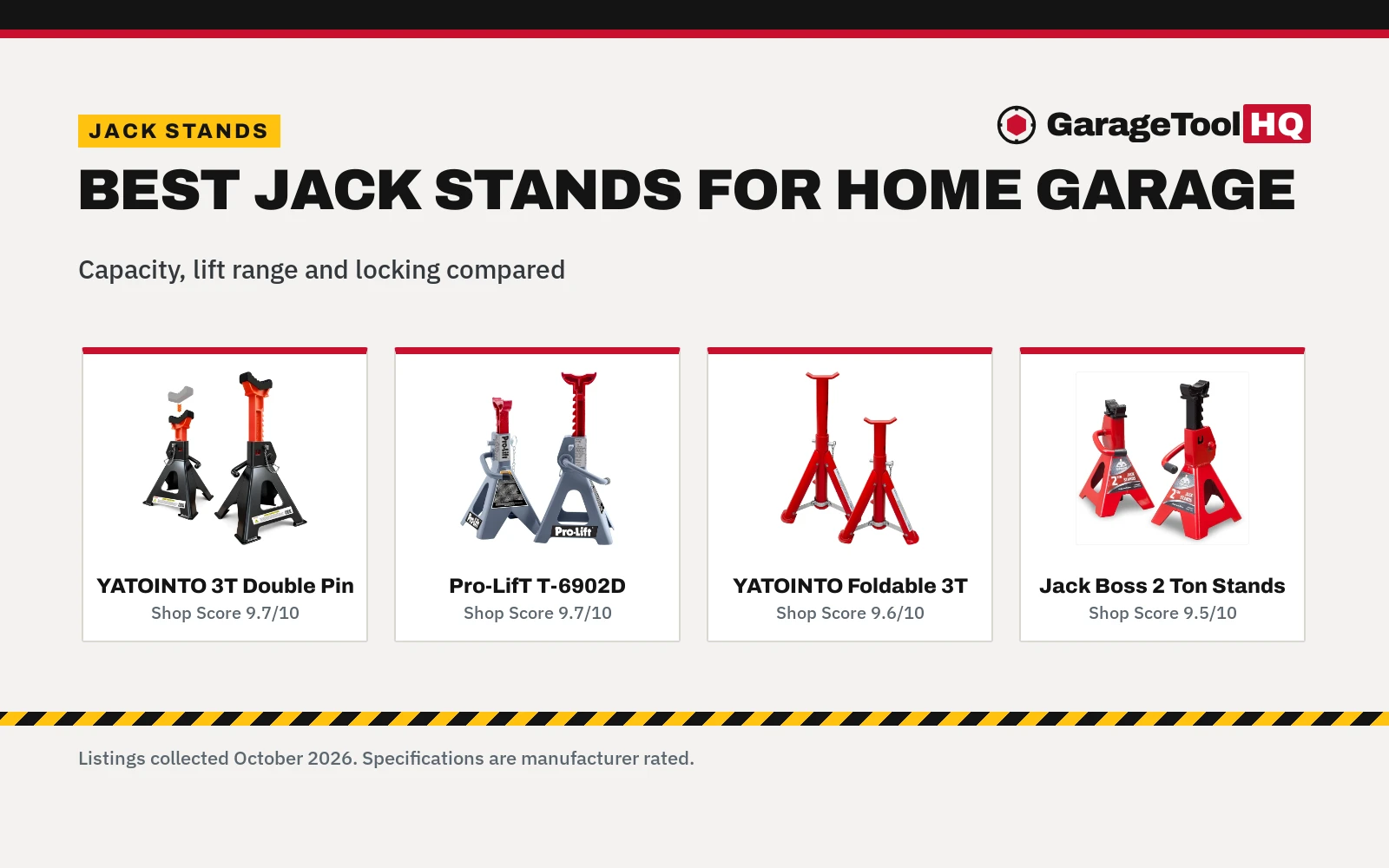
- Mechanical jack stands: Pair lifting tools with rated support from our guide to the best jack stands.
Floor jack maintenance and pre-lift care
Routine maintenance keeps hydraulic equipment operating reliably:
- Fluid levels: Low hydraulic jack oil causes spongy lifting. Clean around filler plugs before filling; never use brake fluid or motor oil.
- Air purging: If lifting feels spongy, open the release valve, pump the handle rapidly several times, close the valve, and verify smooth travel.
- Casters and wheels: Ensure wheels rotate freely so the jack tracks smoothly as the lifting arm swings upward.
- Hardware inspection: Check chassis welds, linkages, and saddle bolts for cracks or looseness, wiping the ram clean after use.
Frequently Asked Questions
Can I use a floor jack on an asphalt driveway?
No. Asphalt softens in warm temperatures and yields under concentrated load. Steel wheels can sink, causing the jack to tilt or drop. Always lift on flat, solid concrete.
Where should I place jack stands under my car?
Position stands exclusively beneath reinforced factory lift points or subframe locations specified in your owner’s manual. Never place stands under floorboards, steering components, or suspension arms.
Why does a floor jack move when lifting a car?
The lift arm travels through an upward arc. To stay centered beneath the vehicle lift point, the jack must roll forward on its casters during lifting, and roll backward when lowering.
Can I leave a car on a floor jack overnight?
Never leave a vehicle supported only by a floor jack. Hydraulic seals and valves can bleed pressure, causing the vehicle to sink. Always support elevated vehicles on rated jack stands.
Do I need a rubber jack pad for pinch welds?
A slotted rubber pad is recommended for unibody pinch welds. It distributes pressure and protects metal seams from bending, scratching, and corrosion.
What is the difference between a floor jack and a trolley jack?
A floor jack features a broad steel chassis and wide saddle for garage stability. A trolley jack has a narrower frame and compact handle suited for trunk transport.
Related: our jacks and stands hub, guide to the best floor jack for cars, rated best jack stands, and our comparison of a floor jack vs trolley jack. Also explore what is a low profile floor jack and the steel vs aluminum floor jack guide.