How to Use Sandpaper: Grits and Technique
Sandpaper turns a rough board or a scuffed panel smooth when you match the grit to the job, work through the grits from coarse to fine, and keep the paper flat on the work.

On this page
Top picks at a glance
As an Amazon Associate I earn from qualifying purchases.
- 1
 Shineboc 18-Sheet 9 x 11 Inch Sandpaper9.7/10View on Amazon
- 2
 Bates- Emery Cloth Roll, 1" x 26 FT, 6 Grits9.5/10View on Amazon
How to use sandpaper comes down to grit choice, direction and patience: pick the right grit, sand with the grain, and work through the grits from coarse to fine without skipping steps. A rough board that needs shaping starts coarse, and a painted panel that needs a smooth finish ends fine, and the paper in between does the smoothing. This guide covers grit numbers, wet or dry sanding, technique that keeps a panel flat, and the sandpaper sets compared below.
GarageToolHQ earns a commission when you buy through links on our product pages, at no extra cost to you. Read our affiliate disclosure.
Below: grit numbers and what they do, wet or dry sanding, technique that keeps a panel flat, and the sandpaper sets compared here.
Shineboc 18-Sheet 9 x 11 Inch Sandpaper
An 18-sheet wet or dry sandpaper assortment in 9 grits, 120/180/240/320/400/600/800/1000/2000, with 2 sheets per grit, in 9 by 11 inch silicon carbide sheets.
Pros
- 9 grits, 120/180/240/320/400/600/800/1000/2000, 2 sheets per grit, covering rough to fine stages
- Wet and dry use; wet sanding reduces scratches and dust
- Silicon carbide with anti-clogging grit and a tear-resistant reinforced backing
- Grit number marked on the back, and sheets cut to size for blocks and orbital sanders
Cons
- No warranty term is stated
- No item weight is stated
- No sanding block is included, though the sheets fit blocks and orbital sanders
- 9 by 11 inch sheets need cutting for narrow work
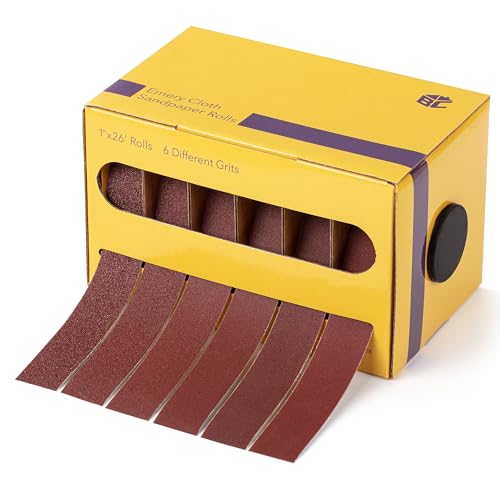
Bates- Emery Cloth Roll, 1" x 26 FT, 6 Grits
A 6-roll emery cloth set in 6 grits from 80 to 600, each roll 1 inch by 26 feet, in a dispenser box for tearing to length.
Pros
- 6 grits from 80 to 600, covering coarse grinding to fine finishing
- Each roll is 1 inch by 26 feet, for long detailed work
- Dispenser box keeps rolls stored and tears cleanly to the length needed
- Emery cloth suits metal, wood and polishing in a single set
Cons
- No warranty term is stated
- No item weight is stated
- The 1 inch width suits detail work, not wide flat panels
- No grit finer than 600 is included, so the set stops short of the finest polishing grits
How to use sandpaper: grit numbers and what they do
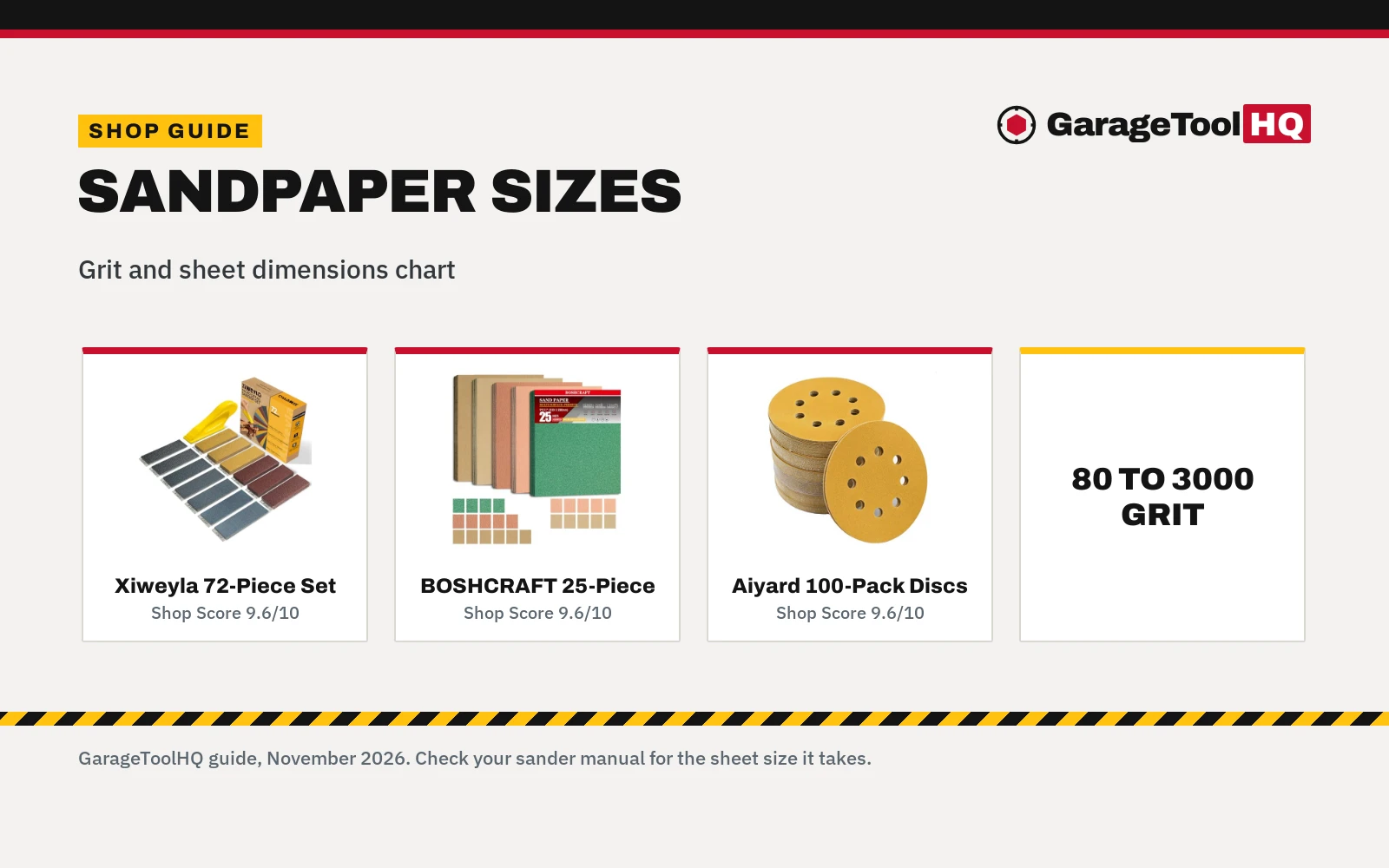
Grit numbers run from coarse to fine, and the number tells you how rough the paper is: a low number cuts fast and leaves visible scratches, and a high number polishes. The sets compared here run from 80 grit at the coarse end to 2000 grit at the fine end, and that spread covers shaping, smoothing and polishing. Start with the coarsest grit the job needs, then step up through the grits, and let each grit remove the scratches the last one left. Skipping grits leaves scratches that take far longer for the next grit to remove, and pressing harder does not fix it.
| Grit | Use it for |
|---|---|
| 80 | Shaping and stripping rough wood and metal |
| 150 to 240 | Smoothing after shaping |
| 320 to 400 | Smoothing before paint and between coats |
| 600 to 2000 | Polishing paint, plastic and metal |
For a fuller map of grit numbers, see the sandpaper grit guide and the sandpaper grit chart.
Wet or dry: pick the method
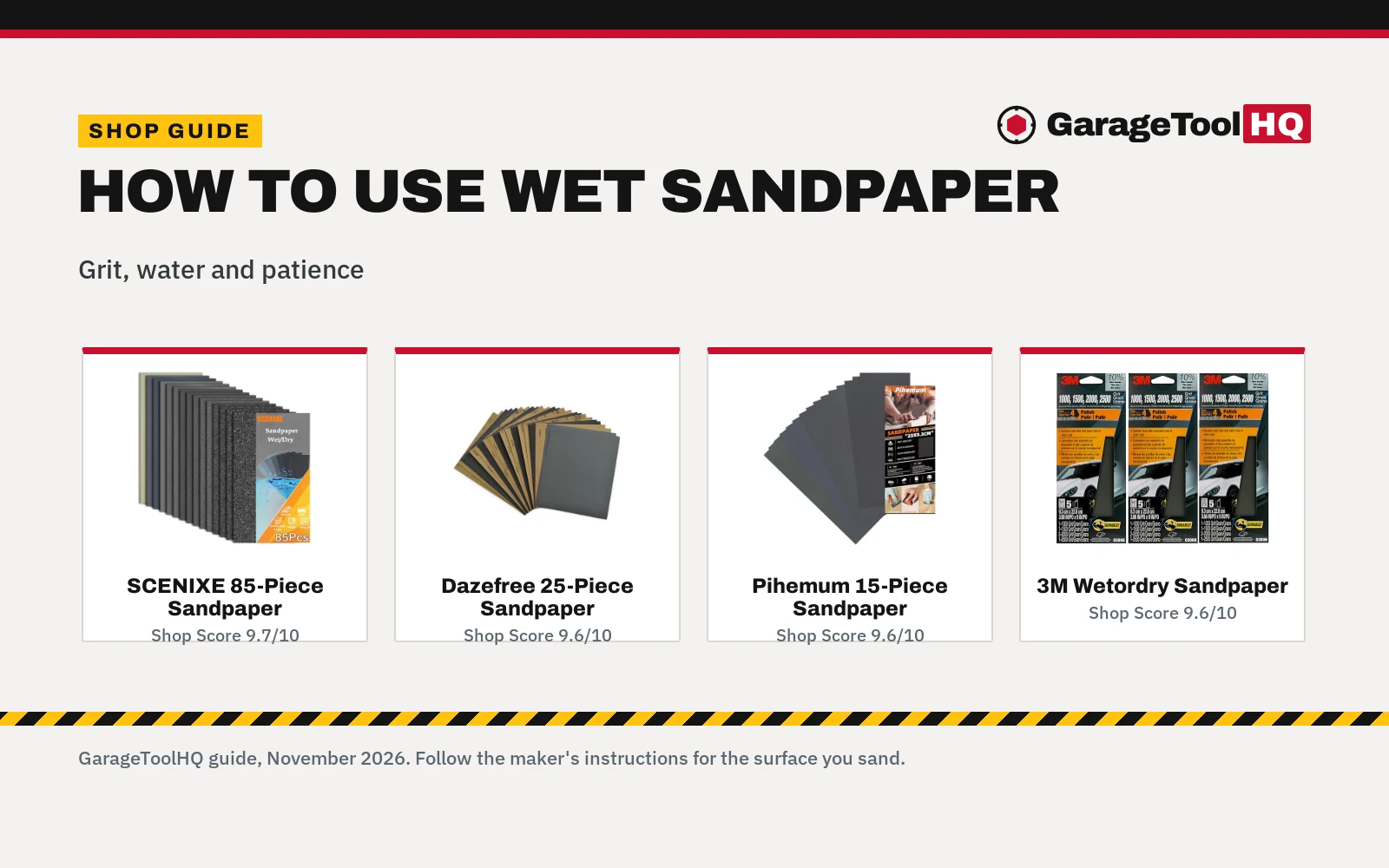
The Shineboc sheets (on Amazon) work wet or dry, and the choice changes how the job goes. Wet sanding helps reduce scratches and minimizes dust, and it suits the fine grits and the final passes on paint and plastic. Dry sanding offers faster material removal and convenience, and it suits the coarse grits and rough shaping. If you sand wet, keep the paper and the work damp, and let the water carry the dust away. If you sand dry, clear the dust often so the paper keeps cutting.
Technique that keeps a panel flat
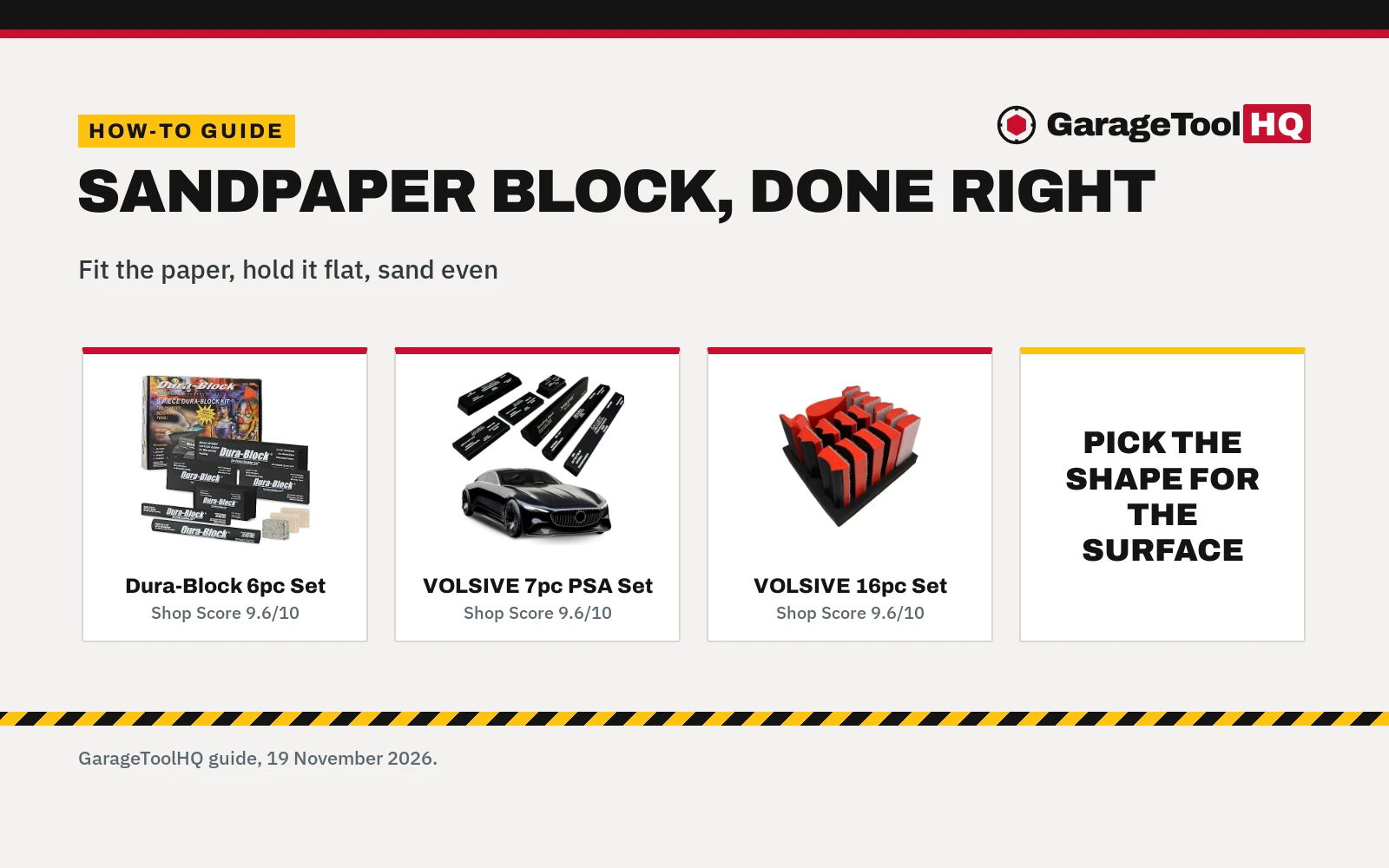
Sand with the grain on wood, and keep the paper flat on the work. A sanding block keeps a sheet flat and stops fingers from digging grooves into a panel, and the sheets here fit sanding blocks, orbital sanders and pneumatic sanders. Cut the 9 by 11 inch sheets to the size the job needs, or tear a length off the Bates roll, and fold or wrap the paper so it stays put on the block. Work in even passes, keep the pressure light, and check the surface often: a panel that looks done under the shop light may show scratches from another angle. Change the paper when it stops cutting, since a worn sheet rubs more than it sands.
The gear for this job
Sanding runs from rough shaping to fine polishing, and the sets below cover that range: the Shineboc sheets cover 9 grits for hand and machine sanding, and the Bates rolls run from 80 to 600 grit for detail work torn to length.
Read the manual before first use, wear eye protection, keep the work area clear and ventilated, and stay within every stated rating. Read our Safety Disclaimer.
FAQ: garage tools
What grit sandpaper should I start with?
Start with the coarsest grit the job needs: 80 grit for shaping and stripping, 150 or 240 grit for smoothing a surface that is already fair, and 320 grit or finer for work that only needs smoothing before paint. Then work up through the grits, and let each grit remove the scratches the last one left.
Can I use sandpaper wet?
Yes, if the paper is made for it. The Shineboc sheets state wet and dry use, and wet sanding helps reduce scratches and minimizes dust. Dry sanding offers faster material removal and convenience, so use dry sanding for rough shaping and wet sanding for fine finishing.
How do I know when to change grit?
Change grit when the surface looks even under the scratches of the grit you are using, then step up to the next grit and sand until those scratches are gone. The Shineboc set has 9 grits and the Bates set has 6 grits. If the paper feels smooth and stops cutting, change the sheet instead of pressing harder.
What is emery cloth for?
Emery cloth is abrasive cloth on a roll, and the Bates set suits sanding, smoothing and polishing metal, wood and other surfaces. Each roll is 1 inch by 26 feet, and the dispenser box tears cleanly to the length you need, so it suits narrow edges and detail work where a wide sheet is hard to hold.
Can I cut sandpaper sheets to size?
Yes. The Shineboc sheets cut to different sizes to meet specific DIY requirements, and the listing states they fit sanding blocks, orbital sanders and pneumatic sanders. The Bates rolls tear to length from the dispenser box, so you take only what the job needs.
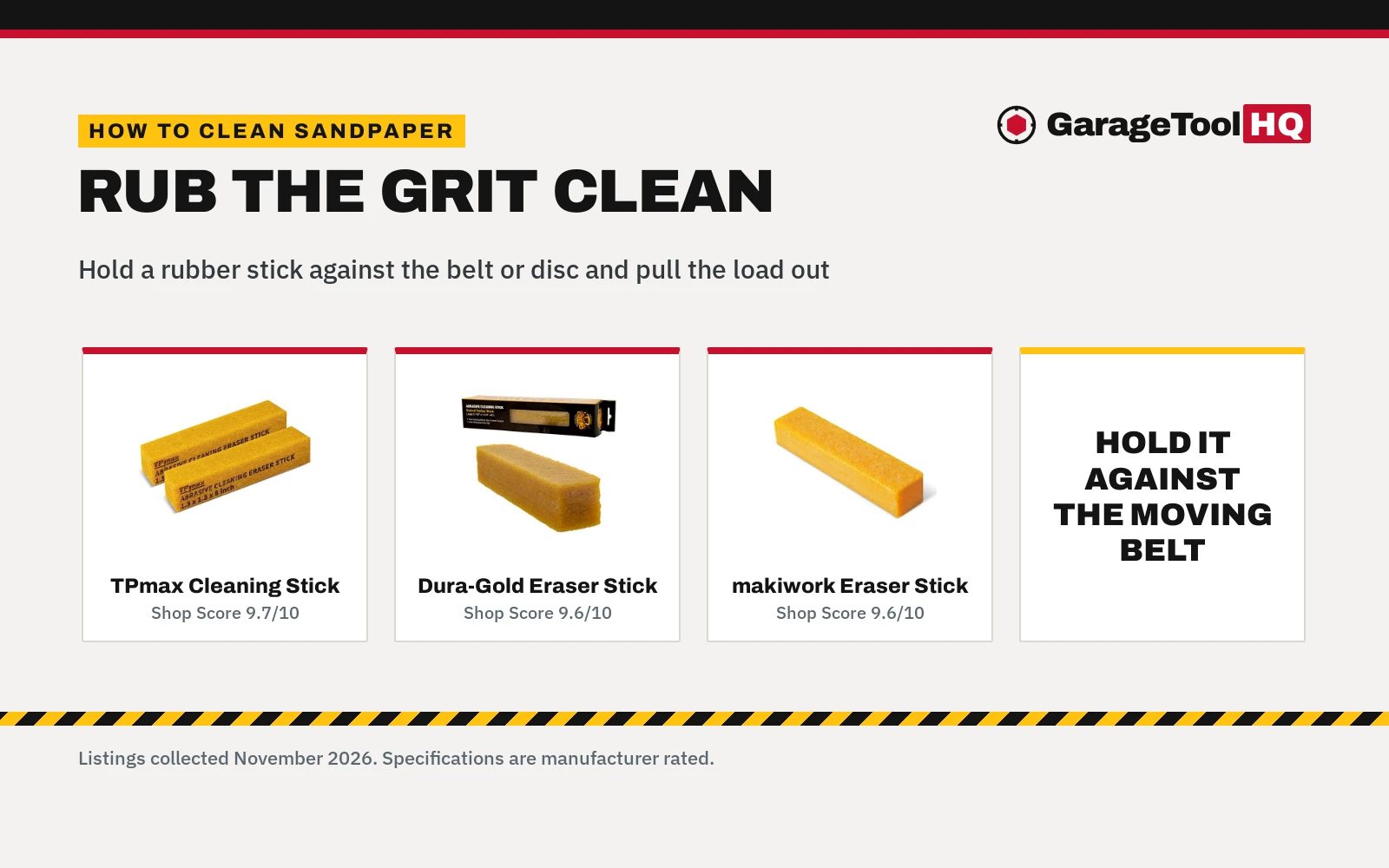
Related: the sandpaper grit guide, the wet vs dry sandpaper guide, how to clean sandpaper, and the best DA sander kit.