Parts Washer Brush and Hose Options
A parts washer brush and hose bring cleaning fluid to the bristle so you can scrub greasy parts without dipping your hands in solvent.

On this page
After a brake job, the caliper bracket, the bolts and the old pads come off coated in grease and road grime, and the parts washer is where they get clean before anything goes back on the car. A parts washer brush and hose does the scrubbing: the hose carries cleaning fluid to the brush, and the bristles work the grime off while the fluid keeps flowing.
As an Amazon Associate I earn from qualifying purchases. GarageToolHQ earns a commission when you buy through links on our product pages, at no extra cost to you. Read our affiliate disclosure.
Below: how a flow-thru brush works, what hose length and fittings to check, which bristles and handles suit your fluid, and a checklist to run before washing.
Parts washer brush and hose: how a flow-thru brush works
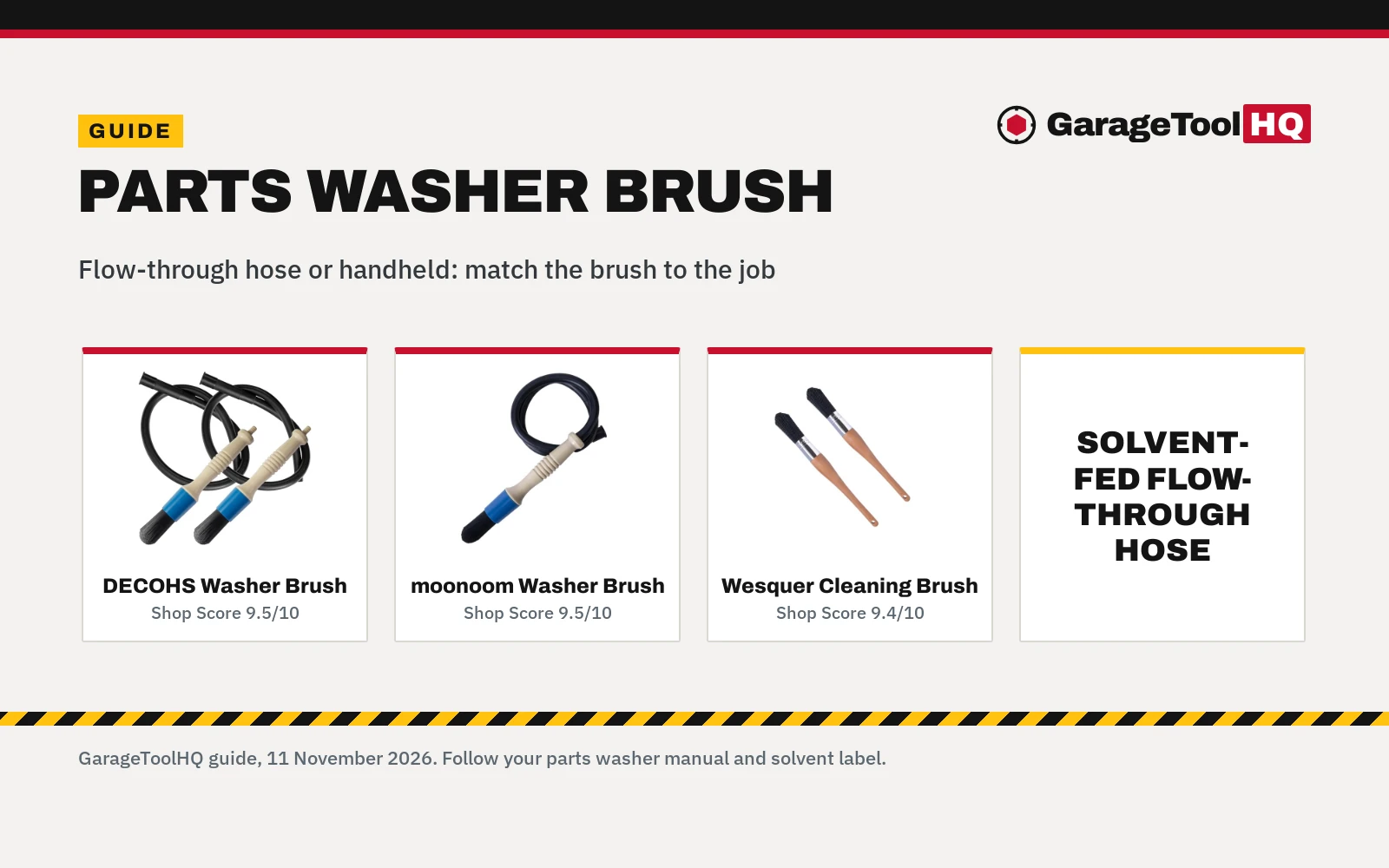
A flow-thru brush connects to the washer nozzle by a hose, so cleaning fluid runs through the hose and out through the bristles while you scrub. The Dreyoo brush pairs a pointed tip with a 27.5 inch hose, and the TINGSOTIN OR101H pairs its brush with a 28 inch hose. The pointed tip reaches into corners and deep holes, and the continuous flow carries loosened grease away from the bristle.
A plain brush with no hose works differently: you dip it in the basin and scrub, then dip again. The Powerbuilt cleaning brush is that kind of tool, a 1-inch diameter brush with a wood handle and a hang hole for storage, and it suits quick scrubbing of small parts that you can hold over the basin. The flow-thru style suits longer jobs, where the part stays in the washer.
The Lisle brushes use stiff Trialoy polyester filament with bullet-shaped tips that resist mushrooming, and the maker lists them for solvent-based or water-based cleaning solutions. The Lisle 89550 measures 14.5 inches long, while the Lisle 89640 and the Lisle 89660 each measure 11.5 inches long, so the 89550 is the longest of the three Lisle brushes.
| Style | How fluid reaches the bristle | Hose or length | Suits |
|---|---|---|---|
| Flow-thru brush with hose | Fluid runs through the hose to the bristle | 27.5 inch or 28 inch hose | Long scrubbing jobs |
| Plain parts cleaning brush | Dipped in the basin by hand | No hose | Quick scrubbing of small parts |
| Flow-thru brush, Lisle 89550 | Fluid runs through the hose to the bristle | 14.5 inches overall | General scrubbing with a longer brush |
Hose length, fittings and clamps: what to check before you order
Hose length is the figure to check, because a hose that is too short pins the brush to a corner of the basin. The Dreyoo hose measures 27.5 inches and the TINGSOTIN hose measures 28 inches, and both are described by their makers as oil resistant. The Dreyoo hose is also described as easy to bend and fold for storage. Measure from your washer nozzle to the far side of the basin before ordering.
The fitting matters as much as the length. The Dreyoo kit includes 2 stainless steel hose clamps, and the maker says the riveted screw cage adjusts and holds tight with a standard screwdriver. The TINGSOTIN OR101H connects to the washer nozzle and lists Black Bull and Eastwood washers, so check your washer nozzle against the fitting before ordering. The OR101 from Parts Brush Division connects to a solvent circulating system, and the maker notes that tubing for that connection is available.
Bristles, handles and cleaning fluid
Bristle material decides which cleaning fluid the brush tolerates. The Lisle brushes use stiff Trialoy polyester filament, and the maker lists it for either solvent-based or water-based cleaning solutions. The TINGSOTIN brush uses PP bristles with a plastic handle and a flexible rubber hose, and the Powerbuilt brush uses polypropylene bristles with a wood handle. The Dreyoo brush uses solvent resistant filaments and the maker lists it for a wide range of parts washer solvents. Match the bristle to the fluid in your washer, and do not assume a solvent brush also suits a water-based fluid unless the maker says so.
Handles are the other half of the job. The Lisle 89550 has an injection molded handle with a ribbed design for a firm grip, the 89640 and 89660 use a strain-fighting ergonomic design, and the Brush Research brush uses ergonomic polypropylene handles that the maker says reduce wrist strain. The Dreyoo handle has a grooved design with a striped friction zone that keeps it from sliding off. Grip matters as much as bristle stiffness.
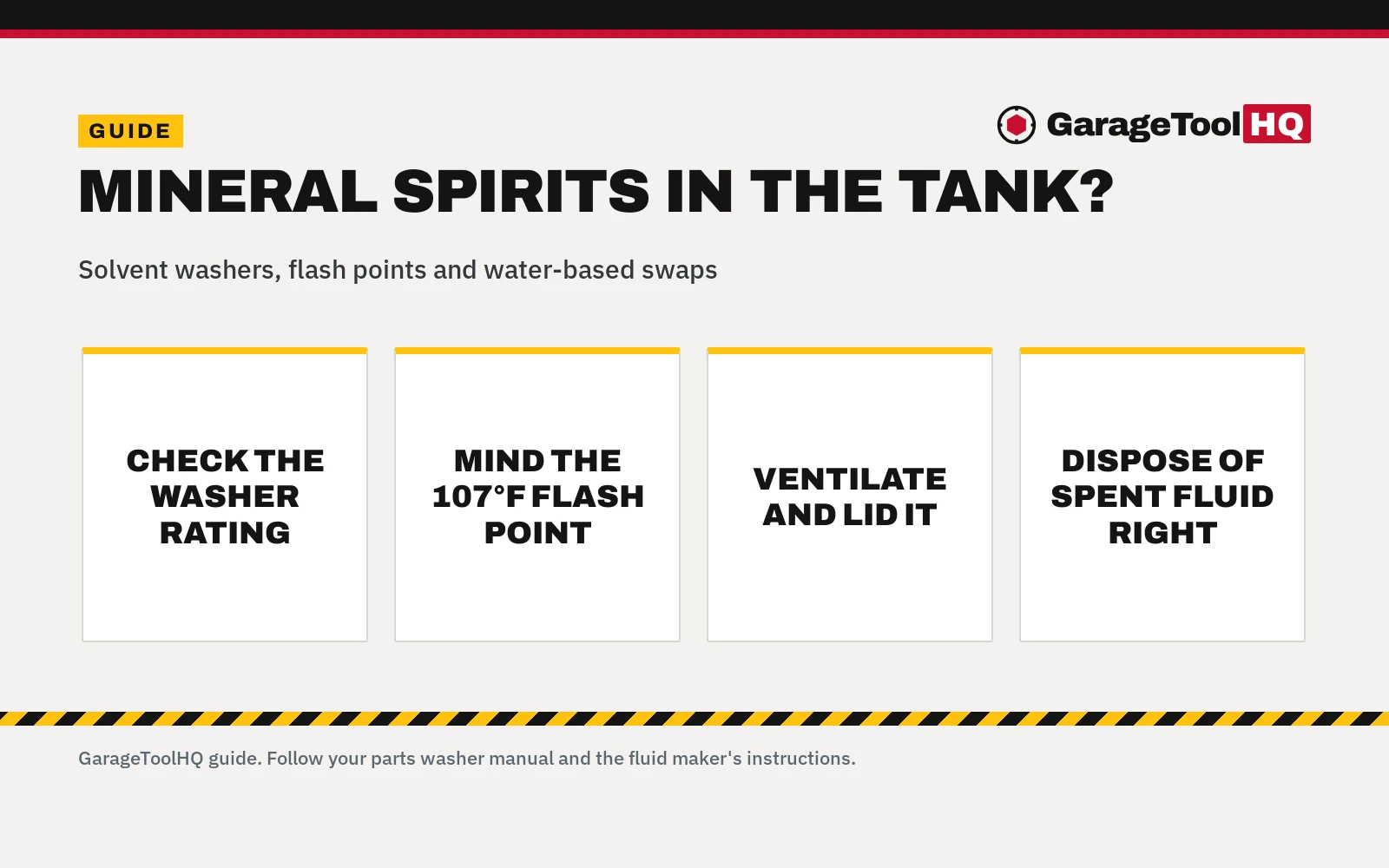
The washer manual decides which fluid to run, and the brush must be listed for that fluid. Our guide to a mineral spirits parts washer covers whether that fluid suits a home garage washer. Whatever fluid you run, keep the brush for that fluid only, and rinse it when the job is done.
How to use a parts washer brush and hose: the checklist
- Confirm the fitting. Check that the hose connects to your washer nozzle and that the clamps fit the hose.
- Check the hose length. Measure your basin before ordering; the Dreyoo hose measures 27.5 inches and the TINGSOTIN hose measures 28 inches.
- Match the bristle to the fluid. Use a brush the maker lists for the solvent-based or water-based fluid in your washer.
- Work the brush with the fluid flowing. Let the flow carry loosened grease away, and rework corners and deep holes with the tip.
- Keep the brush in the basin. A flow-thru brush is meant to stay over the washer, where drips fall back into the fluid.
- Rinse and hang the brush when the job is done. The Powerbuilt brush has a hang hole for storage.
- Check the hose and clamps now and then. A cracked hose or a loose clamp leaks fluid onto the bench.
- Follow the washer manual. It decides the fluid, the fill level and the ventilation.
Parts washer fluid is made to cut grease, and it cuts the skin’s own oils just as well. Wear gloves rated for the fluid you use, and wash up after the job.
Read the manual before first use, wear eye protection, keep the work area clear and ventilated, and stay within every stated rating. Read our Safety Disclaimer.
Parts washer brush vs detailing brush
A parts washer brush and a detailing brush both scrub, but they work in different fluids and on different parts. A detailing brush works on paint, trim and engine bay surfaces with water-based cleaners, while a parts washer brush works in solvent or water-based cleaning fluid on parts in a washer basin. Our guide to the best detailing brush set for engine bay covers the detailing side. Do not use a detailing brush in a parts washer, and do not use a parts washer brush on paint.
Solvent, care and storage
A brush lasts longer when it is cleaned and stored dry. Rinse the bristles in clean fluid at the end of a session, and hang the brush by its handle or hang hole so air reaches the bristles. Store the hose coiled loosely rather than kinked, and keep spare clamps with the washer. The Dreyoo kit includes 2 stainless steel hose clamps, and the maker says they are corrosion resistant and minimize breakdown to the hose. Check the brush before each session: bristles that have gone soft or splayed no longer hold their shape.
FAQ: garage tools
What is a parts washer brush and hose?
It is a brush that connects to a parts washer nozzle by a hose, so cleaning fluid flows through the hose and out through the bristles while you scrub, carrying loosened grease away from the part.
How long should a parts washer hose be?
Long enough to reach from the washer nozzle to the far side of the basin with slack. The Dreyoo hose measures 27.5 inches and the TINGSOTIN hose measures 28 inches, so measure your basin before ordering.
Can I use a parts washer brush with any cleaning fluid?
Only with a fluid the maker lists for that brush. The Lisle brushes are listed for solvent-based or water-based cleaning solutions, the Dreyoo brush is listed for a wide range of parts washer solvents, and the Brush Research brush is listed for petroleum-based or water-based cleaning solutions.
What is the difference between a flow-thru brush and a plain parts brush?
A flow-thru brush connects to the washer nozzle by a hose, and cleaning fluid runs through the bristles while you scrub. A plain brush has no hose, so you dip it in the basin and scrub, then dip again.
Do I need hose clamps for a parts washer brush?
If the hose connects with a clamp fitting, yes. The Dreyoo kit includes 2 stainless steel hose clamps that adjust and hold tight with a standard screwdriver. Check your washer nozzle fitting before ordering, and keep the clamps tight.
Related: our guide to a mineral spirits parts washer, the best detailing brush set for engine bay and the best complete detail brush set.