Ramps Car Repair (2026): Using Car Ramps in the Garage
Car ramps lift the front wheels onto raised platforms for oil changes and underbody work, and this guide covers lift height, rated capacity and driving onto them.

On this page
Top picks at a glance
As an Amazon Associate I earn from qualifying purchases.
- 1
 Nilight Car Ramps9.7/10View on Amazon
- 2
 Garvee 8 Inch Lift Solid Steel Car Ramps9.6/10View on Amazon
- 3
 Garvee 8 Inch Lift Solid Steel Car Ramps9.6/10View on Amazon
An oil change turns into a crawl under the car when the car sits flat on the driveway, and that is the job ramps car repair is built around. Car ramps lift the front wheels onto raised platforms so you can reach the drain plug, the oil filter and the underside without a jack. A ramp pair gives a steady, wide base under the tires, and the car stays put while you work underneath it. This guide explains what ramps do, how to pick a set by lift height and rated capacity, and how to drive onto them without drama.
GarageToolHQ earns a commission when you buy through links on our product pages, at no extra cost to you. Read our affiliate disclosure.
Below: what ramps do for a repair, the kinds of ramp on the market, how to drive onto a set, what to check before the wheels go up, and ramps against a jack and stands.
Ramps car repair: what the ramps do
A fixed car ramp is a wedge with a flat top. You drive each front wheel up its ramp, and the car rests on the platforms with the parking brake set and the rear wheels chocked. With a fixed ramp, the lift comes from the ramp height: a low ramp gives room for an oil change, while a taller ramp gives room for work further under the car. Ramps suit jobs where the car stays still and the wheels stay on: oil changes, filter swaps, chassis inspections and underbody checks. They do not suit jobs that need a wheel off the car, since the tire stays on the ramp.
The table below compares the ramps in the reference listings by lift height and rated capacity. Use it to see what each kind of ramp offers, then read the checks further down before you buy.
| Ramp | Lift height | Rated capacity | Suits |
|---|---|---|---|
| Florety PP ramp, 2-pack | 5.5-inch lift | 20,000 lbs | Oil changes, chassis inspections |
| TOWKING stackable ramp | 7.3-inch lift | 16,000 lbs | Oil changes, filter swaps, underbody inspections |
| Maxsa hydraulic ramp | 9.8 to 15 inches | 11,000 lbs | Oil changes, underbody repairs |
| Garvee hydraulic ramp | 9 to 15 inches | 5 tons | Oil changes, chassis inspection |
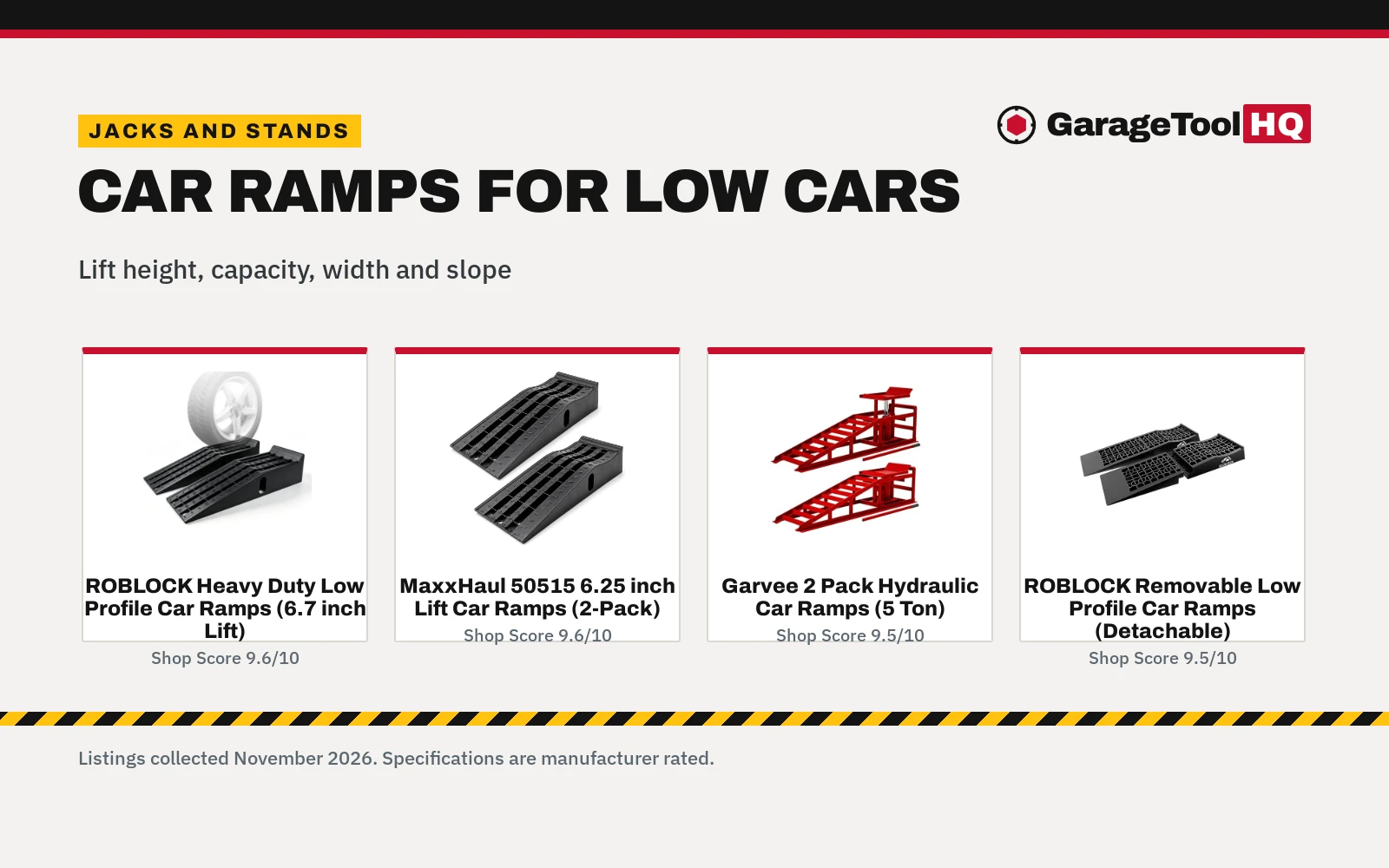
The listings show fixed ramps and hydraulic ramps. Fixed ramps are solid wedges: the Florety ramps are wear-resistant PP with a concave, textured surface and serrated bottoms, and the TOWKING ramps (on Amazon) are high-impact polypropylene with 18 anti-slip pads on each ramp and raised front stop blocks. Hydraulic ramps lift with a built-in jack: the Maxsa ramps carry a built-in 5-ton hydraulic jack on each ramp and roll on 2 wheels, and the Garvee ramps (on Amazon) carry built-in rolling wheels and reflective strips for dark garages. The TOWKING ramps also stack to cut the storage footprint by 50% compared with traditional car ramps, which matters in a tight garage.
How to use car ramps for a repair
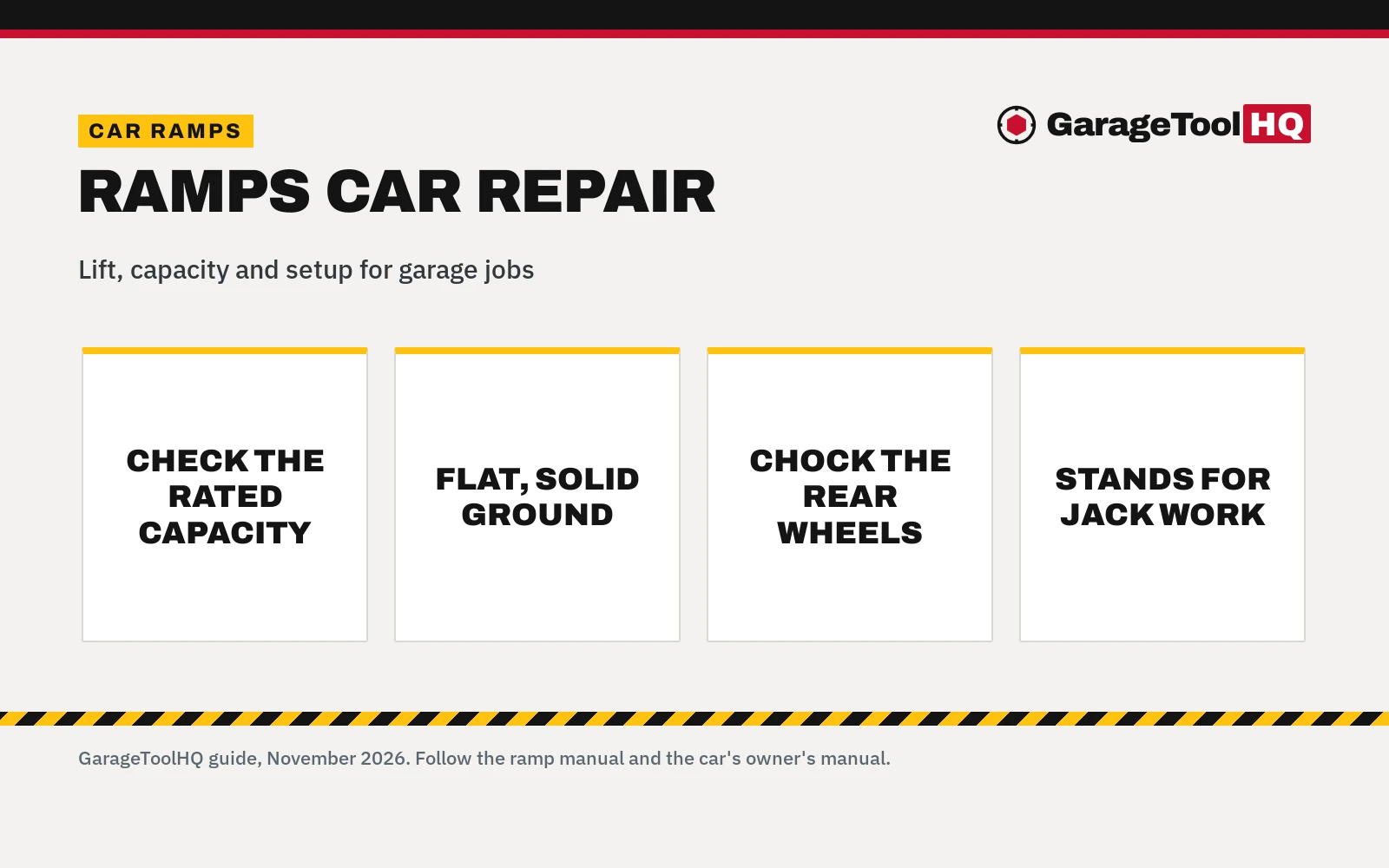
- Park on flat, solid ground. Ramps need a hard, level surface so they cannot sink or slide. A sloped driveway or soft ground is the wrong place for them.
- Set the ramps square to the tires. Place a ramp in front of each front tire, straight ahead of the car, centered on the tire tread. Check that both ramps sit flat and point the same way.
- Drive up slowly. Ease forward in a low gear and let the tires climb the ramps without spinning. Stop when the tires sit flat on the platforms.
- Set the brake and chock the rear wheels. Put the parking brake on, leave the car in park or in gear, and chock the wheels that stayed on the ground.
- Check the car sits steady. Look at both ramps from the side and confirm the tires sit flat on the platforms and the ramps have not moved. Only then go under the car.
- Work, then drive off slowly. When the job is done, lower a hydraulic ramp with its built-in jack first, then remove the chocks, release the brake and ease the car back down the ramps in reverse, slowly and straight.
Fixed ramps hold the car on their platforms, but a jack does not. Never get under a vehicle that rests on a jack alone: lower it onto rated stands on solid, level ground first, and follow the lift points in the owner’s manual.
What to check before the wheels go up
These checks decide whether a set of ramps fits your car and your garage. Run through them before you buy, not after the ramps arrive.
- Rated capacity. Match the ramp’s rated capacity to the car’s weight. The Florety ramps hold up to 20,000 lbs, the TOWKING ramps hold up to 16,000 lbs, and the Maxsa and Garvee hydraulic ramps hold 5 tons.
- Lift height. Match the lift to the job. The Florety ramps give a 5.5-inch lift, the TOWKING ramps give a 7.3-inch lift, the Maxsa ramps adjust from 9.8 to 15 inches, and the Garvee ramps adjust from 9 to 15 inches.
- Incline and footprint. The TOWKING ramps use a 17° incline. The Florety ramps measure 24 by 8.5 by 5.5 inches, and the TOWKING ramps measure 35.9 by 12.9 by 7.3 inches, so check the space in front of the tires and the space to store them.
- Weight and storage. The Maxsa ramps weigh up to 100 lbs, and the Garvee ramps weigh 85.98 pounds, so both take some effort to move. The TOWKING ramps stack to cut the storage footprint by 50%, and the Florety ramps have a built-in handle for carrying.
- Warranty. The Florety 2-pack carries a manufacturer warranty for 90 days, and the TOWKING ramps carry a 1 year manufacturer warranty.
A jack is for lifting, not holding. Never work under a vehicle supported only by a jack: set it on rated jack stands, on solid, level ground, at the manufacturer's lift points, chock the wheels, and give the car a firm shake before you go under. Read our Safety Disclaimer.
Ramps or a jack and stands?
Ramps and jacks do different jobs. Ramps lift the car by driving onto them, and the car stays on its tires. A jack lifts a corner so a wheel can come off. Use ramps for oil changes, filter swaps and inspections where the wheels stay on. Use a jack with rated stands for brake work, tire swaps and any job that needs a wheel off the car. Never get under a vehicle that rests on a jack alone: lower it onto rated stands on solid, level ground first, and follow the lift points in the owner’s manual.
If you are still choosing, compare the ramp guides for drive-on car ramps and car ramps and lifts, and check the car ramp dimensions size chart before you buy. For the other half of the setup, see the adjustable height jack stands.
FAQ: garage tools
Can I use car ramps on any car?
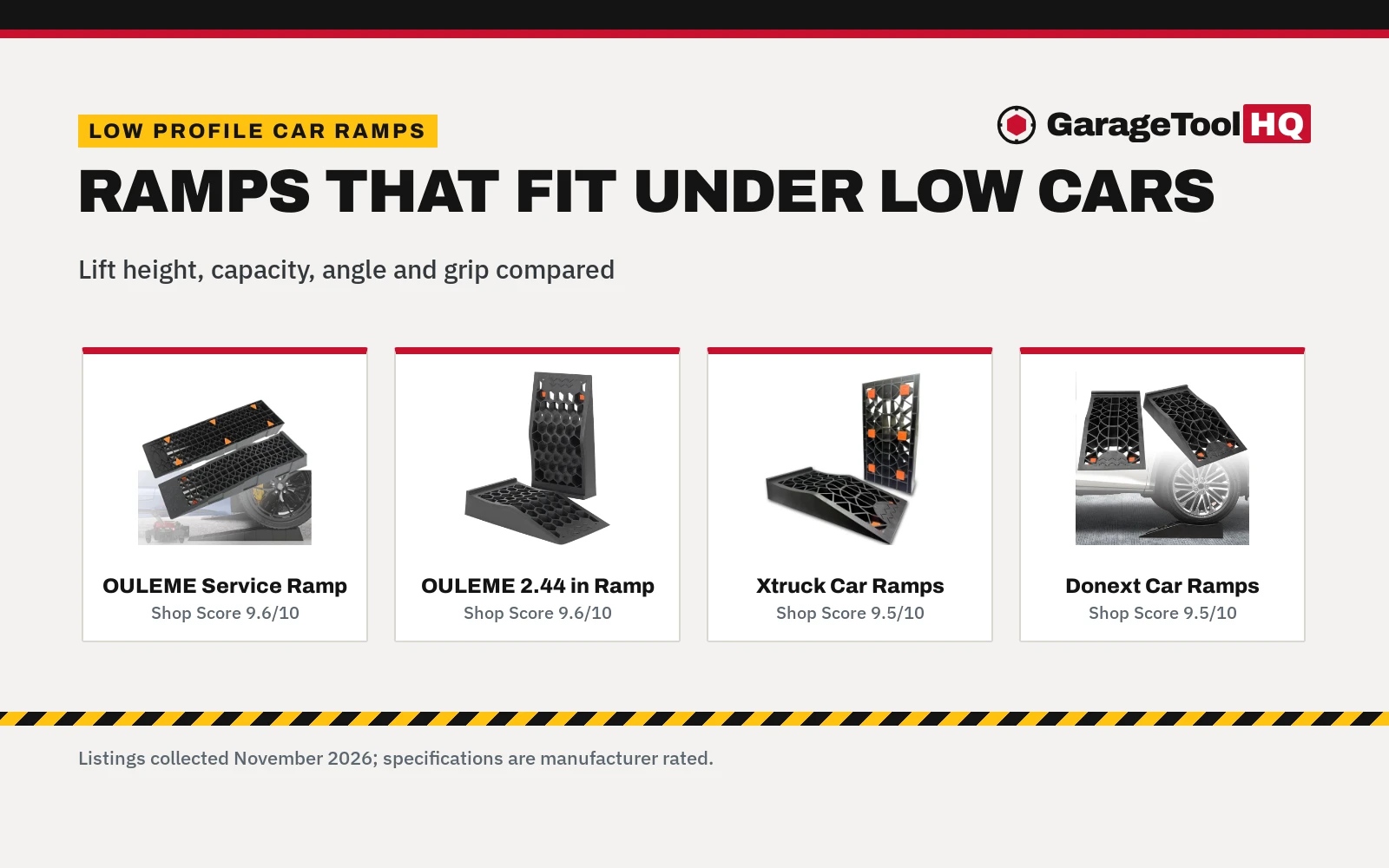
Check the ramp’s rated capacity against the car’s weight and the lift height against the job. The Florety ramps hold up to 20,000 lbs, the TOWKING ramps hold up to 16,000 lbs, and the hydraulic ramps hold 5 tons. Low cars may need a low-profile ramp, and the Maxsa ramps are low profile with a lift that starts at 9.8 inches.
How much lift do car ramps give?
It depends on the ramp. The Florety ramps give a 5.5-inch lift, the TOWKING ramps give a 7.3-inch lift, the Maxsa ramps adjust from 9.8 to 15 inches, and the Garvee ramps adjust from 9 to 15 inches.
Are car ramps safe for oil changes?
Ramps suit oil changes when they are used on flat, solid ground with the parking brake set and the rear wheels chocked. Start by checking the rated capacity, and never go under a car that rests on a jack alone.
Do I need jack stands with car ramps?
A fixed ramp holds the car on its platform, so stands are not needed for the ramp itself. A hydraulic ramp holds the car on its built-in jack, so follow the ramp manual before you go under. If you lift the car with a jack for any reason, lower it onto rated stands on solid, level ground before you go under, and follow the lift points in the owner’s manual.
How do I store car ramps?
The TOWKING ramps stack and cut the storage footprint by 50% compared with traditional car ramps. The Florety ramps have a built-in handle for carrying. Store ramps where they stay dry and out of the way of tires.
What size ramps do I need for an SUV or truck?
Check the rated capacity and the platform size. The Florety ramps hold up to 20,000 lbs and suit trucks, SUVs, RVs and tandem axle trailers, while the Maxsa ramps hold up to 11,000 lbs and fit cars, trucks and SUVs. Check the platform width against the tire: the Maxsa platform is 10 inches wide.
Related: drive-on car ramps, the best car ramps and lifts, our jacks and stands hub and the oil change DIY kit.