Floor Jack Maintenance: Complete Shop Guide
A complete shop routine for floor jack maintenance: inspecting hydraulic seals, purging trapped air, topping off oil, lubricating wheels, and storing safely.

On this page
Top picks at a glance
As an Amazon Associate we earn from qualifying purchases.
- 1
 Maxority 3-Ton9.6/10View on Amazon
- 2
 MAXXHAUL 50699 Low Profile Car Ramps for Vehicle Maintenance9.6/10View on Amazon
- 3
 Heavy-Duty 3-Ton9.5/10View on Amazon
When you roll a hydraulic floor jack under a crossmember or pinch weld for a Saturday brake job or an oil change, you expect the saddle to rise smoothly and hold elevation without creeping downward. Proper floor jack maintenance is what keeps hydraulic shop equipment dependable, leak-free, and safe for home garage service. Performing routine care prevents spongy pumping action, stuck release valves, and premature seal failure.
GarageToolHQ earns a commission when you buy through links on our product pages, at no extra cost to you. Read our affiliate disclosure.
Below, we cover why hydraulic jacks fail, provide an inspection checklist, explain how to bleed air and check oil, and review workshop safety protocols.
Floor jack maintenance: why regular shop care matters
A hydraulic floor jack converts handle pumping into high fluid pressure through a plunger pump, forcing the ram outward to raise the lift arm. In a home garage, road grit, metal dust, and moisture score the polished ram and degrade internal rubber O-rings and wiper seals. When seals wear or dirt prevents check valves from sealing, pressure drops and the lift arm sinks under load.
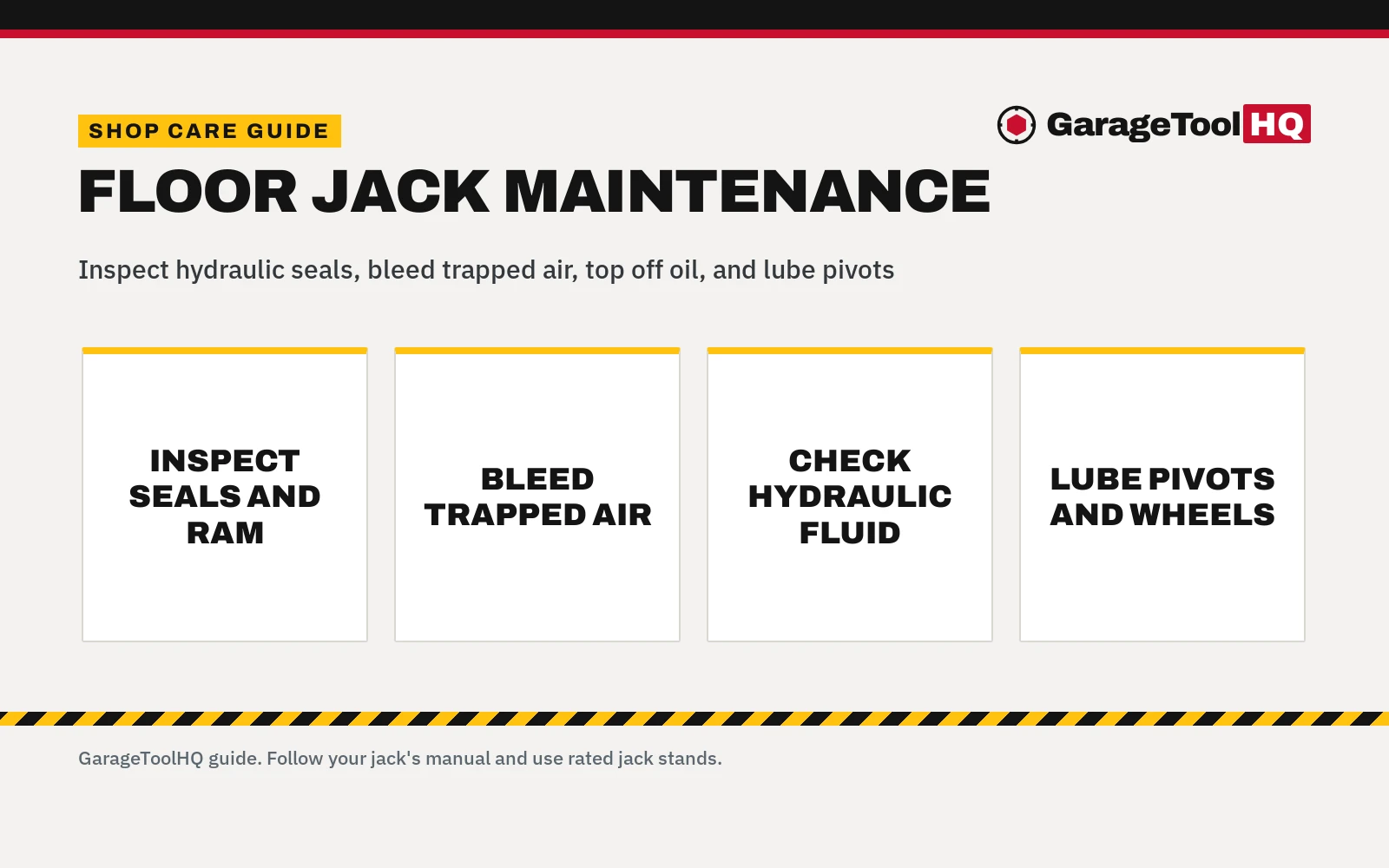
Routine care centers on five core objectives:
- Protecting seals: Keeping the ram clean prevents abrasive grit from tearing rubber wiper seals.
- Eliminating air: Bleeding the reservoir removes compressible air pockets that cause spongy pumping.
- Maintaining fluid: Keeping hydraulic oil at the fill level ensures the ram extends fully.
- Lubricating pivots: Oiling wheels, casters, and pins stops frame binding during lifts.
- Checking hardware: Tightening side plate bolts keeps the chassis rigid under load.
Floor jack maintenance checklist and inspection schedule
| Component | Inspection Check | Maintenance Action |
|---|---|---|
| Hydraulic Ram | Wipe clean; inspect for fluid leaks, pitting, or rust | Clean with a cloth; apply a light oil film |
| Oil Reservoir | Check oil level with the jack fully lowered | Top off with clean hydraulic jack oil just below the fill hole rim |
| Hydraulic Circuit | Check for spongy pumping or reduced lift height | Open the release valve and pump the handle to purge air |
| Wheels & Casters | Check for free rolling and smooth caster rotation | Lubricate axles with light machine oil or grease |
| Lift Arm Pivots | Inspect pivot bolt and links for dryness or binding | Apply oil or grease to pivot pins and handle joints |
| Chassis Bolts | Inspect side plate fasteners and handle retainers | Tighten all loose bolts and structural hardware |
| Saddle & Pad | Check saddle bolt, swivel action, and pad wear | Tighten saddle bolt; clear debris from teeth |
Running through this checklist before raising a vehicle catches minor issues before they cause fluid leaks or garage hazards.
Floor jack maintenance: the step-by-step shop routine
Keeping a service jack reliable requires basic hand tools and proper lubricants. Follow these steps:
- Clean the chassis and ram: Wipe down the frame, lift arm, and handle. Extend the ram to wipe off road grit before it retracts past internal seals. As ARCAN notes for its service jacks, wiper seals help shield internal hydraulic components from dirt, but keeping the ram clean ensures long seal life.
- Inspect for hydraulic oil weeping: Check the cylinder base, release valve stem, and oil fill plug. A faint oil sheen on the ram is normal, but pooling fluid indicates worn O-rings or loose fittings.
- Lubricate rolling and pivoting hardware: A floor jack must roll forward slightly as the arm rises through its arc. If casters bind, side loads stress the chassis. TONDA and BIG RED equip their jacks with two large front wheels and two 360-degree swivel casters for smooth mobility; keeping axle bearings oiled ensures free rolling. Lubricate the handle sleeve, link pins, and main arm pivot.
- Verify chassis fasteners: Check side plate tie rods, caster nuts, and handle retainer screws, tightening any loose hardware.
- Purge trapped air: Air enters the reservoir during transport or storage on its side; purging restores full pumping stroke.
A hydraulic floor jack is designed strictly for lifting, never for supporting a load while you work beneath a vehicle. Hydraulic seals or check valves can bypass pressure without warning. Immediately after raising a vehicle, support the load with appropriately rated jack stands resting on a solid, level concrete surface. Always consult your vehicle owner’s manual to identify designated factory lift points before positioning the jack saddle.
A jack is for lifting, not holding. Never work under a vehicle supported only by a jack: set it on rated jack stands, on solid, level ground, at the manufacturer's lift points, chock the wheels, and give the car a firm shake before you go under. Read our Safety Disclaimer.
How to bleed a floor jack: step-by-step air purging
When air enters hydraulic fluid passages, the handle feels spongy and the arm fails to reach full elevation. Because air compresses under load while hydraulic oil does not, air pockets absorb pump force. Purging trapped air is a quick garage procedure:
- Lower the lift arm completely: Turn the release valve counterclockwise to lower the arm fully.
- Vent the hydraulic oil fill plug: Locate the rubber fill plug on the reservoir cylinder. Carefully unseat the plug edge with a flat screwdriver to let trapped air escape.
- Open the release valve: Keep the release valve open by turning the handle counterclockwise.
- Pump the handle to purge air: With the valve open, pump the handle rapidly. As Pro-LifT outlines for its PL2920 floor jack, pumping 6 to 8 full strokes helps release pressurized air trapped within the reservoir. This circulates fluid through the internal bypass and vents air bubbles out the fill port.
- Reseat the fill plug and close the valve: Push the rubber plug firmly back into place. Turn the handle clockwise to close the release valve, then pump the handle to confirm full lifting height.
For more troubleshooting, read our guide on why your floor jack is not lifting, and see our full tutorial on how to bleed a floor jack.
Checking and topping off hydraulic jack oil
Low fluid prevents the arm from reaching full height. Always lower the jack completely before checking oil. Adding fluid while the ram is extended overfills the reservoir, forcing oil out past the plug when lowered.
- Level ground: Park the jack on a flat garage floor with the ram fully retracted.
- Clean the plug area: Wipe away grit before opening the rubber plug to keep dirt out of check valves.
- Inspect oil level: Remove the plug; fluid should sit just below the lower rim of the fill hole.
- Add hydraulic oil: Slowly pour clean hydraulic jack oil through a funnel to the fill rim. Do not overfill.
- Reseat plug: Reinstall the plug, wipe off excess fluid, and pump the arm to confirm full stroke.
Never add automotive brake fluid, motor oil, or transmission fluid to a hydraulic jack. Brake fluid dissolves rubber O-rings and wiper seals within hours, causing complete pressure loss. Motor oil foams under pressure and lacks proper hydraulic anti-wear additives. Always use dedicated, non-foaming hydraulic jack oil.
Floor jack capacities, frame designs, and specifications
Operating a jack within its ratings protects seals and valves from excessive pressure. Manufacturers offer varied capacities and frame profiles:
- Compact models: The SATA 1.5-ton hybrid jack provides 3,300 pounds of capacity in an aluminum and steel frame, with an overload threshold of 2.25 tons (5,000 pounds) representing a 1.5x rating. Pro-LifT builds a 2-ton steel trolley jack rated for 4,000 pounds for passenger cars.
- Low-profile designs: TONDA lists a 2.5-ton low-profile steel jack supporting 5,000 pounds with a 3.35-inch minimum height and 14.57-inch maximum lift. BIG RED offers a 2.5-ton trolley jack for 5,000 pounds with a 3-1/3-inch minimum height and 15-inch maximum reach.
- Shop and truck models: ARCAN offers a 3-ton steel jack rated for 6,000 pounds with high-carbon steel side plates, though its spec table lists a 7.5-inch minimum height despite its low-profile title. AUTOWN builds a 3-ton alloy steel jack supporting 6,600 pounds with a 7.1 to 20.9-inch lift range for trucks and SUVs. BLACKHAWK offers a 3.5-ton (7,000-pound) fast-lift jack with a 4-inch saddle diameter. For heavy service, BIG RED builds a 4-ton steel jack rated for 8,000 pounds spanning a 3-7/8 to 20-inch range.
Pump design also affects service. BIG RED notes its dual-piston pump lifts loads 5 times faster than a single pump, while SATA lists a 40% reduction in handle effort that cuts lifting time in half.
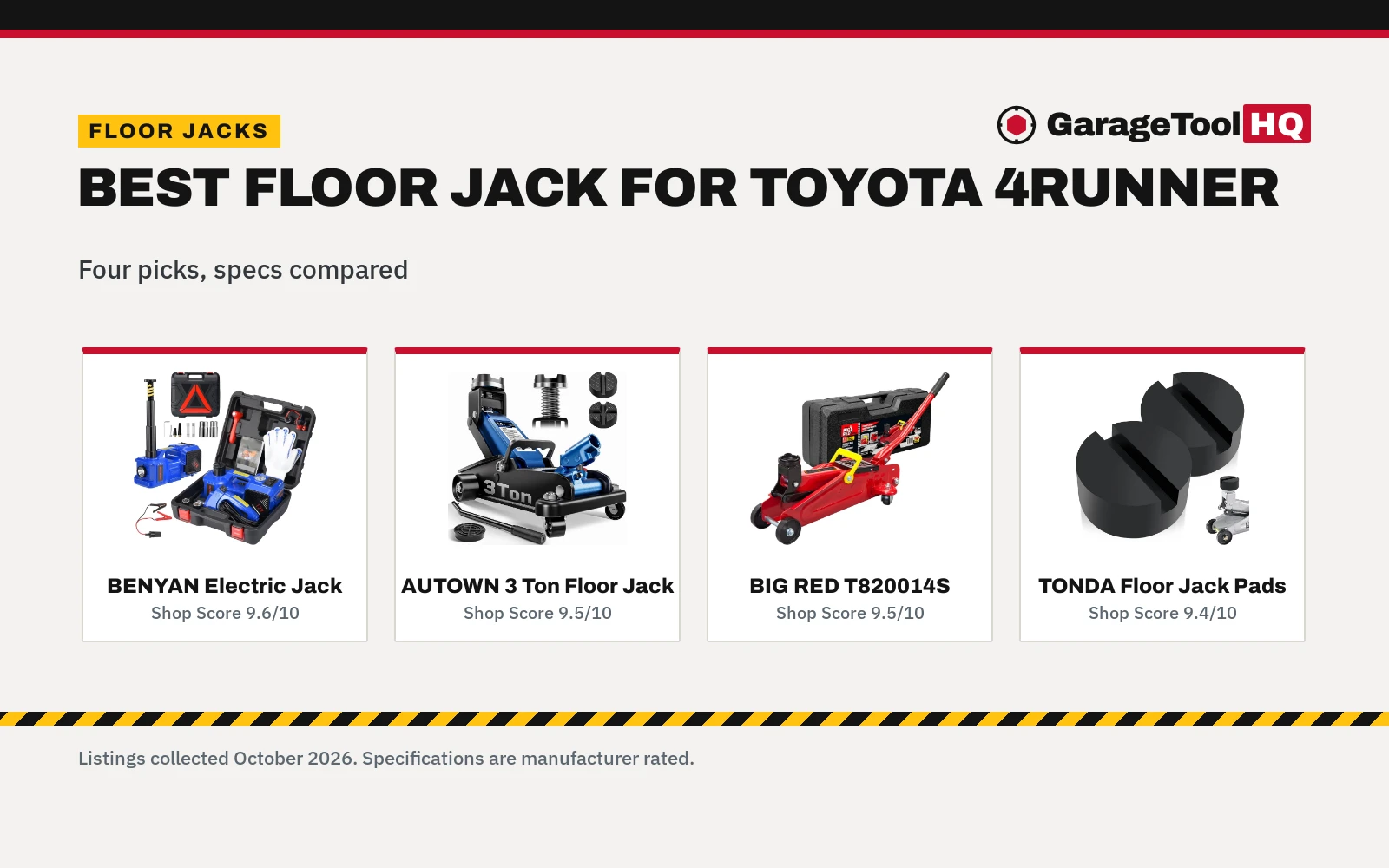
Compare specific options in our guides to the best floor jack for cars, best floor jack for trucks, and what size floor jack you need.
Safe storage and handling practices
Proper storage protects hydraulic seals and metal surfaces between garage projects:
- Retract the ram: Always lower the lift arm fully. Storing an extended ram exposes polished steel to moisture, causing rust that damages wiper seals.
- Close the release valve: Seat the release valve lightly clockwise to keep ambient humidity out of the hydraulic chamber.
- Store upright: Park the jack on its wheels on a level floor. Storing on its side leaks fluid and draws air into the circuit.
- Avoid damp floors: If concrete sweats, park the jack on a rubber mat to stop chassis corrosion.
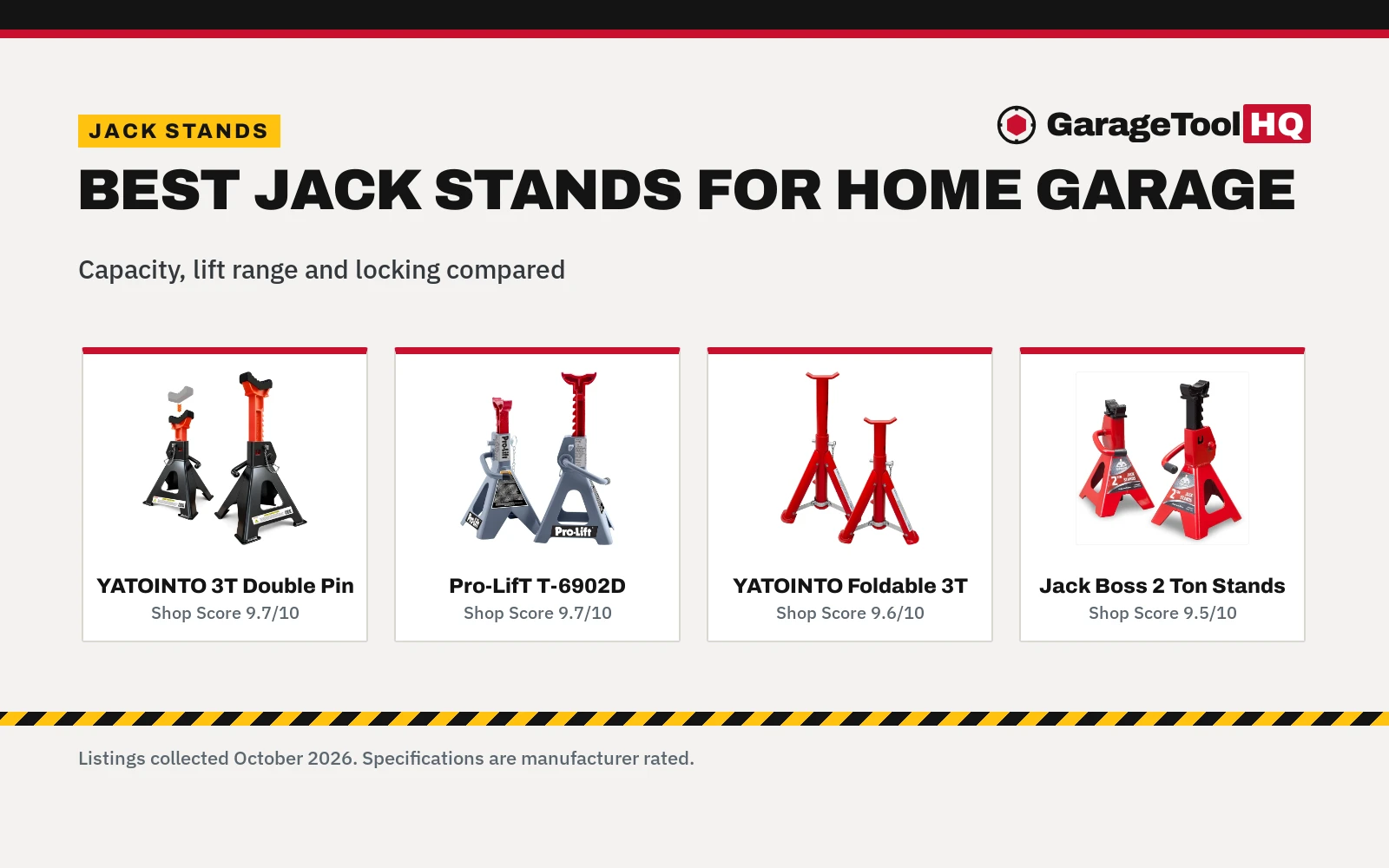
For complete safety protocols, consult our guide on how to use a floor jack safely, and review our picks for the best jack stands.
Frequently Asked Questions
What kind of oil should I put in my hydraulic floor jack?
Always use clean hydraulic jack oil with anti-wear and anti-foaming additives. Never use motor oil, transmission fluid, or brake fluid. Brake fluid dissolves rubber seals, while motor oil foams under pressure.
How often should I perform floor jack maintenance?
Inspect the ram and chassis for leaks before each garage job. Lubricate wheels and pivot pins during routine shop maintenance, and bleed air or top off oil whenever pumping feels spongy.
Why is my floor jack sinking slowly under load?
Slow sinking under load stems from fluid leaking past an open release valve, debris on an internal check valve seat, or worn cylinder seals. Trapped air causes a spongy stroke rather than slow sinking. First ensure the release valve is fully closed, then cycle the handle to flush the valve seat. If creeping continues, internal seals require replacement.
How do I bleed air out of a floor jack?
Lower the lift arm fully, open the release valve counterclockwise, and unseat the reservoir fill plug. Pump the handle rapidly through several full strokes to expel trapped air. As Pro-LifT outlines for its PL2920 model, pumping 6 to 8 full strokes circulates fluid through the internal bypass to release trapped air. Reseat the plug firmly and close the release valve.
Can I store my floor jack on its side?
No. Storing a jack on its side lets oil weep past the reservoir plug and draws air into the pressure chamber. Always store the jack upright on its wheels with the ram retracted and the release valve lightly closed.
How do I know if my floor jack hydraulic oil is low?
Low fluid causes the jack to pump normally initially but stop rising before reaching full lift height. On level ground with the ram fully retracted, remove the fill plug; fluid should sit just below the lower rim of the fill hole.
Related: our guide to how to bleed a floor jack, why your floor jack is not lifting, our review of the best jack stands, how to use a floor jack safely, and our jacks and stands hub.