Car Battery Charger vs Jumper Cables: Which One Should You Buy?
A battery charger refills a dead battery from a wall outlet over hours; jumper cables borrow another car's power for a quick start. Here is when to use each.

On this page
Top picks at a glance
As an Amazon Associate we earn from qualifying purchases.
- 1
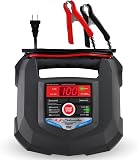 Schumacher Electric 15A Car Battery Charger & Maintainer9.8/10View on Amazon
- 2
 AstroAI S8 Ultra 12V 4000A Lithium Jump Starter Up to All9.8/10View on Amazon
- 3
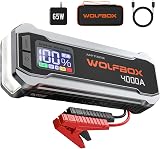 WOLFBOX 4000A Jump Starter9.7/10View on Amazon
- 4
 MOTOPOWER MP00205A 12V 800mA Automatic Battery ChargerView on Amazon
- 5
 Clore Automotive PL2320 20-Amp Fully-Automatic Smart ChargerView on Amazon
- 6
 Schumacher Electric 6A Car Battery Charger & MaintainerView on Amazon
- 7
 CRAFTSMAN 12A Car Battery Charger & MaintainerView on Amazon
- 8
 NEXPEAK NC202 10-Amp Battery ChargerView on Amazon
- 9
 DEWALT DXAEC100 30A Battery ChargerView on Amazon
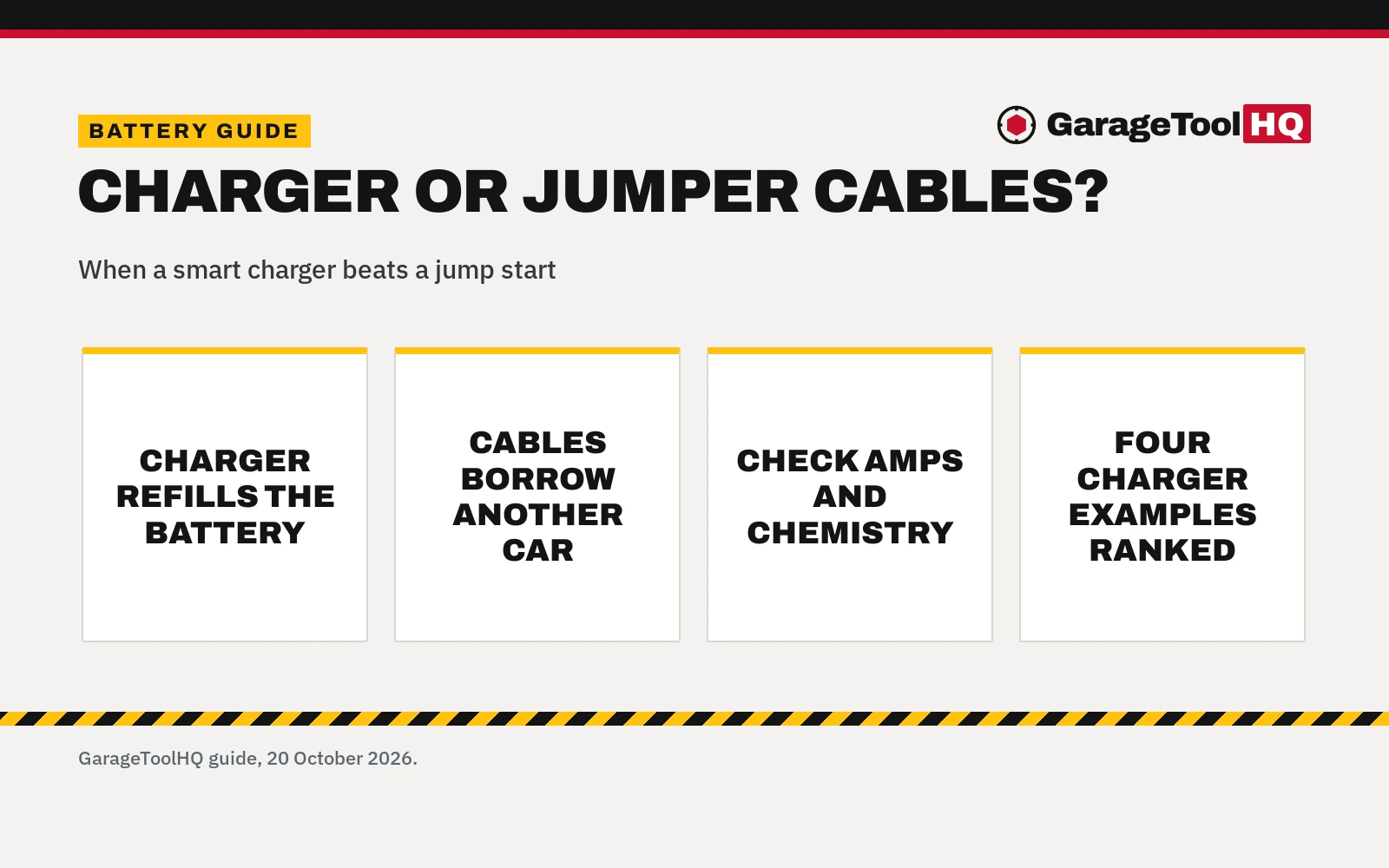
Car battery charger vs jumper cables: a charger refills your battery from a wall outlet over hours and can maintain it through storage; jumper cables borrow power from a second running car to start yours right now, but they do not recharge anything. Pick the charger if the battery is weak, sulfated or parked for the season. Pick jumper cables if you need to start and drive today and have a second car handy. Ideally, a garage keeps both.
More options to compare
 MOTOPOWER MP00205A 12V 800mA Automatic Battery ChargerCheck price on Amazon
 Clore Automotive PL2320 20-Amp Fully-Automatic Smart ChargerCheck price on Amazon
 Schumacher Electric 6A Car Battery Charger & MaintainerCheck price on Amazon
 CRAFTSMAN 12A Car Battery Charger & MaintainerCheck price on Amazon
 NEXPEAK NC202 10-Amp Battery ChargerCheck price on Amazon
 DEWALT DXAEC100 30A Battery ChargerCheck price on Amazon
GarageToolHQ earns a commission when you buy through links on our product pages, at no extra cost to you. Read our affiliate disclosure.
Car battery charger vs jumper cables: the short answer
The charger is the repair tool: it pushes current into the battery in stages, reverses sulfation with a pulse repair mode and then holds a float charge. The cables are the rescue tool: they connect your dead battery to a live one so the starter can turn. A jump gets you moving; a charge brings the battery back. If your car sits for weeks, the charger is the only one of the two that helps.
How a battery charger works
Connect the clamps, plug into a 110 to 120V wall socket and the charger takes over: it detects the battery, picks a charging mode and steps through the charge. The YDBAO 10A states 5 modes (CAR, AGM/GEL/LiFePO4, WET, MOTO, PULSE REPAIR) with an LCD showing voltage, current, battery level and ambient temperature. The NEXPEAK NC215 states a 9-stage process with a large color screen and a 6.7 ft cord. The Schumacher SC1361 adds a 50A engine start and 10A boost for dead batteries, plus a 2A to 6A smart trickle charge for storage. The Clore PL2320 states 2/10/20 amp charge rates for 6V and 12V batteries and a power supply mode that holds system voltage; note its spec table says 4 amps for charge rates, so take the bullets’ 2/10/20.
How jumper cables work
Jumper cables need a second running car: clamp to both batteries in the right order, start the dead car, then remove the clamps. They deliver starting current, not a charge, so if the battery is deeply drained it may die again at the next stop. Cables are small, cheap and live in the trunk; the charger stays in the garage near an outlet. None of the four listings here are cables, so cable specs are not stated.
The gear: four charger examples, ranked
The Schumacher SC1361 leads: 50A engine start, 10A boost, 6A charge and 2A maintain for 12V standard, AGM and LiFePO4 batteries, with reverse hook-up protection, auto restart and a stated 10 hour battery charge time. Its spec states UL 1236, FCC and a 1 Year warranty. The NEXPEAK NC215 follows: 15A at 12V and 8A at 24V, 9-stage smart charging, a large color screen, pulse repair and multi-protections, with a stated 2 years warranty. The YDBAO 10A is the compact pick: 10A for 12V lead-acid and LiFePO4, 5 modes, LCD display, 8 layers of protection and temperature compensation, with a stated 1-Year warranty; do not let it operate unattended for more than 12 hours per its listing. The Clore PL2320 is the 6V-capable pick: 2/10/20 amp rates for 6V and 12V batteries with a power supply mode, UL stated; its warranty text reads “I Year Warranty”, which appears to be a listing typo for 1 Year.
What to check before you buy
Match the voltage: two of the four are 12V only, while the Clore covers 6V and 12V and the NEXPEAK covers 12V and 24V. Match the chemistry: AGM, GEL, flooded and LiFePO4 each get their own mode on the YDBAO and the Schumacher, and the NEXPEAK handles lead-acid and LiFePO4. Size the amps: 2 to 6A maintains, 10 to 15A charges overnight, and 50A starts. Check the warranty term as stated: the Schumacher 1 Year, the NEXPEAK 2 years, the YDBAO 1-Year, and the Clore’s odd “I Year” text.
Charger safety basics
Three of the four state reverse polarity protection of some kind, the Clore states none, and the YDBAO states 8 layers including short circuit, overheating and overcurrent. Charge in ventilated space away from flames, keep the clamps clean and connected correctly, and follow the unattended limits in the manual: the YDBAO states a 12 hour unattended limit. A CO alarm and a fire extinguisher belong in any garage where chargers run.
Displays and monitoring
The listings differ in what they show while charging. The YDBAO states an LCD screen showing charging voltage, current, battery level, ambient temperature and seasonal summer and winter modes, with 5 modes selectable by a MODE button. The NEXPEAK states an extra large color LED screen showing charge voltage and current, inside temperature in Fahrenheit and Celsius, charge percentage and summer and winter modes, readable in sunlight. The Clore states an LED display and the Schumacher LED indicators. If you want to watch the charge progress in detail, the YDBAO and NEXPEAK screens state the most information; the Clore and Schumacher keep it to indicators.
Cables, placement and storage
Charger placement depends on cord length and the outlet. The NEXPEAK states a lengthened 6.7 ft charging cord from the clips to the AC plug for convenient use. The YDBAO states battery clamps and a 110 to 240V AC power cord with plug and play operation: connect the clamps, plug in, and charging starts automatically. The Schumacher includes its charger, manual and low-profile clamps in the box, and the Clore states battery clamps, ring terminal and 12V adapter outputs. For seasonal storage, the Schumacher and NEXPEAK state trickle and float modes that maintain the battery for months, and the Clore is also a battery maintainer.
Frequently Asked Questions
What battery charger do I need for my car?
A 12V charger that matches your battery chemistry. The YDBAO and Schumacher state modes for AGM, GEL and LiFePO4; the NEXPEAK covers lead-acid and LiFePO4 at 12V and 24V.
How does a car battery recharge?
While driving, the alternator recharges it. In the garage, a charger does it from the wall: the Schumacher states a 10 hour charge time, and the NEXPEAK and YDBAO state multi-stage processes ending in a float or trickle maintain mode.
Can a charger replace jumper cables?
Not for a quick roadside start: the charger needs a wall outlet and hours. Cables need a second car but work anywhere. They solve different problems, so many garages keep both.
What type of car battery charger do I need?
Match voltage and chemistry first, then pick amps for your use: maintainer amps for storage, 10 to 15A for recharging, engine-start amps for dead batteries. The Clore is the only one here that states 6V support.
How long does charging take?
The Schumacher states a 10 hour battery charge time. Multi-stage chargers slow down near full and switch to maintain mode, so overnight is the normal plan.
Related: jump starter vs jumper cables, battery charger vs battery maintainer, lithium vs lead acid battery charger and AGM vs flooded battery charger. Browse diagnostics and electrical for more.