DA Sander vs Orbital Sander: Which One Should You Buy?
How dual action sanders differ from standard orbital sanders: motion patterns, swirl-free finishing, air and electric power, and which tool fits your garage.

On this page
Top picks at a glance
As an Amazon Associate we earn from qualifying purchases.
- 1
 Professional Air Random Orbital Palm Sander9.6/10View on Amazon
- 2
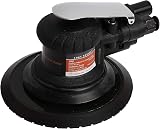 Ingersoll Rand 300G 6" Random Orbital Air Sander Features max9.6/10View on Amazon
- 3
 Ingersoll Rand 328B 8" Dual-Action Orbital Air Sander9.6/10View on Amazon
- 4
 Professional Air Random Orbital SanderView on Amazon
- 5
 Low noise 6 Inch DA Sander for Auto BodyView on Amazon
- 6
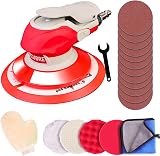 5/6 Inch Pneumatic Orbital Air Sander High-Speed DA SanderView on Amazon
- 7
 Orbital Sander Corded Hand Sander: DEKOPRO 5" Random OrbitalView on Amazon
- 8
 Professional Air Random Orbital Palm SanderView on Amazon
- 9
 Autolock 6 Inches Air Random Orbital SanderView on Amazon
DA sander vs orbital sander: a DA (dual action) sander combines pad rotation with an eccentric orbital motion to remove material quickly without leaving swirl marks, while a standard orbital sander vibrates in fixed circular orbits for light surface smoothing on flat wood. Dual action sanders dominate automotive repair, body filler shaping, and paint feather-edging because the compound motion produces a non-repeating scratch pattern that primer covers cleanly. Standard orbital sanders suit flat woodwork and sheet sanding where uniform light smoothing is needed without aggressive cutting. Choosing between them depends on whether your project requires rapid swirl-free shaping on metal and body panels or light finish smoothing on flat lumber.
More options to compare
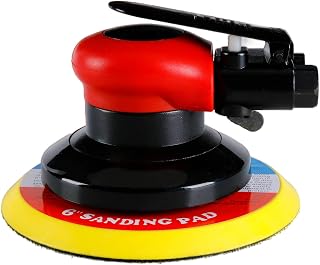 Professional Air Random Orbital SanderCheck price on Amazon
 Low noise 6 Inch DA Sander for Auto BodyCheck price on Amazon
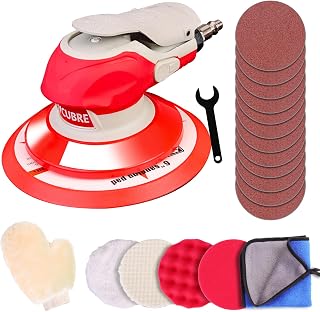 5/6 Inch Pneumatic Orbital Air Sander High-Speed DA SanderCheck price on Amazon
 Orbital Sander Corded Hand Sander: DEKOPRO 5" Random OrbitalCheck price on Amazon
 Professional Air Random Orbital Palm SanderCheck price on Amazon
 Autolock 6 Inches Air Random Orbital SanderCheck price on Amazon
GarageToolHQ earns a commission when you buy through links on our product pages, at no extra cost to you. Read our affiliate disclosure.
Below: how dual action motion compares to standard orbit patterns, how air and electric sanders compare in a home garage, and how to choose the right sander for your projects.
DA sander vs orbital sander: how the sanding action differs
The core mechanical difference lies in how each sander moves the abrasive across the work surface. A standard sander moving in a simple path can leave visible gouges if held in one spot. Different drive assemblies produce distinct abrasive patterns:
- Dual action (DA) mechanism. A dual action sander drives an eccentric counterweight on the main spindle while the backing pad rotates freely on an offset bearing. This creates an eccentric orbit combined with circular rotation. Because the pad spins and orbits simultaneously, individual abrasive grains travel in a constantly shifting epicyclic path. The scratch pattern never repeats over the same track, which prevents deep circular swirl marks on sheet metal and automotive paint.
- Standard orbital mechanism. A standard orbital sander moves its pad in small, uniform circular oscillations without spinning the pad. The drive spindle connects directly to an eccentric cam, vibrating the entire pad at high frequency. While this motion smooths wood fibers evenly along the grain, moving the sander across the grain or against metal can leave small circular swirls known as pigtails.
- Material removal rate. The spinning motion of a DA sander provides a more aggressive cut than a vibrating orbital pad. It levels body filler, feathers paint edges, and removes surface rust rapidly. Standard orbital sanders remove material slowly, making them better suited for final surface preparation where aggressive cutting could ruin a flat profile.
- Orbit diameter influence. The diameter of the orbital throw dictates how coarse or fine the sanded finish will be. For example, Ingersoll Rand lists its 300G pneumatic orbital sander with an orbit diameter of 3/16 inch, balancing smooth surface blending with steady material removal.
Sander types compared: DA, random orbital, and standard orbital
| Sander type | Pad motion | Power source | Primary garage use |
|---|---|---|---|
| Pneumatic DA sander | Dual action orbit with pad rotation | Compressed air | Auto body repair, feather-edging paint, leveling body filler |
| Electric random orbital sander | Dual action orbit with pad rotation | Corded electric or cordless battery | General woodworking, furniture smoothing, shop prep |
| Standard orbital sander | Fixed orbital vibration without pad rotation | Corded electric | Wood surface smoothing, sanding into inside square corners |
Pad shape also divides these tools. Dual action and random orbital models use round sanding pads, commonly 5-inch or 6-inch discs. The round profile glides smoothly over vehicle body contours and flat panels alike without catching corners. Standard orbital sanders often use square or rectangular pads clamped with sheet abrasive, allowing the operator to reach directly into inside square corners on furniture and shelving where a round disc cannot touch.
How to choose and operate a sander: the workshop checklist
- Identify your primary work material. Choose a dual action sander for automotive sheet metal, body filler shaping, primer feathering, and rust cleanup. Choose a standard orbital sander when your work consists mainly of bare lumber, flat panels, and finish coats where aggressive material removal is undesirable.
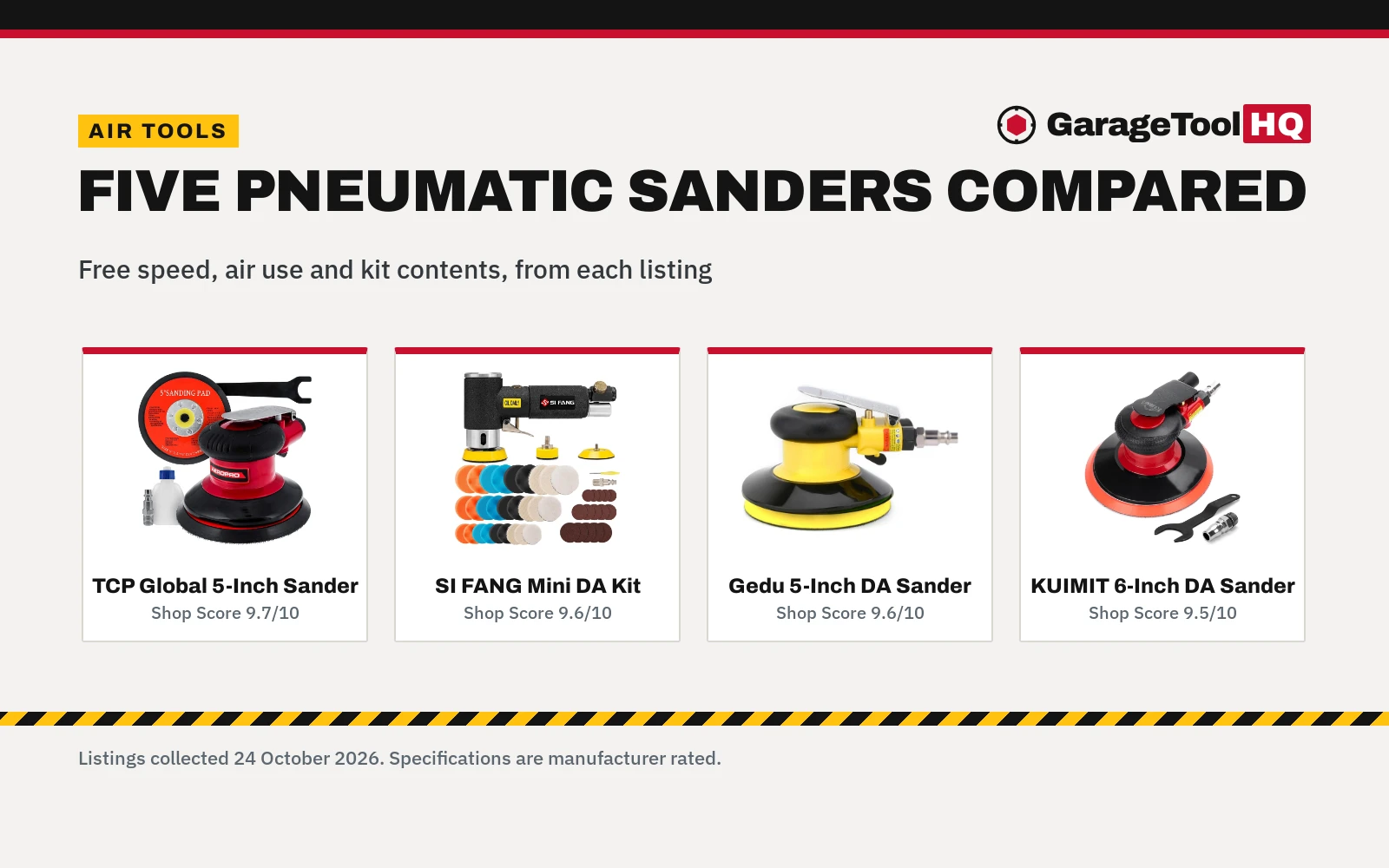
- Verify your air compressor capacity. Pneumatic DA sanders run continuously and demand substantial air volume. For example, Gedu lists its 5-inch pneumatic palm sander with an average air consumption of 10.5 CFM at 90 PSI air pressure. If your compressor cannot maintain the continuous airflow required by your chosen air tool, choose an electric model instead.
- Select the right disc diameter. Large automotive panels and broad surfaces benefit from a 6-inch pad, as found on the Ingersoll Rand 300G and PROSHI pneumatic sanders. General garage projects frequently use a 5-inch pad, such as the hook-and-loop pads on the corded Skil SR211601 and cordless DEWALT DCW210B. For localized spot repairs and tight contours, compact options exist, such as the 1, 2, and 3-inch pads included with the ZFE mini pneumatic sander.
- Match operating speed to the abrasive stage. High operating speeds strip material rapidly, while lower speeds prevent heat buildup that softens paint and primer. Skil lists its corded sander with a maximum rotational speed of 13,000 orbits per minute, while DEWALT lists variable speed from 8,000 to 12,000 OPM on its corded DWE6423 and cordless DCW210B sanders.
- Connect dust extraction. Hooking the sander to dust extraction keeps abrasive discs from clogging and reduces airborne dust. DEWALT designs its sander dust ports to fit 1-1/4 inch hoses directly or through adapters, while Skil includes a cyclonic dust box.
- Keep the pad flat against the surface. Never tilt a dual action sander on its edge to remove a stubborn imperfection. Edging digs deep grooves into body filler and wood that require extensive labor to smooth out. Maintain light, even pressure and let the abrasive do the work.
- Advance through abrasive grits in sequence. Avoid jumping from coarse shaping grits directly to ultra-fine paper. POWERTEC supplies 5-inch 8-hole sanding disc packs with 80, 100, 120, 150, and 220 grits, which allow progressive scratch refinement without leaving visible sanding marks.
- Wear appropriate personal protective equipment. Sanding old paint, body filler, and wood generates fine particulate matter. Always wear a snug-fitting particle respirator, safety glasses, and hearing protection when operating pneumatic or electric sanding machinery.
A small portable compressor cannot keep up with a continuous pneumatic DA sander. Operating an air sander when system pressure drops below its rated operating pressure causes the motor to stall and leads to uneven surface scouring. Always check your compressor CFM rating against the tool listing before connecting an air sander.
Wear eye protection with every air tool, use impact-rated sockets on impact wrenches, disconnect the air line before changing accessories, and finish lug nuts with a torque wrench to the vehicle's spec. See OSHA eye and face protection. Read our Safety Disclaimer.
Pneumatic DA sanders vs electric orbital sanders
If you are deciding between air-powered and electric tools for your garage, evaluate these mechanical differences:
- Power source and runtime: Pneumatic DA sanders run cool under heavy loads all day without electric motor overheating. However, they depend on an air supply capable of sustained delivery. Gedu lists its pneumatic sander with an average air consumption of 10.5 CFM at 90 PSI. Electric sanders plug into ordinary household outlets, with Skil listing a 2.8 amp motor on its corded sander and DEWALT listing a 3-amp motor on its corded model.
- Tool weight and balance: Air motors contain fewer heavy internal parts than electric motors. Ingersoll Rand lists its 300G air sander at 1.9 pounds with a 0.20 hp motor, which reduces arm strain during overhead and vertical panel work. Corded electric sanders often weigh more, with Skil listing its corded sander at 3.4 pounds and DEWALT listing its corded sander at 3.4 pounds. Cordless convenience comes with battery weight, though DEWALT lists its bare 20 volts DCW210B tool at 2.5 pounds before attaching a pack.
- Speed regulation: Air sanders regulate speed through an internal air valve. For example, KUIMIT lists a built-in regulator that allows RPM adjustment from 2,500 to 12,000 RPM on its 5-inch air sander. Electric sanders use electronic dials to vary motor speed, such as DEWALT offering 8,000 to 12,000 OPM.
- Dust collection methods: Electric sanders often feature onboard dust collection bags or canisters, like the cyclonic dust box on the Skil sander. Pneumatic sanders exhaust air from the rear or through central vacuum ports, requiring a dedicated shop vacuum or central extraction system to keep panels clear.
Check whether your existing compressor can supply pneumatic tools with our guide on what size air compressor do I need for air tools or learn general sizing in our guide to how to choose an air compressor. If clean sanding matters in your workspace, compare options in our guide to a DA sander with vacuum.
Can you use a DA sander as a polisher?
Yes, a dual action sander can function as a polisher for automotive paint and clear coats. The compound eccentric rotation that prevents sanding swirls also prevents hot friction spots and buffer trails when polishing. Several air sander packages include buffing accessories directly in the box. For example, ZFE includes 15 buffing pads with its pneumatic sander, and KUIMIT provides sponge contour pads and microfiber cloths with its 5-inch kit. To polish with a DA tool, swap the sanding disc for a hook-and-loop foam pad, apply compound, and run at lower speeds while keeping the pad flat. If vehicle paint correction is your primary focus, dedicated tools like those in our guide to the best dual action polisher for beginners offer specialized motor gearing and body grips configured specifically for buffing.
Frequently Asked Questions
What does DA sander mean?
DA stands for dual action. It refers to a sander whose pad orbits eccentrically while simultaneously rotating on its bearing. This compound motion produces a non-repeating, random scratch pattern that prevents circular swirl marks on wood, sheet metal, and automotive primer.
What is the difference between a DA sander and an orbital sander?
A DA sander combines pad rotation with an eccentric orbital throw, creating a non-repeating scratch pattern that cuts rapidly and prevents circular swirl marks. A standard orbital sander vibrates in small circular orbits without spinning the pad, producing a gentle cutting action suited for light finish sanding on flat woodwork.
What size compressor do I need for a pneumatic DA sander?
Check the airflow rating on the tool’s listing. Pneumatic sanders consume continuous air volume rather than intermittent bursts. For example, Gedu lists its 5-inch pneumatic palm sander with an average air consumption of 10.5 CFM at 90 PSI air pressure. To operate an air sander without pressure loss or pad stall, your air compressor must supply continuous CFM that meets or exceeds the rating specified by the sander’s manufacturer.
Can you use a DA sander on wood?
Yes. Dual action sanders work effectively on wood furniture, tabletops, and cabinetry. The random scratch pattern prevents cross-grain swirl marks. Using appropriate abrasive grits, such as the 80 through 220 grits supplied by POWERTEC in 5-inch disc packs, allows you to shape rough lumber and prepare surfaces for stain or clear finishes.
What pad size is common on garage sanders?
The most common pad sizes are 5-inch and 6-inch discs. DEWALT and Skil configure their electric sanders with 5-inch hook-and-loop pads, while pneumatic models like the Ingersoll Rand 300G and PROSHI use 6-inch pads for broader panel coverage. Detail air sanders, such as the ZFE pneumatic tool, include 1, 2, and 3-inch pads for confined areas.
Why does an orbital sander leave swirl marks?
Swirl marks occur when abrasive grains follow a repetitive circular path across the work surface, or when trapped dust particles scour the finish. Because a standard orbital sander moves in uniform circular oscillations without rotating the pad, each grit particle repeatedly traces the same circular track, leaving visible pigtail swirls on metal or across wood grain. Dual action sanders prevent these marks by combining orbit with rotation, continuously altering the scratch path.
Related: our guide on what size air compressor do I need for air tools, our picks for a DA sander with vacuum, the air tools category hub, and our guide to how to choose an air compressor. Also see our overview of the best dual action polisher for beginners.