Why Is My Floor Jack Not Lifting? What to Check
Why a hydraulic floor jack stops lifting or sinks under load, how to bleed trapped air and refill fluid, and a step-by-step troubleshooting checklist.

On this page
Top picks at a glance
As an Amazon Associate we earn from qualifying purchases.
- 1
 AV Steel 3 Ton Floor Jack9.7/10View on Amazon
- 2
 AV Steel Low Profile Floor Jack 2.5 Ton9.5/10View on Amazon
- 3
 AV Steel Low Profile Floor Jack 3 Ton9.7/10View on Amazon
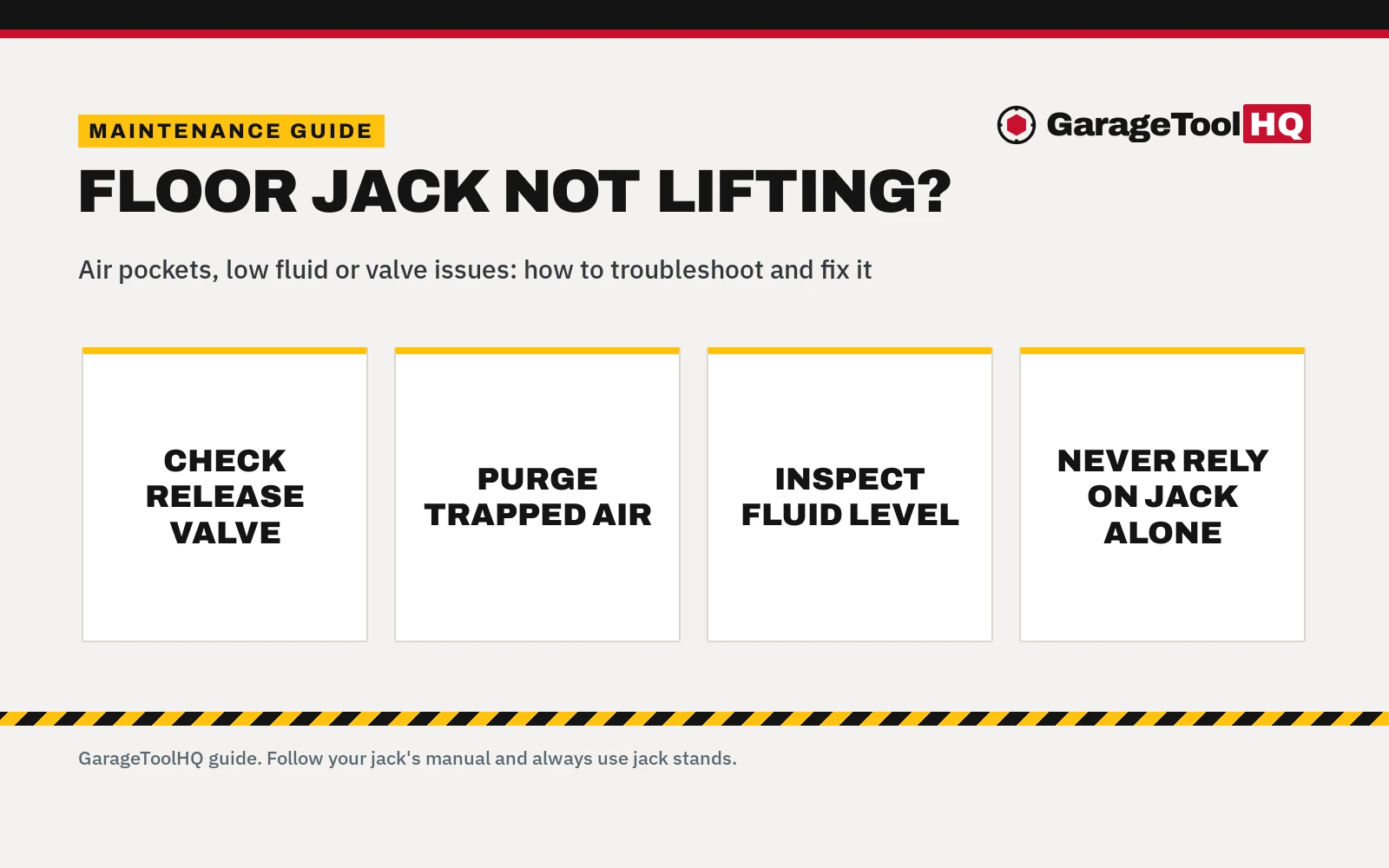
Why is my floor jack not lifting? A floor jack typically stops lifting because air is trapped in the hydraulic circuit, the release valve is not fully closed, the hydraulic fluid level is low, or internal seals have worn out. In most cases, trapped air or an improperly seated release valve prevents hydraulic pressure from building under the lift arm. Bleeding the hydraulic system and verifying the fluid level often restores normal lifting performance if internal seals are intact.
GarageToolHQ earns a commission when you buy through links on our product pages, at no extra cost to you. Read our affiliate disclosure.
Below: what causes a hydraulic jack to lose lifting power, how to diagnose common hydraulic failures, and a step-by-step checklist to bleed and restore your jack.
Why is my floor jack not lifting? Common causes
A hydraulic floor jack relies on Pascal’s principle: mechanical force applied to the pump handle pushes hydraulic fluid through a check valve into a high-pressure cylinder, forcing the ram and lift arm upward. When that hydraulic loop is compromised, the jack cannot generate or hold lifting force. Several distinct issues cause this failure:
- Trapped air in the hydraulic circuit. Air can enter fluid passages during transport, storage on its side, or when fluid runs low. Because air compresses under load while hydraulic oil does not, trapped air cushions the pump stroke and prevents the ram from extending.
- An open or sticking release valve. If the release valve screw is loose, debris blocks the valve seat, or the check ball fails to seat properly, pressurized fluid bypasses the ram and returns directly into the reservoir.
- Low hydraulic fluid level. Hydraulic jacks require sufficient fluid to fill the pressure chamber during full extension. If fluid has leaked out past seals or fill plugs, the pump draws air instead of oil, causing the lift arm to stall midway or fail to rise at all.
- Contaminated or degraded hydraulic oil. Moisture, dirt, or metal shavings in old hydraulic fluid can scour cylinder walls, foul check valves, and degrade rubber seals.
- Worn or blown internal seals. Over time, the rubber O-rings and cup seals on the pump piston or main ram can harden, crack, or tear, allowing high-pressure fluid to leak internally back into the low-pressure reservoir under vehicle weight.
Floor jack lifting problems and what they mean
| Symptom | Likely Cause | Recommended Action |
|---|---|---|
| Handle pumps freely with no resistance, arm stays down | Open release valve or trapped air in hydraulic circuit | Close release valve clockwise to lift; if problem persists, open valve counterclockwise to purge air |
| Arm lifts partway and stops or feels spongy | Low hydraulic fluid level or air pocket in main cylinder | Purge air; inspect fluid level at the fill plug with arm lowered and top off with hydraulic jack oil |
| Jack raises vehicle but slowly sinks under load | Leaking release valve seat, debris on check ball, or worn ram seal | Clean valve seat by rapid release cycling; inspect seals; never crawl under jack alone |
| Fluid leaking around pump piston or main ram | Worn pump piston O-ring, damaged wiper seal, or degraded cylinder packing | Replace damaged hydraulic seals or rebuild hydraulic power unit |
| Handle kicks back or rises on its own after pumping | Discharge check ball not seating or trapped debris in valve body | Flush old oil, cycle release valve under no load, or clean check valve seat |
Identifying the exact symptom helps you determine whether a quick purge and fluid top-off will restore the jack, or whether internal wear calls for a seal rebuild or replacement.
How to bleed and fix a floor jack that will not lift: the checklist
- Position the jack on a flat, level surface. Place the floor jack on a clean, solid concrete floor with the lift arm fully lowered and the handle pointing upright.
- Open the release valve. Turn the release valve counterclockwise using the pump handle or release knob to open the hydraulic bypass circuit.
- Pump the handle to circulate fluid. With the release valve remaining open, pump the handle vigorously through full, rapid strokes. This circulates oil through the bypass circuit and pushes trapped air out of the high-pressure pumping chamber into the reservoir.
- Vent trapped air from the reservoir. Locate the rubber oil fill plug on the main cylinder reservoir casing. Carefully lift the edge of the rubber plug to allow trapped air to vent, then press it back into place. Avoid puncturing or damaging the rubber plug during venting.
- Check and top off hydraulic fluid. With the lift arm fully lowered, remove the oil fill plug to inspect the fluid level. The hydraulic fluid should reach just below the lower rim of the fill port. If the level is low, add clean, approved hydraulic jack oil. Avoid using motor oil, brake fluid, or transmission fluid, which can ruin rubber seals.
- Reinstall the oil fill plug firmly. Press the rubber fill plug back into the reservoir hole until fully seated, wiping away any spilled oil from the cylinder body.
- Close the release valve. Turn the handle or valve screw clockwise until firmly closed. Avoid over-tightening with excessive force, which can damage the tapered valve seat.
- Check the lift action without load. Pump the handle to raise the lift arm through its entire travel range to maximum height. Verify that the arm rises smoothly with consistent resistance on each handle stroke.
- Release the arm and repeat if needed. Open the release valve counterclockwise to lower the lift arm completely. If the lifting motion still feels spongy or fails to reach full extension, repeat the purge procedure to remove stubborn residual air pockets.
A hydraulic floor jack is a lifting device, not a load-holding device. Hydraulic seals can fail abruptly, or a release valve can slip, dropping the vehicle in seconds. Never get under a vehicle on a jack alone. Always lower the vehicle onto rated jack stands set on solid, level ground before inspecting or working underneath, and verify placement against your vehicle owner’s manual lift points.
A jack is for lifting, not holding. Never work under a vehicle supported only by a jack: set it on rated jack stands, on solid, level ground, at the manufacturer's lift points, chock the wheels, and give the car a firm shake before you go under. Read our Safety Disclaimer.
Steel vs aluminum floor jacks
If your existing floor jack has damaged cylinder walls, a bent lift arm, or worn castings that bleeding cannot solve, compare these factors before choosing a replacement:
- Chassis material and weight: Heavy-gauge steel floor jacks offer exceptional rigidity and durability for stationary garage use, but their substantial weight makes them difficult to transport. Aluminum jacks weigh substantially less, making them easier to roll across concrete seams or carry in a vehicle trunk.
- Hydraulic pump design: Dual-piston rapid pump mechanisms raise the saddle to the vehicle chassis in fewer handle strokes than single-piston units, saving effort during repetitive shop tasks.
- Lifting range and profile: Low-profile floor jacks feature a lowered saddle height designed to slip beneath lowered sports cars and unibody sedans, while standard chassis jacks provide extended maximum lift height for trucks and SUVs.
- Serviceability: Quality floor jacks feature accessible oil fill ports, replaceable release valve assemblies, and available seal rebuild kits, whereas sealed budget jacks often require complete replacement when internal seals fail.
To choose the right size and weight rating for your vehicle weight, consult our guide on what size floor jack do I need. If you are comparing chassis materials for home shop duty, read our breakdown of steel vs aluminum floor jacks. For dependable home garage options that balance capacity and cost, explore our recommendations for the best floor jack under 200.
Saddle pads and pinch weld protection
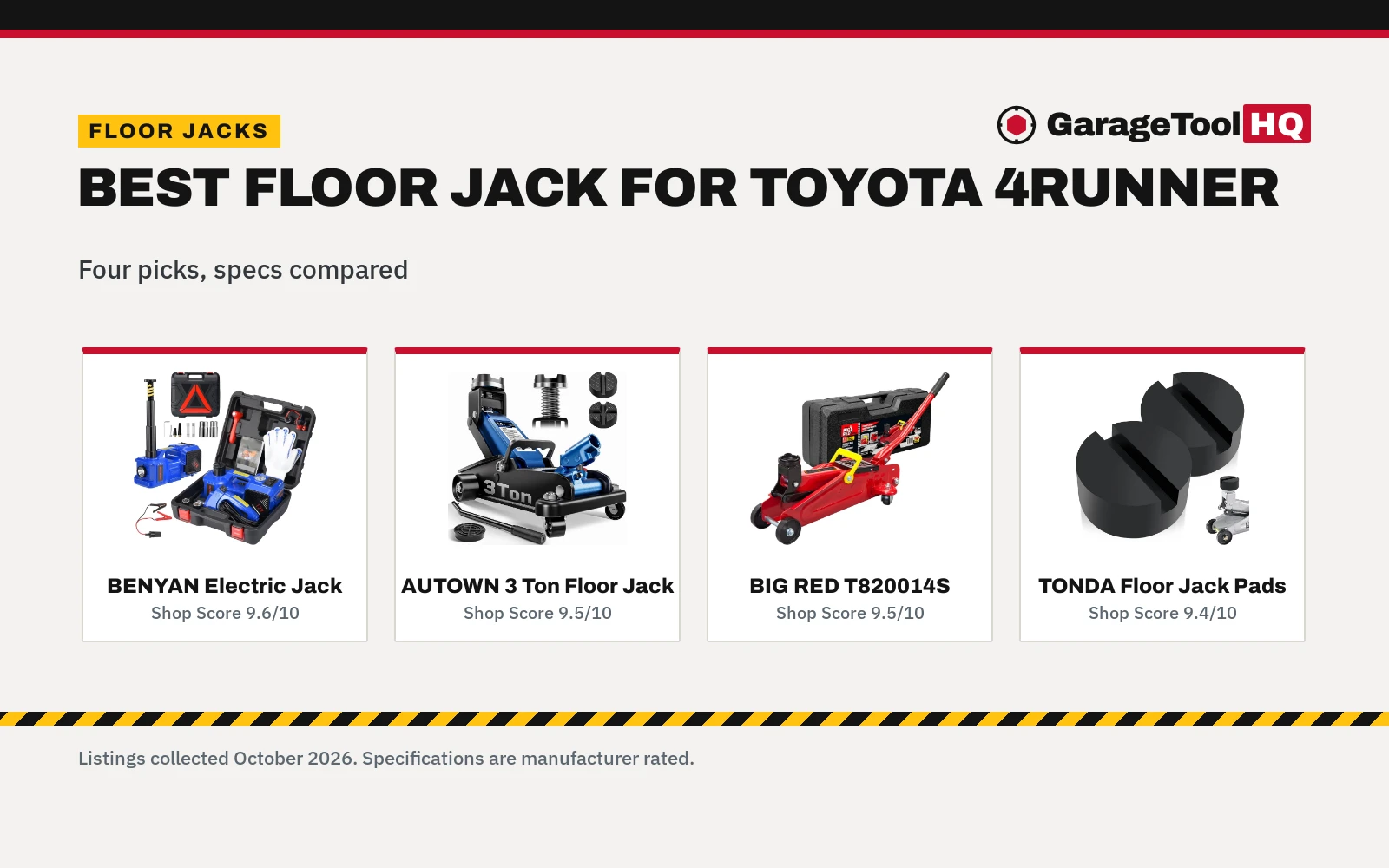
When lifting modern unibody vehicles, bare metal jack saddles can scratch underbody paint, crush rocker panels, or bend pinch welds. Using a slotted rubber jack pad adapter provides cushioned contact between the steel saddle and the vehicle lifting point. For example, TONDA lists a slotted rubber floor jack pad with a diameter of 4.92 inches, a thickness of 1.02 inches, and a load capacity of 2 to 3 tons designed to cushion unibody contact points. Regardless of the adapter used, ensure the pad sits centered in the jack lift cup before applying hydraulic pressure, follow proper lifting procedure in our guide on how to use a floor jack safely, and always pair lifting gear with rated jack stands on solid ground.
Frequently Asked Questions
Can low hydraulic oil cause a floor jack not to lift?
Yes. A hydraulic jack relies on a full oil reservoir to supply fluid to the high-pressure pumping chamber. If fluid leaks past seals or vents, the pump piston pulls air into the chamber instead of oil. This causes the lift arm to stall midway, feel spongy, or fail to raise the vehicle at all. To correct this, check the oil fill port on the reservoir cylinder and add clean hydraulic jack oil until the fluid reaches just below the fill hole.
How do I know if my floor jack has air trapped inside?
The most common indicator of trapped air is a lift arm that feels spongy or fails to rise when you pump the handle, despite the release valve being closed. You may also notice the arm rising only during part of the handle stroke, or dropping slightly between strokes. Purging the hydraulic circuit by pumping the handle with the release valve open and venting the reservoir expels trapped air.
What type of oil should I put in a floor jack?
Only use dedicated hydraulic jack oil formulated for automotive lifting equipment. Never use motor oil, brake fluid, automatic transmission fluid, or power steering fluid in a hydraulic jack. Automotive brake fluids and detergent motor oils break down internal nitrile rubber O-rings and cup seals, causing permanent seal failure and fluid bypass.
Why does my floor jack slowly lower by itself under load?
A floor jack that drifts downward under vehicle weight is losing hydraulic pressure. This typically happens because the release valve check ball is not seating tightly against its valve seat, dirt or debris is trapped in the check valve, or internal ram seals have worn out. Because hydraulic pressure can drop unexpectedly, never get under a vehicle on a jack alone, and always lower the vehicle onto rated jack stands set on solid, level ground.
How often should I bleed air from my floor jack?
You do not need to bleed a floor jack on a set calendar schedule, but you should bleed the hydraulic system whenever the jack has been stored on its side, transported in a vehicle, topped off with hydraulic fluid, or whenever the handle action feels spongy and fails to raise the lift arm smoothly under load.
Related: our guide to what is a low profile floor jack, our comparison of floor jack vs trolley jack designs, our roundup of the best floor jack for cars, and our jacks and stands hub.