Hammer Drill vs Impact Driver: Which One Should You Buy?
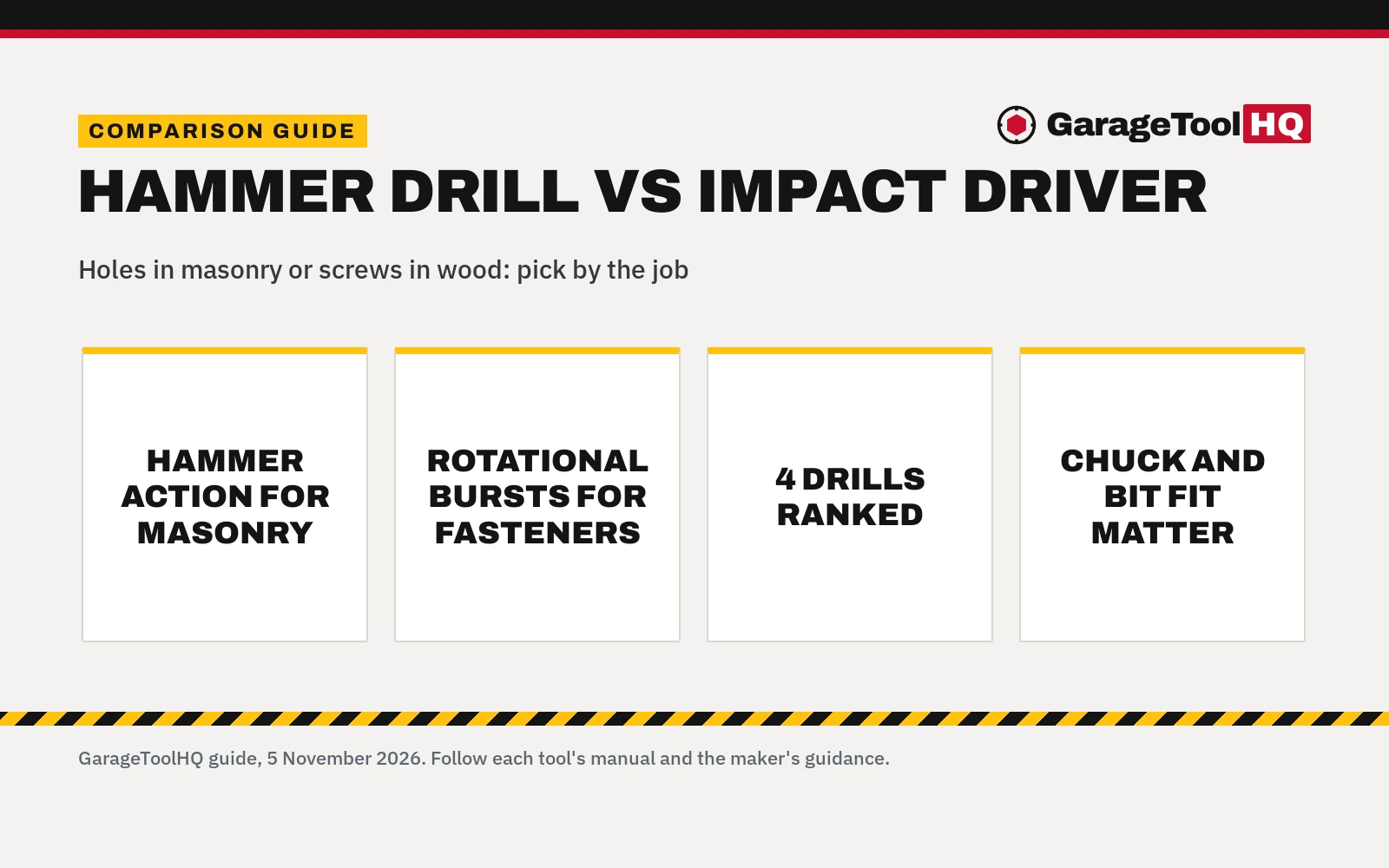
A hammer drill pounds holes in masonry and concrete while an impact driver drives screws and bolts, so the right pick depends on whether the job is holes or fasteners.

On this page
Top picks at a glance
As an Amazon Associate I earn from qualifying purchases.
- 1
 Milwaukee 2697-22 M18 18-Volt Lithium-Ion Cordless Hammer9.6/10View on Amazon
- 2
 ARCCAPTAIN Cordless Impact Wrench9.7/10View on Amazon
- 3
 Cordless Impact Wrench 885 Ft-lbs9.6/10View on Amazon
- 4
 Milwaukee ElectricView on Amazon
- 5
 Hammerhead 7.5-Amp 1/2 Inch Variable Speed Hammer Drill withView on Amazon
- 6
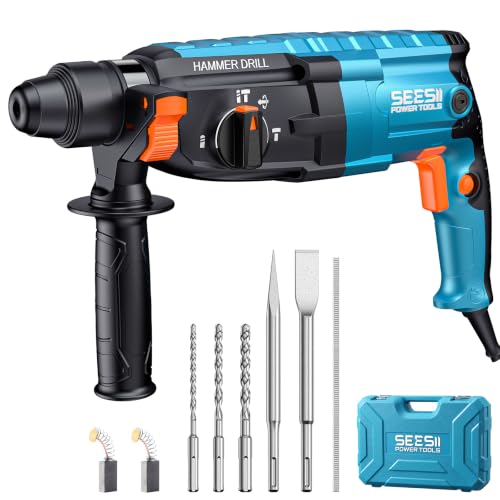 Seesii 9 Amp SDS-Plus Lightweight Rotary Hammer Drill forView on Amazon
- 7
 DEWALT SDS Rotary Hammer DrillView on Amazon
- 8
 DEKOPRO 6-Amp 1/2-Inch Hammer DrillView on Amazon
- 9
 GALAX PRO 4.5Amp 0-3000RPM Corded Hammer Drill with 12View on Amazon
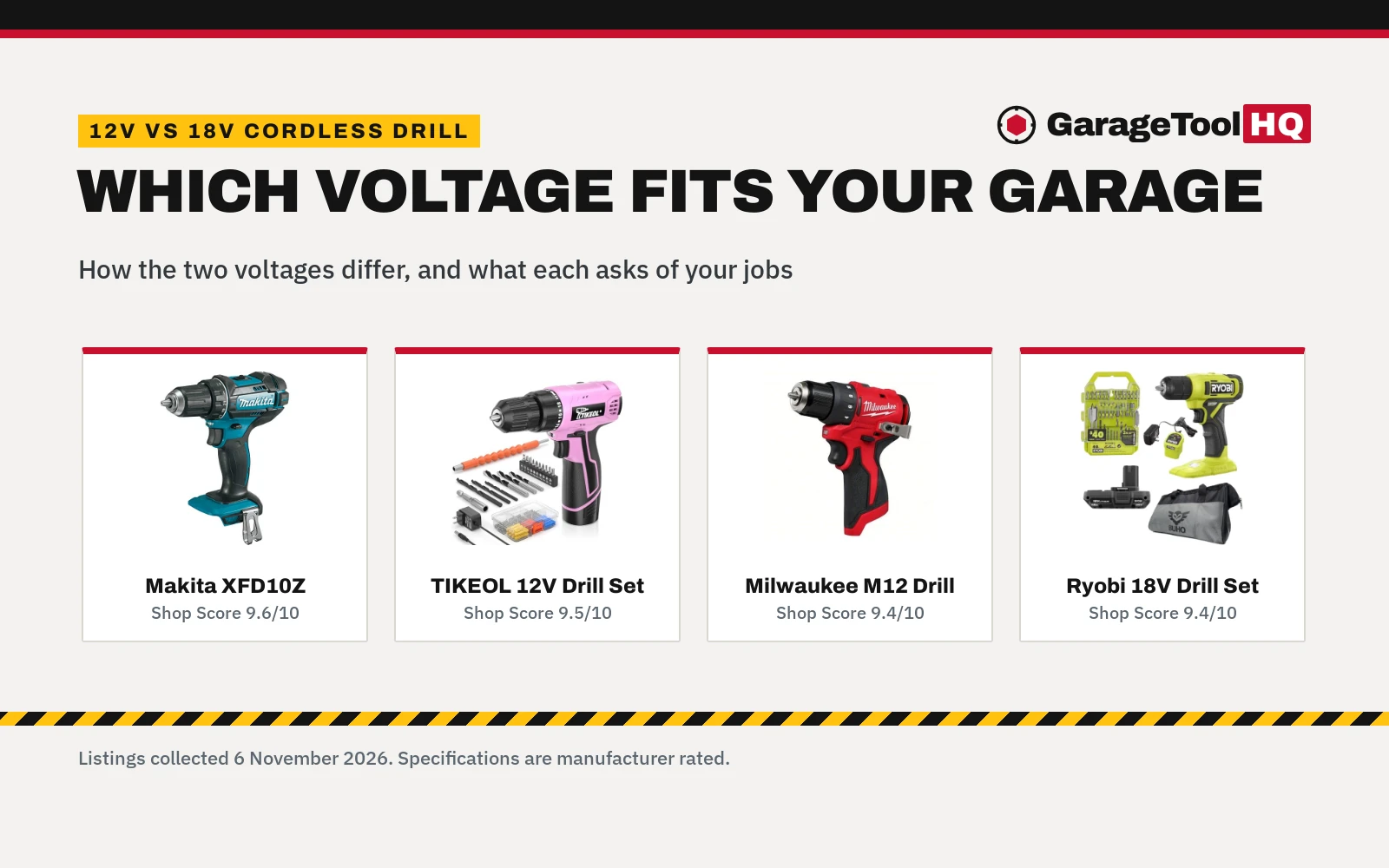
Hammer drill vs impact driver: a hammer drill is the tool for drilling holes in masonry and concrete, while an impact driver is the tool for driving screws and bolts. The difference is in the action. A hammer drill pounds forward as it spins, so the bit bites into hard material. An impact driver adds short rotational bursts as it turns, so the fastener keeps turning without camming out or stalling the motor. If the job is holes in brick, block or concrete, reach for the hammer drill. If the job is driving long screws or lag bolts into wood, reach for the impact driver.
Other tools worth a look
 Milwaukee ElectricCheck price on Amazon
 Hammerhead 7.5-Amp 1/2 Inch Variable Speed Hammer Drill withCheck price on Amazon
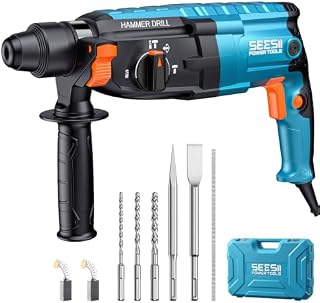 Seesii 9 Amp SDS-Plus Lightweight Rotary Hammer Drill forCheck price on Amazon
 DEWALT SDS Rotary Hammer DrillCheck price on Amazon
 DEKOPRO 6-Amp 1/2-Inch Hammer DrillCheck price on Amazon
 GALAX PRO 4.5Amp 0-3000RPM Corded Hammer Drill with 12Check price on Amazon
GarageToolHQ earns a commission when you buy through links on our product pages, at no extra cost to you. Read our affiliate disclosure.
Below: how the tools differ, the drills in this guide ranked, and when to reach for each one.
Hammer Drill vs Impact Driver: How the 2 Tools Differ
A hammer drill and an impact driver look alike at a glance, and both spin a bit, but they solve different problems. A hammer drill adds a forward pounding motion to the spin. That pounding is what lets a masonry bit chip its way through brick, block and concrete. An impact driver adds rotational bursts instead: the motor turns the fastener in short, hard pulses, which keeps long screws moving and keeps the bit seated in the screw head.
The bit hold is different too. The DEWALT and Milwaukee hammer drills in this guide use a chuck that grips round-shank bits, and their listings state a 1/2 in. chuck. An impact driver uses a quick-release holder made for hex-shank bits, so bits swap quickly and stay put under the pulsing action. That holder is part of why an impact driver is a driving tool first and a drilling tool second.
| Hammer drill | Impact driver | |
|---|---|---|
| Main job | Drilling holes in masonry, concrete and brick | Driving screws, lag bolts and nuts |
| Action | Spins and pounds forward | Spins with short rotational bursts |
| Bit hold | Chuck for round-shank bits; SDS rotary hammers take SDS bits | Quick-release holder for hex-shank bits |
| Reach for it when | The material is hard and the job is a hole | The fastener is long and the job is driving |
Neither tool replaces the other. A standard hammer drill with the hammer action off still drills wood and metal like a plain drill, and an impact driver can drill light holes with the right hex-shank bit, but each one is at its best doing the job its action was built for.
The 4 Drills in This Guide, Ranked
The listings below are the hammer drills in this guide, ranked with the strongest listing at the top. The ranking weighs stated torque and speed, build details, stated warranty and how complete the listing is.
DEWALT 20V MAX XR 1/2 in. Hammer Drill DCD1007B
At the top of the list is the DEWALT DCD1007B, a 20V MAX XR brushless cordless hammer drill with a 1/2 in. chuck. The listing states 2,100 in-lbs of max torque, which the maker calls 50% higher torque than a leading competitor, and a 3-speed all-metal transmission. It also states up to 275 holes per charge and a speed of application of only 2.6 seconds. The chuck is a 1/2 in. ratcheting nitro-carburized metal chuck with carbide inserts, and the drill carries the ANTI-ROTATION System that senses rotational motion and shuts the tool down if the motion is excessive. A pivoting 3-position LED lights dim work areas. The listing states a 3 Year Limited Warranty. It lists a weight of 4.96 pounds and dimensions of 15.5 inches by 4.0 inches by 8.5 inches. Battery not included, and the TOOL CONNECT chip is sold separately.
DEWALT 20V MAX XR 1/2 in. Hammer Drill DCD806B
Next is the DEWALT DCD806B, also a 20V MAX XR brushless cordless hammer drill with a 1/2 in. chuck, sold as a tool only. The maker calls it up to 109% more powerful and up to 25% more powerful vs. Milwaukee. It is a 2-speed drill with a no load speed of 0-650/0-2,000 rpm, and the maker states up to 175 holes per charge. The 1/2 in. metal ratcheting chuck holds bits firm, and the ANTI-ROTATION System shuts the tool down if rotational motion is excessive, with a red LED indicator that lights when the system engages. An adjustable 3-position LED gives 70 lumens with an auto-shutoff function. The listing states no warranty term. It lists a weight of 3.06 pounds and dimensions of 7.323 inches by 3.6 inches by 9.3 inches. The TOOL CONNECT chip is sold separately.
Deshuo 1 in. SDS-Plus Rotary Hammer Drill
Third is the Deshuo rotary hammer, the only corded tool in this guide. It is a 9 Amp SDS-Plus rotary hammer for concrete and masonry, with 0-1,100 RPM and 0-5,300 BPM and 2.21 ft.lbs. (3 Joules) of impact energy. It has 4 modes: Rotary Hammer, Rotary Only, Hammer Only and Chisel position Adjustment, plus a safety clutch that disengages torque if the bit binds and a vibration control system for comfort during long use. The SDS-Plus bit system takes SDS-Plus bits only, not regular drills or SDS Max bits. It comes with 3 drill bits, 2 chisels and a case. The listing states a 24 months warranty service. It lists a weight of 7.19 lbs and dimensions of 15.15 inches by 8.85 inches by 3.93 inches. The title rounds the weight to 7.2 lbs; the bullets and spec table give 7.19 lbs. The maker says it is ideal for DIY enthusiasts and not suitable for heavy-duty demolition work.
Milwaukee M12 Fuel 1/2 Hammer Drill-Driver 3404-20
Fourth is the Milwaukee M12 Fuel 1/2 hammer drill-driver, the lowest-weight tool in this guide at 2.6 lbs. The listing states a brushless motor, a 1/2 in. all-metal chuck and a mechanical clutch for consistency in driving a wide range of fasteners. It states no torque figure, no speed figure and no concrete warranty term; the spec table lists only a manufacturer warranty with no term given. That thin listing is why it sits at the bottom of this ranking: the tool may suit a light-duty kit, but the listing gives a buyer little to compare.
When to Reach for Each Tool
Pick by the job, not by the tool that happens to be charged. Holes in brick, block or concrete call for the hammer drill and a masonry bit. Driving long screws, lag bolts or deck screws calls for the impact driver, which keeps the fastener turning where a plain drill would stall and cam out. Light drilling in wood or metal suits either tool, with the hammer action off on the hammer drill, and a hammer drill covers that work when it is the only drill on the bench.
If the budget runs to one tool only, count the jobs ahead. A home full of masonry anchors, concrete screws and brick holes points to the hammer drill. A deck build, a fence run or a room full of cabinet screws points to the impact driver. Most home garages end up with both, because the jobs keep alternating between holes and fasteners.
For the torque side of the same question, see our guide to impact wrench vs impact driver.
Use rated jack stands on solid ground, wear eye protection with power and air tools, keep fuel-burning equipment out of a closed garage, and follow the manual for every tool. Read our Safety Disclaimer.
FAQ: garage tools
Can a hammer drill drive screws?
Yes, with the hammer action off and a bit that fits the chuck. A hammer drill drives screws like a plain drill, but for long screws an impact driver is the better pick because its rotational bursts keep the fastener turning without camming out.
Can an impact driver drill holes in concrete?
No. An impact driver has no hammering action, so it cannot chip its way through masonry or concrete. Use a hammer drill with a masonry bit for holes in brick, block or concrete.
Do I need both a hammer drill and an impact driver?
It depends on the jobs. If the work mixes holes in hard material with driving long fasteners, both earn their place. If the work is only one of those, the matching tool covers it, and the other can wait.
What size chuck do the hammer drills in this guide have?
The DEWALT DCD1007B, the DEWALT DCD806B and the Milwaukee M12 Fuel listings all state a 1/2 in. chuck. The Deshuo rotary hammer takes SDS-Plus bits instead of a standard chuck.
Are the DEWALT drills in this guide cordless?
Yes. Both DEWALT listings are 20V MAX XR brushless cordless drills. The DCD806B is sold as a tool only and the DCD1007B lists battery not included, so check the listing before ordering if a battery and charger are needed.
Which drill in this guide weighs the least?
The Milwaukee M12 Fuel at 2.6 lbs, then the DEWALT DCD806B at 3.06 pounds, then the DEWALT DCD1007B at 4.96 pounds, with the corded Deshuo rotary hammer heaviest at 7.19 lbs.
Related: the best cordless impact wrench for automotive work, cordless vs air impact wrench, the best cordless drill impact driver combo kit and our cordless tools hub.