Best Tire Bead Seater (2026): 5 Seaters Compared
Five tire bead seaters compared by tank capacity, maximum pressure, valve release mechanism, build material and stated manufacturer warranty terms.

On this page
Top picks at a glance
As an Amazon Associate we earn from qualifying purchases.
- 1
 Top Handheld SeaterVEVOR Tire Seater9.7/10View on Amazon
- 2
 Best 5-Gallon CapacityXtremepowerUS 5-Gallon9.6/10View on Amazon
- 3
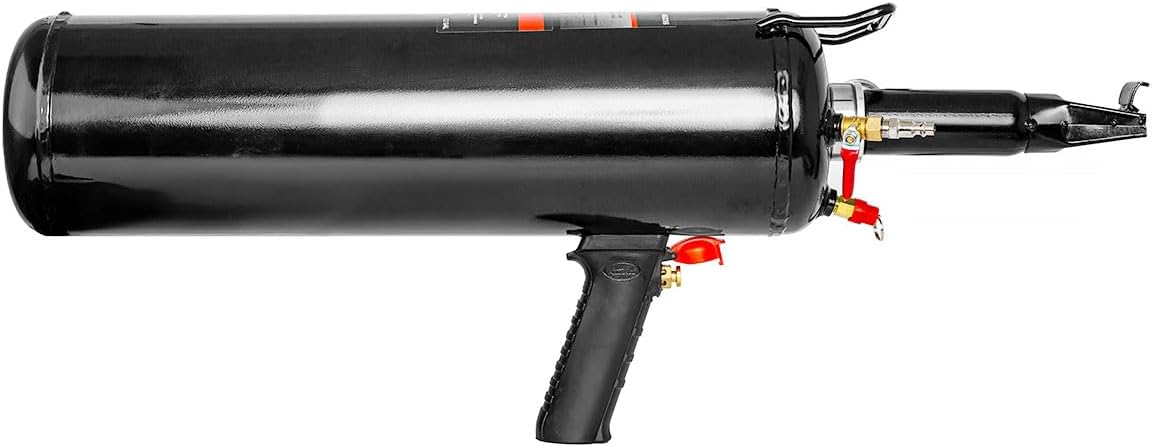 Best High-Capacity HandheldXtremepowerUS 12L9.6/10View on Amazon
- 4
 Best for Large RimsBLACKHORSE-RACING 5-Gal9.5/10View on Amazon
- 5
 3.2Gal/12L Tire Bead SeaterView on Amazon
- 6
 AME INTL 22040 Truck Tubeless Tire Bead Seater 22.5"-24.5"View on Amazon
When you are mounting a fresh trailer tire or seating an off-road truck tire in the home garage, nothing stalls the job faster than a stubborn tire bead that refuses to seal against the rim. Compressed air from a standard tire inflator escapes through the gap, leaving the tire completely flat. That is where the best tire bead seater makes all the difference: it releases a concentrated blast of stored compressed air into the tire cavity in less than 1 second, popping the bead firmly onto the wheel rim so standard inflation can finish the job. This guide compares five tire bead seaters by tank capacity, maximum pressure, valve release design, build materials and manufacturer warranty coverage.
GarageToolHQ earns a commission when you buy through links on this page, at no extra cost to you. Read our affiliate disclosure.
Quick picks
- Top Handheld Seater VEVOR Tire Seater: 3 mm Q235B steel tank with push-button release, liquid-damped gauge and automatic safety relief valve at 15.4 lb. Check price on Amazon
- Best 5-Gallon Capacity XtremepowerUS 5-Gallon: 5-gallon steel air reservoir rated to 145 psi with angled-lip barrel and 60-day manufacturer warranty. Check price on Amazon
- Best High-Capacity Handheld XtremepowerUS 12L: 12 L (3.2 gal) steel tank with push-button valve, non-slip grip and 90-day manufacturer warranty. Check price on Amazon
- Best for Large Rims BLACKHORSE-RACING 5-Gal: 5-gallon reservoir rated to 145 psi, seating stubborn tires on rims up to 24.5 inches. Check price on Amazon
The picks


VEVOR Tire Seater, 2.1 Gal/8 L Air Tire Blaster
An 8 L handheld tire bead seater built from 3 mm Q235B steel with push-button discharge, an automatic safety relief valve and liquid-damped gauge.
Pros
- 3 mm aircraft-grade Q235B steel construction with seamless molding
- Automatic safety valve relieves pressure above 115 to 120 psi
- Push-button switch and non-slip grip for controlled discharge
- Liquid-damped pressure gauge resists vibration deviations
Cons
- No warranty term is stated
- 2.1-gallon capacity requires refilling between tires
- Rated for tires up to 22.5 inches, not 24.5 inches
- Long duck-bill barrel reaches 33.9 inches overall length
XtremepowerUS 5-Gallon Heavy Duty Tire Bead Seater
A 5-gallon carbon steel tire bead seater with a 145 psi rating, angled-lip threaded barrel, built-in carry handle and integrated pressure gauge.
Pros
- Large 5-gallon tank volume supplies high air volume
- 145 psi maximum pressure rating for stubborn beads
- Specially angled barrel lip stabilizes nozzle on the rim
- Includes a 60-day manufacturer warranty
Cons
- Short 60-day warranty term
- Weighs 25.8 pounds empty before filling with air
- Listing noise specification reads 120 dB
- Spec table incorrectly lists electric style for pneumatic tool
XtremepowerUS Heavy Duty Tire Bead Seater Blaster
A 12 L (3.2 gal) steel tire bead blaster with push-button trigger discharge, non-slip grip, extended neck and 90-day warranty.
Pros
- Generous 12 L (3.2 gal) reservoir balances capacity and form
- Push-button switch and non-slip grip for fast firing
- Extended neck keeps hands back from the tire bead
- Includes a 90-day manufacturer warranty
Cons
- Spec table lists weight at 39 pounds
- 116 psi maximum pressure is lower than 5-gallon tanks
- Short 90-day warranty coverage
- Spec table notes alloy steel while bullets state carbon steel

BLACKHORSE-RACING 5 Gallon Air Tire Bead Seater
A 5-gallon heavy-duty steel bead seating tank with 145 psi maximum pressure, threaded barrel and compatibility for tires up to 24.5 inches.
Pros
- 5-gallon tank volume accommodates large vehicle tires
- Handles large rims and tire sizes up to 24.5 inches
- 145 psi maximum tank pressure rating
- 23.5-pound weight is lighter than comparable 5-gallon tanks
Cons
- No warranty term is stated
- Spec table lists features as fender roller tool
- Spec table erroneously lists corded electric power source
- Manual on/off valve rather than push-button trigger

SCITOO 2.1 Gallon TIRE Bead Seater 8L AIR Blaster
An 8 L handheld tire bead seater with duck-bill nozzle, dual-hand grip orientation, painted steel body and 13.67-pound weight.
Pros
- Lightweight 13.67-pound bare weight reduces fatigue
- Two-hand holding layout with quick trigger release
- 8 L (2.1 gal) compact tank stores easily on a shelf
- Operating pressure range of 87 to 116 psi
Cons
- No warranty term is stated
- Listing advises professional installation for a hand tool
- Spec table lists generic model name Tool Kit
- Duck tip requires manual positioning against rim recoil
More options to compare
 3.2Gal/12L Tire Bead SeaterCheck price on Amazon
 AME INTL 22040 Truck Tubeless Tire Bead Seater 22.5"-24.5"Check price on Amazon
Compare the picks
| Model | Shop Score | Tank capacity | Max pressure | Operating pressure | Weight | Release type | Warranty |
|---|---|---|---|---|---|---|---|
| VEVOR Tire Seater | 9.7/10 | 2.1 gal (8 L) | 120 psi | 85 to 116 psi | 15.4 lb | Push-button | Not stated |
| XtremepowerUS 5-Gallon | 9.6/10 | 5 gallons | 145 psi | Not stated | 25.8 lb | Manual valve | 60 days |
| XtremepowerUS 12L | 9.6/10 | 3.2 gal (12 L) | 116 psi | 87 to 116 psi | 39 lb | Push-button | 90 days |
| BLACKHORSE-RACING 5-Gal | 9.5/10 | 5 gallons | 145 psi | 87 to 116 psi | 23.5 lb | On/off valve | Not stated |
| SCITOO 2.1-Gallon | 9.4/10 | 2.1 gal (8 L) | 116 psi | 87 to 116 psi | 13.67 lb | Trigger | Not stated |
Specifications are manufacturer rated, as published on each listing and collected 13 October 2026. Where a listing contradicts itself, both figures are shown.
How we scored them
Each bead seater is scored on performance, build, value, safety and warranty, using the weighted formula explained on our How We Pick page. None states an ASME tank certification or recognized third-party safety listing, so all score zero on safety, and several listings give no stated warranty term.
| Product | Shop Score | Perf. /35 | Build /25 | Value /25 | Safety /10 | Warranty /5 |
|---|---|---|---|---|---|---|
| VEVOR Tire Seater | 9.7 | 32 | 22 | 21 | n/a | 0 |
| XtremepowerUS 5-Gallon | 9.6 | 30 | 20 | 20 | n/a | 1 |
| XtremepowerUS 12L | 9.6 | 29 | 19 | 20 | n/a | 1 |
| BLACKHORSE-RACING 5-Gal | 9.5 | 28 | 18 | 20 | n/a | 0 |
| SCITOO 2.1-Gallon | 9.4 | 27 | 16 | 19 | n/a | 0 |
Scores run from 9.2 to 9.8: each product’s point total is placed on that range, so more points always means a higher score. Safety counts only for powered gear or where the listing states safety features; where it does not apply, the score is taken over the remaining 90 points.
What the listings tell you
We read five tire bead seater listings to evaluate their published specifications. Tank volumes range from 2.1 to 5 gallons (8 to 12 L for handheld models and 5 gallons for floor tanks). Maximum pressure ratings span from 116 to 145 psi, with typical working pressures specified between 85 and 116 psi. A single listing specifies an automatic pressure relief valve, a pair specify manufacturer warranties (60 days and 90 days), and separate listings contain clerical contradictions stating corded electric power on pneumatic air tanks.
Buying guide: choosing the best tire bead seater
Tank capacity and air volume
Air volume determines how large a gap you can bridge when seating a tire bead. Compact 2.1-gallon (8 L) and 3.2-gallon (12 L) handheld canisters are nimble enough to maneuver around wheel wells and ATV tires, but they carry less stored air per discharge. Larger 5-gallon floor tanks supply enough air volume to seat stubborn commercial, trailer and agricultural tires, though they are heavier to carry around the garage.
Operating pressure and safety valves
Most bead seaters recommend an operating charge between 85 and 116 psi supplied by a standard workshop compressor. Never exceed the tank’s maximum rated pressure, which is 116, 120 or 145 psi depending on the model. Look for models equipped with an automatic safety relief valve that vents excess pressure if the tank is overfilled, along with an integrated, legible air pressure gauge.
Trigger versus manual release valves
The discharge mechanism dictates both speed and control. Push-button triggers and lever valves let you hold the nozzle steady against the wheel rim with both hands while releasing the air burst instantly. Traditional manual ball valves and on-off levers require a firm twist, which can shift the barrel position right as the burst fires.
Barrel design and rim fitment
The barrel nozzle directs high-velocity air directly into the bead gap. Flanged duck-bill nozzles and threaded barrels with angled positioning lips help maintain proper insertion between the tire sidewall and wheel flange. An extended neck also keeps your hands and face back at a safer working distance from the rim during discharge.
Shop air supply and compressor pairing
A bead seater does not generate air; it stores compressed air from your existing garage compressor. Because you fill the tank once per seating attempt, you do not need continuous high CFM, but your compressor must reliably reach at least 85 to 116 psi. Pairing your setup with an appropriate air hose for garage work and routinely checking our guide on how to drain water from an air compressor tank protects steel bead tanks from internal moisture buildup.
Wear eye protection with every air tool, use impact-rated sockets on impact wrenches, disconnect the air line before changing accessories, and finish lug nuts with a torque wrench to the vehicle's spec. See OSHA eye and face protection. Read our Safety Disclaimer.
Garage Fit Check
- Space and storage: Overall tool lengths range from 19 inches for 5-gallon floor tanks up to 33.9 inches for handheld models with extended duck-bill barrels, requiring dedicated shelf or wall hook space.
- Power and air supply: Every bead seater here requires clean compressed air between 85 and 116 psi from an air compressor; ignore listing notes claiming electric power.
- Weight handling: Tool weights range from 13.67 pounds for compact 8 L models up to 25.8 and 39 pounds for larger units, so consider balanced support before firing.
- Pre-job inspection: Check the tank pressure gauge, inspect barrel threads and confirm the safety relief valve moves freely before connecting your compressor air line.
Frequently Asked Questions
How does a tire bead seater work?
A tire bead seater stores compressed air in a small steel reservoir and releases it in a sudden blast through a specialized nozzle aimed between the tire bead and wheel rim. The rapid rush of air expands the tire sidewalls instantly, forcing the rubber beads against the rim seats so an airtight seal forms.
How to use a tire bead seater?
Position the wheel assembly flat on the floor or on a tire stand. Connect your shop air line to charge the seater tank to the recommended pressure (typically 85 to 116 psi). Place the barrel lip firmly between the rim edge and unseated tire bead, angle the nozzle toward the tire cavity, and trigger the release valve while wearing eye and hearing protection.
How to seat a tire bead?
Apply generous bead lubricant or soapy water around both tire beads and rim lips to reduce friction. If a gap remains, place the tire on a support block so the bottom bead seals under tire weight, aim the bead seater nozzle into the upper gap, and fire the burst while simultaneously adding air through the valve stem.
How to re bead a tire?
Remove the valve core from the valve stem to allow maximum airflow during initial seating. Charge the bead seater tank, direct the nozzle into the bead gap, and discharge the air burst. Once the beads pop into place, reinstall the valve core and inflate to the vehicle maker’s recommended cold tire pressure.
How to fix a tire bead?
Deflate the tire and inspect the bead area and rim flange for rust, corrosion, dried rubber debris or bent lip edges. Clean the rim surface with a wire wheel or abrasive pad, apply tire bead sealer compound, and reseat the tire using the bead blaster.
Related: the best tire changer for home garage, the best tire inflator with gauge, our engine and shop equipment hub and our air tools category. Also see our best air compressor for home garage. Also see our how to choose an air compressor. Also see our what size air compressor do I need for air tools. Also see our air compressor dryer and regulator set up. Also see our can air compressors explode. Also see our how to oil air tools.